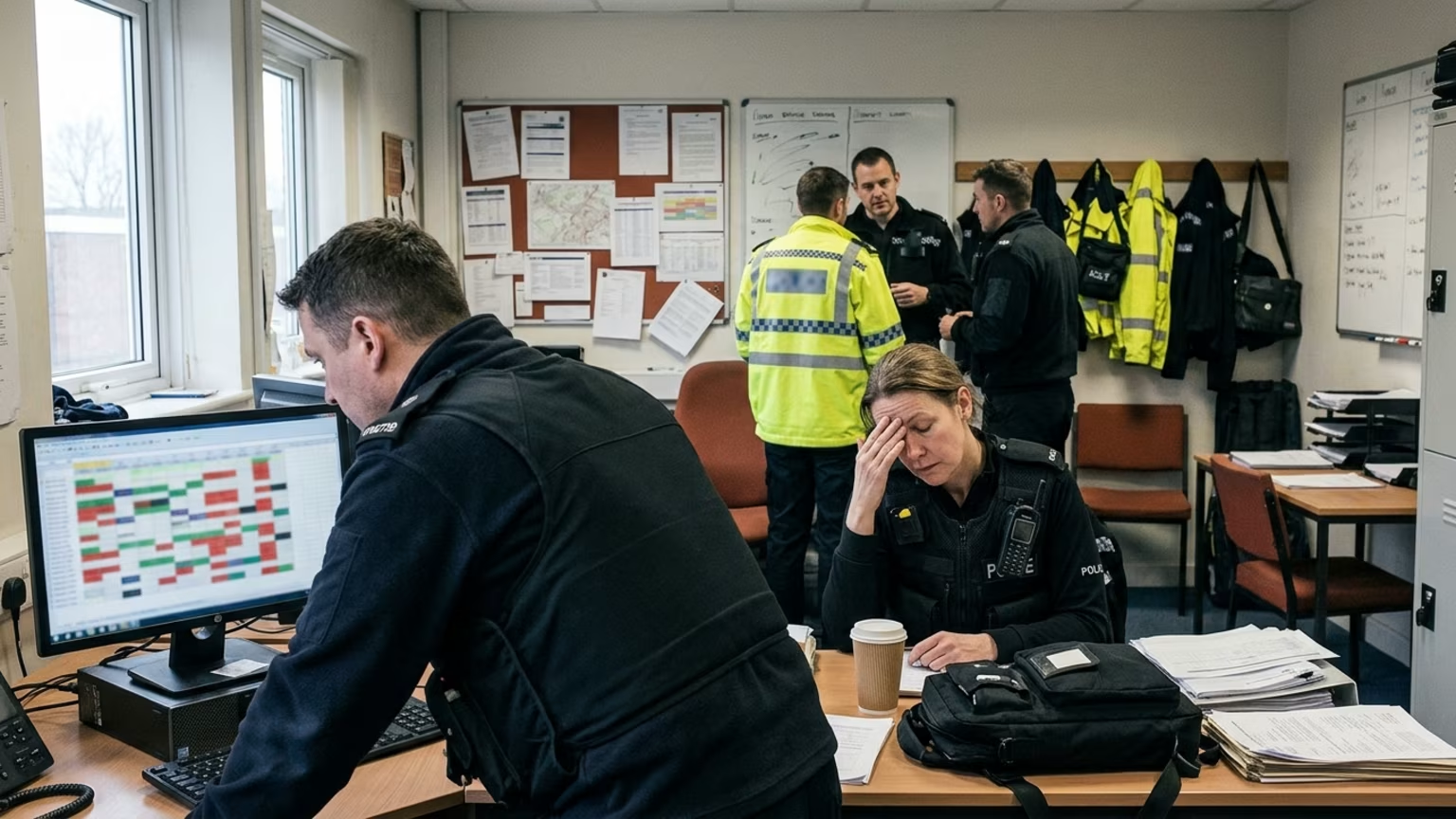

North Yorkshire Police lost over 246,000 hours to sickness in 2025/26, highlighting how extended psychological absence directly impacts operational capacity.





In a report covering the 2025/26 period, the Yorkshire Post revealed that North Yorkshire Police lost nearly 246,822 working hours to sickness. The panel paper detailed the clear operational impact of these extended absences on the broader force.
The data provided to the York and North Yorkshire Police, Fire and Crime Panel offers a stark look at workforce capability. According to the Yorkshire Post, the force lost 246,822 working hours to sickness over a single year. This massive volume of lost time represents a severe constraint on available personnel. The sheer number of hours lost indicates that managing occupational health is a critical administrative priority.
A closer examination of the data reveals a significant disparity regarding the causes of these absences. Psychological ill health accounted for only 12.2 percent of total absences across the workforce. However, it was responsible for 38.6 percent of the sickness-related hours lost. This difference indicates a comparatively large contribution from longer absences, even though the report does not provide average durations by condition.
The panel report clearly identified long-term sickness as a prominent workforce risk. It also highlighted competition from external employers and the retention of specialist expertise as compounding challenges. The report explicitly stated that psychological ill health had a disproportionate impact on operational capacity. These factors combine to create a challenging environment for maintaining consistent public safety services.
During 2026, the overall workforce grew to 3,147 personnel. This total included 1,674 police officers and 125 PCSOs. The report described the officer workforce as relatively young, noting that 51.9 percent of officers were under age 41. The force still experienced recruitment challenges in specialist and investigative roles where experience and supervisory skills matter heavily.
Despite these risks, the report did give substantial assurance regarding overall workforce arrangements. A workforce survey cited in the coverage showed strong internal dynamics and positive departmental culture. More than 86 percent of respondents said their manager built trust. Furthermore, 75 percent said their workload was actively monitored, and 92 percent felt fairly treated by colleagues.
This new information clearly validates modern approaches to fatigue management and physical training. Prolonged sickness absence is a direct threat to operational capability. When long-term absences accumulate, the remaining staff must absorb the operational load. This dynamic creates a compounding cycle of stress for active personnel.
First responders often work irregular shifts and unpredictable hours. This schedule disrupts physical recovery windows and places heavy demands on the nervous system. A failure to recover physically directly compromises mental resilience over time. Departments must adapt their training expectations and scheduling practices to these unavoidable operational realities.
The Yorkshire Post reported that North Yorkshire Police implemented a 2025/26 Wellbeing Pledge. This program focused aggressively on mental fitness and resilience alongside standard occupational-health services. It included annual psychological welfare checks, trauma-awareness training, and mandatory support for staff in high-risk roles. These measures represent a structural shift toward treating recovery as a professional requirement.
Implementing annual psychological welfare checks provides a baseline for tracking staff health over time. When issues are caught early, the likelihood of an absence turning into a prolonged event decreases. Those looking for structured strategies can review guidelines on adapting physical training to night shifts and mental health recovery in policing. Training protocols must account for accumulated wear rather than pushing for maximum intensity at all times.
Extended absences require departments to rethink how they define operational readiness. Maintaining a healthy workforce is no longer just about passing a physical fitness test. True readiness requires comprehensive tracking of fatigue markers and psychological strain over a prolonged period. This operational translation means treating psychological support with the exact same urgency as physical rehabilitation.
The absence data challenges the assumption that short-term physical injuries are the primary drain on emergency services. Acute injuries are highly common in physical roles across all departments. However, they do not automatically lead to the highest volume of lost hours. The report shows that psychological ill health causes fewer individual absence events but heavily dominates the total time lost.
This data also overturns the idea that a young workforce is inherently insulated from long-term sickness. With 51.9 percent of the officer workforce under age 41, youth does not prevent the accumulation of severe fatigue. First responders cannot rely solely on natural resilience to sustain their careers. The physical and mental demands of the job clearly compound regardless of a relatively young demographic profile.
Furthermore, the findings challenge the notion that general workplace satisfaction prevents all long-term absence. The survey cited in the coverage found that 92 percent felt fairly treated by colleagues. More than 86 percent trusted their managers. Good morale and trust are visibly present, yet the force still lost nearly 250,000 hours to sickness.
This data proves that prolonged sickness can occur even in environments where personnel feel supported by their immediate supervisors. The structural demands of the job are a separate variable from interpersonal dynamics. A demanding investigative role requires specialized support regardless of how fair the management team acts. Relying on camaraderie alone to mitigate the effects of demanding shift work is an outdated strategy.
Emergency-service professionals should use this information to adjust their daily routines and shift preparations immediately. The first step is to actively monitor personal workloads and recovery windows. The survey noted that 75 percent of staff had their workload actively monitored by management. Individuals should take the exact same structured approach to tracking their own off-duty recovery time.
First responders must prioritize restorative sleep and physical maintenance between shifts. A structured approach to rest helps prevent the accumulation of long-term fatigue. You can establish specific downtime routines to bridge the gap between irregular schedules and physical readiness. Detailed protocols for the critical post-shift window are outlined in recovering from long shifts.
Personnel in high-risk roles should immediately engage with available occupational-health services. North Yorkshire Police instituted mandatory support for staff in these specific positions. First responders should view psychological welfare checks and trauma-awareness training as standard professional maintenance. Waiting for a crisis to access these resources often leads to the extended absences seen in the data.
Agencies should also evaluate their fitness standards to reflect realistic career longevity. Maintaining physical capability requires adjustments as personnel age and accumulate occupational stress. Departments can look at age-adjusted testing approaches to support long-term readiness. This approach keeps experienced personnel active without forcing them out due to rigid performance metrics.
Command staff and frontline supervisors can build a culture that respects required downtime. The panel report flagged specialist retention as a distinct workforce risk. Supervisors should recognize that granting appropriate recovery time directly supports the retention of these highly trained individuals. Proper scheduling and realistic workload expectations are crucial tools for maintaining a capable and experienced workforce.
Future developments must track how well structured support measures improve operational capacity. Analysts should monitor the long-term effectiveness of the 2025/26 Wellbeing Pledge and its specific targeted interventions. It remains to be seen if mandatory support for high-risk roles will successfully reduce extended sickness duration over the coming years.
The retention of specialist expertise requires ongoing attention from organizational leaders. The panel report explicitly linked long-term sickness and external employer competition to the loss of experienced personnel. Recruitment challenges in investigative and supervisory roles highlight the cost of losing veteran officers to extended burnout. The success of future retention strategies will likely depend on actively managing these extended absences.
Researchers should continue to study the connection between physical readiness and psychological longevity. Maintaining cognitive sharpness and emotional regulation is directly tied to managing physical wear over time. Professionals planning for the later stages of their careers can find additional context on preserving mental performance across a demanding career.
The distinction between absence frequency and lost hours will also be critical for future policy analysis. Tracking average absence durations by specific condition would provide a much clearer picture of occupational hazards. This data will ultimately dictate how departments allocate resources for injury prevention and long-term recovery. Evaluating the success of these programs requires consistent data collection across multiple reporting periods.
Limiting the operational impact of long-term sickness starts with translating absence data into practical shift adjustments. When dealing with conflicting advice that prioritises short-term performance while ignoring long-term health, Rescuris cuts through the noise with targeted recovery strategies. We supply emergency personnel with clear, evidence-backed protocols to manage the specific physiological demands of their work. Explore Resources
Rescuris publishes evidence-aware guidance for firefighters, police officers, paramedics and other first responders on fitness, recovery, sleep, nutrition, stress resilience and long-term capability.






Read practical guidance on first responder fitness, recovery, sleep, nutrition and resilience for demanding work and a long, active career.
read the blog
