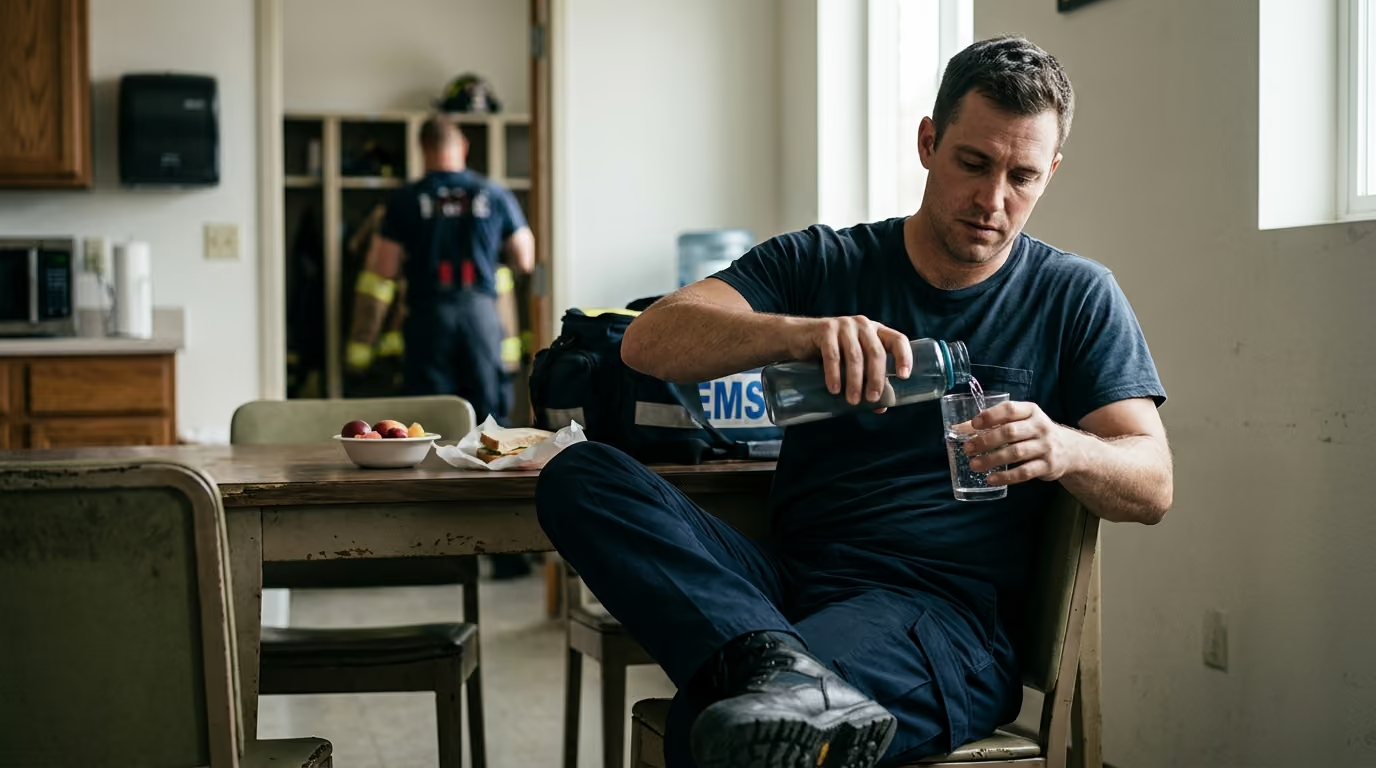

Forty-eight hours of structured recovery helps emergency responders manage sleep debt, realign circadian rhythms, assess residual impairment, and safely return to physical training.





How do you recover after working a 24-hour shift, a 48-hour rotation, or an extended overnight call without losing days to brain fog? First responders and shift workers frequently search for ways to clear fatigue fast, yet waking up after a single long sleep rarely restores full baseline performance. This guide provides a systematic, 48-hour protocol to protect your sleep, reset cognitive function, make safe training decisions, and protect your physical longevity.
Recovering from an extended duty period requires a deliberate management process rather than simply sleeping in. While a single sleep episode can quickly relieve subjective sleepiness and lower biological stress markers, complex reaction time, sustained vigilance, and motor coordination often lag behind. True operational readiness returns only after multiple consolidated sleep windows and planned physiological rest.
Extended work shifts create two distinct physiological burdens: acute sleep deprivation and circadian misalignment. Sleep pressure builds steadily with every hour of continuous wakefulness. At the same time, working through the night forces the central nervous system to fight the internal circadian drive for sleep. When you finally clock out, your body is managing both high sleep pressure and a biological clock out of sync with daylight.
Evidence published in clinical literature shows that severe sleep loss degrades cognitive performance by 1.5 to 2 standard deviations relative to rested baselines. Studies synthesized in nursing and medical reviews indicate that wakefulness extending toward 24 to 30 hours creates performance deficits comparable to a blood alcohol concentration between 0.05% and 0.10%. These deficits degrade clinical calculations, hazard perception, vehicle operation, and physical precision.
Subjective alertness is often misleading. Research tracking sleep debt indicates that individuals frequently report feeling functional long before their objective reaction times return to baseline. A landmark study on recovery sleep demonstrated that extended sleep after sleep restriction normalized subjective sleepiness, perceived fatigue, and daytime cortisol levels. However, objective attention tests and cognitive processing metrics remained impaired.
Residual neurobehavioral deficits can persist across several subsequent sleep opportunities. As noted in research on baselines for shift work fatigue, fatigue affects both immediate attention and downstream physiological regulation. You cannot rely purely on perceived energy or personal grit to assess operational safety. Perceived alertness indicates that acute sleep pressure has dropped, but it does not confirm complete neurological restoration.
Standard sleep advice assumes a predictable eight-hour work block followed by uninterrupted personal time. For firefighters, paramedics, police officers, and emergency medical personnel, work patterns look entirely different. Shifts frequently run 24 to 48 hours, packed with unpredictable alarms, heavy physical labor, thermal strain, and continuous psychological demands.
Emergency calls during traditional sleep hours fragment rest into brief, low-quality intervals. A responder might get three separate 90-minute sleep opportunities across a 24-hour period. While these brief rests prevent total collapse, they do not provide the restorative architecture of continuous, slow-wave and rapid-eye-movement sleep cycles. The body remains in a heightened state of sympathetic activation, primed for the next alarm tone.
Physical demands compound this neural fatigue. Hauling heavy equipment, wearing structural turnout gear, operating on roadway scenes, and managing patient transfers deplete muscular glycogen and create significant physical inflammation. Extended periods of seated vehicle operation alternate abruptly with maximal physical exertion. When the shift concludes, the responder carries systemic muscular damage alongside neurological exhaustion.
Regulatory bodies recognize these unique hazards. The Canadian Nuclear Safety Commission establishes clear benchmarks for safety-critical roles, recommending that work not exceed 16 hours in a 24-hour window or 28 hours across 48 hours. They also advise a minimum 48-hour recovery window after consecutive night shifts. While emergency service schedules often exceed these guidelines, understanding these benchmarks reinforces that physiological recovery requires protected time, not just willpower.
The first critical milestone of recovery occurs before you reach your bed. The final hour of a shift and the morning commute present the highest acute accident risks. Drowsy driving after a 24-hour or overnight shift carries severe hazards that motivation and open vehicle windows cannot offset.
Before getting behind the wheel, perform an honest hazard assessment. Ask yourself if you are experiencing heavy eyelids, wandering attention, missed road signs, or drifting within your lane. If severe drowsiness is present, take a 15 to 20 minute tactical nap in the station parking lot before departing. The National Institute for Occupational Safety and Health notes that a brief nap can provide temporary alertness to complete safety-critical tasks like commuting.
Manage your light exposure during the homeward journey. Exposure to bright morning sunlight signals the suprachiasmatic nucleus in the brain to suppress melatonin and promote daytime wakefulness. Wear polarized sunglasses on the drive home to minimize morning light stimulation. This simple step keeps your circadian alerting system quiet, allowing for smoother sleep onset once you arrive.
Keep the immediate post-shift transition calm and predictable. Consume a small, easily digestible meal containing complex carbohydrates and light protein if you are hungry. Avoid heavy, high-fat meals that can cause gastrointestinal discomfort during daytime sleep. Hydrate with water or electrolyte fluids, but moderate total fluid volume to prevent frequent waking for bathroom visits. Complete non-essential household conversations later, and head straight to your sleep environment.
The first dedicated sleep window after your shift serves as the primary decompression phase. The American Academy of Sleep Medicine and the Sleep Research Society emphasize that adults require seven or more hours of sleep regularly. They also note that sleeping longer than nine hours is appropriate when paying down an accumulated sleep debt. You should plan for an open-ended sleep opportunity of at least seven to nine hours without an alarm whenever personal obligations permit.
Creating an optimized sleep sanctuary is non-negotiable for daytime recovery sleep. The human body is biologically primed to remain awake during daylight hours. Overcoming this natural alerting signal requires strict environmental control to prevent micro-arousals that disrupt deep sleep architecture.
Implement these environmental controls immediately upon entering the bedroom:
Communicate expectations clearly with family members or roommates before the shift concludes. A designated "do not disturb" sign on the bedroom door establishes a clear boundary. Protecting daytime sleep after emergency duty is an essential occupational health measure, not an indulgence.
Avoid relying on alcohol as a sleep aid. While alcohol can shorten the time it takes to fall asleep, it drastically disrupts sleep architecture. It suppresses rapid-eye-movement sleep, increases sympathetic nervous system tone, and causes early morning awakenings that leave you more exhausted. If you struggle to wind down, use low-stimulation activities like light reading or passive breathwork to facilitate sleep onset.
Waking up from the initial post-shift sleep episode often brings a distinct period of grogginess known as sleep inertia. Sleep inertia represents the temporary lag in cognitive and motor performance that occurs as the brain transitions from deep slow-wave sleep to full waking consciousness. This state can last anywhere from 15 to 60 minutes.
Do not mistake immediate post-sleep grogginess for permanent exhaustion, but do not mistake sudden caffeine-fueled energy for complete recovery either. Once sleep inertia clears, conduct a realistic self-assessment of your physiological and cognitive baseline. This assessment determines what activities are safe for the remainder of your first recovery day.
Evaluate your functional state using these practical indicators:
If your self-check reveals lingering sluggishness, recognize that your central nervous system remains in a depleted state. Reserve this first waking afternoon for low-demand activities. Complete light domestic tasks, prepare nutritious meals, and spend time outside in natural sunlight to help reset your circadian clock for the night ahead.
If you must drive or complete technical tasks during this first waking window, understand the role of temporary countermeasures. The National Institute for Occupational Safety and Health points out that combining a brief 15 to 20 minute nap with 100 milligrams of caffeine can provide a temporary window of alertness. However, treat countermeasures as bridge strategies for unavoidable tasks, not as proof that your nervous system is fully restored.
A single recovery sleep window rarely settles the physiological debt created by a 24-hour or 48-hour shift. The second
night of your 48-hour recovery window is where deep cellular repair, hormonal rebalancing, and cognitive restoration occur. Bypassing this second night by staying up late or resuming immediate high-stress demands prolongs systemic fatigue.
If your first recovery sleep took place during the day, your sleep drive might feel slightly reduced by the evening. To prepare for the second night, calculate your caffeine cut-off point carefully. Caffeine has an average elimination half-life of five to seven hours. Stop all caffeine consumption at least six to eight hours before your target bedtime to prevent adenosine receptor blockade during the night.
Establish a progressive evening wind-down routine starting two hours before sleep. Lower household ambient lighting to cue natural melatonin production. Step away from high-stimulation television shows, contentious conversations, and work email. A warm shower or bath 60 minutes before bed can encourage vascular dilation in the extremities, facilitating the drop in core temperature that signals the brain to sleep.
Aim for a full, uninterrupted nocturnal sleep window of seven to nine hours on this second night. This nocturnal window allows your circadian rhythms to re-align with natural dark-light cycles. Quality sleep during this second block resolves the lingering neurobehavioral deficits that the initial daytime sleep could not fully erase.
For comprehensive routines on managing circadian disruptions across rotating shifts, explore our dedicated resources on shift work sleep strategies.
Deciding when and how hard to train after long shifts is a constant dilemma for operational athletes. Physical exercise supports long-term physical capability, but training on a depleted nervous system increases injury risk, blunts training adaptations, and prolongs systemic fatigue. A structured, graded return-to-training model removes the guesswork.
Research examining sleep loss and physical performance demonstrates that sleep deprivation degrades muscle force production, endurance capacity, reaction speed, and technical precision. At the same time, it significantly increases the rate of perceived exertion. A weight or running pace that feels moderate when fully rested can feel maximal under the influence of acute sleep debt.
Understanding duty fatigue and readiness helps you select the appropriate stage in this graded return framework:
For step-by-step guidance on structuring your training split across unpredictable shift rotations, review our detailed breakdown of training around shifts.
Managing fatigue must be approached as a systematic risk-control process rather than an individual character test. Safe Work Australia frames workplace fatigue as a physical and cognitive hazard that requires systematic hazard identification, risk assessment, and control measures. First responders frequently operate in high-consequence environments where an unnoticed micro-sleep or slow reaction can lead to catastrophic outcomes.
Understand the strict limits of temporary alertness aids. Caffeine, energy drinks, cold water, loud music, and physical movement are temporary countermeasures. They briefly mask sleep pressure by blocking adenosine receptors or increasing adrenaline, but they do not reverse cellular fatigue or restore complex decision-making capacity.
Be vigilant for the "performance mismatch" phenomenon. Experienced first responders can often summon brief bursts of normal focus during high-stress calls through pure adrenaline release. However, this adrenaline surge masks deep underlying exhaustion. Once the acute call ends, vigilance crashes rapidly, creating immense vulnerability during vehicle operation, equipment maintenance, and administrative reporting.
Never operate heavy machinery, perform complex clinical dosing calculations, or engage in high-risk technical rescues when suffering from severe, unaddressed sleep debt. If your schedule forces an immediate turnaround with minimal rest, communicate your fatigue level with your crew officer or partner. Implementing two-person checks on critical tasks and rotating driving duties are vital risk controls when operational demands compress recovery windows.
Managing cumulative duty wear over years is essential for protecting your career longevity. Sustainable capability requires treating recovery intervals with the same discipline applied to tactical operations.
While post-shift fatigue is a normal occupational reality, certain symptoms suggest that recovery processes are breaking down. When fatigue becomes chronic, it ceases to be a simple operational byproduct and becomes an occupational health concern that warrants professional evaluation.
Consider scheduling a consultation with a licensed healthcare provider, occupational physician, or board-certified sleep specialist if you regularly experience any of the following:
Obstructive sleep apnea and shift work sleep disorder are highly prevalent across emergency service populations. These conditions prevent deep, restorative sleep stages and accelerate cardiovascular and metabolic strain. An occupational health professional can arrange formal diagnostic testing, evaluate potential hormone disruptions, and provide targeted medical guidance tailored to the realities of shift work.
True operational readiness is built on the foundation of consistent, high-quality physiological recovery. Protecting your capability across a decades-long career requires treating the 48 hours following an extended shift with deliberate operational discipline.
Use this operational checklist to guide your recovery across the next two days:
Stay connected for research-led guidance on duty fitness, shift-work sleep, injury recovery, stress, nutrition and career longevity. Practical ideas for first responders who want to stay capable on the job, recover well and protect their health for the long run.



Read practical guidance on first responder fitness, recovery, sleep, nutrition and resilience for demanding work and a long, active career.
read the blog



