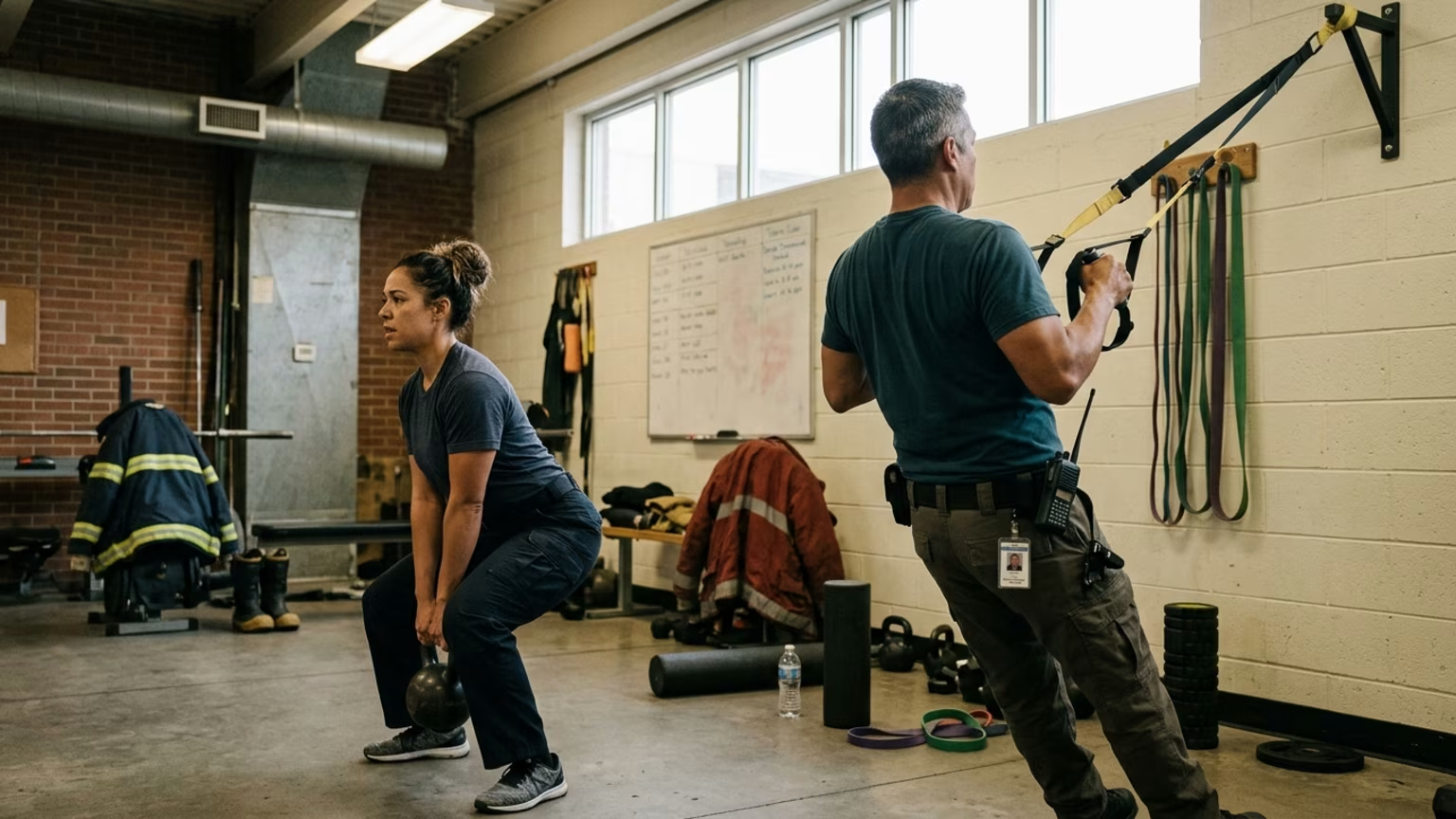

Discover how emergency professionals can adapt physical training around irregular shifts and unpredictable calls. Rescuris explores readiness-based autoregulation, green-to-red decision matrixes, and strategies for preserving long-term capability.





Choosing between a rigid civilian training template and an adaptable readiness-based system dictates whether an emergency professional builds long-term physical capacity or simply accumulates compounding fatigue.
Fixed training templates provide structure and measurable progress for individuals working highly predictable civilian schedules. The physiological basis of these fixed programs relies on systematic progressive overload. A worker steadily increases weight or total exercise volume over consecutive weeks. The body adapts to this specific stress by building strength and aerobic capacity during quiet recovery windows.
This traditional gym approach assumes that occupational physical demands remain relatively stable and predictable. The daily reality for first responders involves fluctuating exposure to sleep loss, heavy protective equipment, and erratic emergency calls. The human body processes occupational stress and physical training stress through the exact same systemic pathways. A responder who completes a demanding shift in heavy gear has already accumulated massive physical load.
Research summarized by CDC-related sources links shift work among police officers with poorer sleep, increased injury, and sickness absence. Applying a rigid training program during these periods of compromised occupational recovery drives excessive fatigue. A 2025 field study reported that wildland firefighters averaged 13.8-hour fire-suppression shifts and about 6.7 hours of sleep. The researchers determined that longer shifts and poorer sleep were directly associated with reduced cognitive function.
Attempting maximum-effort lifts after such intense operational exposure creates a high-risk scenario for joint strain. Spreadsheets tracking weekly strength gains cannot account for a night spent fighting a structure fire. The core issue is a structural failure to account for the massive physical toll of the job itself. Officers and paramedics who strictly follow standardized civilian programs frequently experience chronic soreness and steadily declining performance.
An autoregulated approach actively adjusts training intensity and volume based on the total stress of the preceding days. This adaptable method protects the crucial physical training signal without ever exceeding the current recovery capacity of the responder. Retaining a minimal effective dose keeps muscles engaged without demanding extensive recovery time. Evaluating overall weekly stress allows tactical personnel to adapt their workouts to their immediate physical state.
The NREMT says the LIFE Study is designed to investigate long-term occupational exposures, injuries, and stress among firefighters and EMS clinicians. This ongoing longitudinal research reflects a necessary shift toward treating career-long health as the primary occupational objective. First responders must evaluate their physical capability as an ongoing career requirement rather than a short-term fitness test. Adaptable training systems support this long-term objective by reducing workout intensity when operational stress is severe.
Maintaining fundamental cardiovascular capacity remains a critical component of emergency readiness. A 2026 scoping review identified the 20-meter shuttle run as a practical option for department-wide fire-service fitness monitoring. The review included 14 studies from 140 records and clearly noted the need for local validation. Modifying daily training volume makes it vastly easier to sustain this required aerobic fitness without risking severe overtraining.
Personnel can incorporate manageable duty fitness strategies that keep them active during highly chaotic weeks. This tactical flexibility keeps responders moving safely even when optimal sleep and perfect nutrition are completely impossible. The resulting physical foundation becomes far more resilient and easily survives the chaos of unpredictable shift rotations.
Evaluating physical readiness before training requires a highly practical assessment of recent sleep and operational load. Personnel should quickly check their sleep quality, physical soreness, and current call volume before starting any workout. This basic information guides a simple classification system for appropriately modifying the planned training session. No single wearable fitness metric should ever overrule obvious physical symptoms or severe operational fatigue.
Green conditions describe optimal periods with reasonable sleep, ordinary call volume, and a completely normal warm-up. Personnel should perform their planned strength or conditioning session under these favorable baseline conditions. They must leave a few repetitions in reserve rather than repeatedly testing their absolute maximum physical capacity. This conservative approach safely builds strength while preserving necessary energy reserves for potential emergency calls.
Yellow conditions follow fragmented sleep, mandatory overtime, extended night work, or unusually high call volumes. Personnel should immediately reduce the workout load, lower the movement speed, and decrease overall physical effort. They can retain the main movement pattern but should perform approximately half to two-thirds of the planned volume. Responders facing these compromised conditions must strictly avoid maximal lifts and high-risk loaded carries entirely.
Red conditions involve severe sleep loss, acute physical injury, significant heat stress, or uncontrolled joint pain. Severe dizziness, unusual weakness, and severe delayed onset muscle soreness all clearly indicate a red condition. First responders in this depleted state should not perform any demanding physical training whatsoever. They should prioritize basic hydration, formal medical assessment, and low-intensity movement only if it feels entirely comfortable.
Tactical rest is highly effective for cognitive recovery during these intensely demanding periods. In a study of clinical trainees, a nap opportunity was associated with a 14.8-point, or 7.4%, improvement in simulation performance. Schedule design heavily influences the frequency of these different readiness states across a department. In a Firehouse-reported schedule evaluation, firefighters recorded improved sleep after moving to a 48/96 schedule.
After 12 months, self-reported sleep increased by 41 minutes per night. Wrist-tracker data showed mean sleep rising from 6.7 to 7.0 hours across the evaluated schedule period. Sleep on the night before a shift also rose notably from 6.1 to 7.0 hours. Responders can effectively navigate a training decision tree to match their output to these fluctuating recovery windows.
A frequent mistake is attempting to quickly compensate for missed training days by doubling the next workout. Personnel returning from forced overtime or a major incident should never force two sessions into one day. They should structure physical training minimums to rebuild their operational capacity gradually and safely. Normal training volume should only resume when sleep and basic coordination have fully returned toward baseline levels.
Another common pitfall involves aggressively treating physical recovery as complete and total bodily inactivity. Workers should maintain light joint mobility and practice job-relevant movement patterns at very low intensities during recovery days. NIOSH guidance emphasizes risk assessment, safe procedures, ergonomic equipment, and regular training for healthcare workers. Gentle movement supports this ongoing physical preparation without adding unnecessary mechanical strain to tired joints.
First responders regularly err by selecting heavy gym exercises that duplicate their most severely fatigued muscle groups. A paramedic who just completed a chaotic shift with repeated heavy patient lifts does not need high-volume deadlifts. They should actively choose lower-fatigue aerobic work and mobility exercises instead to promote safe injury recovery practices. Training must intelligently complement the severe physical demands of the job rather than merely replicating them.
Ignoring acute medical symptoms during a planned workout remains a severe and common safety hazard. Chest pain, severe heat illness symptoms, or unusual shortness of breath always require immediate professional medical judgment. Personnel must never attempt to manage these severe clinical symptoms by simply downgrading the intensity of a workout.
Emergency professionals require intelligent physical training systems that respect the highly unpredictable nature of their daily operations. Actively adjusting workout volume based on sleep quality and duty load prevents minor fatigue from compounding into chronic injury. Carefully choosing between a rigid civilian training template and an adaptable readiness-based system dictates long-term career capability.
Evaluating physical training intensity around unpredictable shift schedules forces emergency personnel to constantly balance active capability against severe exhaustion. Planning for physical capability and an active life after retirement or leaving service requires practical recovery frameworks built for irregular duty hours, which is exactly how Rescuris structures its long-term health guidance.
Rescuris publishes evidence-aware guidance for firefighters, police officers, paramedics and other first responders on fitness, recovery, sleep, nutrition, stress resilience and long-term capability.






Read practical guidance on first responder fitness, recovery, sleep, nutrition and resilience for demanding work and a long, active career.
read the blog
