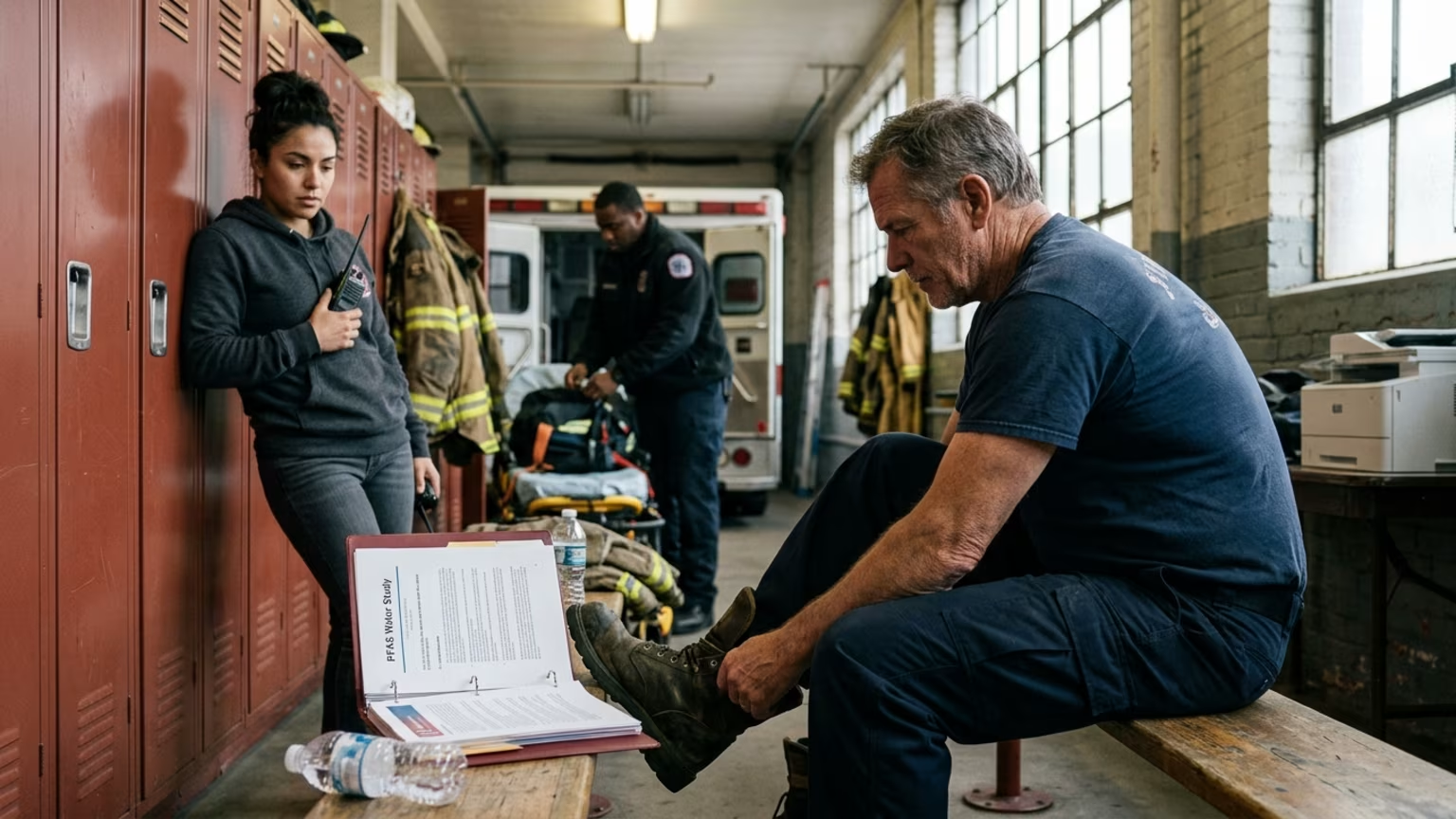

Preliminary data links firefighting foam exposure to higher blood pressure and cholesterol. Review how first responders can manage these cardiometabolic risks.





On September 16, 2026, The Philadelphia Inquirer reported preliminary findings from an ongoing federal health study detailing cardiometabolic risks in Pennsylvania communities. The data connects drinking water contaminated by firefighting foam near military bases to higher cholesterol and blood pressure.
The reported findings emerged from a public meeting in Hatboro, Pennsylvania. The project operates as part of a larger federal effort by the Agency for Toxic Substances and Disease Registry and the Centers for Disease Control and Prevention. The broader federal study included 5,826 adults and 710 children ages 4 to 17 across Pennsylvania and seven other states.
The Pennsylvania portion specifically collected blood from 1,251 adults and 89 children in 11 townships in Bucks and Montgomery Counties. These Pennsylvania communities are located near military bases where firefighting foam contaminated local drinking water for decades. Linda Brown, the study director from RTI International, stated that participant chemical levels were consistent with decades of foam exposure.
The publication identifies four specific compounds measured in the study participants. These compounds are PFOS, PFOA, PFHxS, and PFNA. These persistent chemicals are known for remaining in the environment and the human body for extended periods. Pennsylvania participants showed chemical levels that exceeded national averages across the testing pool. The state ranked second among all study sites for PFOS and PFHxS concentrations.
Brown reported that adults with higher chemical levels in their blood tended to have higher blood pressure. All four measured compounds were associated with higher cholesterol in both adults and children. This recorded trend specifically included higher levels of LDL cholesterol.
These preliminary results establish valuable baseline associations for community health. However, Brown noted that the data did not show a clear pattern linking PFOS levels with heart disease. The findings also lacked clear links to diabetes, thyroid disease, or obesity.
These findings provide crucial context for emergency personnel managing their long-term health. First responders already face heavy cardiovascular burdens from irregular sleep, unpredictable schedules, and high physical exertion. Knowing that local water supplies may influence blood pressure adds another critical variable to routine health screenings.
For firefighters and paramedics, this data shifts the perspective on legacy chemical exposure. The occupational conversation often centers entirely on cancer prevention and complex respiratory protocols. This new data highlights the immediate necessity of tracking cumulative risk factors like basic lipid profiles and standard cardiovascular markers.
Departments operating near legacy training sites should view these results as a practical screening prompt. Higher cholesterol and high blood pressure remain manageable conditions when medical providers identify them early. Standardizing this routine monitoring helps personnel maintain their physical capability across a long career in emergency services.
First responders frequently operate under extreme physiological stress during standard duty cycles. The combined demands of thermal strain, heavy turnout gear, and sleep disruption already increase resting cardiovascular metrics. Factoring in occupational chemical exposure gives medical teams a more accurate picture of a responder's total physiological load. Documenting these specific environmental variables helps occupational health directors build better longitudinal health tracking systems for their departments.
Understanding occupational risk requires looking at overlapping populations with similar operational histories. A separate analysis from Brown University examined eight national health survey cycles from 2003 to 2018. This separate veteran analysis represented an estimated 22.8 million adults with prior military service after standard survey weighting.
Military Times reported that this separate analysis found notable chemical concentrations among younger veterans. The data showed concentrations were 13% to 24% higher among veterans ages 20 to 39 compared to civilians of comparable age. This provides valuable context for emergency personnel who share similar operational environments and legacy suppression tools.
Emergency service departments frequently recruit personnel directly from military backgrounds. This hiring pipeline means many active first responders carry cumulative exposure histories from their previous service. Integrating this veteran data into civilian department health screenings creates a more comprehensive safety net for the workforce.
While this veteran data is distinct from the Pennsylvania community study, the parallel remains clear. Professionals working around military installations or handling similar suppression materials face unique exposure variables. Recognizing these environmental overlaps helps emergency departments refine their occupational health programs and advocate for better preventive screening.
First responders should treat these preliminary findings as a practical prompt for detailed clinical discussions. Personnel should schedule routine screenings to establish a baseline for their blood pressure and cholesterol. These basic assessments remain the most reliable way to monitor cardiovascular changes over time.
When speaking with a clinician, professionals must mention their occupational history and regional water sources. Identifying potential exposure to suppression foam helps medical providers interpret lipid panels more accurately. This transparency confirms that any higher markers are viewed in the proper occupational context rather than isolated lifestyle factors.
The current evidence supports standard medical monitoring rather than drastic lifestyle interventions. The source material does not recommend any specific diet or unproven supplement protocol to address these chemical exposures. Emergency personnel should review evidence safely and avoid commercial detoxification products that lack clinical validation.
High cholesterol and blood pressure are highly responsive to targeted clinical management. Physicians can prescribe proven medications and sustainable nutritional frameworks to manage these specific cardiometabolic risks. Addressing these markers early prevents minor chemical associations from developing into severe duty-limiting conditions. Routine lab work provides the objective data needed to keep personnel operational.
Operational units can also take immediate steps to secure safe hydration on duty. The Pennsylvania study specifically linked the cardiometabolic trends to contaminated drinking water near military bases. Departments must verify the safety of their station water supplies to prevent ongoing occupational exposure.
Prioritizing clean water sources protects personnel during intense physical conditioning and demanding emergency responses. Access to safe hydration is fundamental for helping responders preserve blood volume and cardiovascular capacity on shift. Drinking contaminated water while trying to recover from heat stress simply introduces new physiological liabilities.
Crew safety relies on controlling the environmental variables that can be managed locally. While individual responders cannot reverse past chemical exposure, they can rigorously control their daily hydration sources on duty. Department leadership has a clear responsibility to test local water systems and post the results transparently for all personnel.
Replacing compromised water systems requires coordination with municipal authorities and occupational health leaders. In the interim, securing alternative drinking water for the station is a practical and immediate adjustment. These basic logistical changes protect the workforce while broader infrastructure updates are completed across the region.
Researchers must conduct further analysis to understand the broader implications of these preliminary associations. A separate analysis found geographic clusters of kidney and thyroid cancer alongside breast, endometrial, and ovarian cancer in Bucks and Montgomery Counties. This cancer analysis was not part of the original blood-sample study.
Temple researcher Resa Jones stressed that these cancer findings are preliminary and require much more investigation. The county-level mapping identified spatial clusters without establishing a direct correlation to the contaminated water. First responders should track future clinical updates to see if definitive causal links emerge over time.
The initial report also detailed associations between higher exposure and lower levels of certain antibodies in children. The data showed patterns of lower language, reasoning, and cognitive abilities associated with exposure during pregnancy and early childhood. However, researchers stressed that these are strictly group-level patterns.
Medical professionals explicitly cautioned against applying these childhood development trends to individual cases. The findings do not determine how the chemicals affected any particular child. They also do not establish that any individual child’s vaccines were rendered less effective by the environmental exposure. First responders with families in these townships should discuss pediatric concerns directly with their family doctors rather than relying solely on group-level statistics.
The transition from preliminary association to definitive medical guidance requires years of sustained clinical observation. Future cycles of this federal health study will likely clarify the long-term impact on adult cardiovascular health. Emergency service professionals should continue their routine medical screenings while the scientific community finalizes these critical investigations.
Once a clinician establishes a baseline for cardiovascular risk following chemical exposure, operational units need a structured way to maintain duty readiness without aggravating physiological stress. Sleep disruption from nights, rotating shifts, overtime and unpredictable calls makes consistent cardiovascular conditioning difficult, but Rescuris helps professionals build practical schedules that protect long-term health. Explore Resources
Rescuris publishes evidence-aware guidance for firefighters, police officers, paramedics and other first responders on fitness, recovery, sleep, nutrition, stress resilience and long-term capability.






Read practical guidance on first responder fitness, recovery, sleep, nutrition and resilience for demanding work and a long, active career.
read the blog
