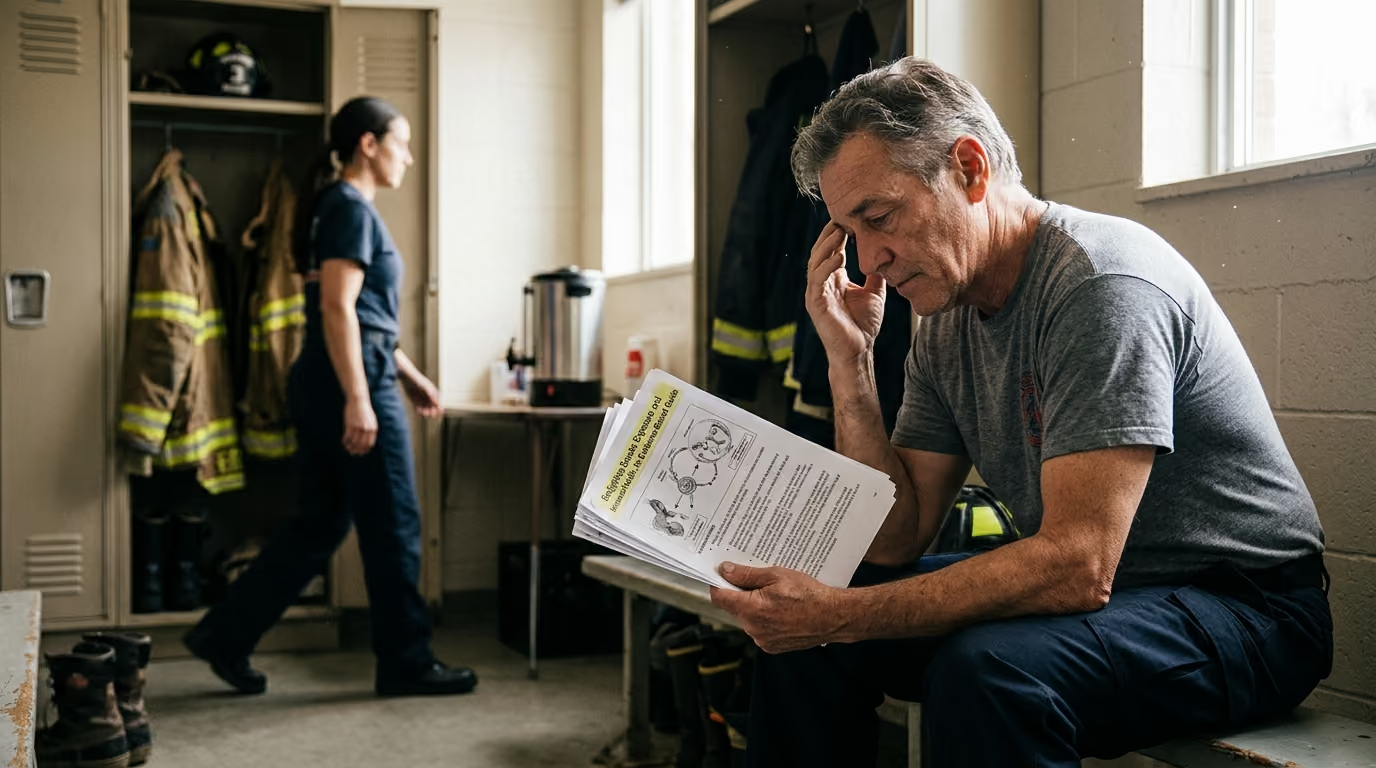

Fireground smoke exposure is widely feared as an immediate cause of endocrine disease, but real clinical risk depends on specific absorption levels and mitigation habits.





You step off the apparatus after a third-alarm residential structure fire, peel off your turnout coat, and wash your face at the station sink. Hours later, even after a shower, the faint smell of combustion products lingers on your skin, in your hair, and across your gear locker. Many firefighters find themselves wondering what those chemical exposures do beneath the surface, especially regarding endocrine health, testosterone, thyroid function, and long-term fertility.
Understanding how occupational exposures interact with the endocrine system requires looking past alarmist headlines and quick-fix detox protocols. The fireground presents a complex operational environment where chemical toxicants, intense physical heat, disrupted circadian rhythms, and heavy physical strain meet human physiology. This guide examines what scientific research actually shows about firefighting smoke exposure, hormone regulation, reproductive health, and practical contamination control.
Occupational firefighting involves repeated contact with combustion products, synthetic materials, and persistent chemicals that can act as endocrine disruptors. Research shows that acute firefighting evolutions produce measurable, short-term shifts in hormones like cortisol, bioavailable testosterone, and thyroxine. These immediate changes largely reflect acute physiological stress, heat burden, and physical exhaustion rather than immediate, permanent endocrine damage.
Cumulative exposure over a career presents a different challenge. Chemical toxicants such as polycyclic aromatic hydrocarbons, phthalates, flame retardants, and per- and polyfluoroalkyl substances can interact with hormone receptors and reproductive tissues. While studies observe associations between firefighting tenure and alterations in semen parameters, anti-Mullerian hormone levels, and specific cancer rates, occupational exposure alone does not automatically cause clinical hormone disease or infertility. Protecting long-term endocrine health depends primarily on strict respiratory protection, aggressive field decontamination, clean gear separation, and structured medical follow-up.
Evaluating how fireground exposures influence human biology requires distinguishing between experimental laboratory findings and established clinical outcomes. Scientists evaluate occupational environmental health across a clear spectrum. This spectrum separates chemical hazards from biological effects and clinical diagnoses.
An endocrine-disrupting chemical is an external substance that interferes with the production, transport, binding, action, or breakdown of natural hormones. Hormones act as chemical messengers that regulate metabolism, growth, stress adaptation, sexual function, and tissue repair.
Endocrine disruption rarely looks like an immediate shut-off switch. Instead, external compounds can mimic natural hormones, block cellular receptors, alter feedback loops in the brain, or speed up hormone clearance in the liver. In emergency services, these chemical interactions take place alongside physical fatigue, sleep debt, and high core body temperatures.
To interpret research accurately, emergency responders must understand the critical distinctions between five separate stages of occupational toxicology:
A laboratory finding that a chemical residue disrupts hormone receptors does not prove that every exposed firefighter will develop an endocrine disorder. Biological defenses, liver metabolism, kidney clearance, exposure timing, and personal protective equipment all influence whether an external hazard translates into a clinical illness.
Modern fire environments burn diverse synthetic materials, plastics, treated textiles, and structural components. This combustion creates complex toxic mixtures rather than isolated compounds. Several major chemical groups are particularly relevant to endocrine and reproductive research.
Polycyclic aromatic hydrocarbons, or PAHs, form during incomplete combustion of organic materials, structural timbers, and petroleum-based furnishings. Firefighters encounter PAHs primarily through inhalation and dermal absorption. Occupational research links PAH exposure to alterations in cellular integrity and reproductive markers, though individual dose-response relationships depend heavily on gear maintenance and suppression tactics.
Phthalates serve as plasticizers in consumer goods, building supplies, and synthetic fabrics. Research examining extracts from used firefighter turnout gear has identified phthalate diesters on external and internal textile layers. Laboratory assays showed that these gear extracts displayed antiestrogenic and estrogenic activity, indicating that contaminated gear surfaces can carry endocrine-active residues long after leaving the fireground.
Flame retardants are applied to furniture, electronics, and construction insulation to slow ignition. When these materials burn, organophosphate flame retardants and chlorinated compounds break down into airborne particulates. A biomonitoring study investigating firefighter exposures found that elevated urinary concentrations of flame-retardant metabolites, specifically bis(1,3-dichloro-2-propyl) phosphate, were associated with reduced thyroxine levels in active firefighters compared to office workers.
Per- and polyfluoroalkyl substances, known collectively as PFAS, represent a broad family of synthetic fluorinated chemicals valued for heat, water, and oil resistance. Firefighters encounter PFAS through older aqueous film-forming foams and certain water-resistant layers of turnout gear. PFAS resist environmental breakdown and remain in human tissues for extended periods. A 2024 scientific review noted limited but suggestive evidence linking general PFAS exposure to ovarian changes and moderate impairments in sperm motility across studied populations, though occupational firefighting exposures represent only one component of lifetime PFAS accumulation.
Toxic compounds enter the body through multiple distinct routes during and after an incident. Understanding these pathways allows departments and individuals to place protective barriers where they matter most.
Inhalation represents the most rapid exposure route. Toxic gases, volatile organic compounds, and ultra-fine particulates pass through alveolar membranes directly into systemic circulation. Modern self-contained breathing apparatus provides strong respiratory protection against inhalation hazards. However, inhalation risks rise sharply when responders remove facepieces prematurely during overhaul, exterior ventilation, or apparatus repositioning. Research shows that firefighters who use breathing apparatus inconsistently demonstrate higher internal concentrations of chemical biomarkers than those maintaining strict compliance.
Dermal absorption serves as a major pathway for lipid-soluble compounds like PAHs, flame retardants, and phthalates. Skin absorption rates increase substantially with rising core body temperature and localized heat. For every five-degree increase in skin temperature, dermal absorption capacity multiplies. Turnout gear retains heat, opening skin pores and increasing blood flow to the epidermis while trapping chemical particles against sweaty skin. Contaminated particulate hoods, wristlets, and glove interiors keep chemical residues in direct contact with permeable anatomical zones, including the neck, jaw, and wrists.
Ingestion occurs primarily through secondary hand-to-mouth transfer. Soot particles settling on bare hands, apparatus steering wheels, clipboards, water bottles, and rehabilitation snacks can be swallowed unintentionally. Responders who eat, drink, or use oral tobacco products before washing their hands transfer fireground contaminants directly into their gastrointestinal tracts.
Take-home exposure extends occupational risk beyond the fireground into firehouse living spaces, personal vehicles, and family residences. When contaminated turnout gear, dirty structural boots, or unwashed base layers enter vehicle cabins or station dormitories, semi-volatile compounds off-gas into confined spaces. Family members and off-duty crew members can inhale or touch these settled residues, expanding chemical exposure opportunities outside of emergency operations.
Operational stressors compound these chemical burdens. High physical exertion, rapid thermal loading, severe fluid loss, and interrupted sleep disrupt normal baseline physiology. These physical demands alter hepatic blood flow, temporary kidney clearance rates, and cellular repair processes, making it harder for biological systems to recover quickly. Responders interested in navigating shift-related strain can review strategies for shift work recovery to support systemic resilience.
The endocrine system responds dynamically to physical work, psychological threat, thermal strain, and environmental exposures. Distinguishing between normal acute adaptations and chronic dysregulation helps prevent unnecessary panic over routine laboratory results.
Testosterone levels fluctuate naturally in response to circadian signals, training volume, sleep depth, nutritional intake, and systemic inflammation. An intense structure fire or grueling multi-company drill creates an acute physical and psychological demand that triggers an immediate neuroendocrine response.
A controlled human study evaluating firefighters during live-fire training evolutions demonstrated this acute dynamic clearly. Following intense fireground training exposure, researchers observed significant drops in bioavailable testosterone along with simultaneous spikes in circulating cortisol. During the subsequent recovery week of the training cycle, bioavailable testosterone levels rebounded toward baseline values.
This recovery pattern confirms that a single low testosterone reading obtained immediately after a demanding shift, heavy call volume, or poor sleep reflects transient physiological exhaustion rather than permanent testicular damage. Responders exploring systemic hormone balance can examine evidence-based perspectives on testosterone and hormonal health to separate normal recovery fluctuations from genuine medical conditions.
Cortisol is often mislabeled as a purely destructive hormone. In reality, cortisol is an essential glucocorticoid produced by the adrenal glands to mobilize energy, regulate vascular tone, and control acute inflammatory responses during emergency operations.
Live-fire evolutions and emergency responses predictably stimulate the hypothalamic-pituitary-adrenal axis, producing sharp elevations in adrenocorticotropic hormone, cortisol, and catecholamines. This neuroendocrine surge allows firefighters to perform heavy physical labor under extreme conditions. The primary health concern is not the temporary post-incident cortisol peak, but the failure of the system to return to baseline due to chronic sleep disruption, ongoing overtime, poor nutrition, and lack of restorative rest between tours.
Thyroid hormones, primarily thyroxine (T4) and triiodothyronine (T3), regulate cellular metabolism, thermoregulation, and cardiovascular function. Research has noted subtle changes in free T4 concentrations following intense training exposures and documented statistical associations between specific flame-retardant biomarkers and altered thyroxine levels.
Experimental cell models investigating technical mixtures of firefighting foams have also shown the potential to interfere with thyroid receptor pathways. However, current epidemiological evidence does not demonstrate a universal thyroid disease pattern across the fire service. Responders experiencing unexplained fatigue, extreme cold intolerance, sudden weight changes, or resting heart rate changes should undergo comprehensive clinical thyroid testing rather than assuming smoke exposure has caused permanent gland damage.
Female firefighters encounter unique occupational questions regarding reproductive physiology, cycle regularity, and ovarian health. Scientists frequently evaluate anti-Mullerian hormone, or AMH, as an indirect biomarker associated with ovarian reserve.
An exploratory study investigating female firefighters reported a lower mean AMH concentration compared to non-firefighter control subjects, measuring 2.93 ng/mL in firefighters versus 4.37 ng/mL in civilian controls. While this finding highlights the need for continued reproductive research, AMH values do not represent a direct measure of fertility, egg quality, or pregnancy probability. A cross-sectional investigation examining female firefighters noted a modest, statistically non-significant association between longer career duration and self-reported fertility challenges, showing a relative risk of 1.39. These findings support proactive reproductive planning and exposure reduction rather than assuming occupational service prevents family building.
Spermatogenesis is highly sensitive to external environmental stressors, including elevated scrotal temperature, heavy physical strain, acute illness, sleep deprivation, and toxic chemical mixtures. Mature sperm take roughly 70 to 74 days to develop, meaning that a semen analysis reflects occupational exposures and health status from the preceding two to three months.
An exploratory study evaluating male firefighter semen samples found multiple parameters falling below World Health Organization standard reference baselines. The study noted that longer employment tenure of fifteen years or more, higher call frequency, and inconsistent breathing apparatus use were associated with higher internal concentrations of several chemical compounds. Because semen reference ranges are statistical population thresholds rather than absolute measures of fertility, abnormal parameters indicate a need for lifestyle review, proper thermal management, and clinical urological follow-up.
Emergency service work introduces physical and chemical realities that require clear occupational planning for responders seeking to start or grow families. Reproductive risks apply to both female and male personnel.
Guidance from the Centers for Disease Control and Prevention and the National Institute for Occupational Safety and Health identifies structural firefighting as involving exposures to thermal stress, toxic combustion byproducts, shift work, and heavy lifting. Epidemiological studies surveying female firefighters have observed elevated signals for spontaneous pregnancy loss, preterm birth, and complications during labor compared to general population averages.
Airborne pollutants, persistent fluorinated compounds, and severe physical exertion all represent biologically plausible contributors to these reproductive outcomes. Because real-world emergency responses combine these stressors simultaneously, isolating the effect of a single toxicant remains scientifically difficult.
The physical demands of structural operations present direct logistical challenges during pregnancy. Standard self-contained breathing apparatus, heavy protective ensembles, and confined-space work can become physically incompatible with advancing gestational physiology. NIOSH notes that standard breathing apparatus ensembles may not fit appropriately or provide adequate protection as body dimensions change during pregnancy. Departments and personnel must establish clear, non-punitive policies providing early alternative duty assignments that remove pregnant personnel from active fireground exposures and heavy chemical handling without administrative penalties.
Paternal health plays an equally vital role in conception and healthy fetal development. Male firefighters frequently face scrotal heat strain from wearing insulated turnout gear during structural operations and extended overhaul. Heat stress directly impairs sperm motility, cellular morphology, and sperm DNA integrity.
Chemical toxicants absorbed through the skin or lungs can cross biological barriers and enter seminal fluid. While research examining the specific link between paternal chemical exposures and early pregnancy loss remains limited, protecting paternal reproductive biology requires identical operational controls: consistent SCBA use, rapid gear decontamination, and avoiding prolonged heat retention around pelvic tissues. Firefighters planning to conceive within three to six months should prioritize strict on-scene contamination control to support healthy spermatogenesis.
Responders experiencing reproductive or endocrine symptoms should pursue targeted medical evaluations. The following structured framework outlines key focus areas when consulting healthcare providers:
The relationship between fireground exposures and long-term cellular health is an area of intense scientific investigation and policy development. Differentiating between established cancer classifications and general endocrine modulation provides clarity for active responders.
In 2022, the International Agency for Research on Cancer classified occupational exposure as a firefighter as Group 1, designating it as carcinogenic to humans. This determination followed decades of epidemiological research evaluating cancer incidence and mortality across hundreds of thousands of municipal firefighters.
NIOSH research tracking large cohorts of structural firefighters documented a 9% increase in overall cancer diagnoses and a 14% increase in cancer-related deaths compared to expected rates in the general population. The elevated risks were particularly evident in specific malignancies, including mesothelioma, non-Hodgkin lymphoma, bladder cancer, testicular cancer, melanoma, prostate cancer, and multiple myeloma.
While certain elevated cancers occur in hormone-sensitive tissues, such as the prostate and testes, the biological mechanisms driving carcinogenesis are complex and multifaceted. Cancer development involves direct DNA damage from genotoxic combustion products, chronic systemic inflammation, diesel exhaust particulate exposure, and immune suppression alongside potential endocrine-disrupting pathways.
Responders must separate occupational cancer hazard identification from routine endocrine testing:
The IARC evaluation noted supportive evidence linking fireground exposures to altered hormone concentrations and positive associations with prostate cancer, but concluded that evidence remains insufficient to establish a direct causal link for thyroid cancer. Responders should focus their health efforts on evidence-based cancer screenings and proactive exposure reduction throughout their operational careers. Exploring foundational career longevity practices offers actionable steps to protect long-term physical capacity.
Minimizing internal chemical dose requires applying the industrial hygiene hierarchy of controls directly to fire department operations. Individual discipline on the fireground and at the station provides the most effective defense against toxicant absorption.
Elimination and substitution focus on removing hazardous substances before responders encounter them. Fire service organizations are increasingly replacing legacy PFAS-containing foams with fluorine-free alternatives for training and hydrocarbon firefighting. Department procurement teams also evaluate outer shell and moisture barrier materials that reduce chemical additives while maintaining thermal protection standards.
Engineering controls isolate responders from chemical hazards through station and apparatus design. Modern firehouse layouts incorporate direct-source diesel exhaust extraction systems that connect to apparatus tailpipes before vehicle start-up. Apparatus bays should maintain negative air pressure relative to living quarters, preventing diesel particulates and off-gassing equipment vapors from entering station kitchens, dormitories, and fitness facilities. Commercial turnout gear extractors and dedicated gear-drying cabinets ensure protective equipment can be thoroughly laundered immediately after contamination.
Administrative rules establish operational boundaries that protect personnel during and after suppression activities. Mandatory respiratory protection policies must require SCBA use throughout the entire overhaul and investigation phases, not merely during initial fire attack. Incident commanders should establish clean staging areas upwind of active structures during large incidents.
Departments must implement strict clean cab concepts. Contaminated turnout gear, tools, and SCBA harnesses should never be transported inside the passenger compartments of apparatus or personal vehicles. Contaminated gear should travel back to the station in sealed, airtight compartments or specialized transport bags.
Decontamination begins before leaving the incident scene. Gross decontamination removes up to 85% of surface soot and chemical particulates from turnout gear, drastically reducing dermal absorption and inhalation risks during doffing.
A structured on-scene decontamination sequence includes the following steps:
Taking a rapid post-incident shower reduces chemical contact time on the skin. Using cool or lukewarm water during the initial rinse keeps skin pores closed, preventing lingering surface contaminants from absorbing deeper into cutaneous tissue.
While exposure control reduces chemical load, daily lifestyle habits provide the physiological foundation necessary for liver detoxification, tissue repair, and hormone production. Firefighters facing irregular shift work must focus on consistent health practices off duty.
Dietary habits should emphasize whole, nutrient-dense foods rich in antioxidants, dietary fiber, and quality protein. Adequate dietary fiber supports healthy gastrointestinal motility, aiding the excretion of metabolized chemical byproducts through the digestive tract. Cruciferous vegetables like broccoli, cauliflower, and Brussels sprouts contain bioactive compounds that support normal hepatic phase II detoxification pathways.
Prioritizing sleep architecture between tours is vital for endocrine recovery. Growth hormone and testosterone secretion peak during slow-wave, deep sleep stages. Establishing dark, temperature-controlled sleeping environments and minimizing screen exposure prior to rest helps counteract the metabolic disruption caused by overnight emergency calls. Firefighters can evaluate circadian nutrition strategies to align meal timing with demanding shift rotations.
Physical conditioning routines should balance heavy strength training with aerobic capacity and mobility work. Structured training maintains healthy insulin sensitivity and helps manage body composition, both of which support normal baseline testosterone and estrogen balance. Responders seeking a sustainable physical approach can explore autoregulation principles for duty readiness to adjust training intensity around cumulative fatigue.
Misinterpreting occupational health research can lead responders to adopt unproven treatments, ignore critical safety measures, or experience unnecessary anxiety. Reviewing common misconceptions provides realistic operational perspective.
Turnout gear is primarily designed to prevent thermal burns and provide physical protection from debris. While modern moisture barriers and particulate-blocking hoods reduce particle penetration, gear ensembles are not gas-tight hazardous material suits. Semi-volatile chemicals and fine particulates can penetrate seam interfaces, wrist gaps, and collar openings. Turnout gear also absorbs and stores contaminants within its fabric layers, transforming dirty equipment into an ongoing exposure source until it undergoes commercial extraction.
Many endocrine-active chemicals and combustion byproducts do not cause acute throat irritation, coughing, or skin stinging at low concentrations. Heavy PAH compounds, phthalates, and PFAS accumulate silently in lipid stores and vascular pathways without triggering immediate sensory warnings. Responders must follow standard respiratory protection and decontamination protocols on every incident, regardless of whether visible smoke appears heavy or irritating.
Blood testosterone concentrations respond rapidly to acute sleep loss, high core body temperatures, systemic inflammation, severe caloric restriction, and psychological stress. Obtaining blood work within 24 to 48 hours of a strenuous shift, heavy training evolution, or acute illness will frequently show depressed hormone levels. A valid clinical evaluation requires repeat testing performed in a well-rested, fasted state during morning hours when circadian hormone output peaks.
Commercial detox teas, rapid juice cleanses, sauna detox kits, and unverified herbal protocols are aggressively marketed to first responders. These products lack rigorous scientific validation and do not accelerate the elimination of heavy industrial toxicants or persistent PFAS compounds. Human detoxification relies on functional biological organs: the liver, kidneys, lungs, skin, and gastrointestinal system. Supporting these organs through hydration, balanced nutrition, sleep, and physical fitness is far more effective than unverified retail supplements.
Responders who discover low testosterone readings sometimes seek rapid solutions through online hormone clinics, self-prescribed testosterone replacement therapy, or over-the-counter prohormones. Administering exogenous testosterone shuts down the hypothalamic-pituitary-gonadal axis, drastically suppressing endogenous luteinizing hormone and follicle-stimulating hormone production. This shutdown halts natural spermatogenesis, causing profound male infertility while doing nothing to eliminate underlying chemical toxicants. Hormone therapies must only be managed by qualified medical specialists following thorough diagnostic workups.
Routine occupational exposures require clear clinical boundaries. Firefighters should know when symptoms warrant specialized medical evaluation rather than self-management.
Consult a licensed healthcare provider, such as an occupational medicine physician, endocrinologist, urologist, or reproductive specialist, when experiencing any of the following clinical presentations:
When consulting with medical providers, clearly state your occupation as a firefighter and describe your typical operational exposures. Discuss your weekly call volume, the types of structures encountered, your history of SCBA compliance, and your access to gear decontamination facilities. Providing your physician with this complete occupational context ensures they select appropriate diagnostic tests and interpret laboratory findings within the reality of emergency service work.
Fireground smoke exposure presents real, biologically plausible interactions with the endocrine and reproductive systems, but occupational exposures do not make clinical hormone dysfunction an inevitable outcome. By pairing rigorous exposure controls, strict respiratory protection, and disciplined decontamination with proactive medical monitoring, first responders can effectively mitigate occupational risks, sustain high operational performance, and safeguard their long-term health throughout a long career and into retirement.
Review this guidance when updating department standard operating procedures, planning for pregnancy and family expansion, transitioning between operational assignments, or preparing for annual occupational physical examinations. Long-term health in the fire service is built through consistent, day-to-day exposure control and informed medical partnerships.
Stay connected for research-led guidance on duty fitness, shift-work sleep, injury recovery, stress, nutrition and career longevity. Practical ideas for first responders who want to stay capable on the job, recover well and protect their health for the long run.



Read practical guidance on first responder fitness, recovery, sleep, nutrition and resilience for demanding work and a long, active career.
read the blog



