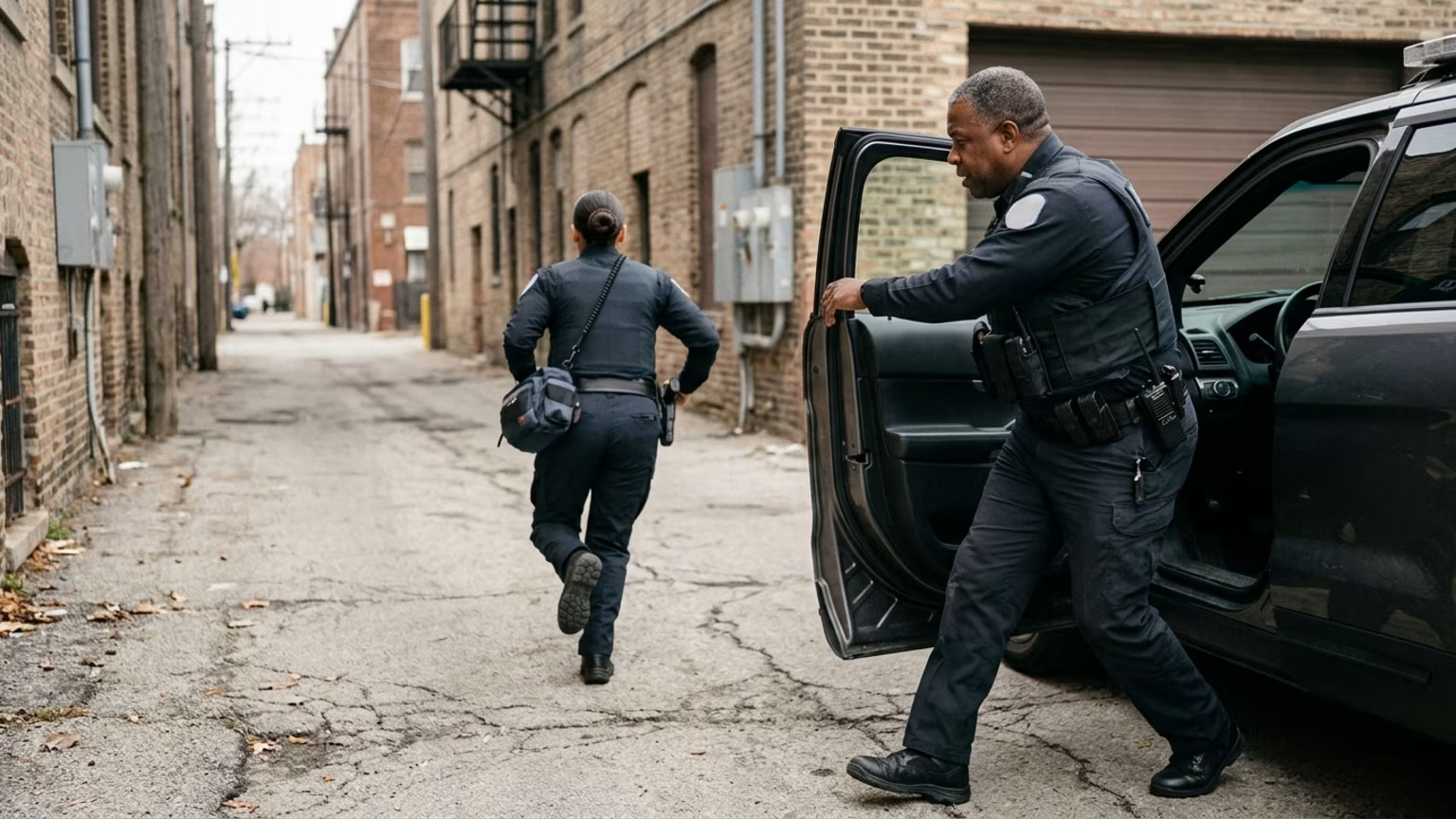

A recent Police1 analysis of a Peoria County pursuit highlights the need for officers to transition immediately from vehicle operation to physical control.





On September 28, 2026, Police1 published a training analysis of an August 6, 2025, dashcam recording showing a Peoria County sheriff’s deputy pursuing a motorcycle rider in Illinois. The video captures a rapid tactical shift, with the deputy stopping his patrol vehicle to chase the fleeing rider on foot before moving immediately into a physical-control encounter.
According to Police1’s account of the dashcam footage, the incident escalated quickly after the initial contact. The motorcycle rider signaled toward a gas station, changed course after the deputy activated emergency lights, and attempted to flee. The dynamic of the pursuit shifted entirely when the motorcycle appeared to lose power and stop in the roadway.
Police1 reports that the rider tried to push the motorcycle forward with his feet. This specific action prompted an immediate response from the pursuing officer. The deputy stopped his patrol vehicle, pursued on foot, and caught up to the rider rapidly. The deputy pulled the rider off the motorcycle, took him to the ground, and moved his hands behind his back for handcuffing.
The Police1 article presents this specific encounter strictly as a training example rather than a department-wide performance study. However, the takeaways regarding physical capability are clear. Police1’s specific physical-readiness point is that officers may need to run and move immediately into physical-control techniques. Crucially, they must be able to execute this demanding sequence without time to recover. The article characterizes the event as a reminder that a vehicle pursuit can rapidly become a foot pursuit and then a hands-on encounter.
For police readers, the article supports a narrow but highly relevant work-specific point. Physical readiness may need to include moving from vehicle operation to running and then to physical control without a recovery interval. This requirement validates the need for conditioning concepts that address the realities of patrol duty. Training must account for the friction of moving from a static seated position directly into high-intensity physical output.
Officers spend significant portions of their shifts operating vehicles. When a pursuit forces an officer to transition abruptly from driving to running, the physical demand spikes immediately. The subsequent move into physical-control techniques requires a complex combination of cardiovascular endurance and muscular effort. A standard gym routine rarely replicates this specific sequence of demands. Proper preparation requires acknowledging these realities and Combining Baseline Physical Strength With Job-Specific Drills for Emergency Responders.
The specific physical-readiness point identified by Police1 centers on the total lack of a recovery interval. When officers transition from vehicle operation to running, their cardiovascular system is stressed instantly. Moving directly into physical control compounds that acute stress. In a controlled testing environment, subjects often receive scheduled rest periods between physical tasks. The reality of a pursuit removes these recovery windows entirely, highlighting a significant operational challenge.
Agencies utilize various assessments to measure how well personnel handle these physical requirements. The Royal Canadian Mounted Police offers an official example of a police fitness test that evaluates pursuit readiness. The RCMP says its fitness assessment is intended to evaluate abilities relevant to essential policing duties. These duties specifically include moving quickly and safely while applying force to control a resistant person.
The RCMP describes its Police Fitness Assessment as measuring strength, power, endurance, and agility for policing demands. The agency states that its field test includes a specific foot-pursuit component. This component involves a 500-metre run with directional changes and a 1.4-metre fence climb. This structure provides a tangible example of how a department might measure the physical capacity required for a foot pursuit.
While the RCMP assessment illustrates one way an agency can represent pursuit-related demands, it has limitations. It is a Canadian assessment and should not be presented as a standard used by U.S. departments. The RCMP assessment does not establish that this is the only or best test design. It simply provides one working model for evaluating the physical capacities required during a pursuit. Officers preparing for these scenarios may benefit from reviewing Active Movement Strategies for Sudden Transitions from Static Shifts to High-Force Response.
It is also essential to define the boundaries of this training analysis. For first responders outside law enforcement, the incident is not direct evidence about firefighter, EMS, or paramedic job demands. Personnel in those fields face their own distinct operational challenges. Blog guidance or training protocols for those roles must rely entirely on role-specific sources. Avoid extending the conclusions of a police pursuit analysis to roles with different physical requirements.
The Police1 analysis does not test a training program or prescribe a conditioning protocol. Therefore, any blog guidance on workouts, recovery, injury prevention, or readiness standards requires additional evidence beyond this event coverage. Instead of focusing on gym routines, the immediate adjustments center on patrol tactics. The article provides several actionable takeaways regarding vehicle operation, spatial management, and situational awareness.
Police1’s training analysis advises maintaining a safe reactionary gap behind a motorcycle during a pursuit. This distance is a critical safety measure for any patrol officer. It provides the officer with the necessary time to process sudden changes, such as the motorcycle losing power. A proper reactionary gap helps an officer prepare for the abrupt transition from driving to running. It creates a brief but vital window to evaluate the evolving situation.
The article also emphasizes adapting patrol-vehicle positioning as circumstances change. The dynamic nature of a pursuit requires continuous assessment of the environment. The analysis recommends considering traffic and other environmental hazards before moving into a hands-on encounter when circumstances allow. These tactical considerations are crucial for mitigating risk during the escalation sequence.
Evaluating the surroundings is a mandatory adjustment for daily patrol routines. A roadway introduces variables such as passing vehicles, uneven terrain, and limited visibility. These factors increase the physical complexity of a foot pursuit and a subsequent physical-control scenario. Officers must integrate this hazard assessment into their vehicle positioning strategies constantly.
The available event account is strictly limited to Police1’s video analysis. The search results did not provide independent reporting, an official Peoria County statement, or an incident report that corroborates the sequence. Furthermore, the search results do not supply additional case details. The Police1 article does not report the rider’s identity, charges, or injuries.
Critically, the article omits details regarding the deputy’s physical condition, the exact pursuit distance, or any measured fitness data. These details should not be inferred from the video summary. Because these data points are missing, officers must focus on the controllable elements of their daily routines. Establishing a proper transition routine from operational readiness to recovery remains a vital component of managing the job's demands.
The Peoria County incident serves as a clear reminder of how unpredictable patrol duty can be. A vehicle pursuit can rapidly become a foot pursuit and then a hands-on encounter. As agencies review their training protocols, the evaluation of these transitional movements will require ongoing scrutiny. Tracking how departments measure the ability to run and engage without recovery time will remain a key focus for the industry.
The RCMP assessment provides a clear example of one agency’s testing approach. However, it is not evidence that a particular test predicts performance in every pursuit. The ability to pass a 500-metre run with directional changes and a fence climb is a useful metric. Still, passing a fitness assessment does not guarantee safe outcomes in the field. The friction of an actual encounter involves variables that a standardized test cannot fully replicate.
The reliance on video analysis highlights a broader data gap in law enforcement physical readiness. The Police1 article does not provide measured fitness data for the deputy involved in the Illinois incident. Without exact pursuit distance or duration metrics, trainers cannot build highly specific conditioning protocols based on this single event. Continuing analysis must focus on gathering empirical data from a wide range of incidents.
To build better training models, the emergency services sector needs more comprehensive research. The Police1 article does not identify a quoted outside expert or provide an independent study evaluating the encounter. Future studies must focus on identifying which specific training methods best prepare officers for the vehicle-to-foot-pursuit transition. We must track independent reporting and broader performance studies to evaluate how effectively current conditioning programs translate to the realities of a sudden, hands-on encounter.
The lack of a recovery interval during sudden foot pursuits often complicates how personnel manage their physical readiness on patrol. Managing nutrition, hydration and energy when meal timing is inconsistent remains a significant hurdle for maintaining that immediate physical capacity. Rescuris evaluates the evidence behind these demanding shifts to help emergency professionals sustain their baseline readiness and long-term health without relying on generic wellness advice. Explore Resources
Rescuris publishes evidence-aware guidance for firefighters, police officers, paramedics and other first responders on fitness, recovery, sleep, nutrition, stress resilience and long-term capability.






Read practical guidance on first responder fitness, recovery, sleep, nutrition and resilience for demanding work and a long, active career.
read the blog
