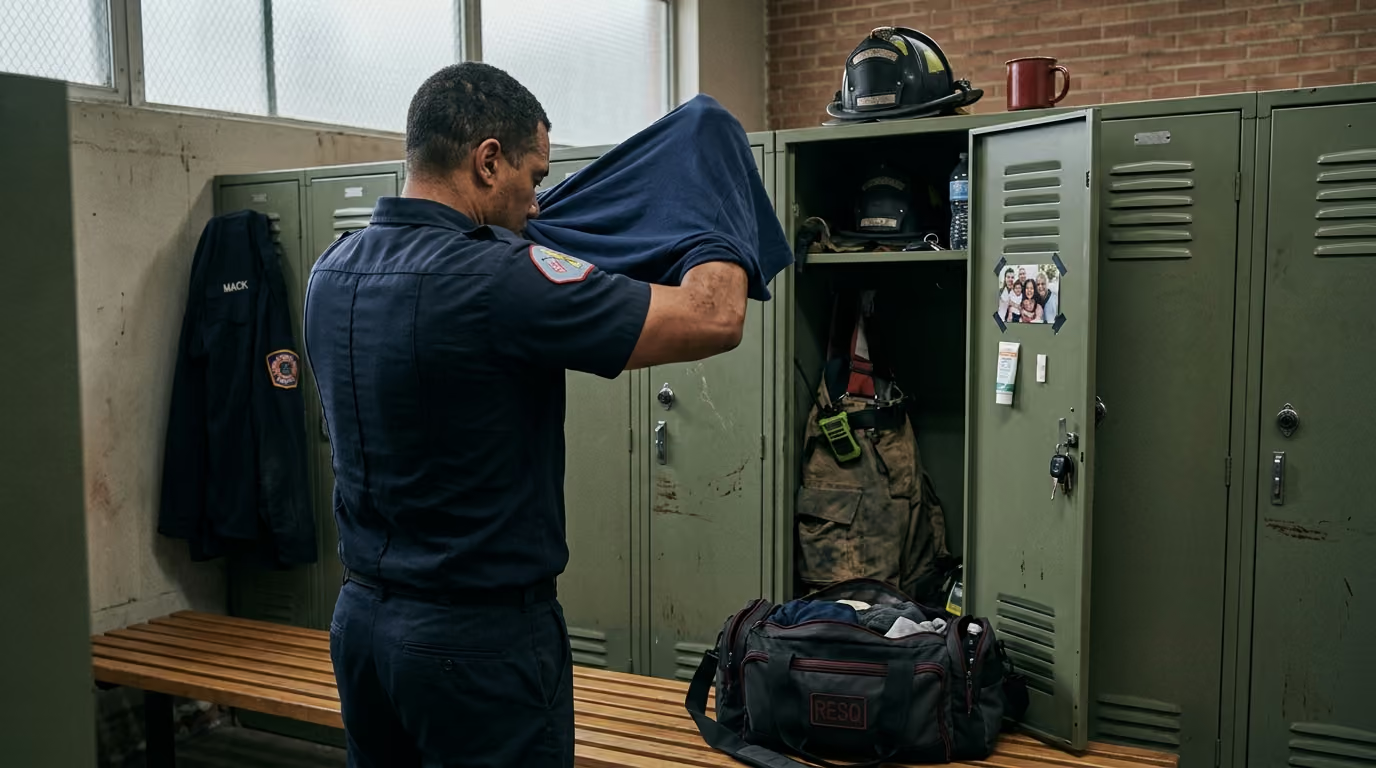

Four structured transition phases help shift workers decompress after duty, mitigate drowsy driving risks, and achieve restorative biological sleep between operational shifts.





Many shift workers search for how to fall asleep faster after a demanding shift or how to stop replaying calls when they walk through their front door. The physiological arousal required to perform emergency response, healthcare tasks, or night operations does not vanish the moment you clock out. This guide provides a definitive protocol for managing the physical, neurological, and domestic transition from operational readiness to restorative recovery.
Managing the handoff between work mode, home mode, and sleep mode requires treating departure from work as a multi-stage process rather than a single event. A structured transition lowers travel risks, protects daytime sleep, reduces domestic friction, and preserves long-term physical capability.
Human physiology operates on circadian patterns that regulate hormone secretion, body temperature, digestion, and cognitive alertness. Working outside the standard daytime window forces the nervous system to maintain vigilance when biological systems are primed for rest. To move from high alert to restorative sleep, you must progress through three distinct operational states.
Work mode demands sustained vigilance, rapid decision-making, and emotional containment. In this state, the sympathetic nervous system dominates, elevating heart rate and blood pressure while suppressing digestive activity. Environmental factors such as bright artificial lighting, radio traffic, sirens, alarms, and interpersonal urgency maintain high neurological arousal.
The primary goal of work mode is not relaxation. It is the preservation of safety and task execution until your responsibilities are formally transferred to relieving personnel.
Home mode serves as an intermediate buffer between operational duty and biological rest. It encompasses the commute, changing out of uniform, personal hygiene, hydration, light nourishment, and initial contact with family members.
A common operational error is treating home mode as an additional work shift. Moving directly from high-stakes professional tasks into heavy domestic chores, administrative tasks, or emotionally charged conversations prolongs sympathetic activation. This dynamic compromises the recovery window.
Sleep mode begins when problem-solving ceases, external stimulation is systematically removed, and the biological environment is prepared for rest. This state requires parasympathetic nervous system dominance, a drop in core body temperature, and minimal sensory input.
Consensus guidelines from occupational health researchers show that workers need approximately 11 hours between shifts to secure seven hours of restorative sleep while accounting for commuting, hygiene, and domestic necessities. Sleep mode must be treated as a non-negotiable operational necessity rather than discretionary free time.
The biological impact of irregular working hours is well documented across occupational medicine literature. Shift work, defined as work scheduled outside the traditional 7:00 a.m. to 6:00 p.m. window, affects nearly 30 percent of the workforce. The resulting misalignment between internal circadian rhythms and external demands produces measurable changes in sleep architecture, cognitive performance, and metabolic health.
Data published by the National Institute for Occupational Safety and Health (NIOSH) indicates that 37.6 percent of workers report short sleep duration, representing over 54 million individuals. Among night-shift workers specifically, the rate of short sleep rises to 61.8 percent, compared with 35.9 percent for standard day-shift personnel.
Research also demonstrates that sleep quality degrades substantially during night assignments:
A systematic review and meta-analysis confirmed that shift schedules are associated with higher odds of sleep disturbances, demonstrating an odds ratio of 1.42 across occupational populations. The highest risk profiles occur during rapidly rotating shifts and compressed night blocks.
Occupational risk also increases during non-standard hours. NIOSH analyses show that workplace accident and error rates rise by 15 percent on evening shifts and 28 percent during night shifts compared with day assignments. Understanding these elevated baselines is vital for building realistic protocols that protect worker health across long careers. For broader systemic strategies, see our analysis on shift work sleep recovery frameworks.
First responders, including structural and wildland firefighters, police officers, paramedics, and emergency dispatchers, operate under conditions that compound standard shift-work fatigue. In these environments, biological circadian disruption merges with acute psychological stressors, high physical loads, thermoregulatory strain, and unpredictable call volume.
Emergency personnel rarely finish a shift on a gentle, predictable deceleration curve. A crew might manage a multi-casualty collision, an escalating structural fire, or a violent confrontation minutes before relief arrives. This creates a state of hypervigilance where circulating catecholamines like adrenaline and noradrenaline remain elevated long after operational hazards have cleared.
Physical load also alters recovery needs. First responders frequently accumulate substantial muscular fatigue, spinal compression, and dehydration from carrying heavy duty gear, structural turnout gear, or medical equipment. Attempting to initiate sleep without addressing fluid deficits or physical tension frequently leads to fragmented rest and muscle cramping.
Extended operations require specialized resets between dynamic tasks. Implementing targeted strategies such as an active post-incident reset helps clear acute sympathetic arousal before heading home. Moving safely from duty to rest requires recognizing that the physical and emotional residue of the shift must be systematically processed.
Executing an effective transition requires breaking the post-shift window into four distinct phases. Each phase has specific operational objectives and clear exit criteria.
The transition begins before leaving the duty station. Attempting to rush out the door immediately after a high-tempo shift leaves cognitive loops open and prevents the nervous system from initiating down-regulation.
Complete a deliberate operational release before departing:
The commute represents one of the most hazardous components of the shift-work cycle. Travel should be treated as a safety-critical phase of duty rather than casual downtime.
The primary objective during Phase B is safe transit while initiating light and sensory management:
The first 20 to 30 minutes at home establish the biological trajectory for your sleep session. The objective is to remove occupational contaminants, normalize body temperature, and lower neurological arousal.
Follow a standardized domestic arrival sequence:
Phase D represents the definitive boundary where waking activities terminate. The goal is rapid sleep onset within an environment optimized for daytime biological recovery.
Execute the pre-sleep environmental protocol:
Drowsy driving is a critical occupational hazard for shift workers. Fatigue alters reaction time, visual tracking, speed maintenance, and hazard awareness in a manner comparable to blood alcohol toxicity.
Data from the National Highway Traffic Safety Administration (NHTSA) indicates that drowsy driving contributes to at least 91,000 police-reported crashes annually in the United States, resulting in 50,000 injuries and 800 fatalities. NIOSH and sleep medicine authorities emphasize that these numbers represent a conservative baseline due to reporting limitations.
A controlled driving study evaluating post-night-shift performance revealed significant travel hazards:
To manage commute risks, implement strict travel rules:
If you feel compromised before leaving the station, take a structured 15 to 20 minute nap in a dark, quiet bunk room. Keep the nap under 30 minutes to avoid deep slow-wave sleep and severe sleep inertia. Allow 10 minutes of complete wakefulness and light exposure before operating a motor vehicle.
Establish a clear contingency protocol for extreme exhaustion:
Avoid long, monotonous highway stretches when fatigued. Monotonous driving conditions accelerate micro-sleep episodes. Choose routes with lower speeds, reliable pull-off locations, and predictable traffic patterns whenever feasible.
Shift work places continuous strain on household dynamics. Domestic conflict often occurs when family members expect normal daytime social engagement from a worker who is biologically exhausted. Managing family communication must be approached as a structured recovery intervention.
Effective domestic integration requires pre-shift agreements, brief structured check-ins, and clear boundary management.
Establish schedule parameters with family or housemates before a shift block begins. Ensure everyone understands:
Workers often struggle between two domestic extremes: isolating entirely or attempting to jump directly into heavy family discussions. The most effective approach is a brief, supportive connection followed by protected space.
Spend five to ten minutes connecting with family upon arrival. Provide a clear status update: "I am safe and glad to see you, but my shift was demanding and I need to enter recovery mode now." Postpone major relational decisions, financial planning, or behavioral corrections with children until after you have obtained restorative sleep.
Create a shared system for categorizing household events during sleep windows:
Agency leaders seeking to understand the institutional side of these stressors can review our analysis on fatigue reporting baselines and organizational rest.
Digestive capability decreases during nighttime hours and immediate post-shift windows. Gastric emptying slows, insulin sensitivity drops, and the secretion of digestive enzymes declines. Eating large, heavy, or poorly timed meals before daytime sleep causes gastrointestinal reflux, elevated core body temperature, and frequent sleep interruptions.
Nutritional strategies should prioritize easily digestible fuel that supports satiety without placing metabolic burdens on the gastrointestinal tract.
Maintain consistent fluid intake throughout the active shift rather than attempting to catch up on fluid deficits right before bed. Drinking large volumes of water immediately prior to sleep leads to nocturia and sleep fragmentation.
Consume 200 to 300 milliliters of water or an electrolyte solution with low sugar content during your home arrival sequence. If waking up with dry mucous membranes is an issue, run a cool-mist humidifier in the bedroom rather than overconsuming fluids.
Avoid greasy, heavily fried, or spicy foods before bed. High-fat meals delay gastric clearance and elevate metabolic heat production, interfering with the natural drop in body temperature required for deep sleep.
Opt for light, balanced combinations containing complex carbohydrates and lean protein:
If you experience acid reflux, finish all food intake at least 45 minutes before lying flat. Elevate the head of your mattress slightly if symptoms persist.
Caffeine is an adenosine receptor antagonist that masks sleep pressure. NIOSH and sleep medicine consensus guidelines recommend stopping caffeine consumption at least five to eight hours before your target sleep time. For individuals with slow caffeine clearance genetics, this window should extend to ten hours.
Alcohol should never be used as a sleep aid. While ethanol exerts a mild sedative effect that may reduce sleep latency, it severely disrupts sleep architecture:
Eliminate all alcohol consumption for at least three hours before attempting recovery sleep.
Light is the primary zeitgeber, or environmental cue, regulating the human suprachiasmatic nucleus. Managing light exposure, ambient noise, and thermal conditions dictates the depth and continuity of daytime rest.
Implementing strict environmental boundaries allows shift workers to simulate nighttime biological conditions during daylight hours.
American Academy of Sleep Medicine (AASM) guidelines emphasize light restriction in the morning for night-shift personnel:
Core body temperature naturally declines during biological night, reaching its lowest point approximately two hours before habitual waking. Daytime sleep occurs when core body temperature is biologically programmed to rise.
Assist thermal down-regulation through environmental controls:
Daytime environments present unpredictable, high-frequency noises such as lawnmowers, construction, delivery vehicles, and domestic foot traffic. These acoustic spikes activate startle reflexes and trigger micro-arousals even if they do not cause full waking.
Deploy continuous, broad-spectrum sound masking:
To build structured long-term capability across shift rotations, see our operational guidance on managing duty fitness through autoregulation.
Extended operations, major incidents, and mandatory double shifts can leave personnel in a state of severe physiological depletion. Complex multi-step decompression routines fail when cognitive fatigue is extreme.
When exhaustion is severe, execute the five-step Minimum Viable Transition Routine:
This streamlined protocol strips away non-essential tasks while preserving essential safety, biological down-regulation, and sleep protection.
Transition requirements shift depending on your position within a work block. A routine that works before the first night of a tour will not suit the final shift or the transition back to daytime life.
Adjust your recovery approach across the schedule cycle:
Entering a night block requires building up sleep reserves and delaying your circadian phase:
Consistency is the primary objective during consecutive night assignments:
Transitioning from the final night shift back to a standard daytime schedule requires careful management to prevent acute sleep deprivation:
Consensus statements from the Working Time Society recommend at least two full night-sleep periods between shift blocks to clear
accumulated biological fatigue. NIOSH guidelines suggest planning one to two full rest days after five eight-hour shifts or four ten-hour shifts, and at least two days off after three consecutive 12-hour assignments.
On rest days, utilize "no-alarm days" where you allow your body to wake spontaneously. Spend time outdoors during daylight hours to reinforce natural circadian alignment and support overall career longevity and resilience.
Post-shift protocols improve recovery efficiency, but they cannot eliminate the physiological strains of chronic sleep restriction or severe operational stress. Recognizing the limits of self-management is essential for personal safety and operational capability.
Never operate a vehicle, handle dangerous machinery, or return to duty when experiencing extreme cognitive fatigue, involuntary micro-sleeps, or physical instability. If you find yourself repeatedly nodding off during travel, pull over immediately to a safe, well-lit location and contact your agency, a transport service, or a family member.
Structured transition routines cannot resolve underlying medical sleep disorders or psychological trauma. Consult a licensed medical provider, board-certified sleep specialist, or occupational psychologist if you experience:
Professional evaluation can identify underlying conditions such as Shift Work Sleep Disorder (SWSD), sleep apnea, or clinical mood disorders, ensuring you receive appropriate evidence-based interventions.
Establishing an effective post-shift transition routine requires deliberate, step-by-step implementation. Use this practical checklist to refine your recovery protocol over the next seven days:
Building a reliable post-shift transition routine protects your physical health, supports clear decision-making, and sustains your professional capability throughout a demanding career.
Stay connected for research-led guidance on duty fitness, shift-work sleep, injury recovery, stress, nutrition and career longevity. Practical ideas for first responders who want to stay capable on the job, recover well and protect their health for the long run.



Read practical guidance on first responder fitness, recovery, sleep, nutrition and resilience for demanding work and a long, active career.
read the blog



