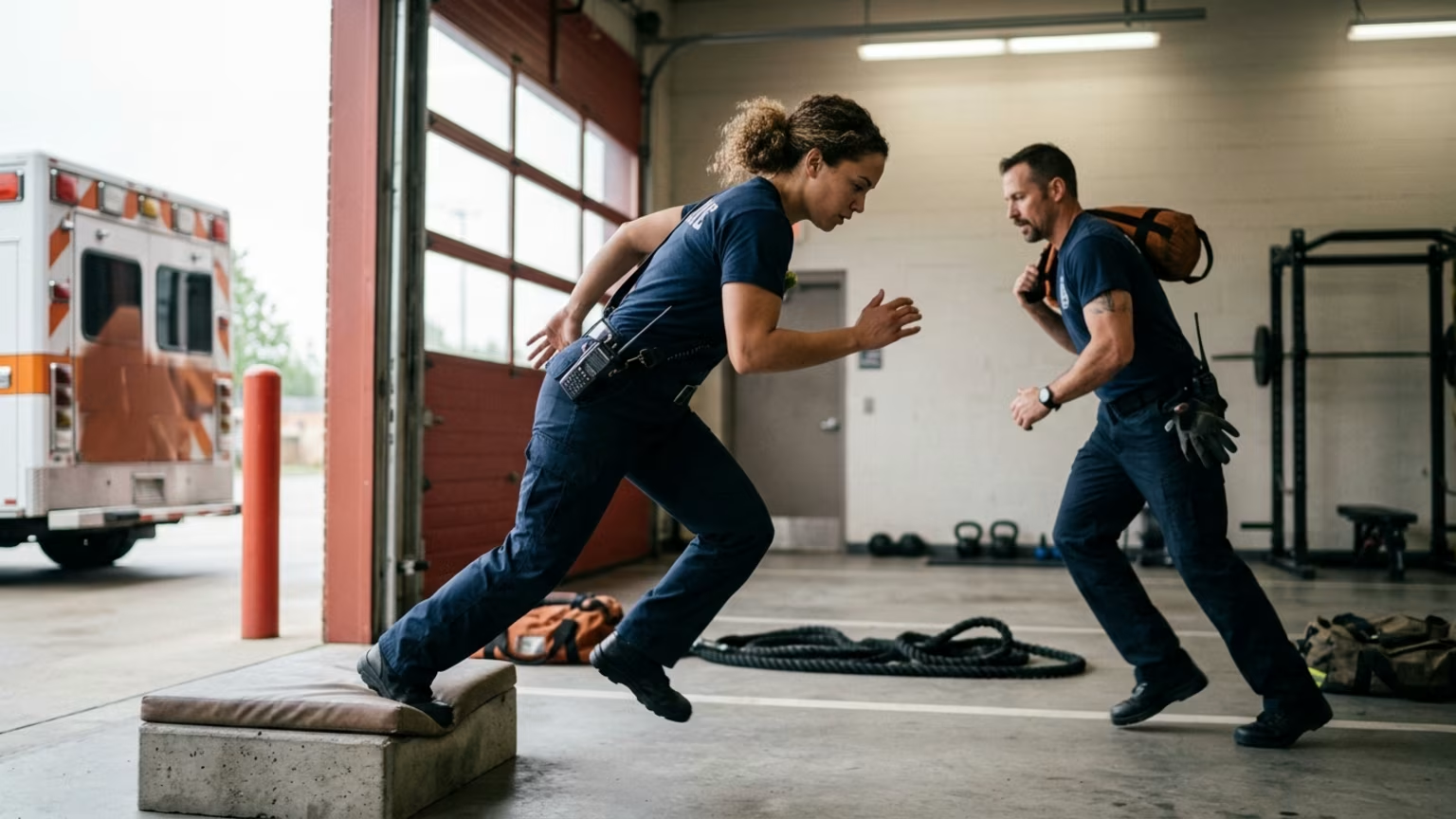

First responders face severe occupational physical demands from prolonged sitting, heavy gear and patient handling. Learn how to build a phase-based mobility routine.





The physical reality of emergency service involves moving rapidly between two absolute extremes. Personnel frequently sit in vehicles or station quarters for extended periods without meaningful movement. An emergency call then forces an immediate transition to intense, high-force physical activity. According to clinical pain assessments in first responders, this combination creates specific occupational movement demands that standard fitness programs ignore.
Police officers transition rapidly from a seated patrol position directly into physical confrontation or foot pursuit. Firefighters manage heavy equipment carries while simultaneously climbing stairs and navigating compromised structures. Emergency medical professionals repeatedly navigate confined spaces to manage complex patient transfers. These distinct environmental constraints dictate the actual physical requirements of the job.
The National Institute for Occupational Safety and Health provides clear guidance on these exact occupational hazards. The agency explicitly identifies manual patient handling and lifting as major causes of work-related musculoskeletal disorders. This finding makes patient-transfer technique, proper equipment availability and physical readiness incredibly relevant to modern emergency work. The repetitive nature of moving patients in unpredictable environments magnifies the mechanical load on the human spine.
Generic flexibility routines simply cannot compensate for the mechanical demands of repeated heavy lifting. A structured readiness approach must integrate proper lifting equipment and broad ergonomics training alongside basic physical preparation. Mobility work represents just one layer of a complete injury-reduction strategy. Developing structured physical capacities tailored specifically to the job is essential for long-term career survival.
The modern shift environment applies unique stress to the nervous system and the musculoskeletal structure. Sitting with heavy duty gear alters the body's natural resting posture for hours at a time. Prolonged static holds cause tissues to adapt slowly to these shortened, unnatural positions. This chronic static exposure fundamentally changes how the nervous system coordinates basic movement patterns.
When an emergency response is required, the autonomic nervous system shifts rapidly into a sympathetic state. A sudden flood of adrenaline temporarily masks mechanical stiffness and localized tissue discomfort. Personnel routinely push past the physiological limits of their cold tissues to complete the immediate operational task. The nervous system prioritizes immediate survival and task completion over safe tissue loading.
This rapid transition under heavy load impacts daily physical function long after the shift ends. Responders gradually lose the ability to access comfortable, neutral body positions during their off-duty hours. Chronic stiffness becomes a structural adaptation to the job rather than a sign of generic aging. This autonomic reality explains why many injuries occur during routine movements instead of maximal physical efforts.
Protecting long-term physical capability requires intentional routines that deliberately downshift the nervous system. Personnel must actively restore their baseline mobility before the next demanding shift begins. Addressing this physical toll involves adjusting training to readiness rather than pushing through continuous fatigue. Ignoring the physiological transition from duty to rest guarantees eventual burnout.
First responders need movement preparation matched directly to their actual shift exposures. The ultimate goal is restoring comfortable access to the physical positions personnel repeatedly use on duty. A practical routine must fit within the unpredictable phases of an active, chaotic shift. The following protocols outline how to manage occupational physical wear before, during and after work.
A pre-duty routine should be brief, active and specific to the expected work. This phase focuses on active physical preparation instead of exhausting static flexibility exercises. The primary goal is preparing the joints and tissues for the specific demands of the upcoming shift. A reasonable structure begins by simply matching movement patterns to the required daily tasks.
Start by raising the core body temperature with easy walking, marching or controlled step-ups. Open the hips and ankles using controlled split-stance movements and supported bodyweight squats. Prepare the trunk for load through slow rotational movements and anti-rotation bracing exercises. Rehearse common duty positions by alternating half-kneeling stances and standing up without pushing aggressively through one side.
Preparing safe carrying mechanics is also critical for daily duty readiness. Personnel should practice light carries or unloaded marching with their ribs stacked neutrally over the pelvis. Finally, responders should perform a few controlled bends, turns and step-ups while wearing their actual duty equipment. Checking gear tolerance helps identify movement restrictions caused by heavy uniform items before the first call drops.
The pre-duty routine must always adapt to the specific operational assignment. A patrol officer might focus heavily on hip mobility and repeated stand-to-run transitions. An EMS crew might prioritize kneeling mobility, trunk control and safe patient-transfer positions. Firefighters might spend more time preparing their ankles, shoulders and loaded step patterns for heavy equipment use.
Break-time mobility must remain low-fatigue and easy to abandon immediately when a tone drops. The primary purpose is interrupting static posture and restoring access to commonly used work positions. A practical five-minute reset should never create physical fatigue before a high-stakes emergency response. Prolonged sitting and abrupt transitions from inactivity to intense exertion require constant, low-level physical management.
A mid-shift reset can start with simple standing and walking after prolonged vehicle time. Responders can add several controlled hip hinges and alternating half-kneeling hip stretches to open the lower body. Ankle rocks and gentle calf raises help maintain lower-body circulation during long, stationary periods. Gentle thoracic rotations and relaxed breathing help calm the nervous system briefly before returning to active duty.
These short movement breaks must complement proper manual handling protocols rather than replace them. Movement breaks never substitute for safe equipment use or established team-handling procedures in the field. The National Institute for Occupational Safety and Health specifically identifies manual patient lifting as a severe injury risk. Movement breaks support physical readiness, while mechanical lifting aids and proper policies handle the heavy occupational load.
Post-duty mobility requires adjusting the physical intensity to match the reality of the completed shift. A rigid post-shift template often fails because emergency demands vary wildly from day to day. Responders must use this specific phase to downshift their nervous system and carefully assess any physical symptoms. Using a complete transition routine helps personnel successfully switch off from high-alert duty states.
A firefighter who performed repeated loaded stair climbs might need gentle ankle and hip work. An EMS clinician might prefer easy walking and a gradual return from kneeling after repeated patient transfers. A police officer finishing a long vehicle patrol might benefit most from comfortable trunk and shoulder motion. The focus must remain heavily on light, unloaded movement rather than aggressive end-range stretching.
A practical post-duty sequence should begin with five to ten minutes of easy, unstructured walking. Personnel can follow this baseline activity with comfortable hip, ankle and thoracic movements. Gentle breathing with a longer, controlled exhale helps calm the sympathetic nervous system directly. Finally, responders should complete a short symptom check covering the back, neck, knees and hips.
Pain that is severe, rapidly worsening or associated with numbness requires immediate professional clinical assessment. Mobility routines must never be used to push through a suspected acute injury or conceal symptoms. Personnel must consult an appropriately qualified clinician when physical symptoms persist or begin to affect fitness for duty.
Rehearsing safe movement for unpredictable emergency scenarios requires targeted physical preparation rather than basic static stretching routines. Generic fitness advice that assumes a predictable nine-to-five schedule consistently fails active-duty first responders, but implementing adaptable occupational mobility systems becomes much more effective when Rescuris provides clear, evidence-led guidance.
Rescuris publishes evidence-aware guidance for firefighters, police officers, paramedics and other first responders on fitness, recovery, sleep, nutrition, stress resilience and long-term capability.






Read practical guidance on first responder fitness, recovery, sleep, nutrition and resilience for demanding work and a long, active career.
read the blog
