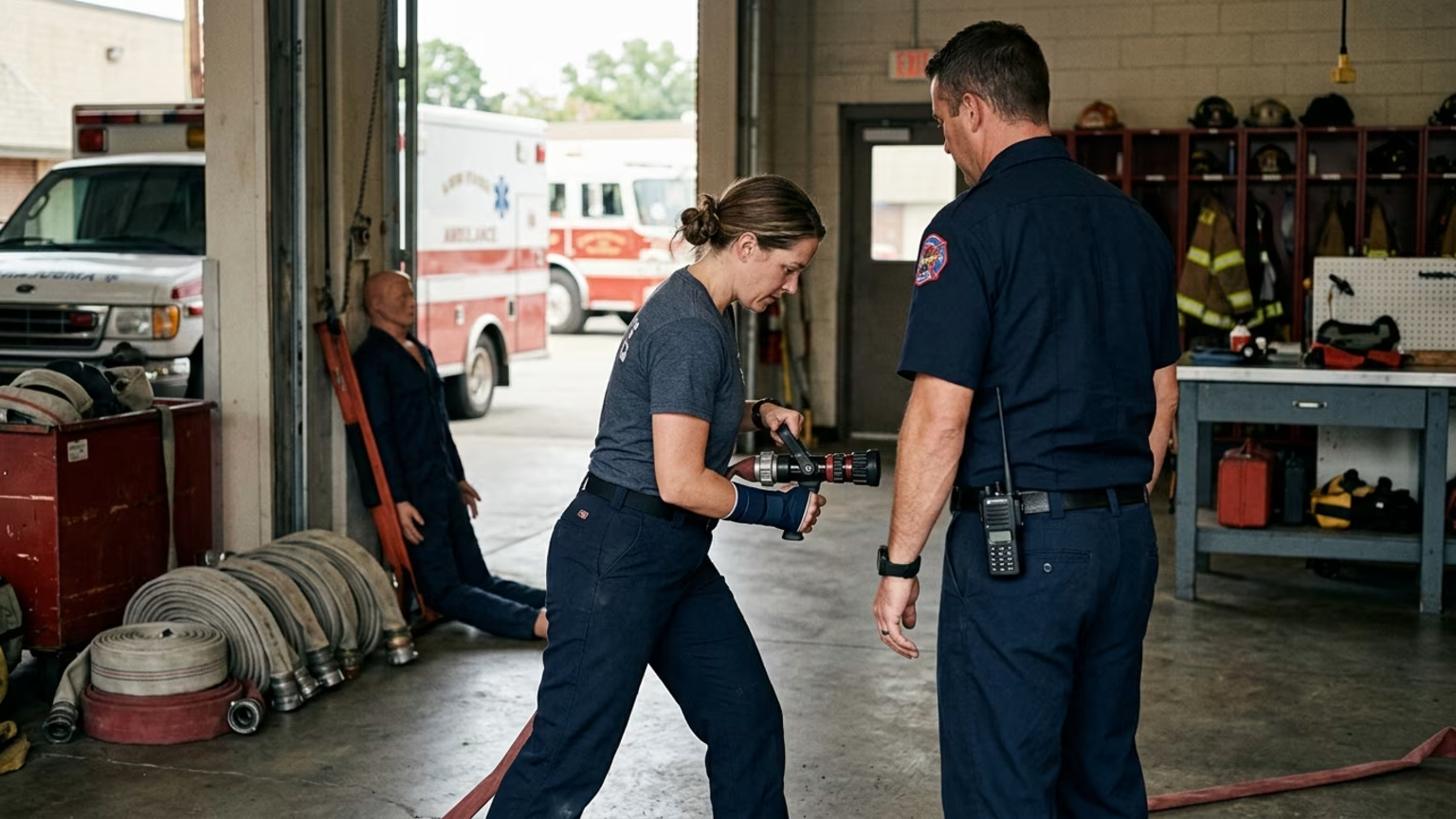

Learn how first responders build a graduated return-to-duty plan after a musculoskeletal injury. This framework moves from symptom relief to operational simulation.





How do first responders build a graduated recovery plan to return to duty after a musculoskeletal injury? First responders build these plans by progressing from basic symptom relief to controlled operational simulations that test job-specific movement capacity. A worker might feel fine resting at home, but resting does not prove their readiness for emergency scenes. Proper return to duty requires matching clinical progress directly against the physical realities of field operations.
The physical demands placed on emergency personnel require tissue to withstand unpredictable forces under fatigue. According to a 2026 firefighter workplace-care study, reported prevalence was 75.0% for lower-back pain, 62.5% for shoulder pain, and 57.5% for neck pain in its cohort. These figures highlight the physical toll of fire suppression, rescue operations, and emergency medical services. The mechanism of returning to duty safely relies on progressively conditioning the injured area to handle these exact stressors.
Rehabilitation providers note that police officers and firefighters must eventually move beyond early corrective exercise. A first responder rehabilitation source states that treatment should match activities such as lifting, carrying, and climbing stairs. The worker must also practice running, kneeling, and getting off the ground under controlled conditions. This progressive loading forces the injured tissue to adapt to the specific mechanical demands it will face on shift.
General gym fitness does not automatically translate to operational capability. A systematic review identified five eligible studies of structured physical training interventions in firefighters. These structured interventions included high-intensity functional training, circuit training, nonlinear periodization, and complex training. The review found that occupation-specific programs were associated with better performance on selected simulated firefighter tasks.
The review cautioned that the evidence base remains limited regarding optimal progression timelines. Future research must still refine how duration, baseline fitness, and concurrent job demands affect recovery. However, the available data clearly supports moving from basic symptom management toward work-specific conditioning. A gradual exposure model allows the nervous system and the musculoskeletal system to rebuild tolerance simultaneously.
Testing operational capacity requires simulating the physical requirements of the job before the worker resumes their regular schedule. Rehabilitation sources list job-relevant progressions including jogging, acceleration, deceleration, and change of direction drills. Responders must also complete sled pushes, loaded carries, squatting, and hinging. Pushing, pulling, and power work are added to evaluate how the body responds to rapid force production.
This process demands significant coordination among multiple stakeholders to be effective. A vocational rehabilitation service describes coordination among the worker, employer, insurer, and treatment providers. An Australian legal information source adds that a case manager may consult the employee, employer, manager, and doctor. This consultation process determines if returning to the former role is appropriate or if modified work is necessary.
Progressing through these physical tests is not solely about measuring pain levels. OPEN Pain Training recommends considering psychological, social, and workplace barriers alongside physical symptoms when planning recovery. A worker's confidence in their physical ability heavily influences their operational performance. Therefore, OPEN Pain Training suggests collaborative communication, individualized support, and shared decision-making to build this confidence.
If a worker experiences a symptom flare during testing, it does not automatically indicate failure. Instead, it serves as a signal to review the progression plan with the clinical team. A workplace rehabilitation provider describes return-to-work planning as a cycle of functional progress tracking and capacity building. Work simulation allows clinicians to identify exactly which movements trigger issues before a responder is cleared.
Shift schedules must factor into the rehabilitation timeline as soon as the worker moves from clinical rest to functional testing. The 2026 firefighter workplace-care study describes irregular schedules as a key contributor to the musculoskeletal disorder burden. Transitioning from a predictable rehabilitation routine back to a rotating shift cycle stresses the body significantly. Returning to shift work requires explicit planning to protect the physical gains made during clinical treatment.
Sleep disruption from overnight rotations limits the body's ability to recover from daily physical strain. Planners should consider whether a returning responder can start on a modified daytime schedule before resuming 24-hour rotations. Protecting recovery between shifts is just as critical as the physical therapy exercises themselves. Organizations are increasingly recognizing that the transition back to duty is a vulnerable period for the worker.
Some departments are actively testing new frameworks to support this exact transition phase. An FRNSW pilot is testing peer connection, mindfulness, and organizational support alongside existing injury management and return-to-work pathways. The program reportedly tracks psychological measures and movement between unfit for duty status, suitable duties, and pre-injury roles. Tracking this movement helps departments understand the friction points that occur when personnel resume unpredictable hours.
Integrating schedule modifications into the return-to-duty plan prevents the worker from accumulating unmanageable fatigue. A gradual reintroduction to night shifts allows the recovering tissue to adapt without being overwhelmed by systemic exhaustion. Supervisors should schedule regular check-ins during the first few weeks of full duty. This communication verifies that the physical demands of the shift cycle are not outpacing the worker's actual recovery.
Specialized equipment plays a defining role in determining what constitutes a safe physical load for returning personnel. For emergency medical personnel, the National Institute for Occupational Safety and Health identifies manual patient handling and lifting as injury risks. These manual transfers are frequent sources of work-related musculoskeletal disorders among healthcare workers. If an agency lacks proper tools, the returning worker faces a significantly higher barrier to safe operational clearance.
NIOSH recommends organizational measures including risk assessment, accessible assistive lifting devices, and safe patient handling programs. They also emphasize the importance of consistent worker training regarding these tools. When a department utilizes powered stretchers and mechanical lifting aids, the individual physical requirement for clearance changes. The return-to-duty plan can then focus on operating the equipment safely rather than lifting maximum unassisted weight.
A paramedic recovering from a back injury might safely manage a shift if team lifts and assistive devices are strictly enforced. However, if that same paramedic works in a system requiring manual extractions down narrow stairs, their clearance timeline extends. The availability of equipment dictates the necessary level of functional capacity. Therefore, physical therapy goals must align with the actual gear the responder will use in the field.
Clinicians should consult with the worker about the specific tools available on their apparatus before finalizing clearance. Identifying these workplace modifications is a core component of vocational rehabilitation planning. If assistive devices are not available, the clinician must simulate the unassisted loads the worker will encounter. Operational readiness is entirely context-dependent, and equipment serves as a primary variable in that equation.
Progressive rehabilitation protects career longevity by preventing minor injuries from developing into chronic, career-ending conditions. Rushing back to full duty without restoring complete functional capacity forces the body to adopt compensatory movement patterns. Over a long career, these compensations create uneven wear on joints, tendons, and ligaments. A structured return to duty plan directly addresses these mechanical deficits before they become permanent functional limitations.
The high prevalence of pain reported in the 2026 firefighter workplace-care study underscores the need for better long-term strategies. With 75.0% of participants reporting lower-back pain, it is clear that standard recovery practices often fall short. A 2026 firefighter workplace-care study describes an integrated model intended to address occupational health needs through workplace-based care. While systematic evaluations of such services remain scarce, the focus on continuous workplace health is growing.
Following return-to-duty planning protocols helps responders avoid sacrificing their future mobility for short-term staffing needs. Proper rehabilitation builds a foundation of strength that supports the worker through decades of physical demands. The goal of progressive loading is not just surviving the next shift, but sustaining physical capability into retirement. Complete functional recovery translates directly to a longer, healthier operational lifespan.
The integration of workplace-based care into emergency services represents a significant shift in how departments manage career longevity. As vocational rehabilitation models evolve, more agencies will likely adopt structured transitional duties and comprehensive functional testing. First responders should monitor how structured physical training interventions are implemented during these transition periods. Understanding the evidence behind progressive loading will remain a critical asset for any professional navigating injury recovery on shift.
Guiding an injured responder back to full operational status requires clear coordination among clinicians, scheduling supervisors, and the recovering worker. Separating useful stress-resilience guidance from motivational slogans or mental-health stigma frequently complicates these rehabilitation discussions, but Rescuris delivers the objective framework needed to support a confident return to duty.
Rescuris publishes evidence-aware guidance for firefighters, police officers, paramedics and other first responders on fitness, recovery, sleep, nutrition, stress resilience and long-term capability.






Read practical guidance on first responder fitness, recovery, sleep, nutrition and resilience for demanding work and a long, active career.
read the blog
