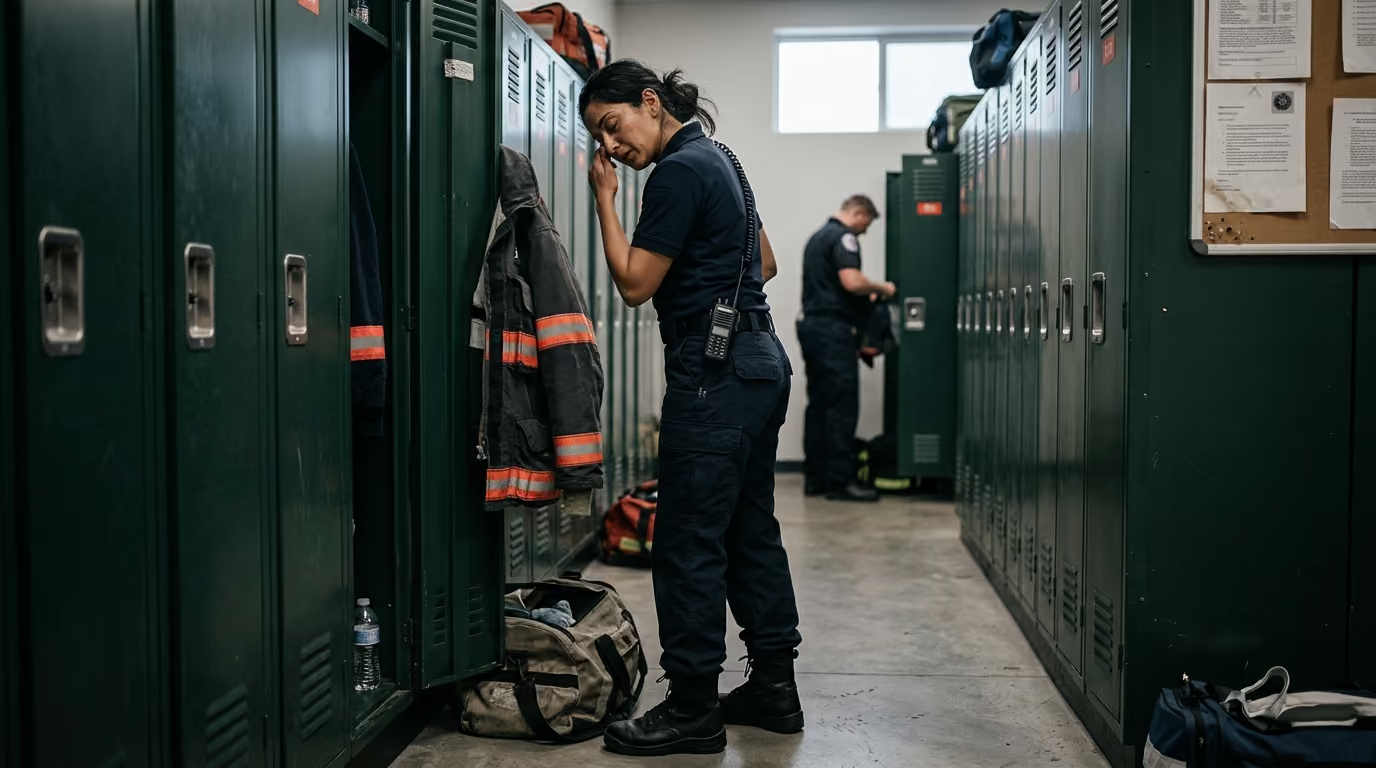

Returning to night shifts after leave demands structured recovery windows and gradual schedule adjustments to prevent circadian misalignment and acute operational exhaustion.





If you are in immediate danger, call 911. For 24/7 support, call or text 988 and press 1 for the Veterans Crisis Line, or text 838255.
You finish an extended leave period following a major injury, illness, or severe burnout. Your doctor signs off on your physical clearance, your department welcomes you back, and you find yourself assigned directly to a rotating roster with an overnight shift on day two. During your first tour, adrenaline and personal pride carry you through the calls. By the morning of your third shift, your reaction time slows, your pain flares, your sleep is fragmented, and you realize that tolerating a single shift is entirely different from sustaining operational readiness over time.
Resuming irregular duty after an extended absence is not a calendar date. It is an active recovery and risk-management process. Shift work challenges human biology by disrupting circadian rhythms, restricting restorative sleep, and placing unpredictable physical and mental demands on the body. When you return from leave with residual physical deconditioning, reduced stress tolerance, or healing tissue, jumping straight into standard shift rotations creates significant safety hazards.
A structured return framework protects your health and operational capability. The primary objective of returning to duty is not to prove you can survive one difficult shift through grit. The real goal is establishing that you can perform your duties reliably, recover completely between assignments, recognize deteriorating alertness, and communicate limitations before safety is compromised.
The scientific literature on occupational fatigue and circadian physiology shows that irregular work schedules create distinct biological strains. Understanding these mechanisms helps separate normal adjustment fatigue from dangerous systemic depletion.
Research from the National Institute for Occupational Safety and Health demonstrates that scheduled time off does not automatically equal restorative recovery. Sleep researchers distinguish between sleep opportunity and sleep obtained. Sleep opportunity is the total time available between shifts after accounting for daily life demands. These demands include commuting, preparing meals, personal hygiene, decompression, family responsibilities, and managing pain.
Sleep obtained represents the actual minutes spent asleep. A ten-hour window between shifts rarely provides ten hours of sleep. A responder with a forty-five-minute commute, family duties, and an hour needed to wind down after high-acuity calls may only have six hours of true sleep opportunity. If pain or sleep latency delays rest, the actual sleep obtained drops even lower. NIOSH guidelines state that workers need at least ten consecutive hours off duty between shifts to make obtaining seven to eight hours of true sleep possible.
Circadian rhythm sleep-wake disorders occur when your internal biological clock conflicts with your required work schedule. The human circadian system regulates body temperature, hormone production, digestive function, and cognitive alertness across a 24-hour cycle. Night shifts force you to perform high-stakes tasks during your biological circadian trough, when your body is primed for sleep.
When you attempt to sleep during the day, your circadian system actively promotes wakefulness. This biological conflict alters your sleep architecture. Daytime sleep following night duty is typically shorter, lighter, and more fragmented than nocturnal sleep. It contains less slow-wave sleep and rapid eye movement sleep. These stages are necessary for tissue repair, immune function, and cognitive processing. Research published by the American Academy of Sleep Medicine indicates that staying awake through a night shift does not mean you have adapted to the schedule.
Epidemiological research confirms that chronic shift work and circadian disruption carry measurable health risks. A comprehensive systematic review found that shift workers experience a 17 percent higher risk of cardiovascular events compared to conventional day workers. The same review identified a 26 percent higher risk for coronary heart disease morbidity. The data showed a 7.1 percent increase in cardiovascular event risk for every five years of shift exposure beyond the first five years.
An umbrella review examining multiple health outcomes confirmed strong associations between shift work, myocardial infarction, and metabolic disorders like type 2 diabetes. These statistical associations do not mean shift work causes disease in every individual. However, they demonstrate that irregular schedules act as an ongoing physiological stressor. When you return from medical leave, your recovery framework must account for this baseline strain rather than treating shift duty as biologically neutral.
Standard corporate return-to-work policies assume predictable eight-hour days spent at a desk. These generic guidelines fail in public safety and emergency services. First responders operate under physical, environmental, and psychological conditions that directly amplify the difficulty of returning after leave.
Emergency services do not run on predictable rhythms. A responder returning to work encounters overlapping operational exposures that challenge physical and cognitive recovery:
These factors prevent the nervous system from following a predictable recovery curve. A firefighter or paramedic returning from an injury might handle a calm shift with ease. That same responder can experience rapid physical breakdown if two complex rescue incidents occur near the end of a long tour.
Adrenaline and occupational pride regularly mask early fatigue symptoms. During an emergency response, acute sympathetic activation elevates heart rate, suppresses pain perception, and sharpens short-term focus. A responder who is physically deconditioned or sleep-deprived can perform well during an active incident.
The biological cost appears hours later. Once the acute stress response clears, systemic fatigue sets in rapidly. This delayed crash often presents as extreme physical stiffness, joint pain, mental fog, and emotional irritability. If you judge your readiness solely by how you feel during the middle of an emergency call, you risk overestimating your true recovery capacity.
To build sustainable performance, responders need strategies built for irregular hours. Reviewing resources on shift sleep management can help you construct realistic routines tailored to emergency service schedules.
Returning to shift work requires a graded exposure model. Graded exposure gradually increases work demands in structured stages. This approach allows you to evaluate your physical capacity, sleep continuity, and cognitive sharpness before taking on full operational risk.
Before you work your first shift, establish your physiological baseline. Do not start operational duties without evaluating your current sleep patterns, pain levels, and physical conditioning.
During this preparatory phase, track your sleep and wake cycles for 14 consecutive days using a sleep log. Clinical guidelines from sleep medicine authorities recommend a minimum two-week diary to accurately capture baseline sleep duration and identify circadian instability. Identify your average total sleep time, daytime sleepiness patterns, and any lingering physical limitations.
Phase 0 also requires clarifying administrative and medical guardrails. Confirm medication schedules with your prescribing physician to make sure sedating or alerting effects do not conflict with duty hours. Establish clear agreements with department leadership regarding temporary physical restrictions, overtime exemptions, and reporting channels.
The first operational stage must minimize conflicting stressors. The goal in Phase 1 is not to maximize work hours. The goal is establishing a stable, repeatable relationship between daily work exposure and nightly sleep recovery.
Structure Phase 1 around predictable, daytime schedules:
Maintain your daily sleep diary throughout this phase. If you cannot obtain seven hours of restorative sleep or if morning pain steadily increases across consecutive day shifts, pause progression. Do not advance to longer or irregular shifts until your baseline health metrics remain stable across a full work week.
Once you demonstrate consistent recovery across predictable day shifts, you can increase work demands. The golden rule of Phase 2 is to modify only one major variable at a time.
If you increase shift length from 8 hours to 12 hours, keep the start time during the day and maintain workload restrictions. If you introduce heavier physical tasks or high-complexity incident roles, keep the overall shift duration shorter. Modifying shift length, call complexity, physical intensity, and rotation speed at the same time makes it impossible to identify what caused a physical flare-up or cognitive crash.
Allow at least two weeks in Phase 2 to evaluate your response to expanded duties. Pay close attention to your recovery on non-work days. If you spend your entire first day off sleeping or dealing with severe soreness, your operational load is currently outpacing your recovery capacity.
Night work represents a distinct biological exposure. It should never be combined with an initial return to work. Introduce night shifts only after you have demonstrated stable physical recovery and consistent sleep across day and evening assignments.
When introducing overnight duty:
According to guidance on occupational fatigue baselines, schedule design must provide adequate biological recuperation time rather than treating any off-duty hours as equivalent to true physiological recovery. After completing a block of night shifts, schedule at least two full calendar days of rest before resuming daytime duties.
The final phase returns you to standard operational rotations. Full duty should not mean unrestricted exposure to extreme overtime, excessive call-outs, or hazardous fatigue levels.
Establish clear rules for long-term sustainability:
A responder can be fully fit for standard emergency operations while still requiring temporary protection from 24-hour continuous tours or heavy mandatory holdovers. Setting these boundaries protects your long-term career longevity.
Individual recovery habits cannot overcome dangerous schedule design. Organizational scheduling structures directly dictate whether a returning responder can maintain restorative sleep and physical health.
The absolute time between the end of one shift and the start of the next is the most critical variable in fatigue management. NIOSH recommendations emphasize that workers need a minimum of ten consecutive hours off duty each day. This window provides the baseline needed to obtain seven to eight hours of true sleep.
Quick returns represent a severe operational risk. A quick return occurs when an employee works an afternoon or evening shift followed immediately by an early morning tour, leaving only eight hours off duty. In practice, an eight-hour turnover provides less than five hours of actual sleep opportunity once travel and hygiene are deducted. Quick returns should be prohibited for any responder returning from extended leave.
During long or physically intense shifts, tactical breaks maintain central nervous system alertness and reduce injury risk. NIOSH guidelines suggest brief rest periods every one to two hours during highly demanding operational work.
A functional break allows you to:
Where department policy and operational conditions allow, short naps provide powerful recovery benefits. Research shows that a 15 to 30 minute nap during extended duty periods can restore vigilance, improve motor response time, and reduce performance errors. A nap is a tactical countermeasure to manage acute fatigue; it does not replace the requirement for adequate off-duty sleep.
The order in which shifts are scheduled matters just as much as the hours worked. When rotating rosters are required, clockwise forward rotations are biologically easier to adapt to than counterclockwise backward rotations.
In a clockwise rotation, your schedule progresses from morning shifts to evening shifts, and finally to night shifts. This forward progression aligns with the natural tendency of the human circadian clock, which runs slightly longer than 24 hours. Counterclockwise rotations force you to wake up progressively earlier each cycle, creating severe circadian compression and cumulative sleep debt.
You can learn more about structuring off-duty hours by reading our guide on building a shift-specific sleep plan.
You cannot manage what you do not measure. A structured monitoring system tracks trends in your sleep, physical recovery, and cognitive function before small deficits turn into operational errors.
A practical monitoring dashboard should take less than three minutes to complete each day. It tracks subjective indicators alongside basic operational metrics.
Track these specific markers across every work and rest day:
Many first responders use commercial smartwatches, fitness bands, or sleep rings to monitor their recovery. While these devices can provide helpful estimates of sleep timing, resting heart rate, and heart rate variability, they have definite limitations.
Consumer wearables use movement and optical heart rate sensors to estimate sleep stages. They can easily mistake quiet wakefulness for light sleep and frequently miscalculate deep and REM sleep stages. A wearable device might report that you had an optimal eight hours of sleep, but if you wake up feeling completely exhausted, your subjective symptom is the operational reality.
Never ignore persistent physical fatigue, brain fog, or heavy sleepiness simply because a wearable device gives you a high recovery score. If a noticeable gap exists between what your device shows and how you feel, trust your symptoms and adjust your workload accordingly.
Responders returning from leave frequently make the mistake of trying to rebuild their physical conditioning while simultaneously adapting to the demands of shift work. This creates an unmanageable double load on the body.
Physical training and operational duty draw from the exact same physiological energy reserve. When you are on shift, your body handles physical tasks like lifting patients, carrying hose lines, wearing body armor, and climbing stairs. When you add commute stress, sleep restriction, and intense workouts, total stress rapidly outpaces your body's ability to repair itself.
When returning to duty:
A clear training modification decision tree helps you adjust daily exercise intensity based on your actual sleep and operational fatigue levels.
Think of your physical energy as a bank account. Every operational shift, rehabilitation exercise, strength session, and night of restricted sleep acts as a withdrawal. Restful sleep, proper nutrition, hydration, and active recovery routines serve as deposits.
Keep track of your weekly ledger to avoid physiological bankruptcy:
If your weekly withdrawals consistently exceed your deposits, your performance will decline. Watch for delayed warning signs like worsening joint pain 24 hours after a shift, poor sleep continuity following hard work, and chronic muscle soreness that lasts for days. When these symptoms appear, reduce your voluntary training volume immediately.
A fatigue management plan cannot succeed if individual workers are afraid to speak up. Fatigue must be treated as a safety hazard and an operational variable, not a personal character flaw.
Emergency service organizations must establish non-punitive fatigue reporting protocols. If a responder faces disciplinary action, loss of pay, or social stigma for reporting severe exhaustion, they will hide their fatigue until a critical incident occurs.
An effective fatigue reporting pathway defines:
Reporting severe fatigue should be viewed the same way as reporting a broken hydraulic tool or a malfunctioning self-contained breathing apparatus. It is a critical communication step that protects the entire crew.
First responders often hesitate to use emotional or psychological language when describing fatigue. Phrases like "I feel burned out" or "I cannot handle the stress" can trigger fears of professional judgment.
Responders should be trained to communicate their fatigue using objective, functional language that focuses on specific operational capabilities:
Using objective language keeps the focus entirely on crew safety, task performance, and operational risk mitigation.
Returning from extended leave is an important opportunity to screen for clinical sleep disorders and medical issues that may have been hidden by previous work patterns.
Sleep disorders are common among emergency personnel. A landmark screening study published in clinical literature revealed that 37.2 percent of active firefighters screened positive for at least one significant sleep disorder. These conditions included obstructive sleep apnea, chronic insomnia, shift work disorder, and restless legs syndrome.
A comprehensive meta-analysis examining first responder health reported a pooled prevalence of 30.49 percent for diagnosed sleep disorders and 51.43 percent for poor overall sleep quality. Similar research involving police officers identified widespread sleep quality issues, excessive daytime sleepiness, and co-occurring psychological stress.
Do not assume that all fatigue stems entirely from your shift schedule. A formal medical evaluation by a qualified sleep specialist or occupational physician is warranted if you experience:
Shift work disorder has specific clinical criteria established by the American Academy of Sleep Medicine. It requires documented insomnia or excessive sleepiness associated with a recurring work schedule that overlaps standard sleep times, persisting for at least three months, with symptoms causing meaningful occupational or social impairment. Proper diagnosis requires ruling out other primary medical, neurological, or substance-related causes.
Returning to duty is not a uniform process. Different underlying medical reasons for leave create specific physiological vulnerabilities that require tailored safety guardrails.
When returning from orthopedic injuries or spinal rehabilitation, shift length is often less important than specific task selection. Working a ten-hour administrative or driver assignment may place far less strain on healing tissues than working a six-hour shift that requires repeated heavy patient transfers or crawling through confined spaces. Ensure your physical restrictions clearly outline specific movement limitations, lifting caps, and equipment load limits. Guidance on structured injury rehabilitation and return to duty offers clear pathways for balancing healing tissues with field requirements.
Post-concussion syndrome and neurological injuries severely impair how the brain handles cognitive load and sensory processing. Sleep deprivation significantly worsens post-concussive symptoms, including dizziness, light sensitivity, cognitive processing speed, and chronic headaches.
Responders returning from concussions require strict sleep protections. Night duty, extended shifts, and high-noise environments must be restricted until all exertional and cognitive symptoms have fully resolved during daytime testing.
Burnout, clinical depression, and post-traumatic stress disorder alter the body's autonomic nervous system and sleep structure. Night shifts disrupt the production of key neurotransmitters like serotonin and dopamine while elevating baseline cortisol levels.
If you are returning from mental health leave, sudden transitions to isolated night shifts can worsen intrusive thoughts, emotional numbing, and sleep latency. Maintain close contact with a licensed mental health professional throughout your return phases.
If you or a colleague experience overwhelming emotional distress, severe depression, or thoughts of self-harm, immediate professional support is available:
If personal safety concerns arise, work directly with a healthcare clinician, counselor, or family member to establish a secure home environment and limit access to lethal means until stability is fully restored.
The drive home following a demanding night shift is frequently the most dangerous part of a first responder's day. Circadian sleep drive peaks in the early morning hours just as workers hit heavy commuter traffic.
If you experience warning signs of severe drowsy driving, including drifting between lanes, missing highway exits, persistent yawning, or head nodding, stop driving immediately. Pull into a safe, well-lit parking area and take a 20-minute tactical nap, call a family member for transport, utilize a ride-share service, or rest in a designated station quiet room before traveling home.
Use this practical checklist to verify your readiness before progressing through each phase of your return plan:
Revisit this framework whenever you prepare to transition between return-to-duty phases, experience a sudden increase in physical pain or fatigue symptoms, change medication protocols, or prepare to resume overnight shift rotations.
Sustaining a long, capable career in emergency services requires respecting human biology. By treating your return to shift work as a phased, feedback-controlled process, you protect your personal safety, maintain your operational capability, and safeguard your long-term health for the future.
Stay connected for research-led guidance on duty fitness, shift-work sleep, injury recovery, stress, nutrition and career longevity. Practical ideas for first responders who want to stay capable on the job, recover well and protect their health for the long run.



Read practical guidance on first responder fitness, recovery, sleep, nutrition and resilience for demanding work and a long, active career.
read the blog



