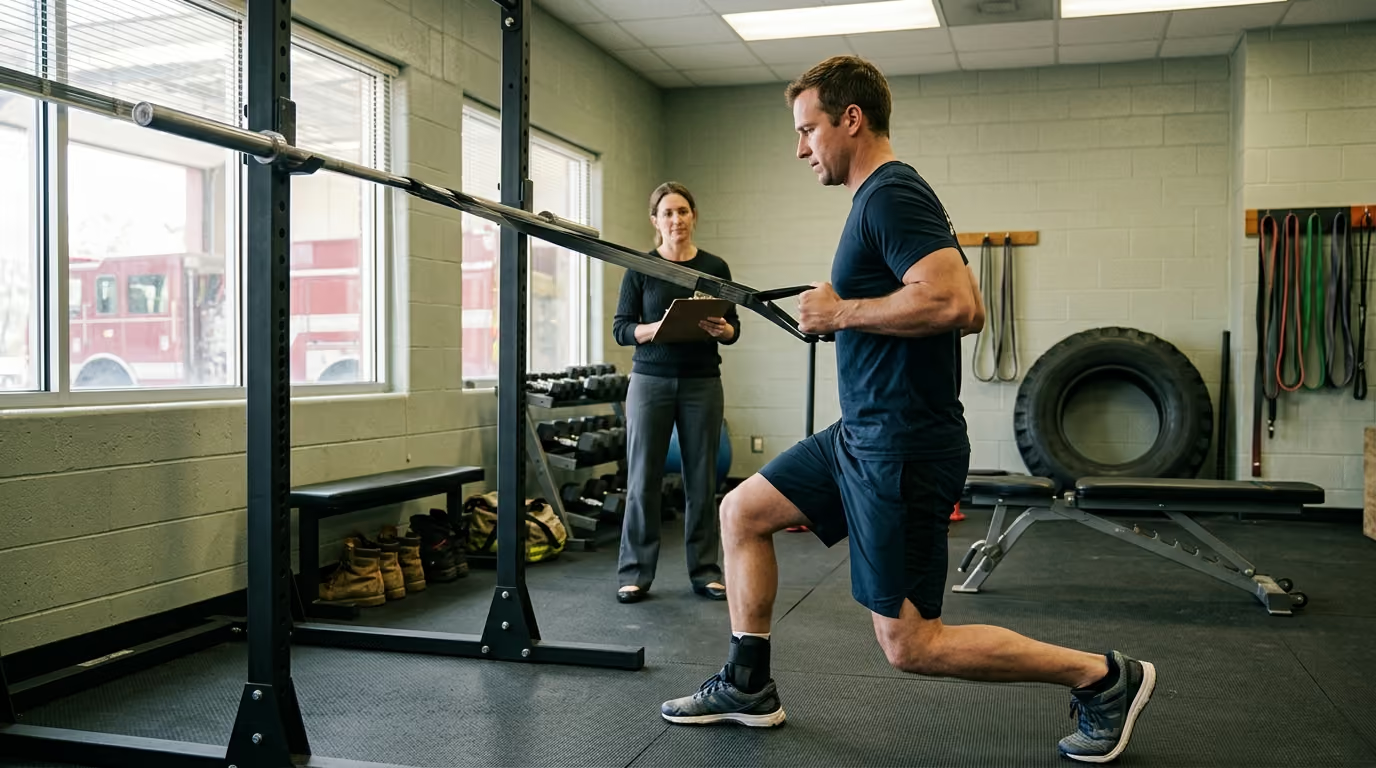
Return-to-duty planning is a structured, criteria-based operational process designed to determine whether an injured worker can safely resume emergency service tasks. It is not a casual sign-off, a passive waiting period, or a generic gym clearance.
A successful return requires systematically evaluating tissue healing, functional movement, protective equipment demands, and unpredictable operational hazards. Resuming full duty means answering one core question: Can the responder reliably perform essential job tasks under realistic conditions without creating unacceptable risk for themselves, their crew, or the public?
The quick answer is that clinical healing alone does not establish operational readiness. A treating clinician's release indicates that damaged tissues have healed sufficiently for general daily tasks. Unrestricted emergency work requires a separate, objective verification of capacity under occupational loads, awkward postures, thermal stress, and acute fatigue. A structured plan bridges this gap through role-specific testing, clear modified-duty parameters, and graded functional progression.
What Distinguishes Return to Duty From Basic Medical Clearance?
A standard medical release certifies that an acute injury has stabilized and basic activities of daily living no longer present a medical hazard. That release rarely accounts for the physical volatility of the fireground, a dynamic physical arrest, or an awkward patient carry down a narrow staircase. Operational readiness requires physical capability across dynamic, unscripted environments.
- RETURN-TO-DUTY EVALUATION PILLARS
- Clinical Status Functional Capacity Operational Demands
- Tissue healing Strength & power Heavy personal protective gear
- Joint stability Aerobic endurance Unpredictable loads
- Neurological state Balance & mobility Austere, shifting environments
Four interconnected pillars govern a defensible return-to-duty evaluation:
- Clinical status: Tissue healing, joint stability, pain irritability, surgical precautions, and the absence of red-flag neurological deficits.
- Functional capacity: Demonstrated force production, movement symmetry, cardiovascular endurance, dynamic balance, and tolerance to repeated physical work.
- Operational demands: The physical loads, awkward postures, protective equipment weights, environmental stressors, and teamwork dynamics of the assigned role.
- Risk-managed progression: A documented pathway from modified duty through graded simulation training to unrestricted operational clearance.
Occupational medical guidelines, including NFPA 1582 for structural fire departments, treat return to duty as an individualized assessment rather than an arbitrary calendar date. A medical release from a personal physician allows the occupational process to begin. The department physician or designated occupational health professional must verify that the responder meets specific operational standards before unrestricted response resumes.
Understanding the difference between clinical recovery and job readiness requires clear definitions across administrative and operational categories:
- Return to work: Resuming paid occupational activity. This may involve administrative work, training division support, or modified assignments outside the emergency response loop.
- Return to modified duty: Performing meaningful station or administrative work under strict physical boundaries. These restrictions define maximum lifting weights, prohibited body postures, or excluded tasks such as patient handling or emergency driving.
- Return to operational duty: Resuming primary response functions within an assigned unit, subject to departmental medical certification.
- Return to unrestricted duty: Full, unconstrained operational clearance to perform all primary, secondary, and rare high-consequence tasks under hazardous conditions.
What Does the Occupational Research Reveal About First Responder Musculoskeletal Risk?
Emergency service personnel sustain musculoskeletal injuries at rates far exceeding the general workforce. Research shows that structural firefighters are roughly 3.5 times more likely to sustain an occupational injury than private-sector workers. They are 3.8 times more likely to experience a work-related musculoskeletal disorder.
Recovery timelines also reflect this occupational reality. Firefighters take approximately 1.4 times longer to return to work after general injuries compared to private-sector employees. When recovering specifically from work-related musculoskeletal disorders, firefighters take roughly twice as long to return.
- FIREFIGHTER MUSCULOSKELETAL INJURY BURDEN
- Injury Metric Documented Occupational Rate
- Workplace Injury Likelihood 3.5x higher than private sector
- Musculoskeletal Disorder Likelihood 3.8x higher than private sector
- Overall Musculoskeletal Prevalence 41% across pooled cohorts
- Low-Back Disorder Prevalence 31% pooled regional prevalence
- Recovery Duration for WMSDs 2.0x longer than private industry
Musculoskeletal disorders represent a chronic occupational challenge across all emergency services:
- Epidemiological burden: Systematic reviews and meta-analyses show an overall pooled musculoskeletal disorder prevalence of 41% among firefighters.
- Anatomical distribution: The lower back is the most common site of injury with a pooled prevalence of 31%. Lower-extremity injuries account for 16%, upper-extremity injuries account for 13%, and shoulder injuries represent 11%.
- Incident context: Most firefighter musculoskeletal injuries occur outside active fireground suppression. CDC-hosted research indicates that non-fire calls, equipment handling, and lifting tasks generate the bulk of sprains, strains, and overexertion events.
- Law enforcement profiles: Police officers face distinct physical hazards. Research identifies the upper extremity as the primary injury site, driven by soft-tissue sprains and strains sustained during dynamic physical control or defensive tactics.
- Emergency medical services: Paramedics and emergency medical technicians manage constant patient-handling exposure. Studies show that lifting loads over 23 kilograms per event, working shifts exceeding 13 hours, and missing regular handling refresher courses drive elevated injury rates.
These findings show why a generic medical clearance fails first responders. When an agency returns a worker using standard civilian timelines, it exposes vulnerable tissues to extreme physical stress. Proper planning requires an occupation-specific pathway.
How Should Agencies and Clinicians Analyze Job-Specific Physical Demands?
A valid return-to-duty process begins with an accurate physical demand analysis of the responder's exact assignment. Job titles alone provide insufficient data for clinical clearance. A paramedic assigned to a rural dual-medic transport unit experiences different loading profiles than a patrol officer wearing a duty belt or a truck company firefighter operating a roof saw.
- OPERATIONAL TASK DEMAND HIERARCHY
- Essential Tasks: Primary operational duties required for emergency
- readiness (stretcher loading, hose deployment, vehicle extractions).
- Frequent Tasks: Regular station maintenance, equipment inspections
- routine driving, patient documentation, and inventory management.
- Rare, High-Consequence Tasks: Unscripted victim drags, emergency bailout
- dynamic suspect control, and manual stretcher carries down stairs.
- Environmental Modifiers: Turnout gear weight, thermal heat, reduced
- visibility, uneven terrain, sleep debt, and prolonged sitting.
An objective demand analysis organizes occupational duties into distinct categories:
Essential Operational Tasks
Essential tasks define the primary function of the position and cannot be reassigned during an emergency call without compromising crew safety. For a firefighter, essential tasks include advancing charged hose lines, forcing entry, climbing ladders under load, and operating ventilation equipment. For law enforcement, essential tasks require drawing and discharging weapons accurately, operating a vehicle at high speeds, and subduing combative subjects. For EMS professionals, essential tasks center on lifting and navigating loaded stretchers across uneven surfaces.
Frequent Station and Support Tasks
Frequent tasks occur regularly throughout a shift but rarely carry immediate life-safety consequences. These include loading equipment onto apparatus, inspecting SCBA cylinders, washing vehicles, climbing in and out of cabs, and restocking medical supplies. These tasks offer an ideal testing ground during the early stages of modified duty.
Rare, High-Consequence Tasks
These events occur unpredictably but demand immediate, peak physical outputs. Examples include dragging an unconscious crew member through a restricted opening, carrying a bariatric patient down a narrow stairwell, or engaging in prolonged physical restraint on asphalt. These high-force tasks create the highest reinjury risks. Full clearance must confirm capacity for these specific worst-case demands.
Environmental Modifiers and Equipment Loads
Physical demands in emergency response are amplified by external variables:
- Load carriage: Structural firefighting gear, SCBA, and hand tools add 20 to 35 kilograms of external load. Police duty belts and tactical vests add 9 to 15 kilograms, altering pelvic tilt and spinal mechanics.
- Thermal strain: High ambient temperatures and encapsulating gear elevate core body temperature, accelerating cardiovascular strain and neuromuscular fatigue.
- Terrain unpredictability: Wet grass, broken concrete, icy driveways, and cluttered domestic environments eliminate predictable foot placement.
- Operational fatigue: Night-shift dispatches, extended scene times, and skipped meals reduce movement coordination and dynamic joint stability. Responders looking to manage these metabolic stressors can review practical meal strategies for demanding shifts to protect recovery during high-volume periods.
What Are the Strengths and Limits of Functional Capacity Testing in Emergency Services?
Functional Capacity Evaluations (FCEs) and objective performance batteries provide valuable physical data during rehabilitation. They evaluate what a worker can do under structured, standardized test conditions. However, performance on a standardized test battery does not automatically prove operational readiness on the street.
- FUNCTIONAL TESTING: VALUE AND LIMITS
- What Functional Tests Deliver What Functional Tests Miss
- Objective baseline force output Unpredictable load shifts
- Bilateral strength symmetry Thermal and cardiovascular drift
- Isolated movement competency Complex multi-tasking under stress
- Documented lifting capacity Fatigue accumulation over 24 hours
Systematic reviews confirm that performance-based tests, particularly lifting assessments, correlate with initial work participation in patients recovering from musculoskeletal disorders. When tested capacity matches job demands during a customized FCE, the odds of a successful initial return increase significantly. Research on customized capacity testing has shown a 77% positive predictive value for return to work, alongside an 83% negative predictive value when functional deficits remain.
Despite these strengths, capacity testing has definite boundaries:
- Poor reinjury prediction: High-quality Cochrane reviews show insufficient evidence to support using standard FCE scores to predict long-term reinjury risk. Passing a laboratory test does not guarantee an athlete or responder will stay healthy under uncontrolled work conditions.
- Predictive efficiency limits: While functional testing correlates with initial return outcomes, its predictive efficiency remains modest. It cannot account for poor sleep, sudden emotional stress, or unforeseen operational loads.
- Controlled vs. volatile conditions: Laboratory lifts use balanced crates and barbell sleeves. Operational lifting involves shifting human patients, uncooperative suspects, or dynamic hose lines that lack clean handles.
- Absence of cumulative fatigue: An FCE measures performance in a rested state over two to four hours. It cannot simulate the neuromuscular fatigue of three consecutive night calls followed by heavy lifting.
Agencies should treat functional capacity testing as an informative decision-support tool rather than an absolute clearance switch. Testing provides objective metrics to guide clinical judgment, but it cannot replace comprehensive, scenario-based evaluations.
How Do You Design a Safe and Effective Modified Duty Assignment?
Modified duty serves as an active bridge between clinical rehabilitation and full operational readiness. When built correctly, it allows an injured worker to remain connected to the department, maintain operational routines, and contribute productively. When built poorly, it exposes the responder to hidden hazards or isolates them in unhelpful roles.
- FOUR-STAGE DUTY CLASSIFICATION SYSTEM
- Level 1: Not Fit for Duty
- Unresolved clinical flags, severe movement limits, acute tissue healing.
- Level 2: Modified Administrative Duty
- Productive non-response work, desk tasks, training materials, zero gear.
- Level 3: Operationally Restricted Duty
- Controlled station work, driver-only roles, low-risk field operations.
- Level 4: Unrestricted Operational Duty
- Full clearance for emergency response, heavy gear, and unscripted loads.
A defensible modified-duty program follows clear administrative principles:
Use Precise, Objective Restriction Language
Vague restrictions like "light duty" or "work as tolerated" invite failure. Staffing shortages can lead workers to exceed their physical boundaries on ambiguous assignments. Restrictions must define clear physical limits:
- Maximum lifting, carrying, pushing, and pulling weights (such as no lifting over 10 kilograms).
- Prohibited postures, such as kneeling, deep squatting, overhead reaching, or crawling.
- Clear exclusions regarding response driving, operating in personal protective gear, or handling patients.
- Mandatory scheduled review dates and defined criteria for physical progression.
Offer Meaningful Occupational Contributions
Modified duty must not feel like a punitive assignment. Productive roles keep responders engaged with their crews and organizational mission. Suitable assignments include:
- Assisting training divisions with curriculum, practical scenario setups, or classroom delivery.
- Conducting community fire prevention inspections, pre-incident planning, or public education.
- Managing logistics, equipment inventories, radio tracking, and supply deliveries.
- Supporting communications, non-emergency dispatch, or report auditing.
- Participating in structured, on-duty physical rehabilitation and supervised conditioning.
Prevent Hidden Operational Exposures
A major failure point occurs when an agency places an injured responder on modified duty in an active station without enforcing clear response boundaries. If a tone drops and staffing is tight, an employee on modified duty may feel social pressure to assist. Agency policy must state that personnel on restricted duty cannot respond to calls, wear full PPE, or perform manual handling tasks.
Responders recovering from joint strains or post-surgical repairs can explore our injury prevention and physical recovery resources for additional joint-sparing training strategies.
What Does a Progressive Graded Exposure Plan Look Like in Practice?
Returning to full operational readiness requires progressive physical exposure. Tissues must adapt to rising loads, movement speeds, and operational complexity over time. A time-based calendar cannot guarantee tissue capacity. The recovery process requires a criteria-based progression model.
- EIGHT DIMENSIONS OF GRADED EXPOSURE
- 1. Movement Complexity: Simple isolated joints - multi-planar tasks
- 2. External Load: Light bodyweight - full operational equipment weights
- 3. Volume and Density: Low repetitions - repeated work with short rest
- 4. Movement Velocity: Controlled tempos - explosive, reactive outputs
- 5. Environmental Surface: Flat clinic floors - uneven, unstable ground
- 6. Equipment Loading: Standard gym attire - structural turnout gear
- 7. Cognitive Processing: Focused movement - tactical decision-making
- 8. Neuromuscular Fatigue: Rested state - performance under high fatigue
Reentry programming progresses across seven progressive stages:
Stage 1: Clinical Symptom Management and Early Mobility
The primary goals are controlling pain, resolving acute swelling, restoring basic joint range of motion, and maintaining baseline cardiovascular fitness through non-aggravating modalities like stationary cycling or swimming.
Stage 2: Foundational Strength and Movement Competency
This stage rebuilds basic multi-joint movement patterns, including squatting, hinging, lunging, pushing, and pulling. Loading remains controlled, bilateral, and focused on symmetry and structural integrity.
Stage 3: Job-Specific Movement and Closed Simulations
The responder begins performing operational movements in controlled environments without personal protective equipment. This includes dragging light dummies, lifting simulated medical equipment, and practicing controlled stair climbs.
Stage 4: Equipment Integration and Moderate Load Carriage
Training introduces occupational equipment. Firefighters don turnout coats and boots; police officers wear duty belts or weighted vests. Loading matches realistic job demands, and repetitions increase to build local muscular endurance.
Stage 5: High-Intensity Dynamic Scenarios and Team Drills
Responders execute full-speed, complex tasks in realistic environments. Training includes hose advancements, vehicle extractions, ground-restraint drills, and awkward stretcher navigations alongside crew members. For those needing guidance on managing training fatigue, our guide on training around shift work and duty demands breaks down low-fatigue loading methods.
- STAGE 5 PASSING CRITERIA: JOB TASKS
- Task Assessment Drill Minimum Performance Standard
- Charged Hose Advance (45m) Sustained pace, no spinal flexion
- Dummy Drag (75kg for 30m) Continuous movement, neutral spine
- Stretcher Stair Descent/Ascent Smooth mechanics, stable grip
- Defensive Tactics Restraint (3min) Controlled bracing, zero joint lag
- Full Gear Tower Climb (4 floors) Stable cadence, safe breathing
Stage 6: Operationally Restricted Field Deployment
The responder returns to field operations under defined boundaries, such as operating as a third rider on an ambulance, driving non-emergency apparatus, or handling lower-acuity dispatches.
Stage 7: Unrestricted Operational Duty
The member returns to full primary emergency response without physical restrictions, supported by ongoing maintenance conditioning and periodic check-ins.
- SAMPLE 7-STAGE REHABILITATION PROGRESSION
- Stage 1
- Stage 2
- Stage 3
- Stage 4
- Stage 5
- Stage 6
- Stage 7
How Should Return-to-Duty Decisions Address Complex Clinical Edge Cases?
Certain musculoskeletal presentations present unique operational risks that standard functional testing may overlook. Clinicians and peer fitness coordinators must address these specific clinical challenges before granting clearance:
Recurrent or Persistent Lumbar Spine Pain
Low-back pain accounts for 31% of firefighter musculoskeletal issues. The primary objective is rarely achieving a permanent, pain-free state. Instead, testing must confirm functional stability, safe hip-hinge mechanics, and consistent force transfer under load.
Clearance requires evaluating how the responder manages unpredictable spinal loading during unexpected trips or shifts. It also requires verifying tolerance to sustained seated postures in patrol cars or apparatus seats.
- LOW-BACK CLEARANCE TESTING CHECKLIST
Rotator Cuff and Shoulder Complex Injuries
Shoulder injuries in firefighting and EMS occur during overhead tool operation, hose advancement, and stretcher loading. Rotator cuff tears or labral repairs require specific testing of end-range external rotation strength and overhead stability.
Testing must confirm whether the responder can safely control tools overhead, handle sudden eccentric loading if a patient drops, and perform chest compressions without anterior shoulder shear.
Law Enforcement Upper-Extremity Strains
Patrol officers require high wrist, forearm, and elbow stability to maintain weapon retention, manipulate defensive tools, and secure resistant subjects. Standard grip dynamometer tests provide only static data.
Readiness testing must assess dynamic grip control, rotational forearm strength against sudden resistance, and weapon manipulation speed while wearing duty gloves.
- POLICE UPPER-EXTREMITY CAPACITY REQUIREMENTS
- Functional Capacity Demand Operational Application
- High-Velocity Grip Lock Defensive tactics & weapon control
- Resisted Forearm Pronation Handcuffing uncooperative subjects
- Sustained Isometric Pulling Controlling resistant limbs
- Rapid Push-Away Force Production Creating distance during an assault
Deconditioning Following Extended Medical Leave
When a responder spends three to six months away from operational duties, cardiovascular fitness, tendon stiffness, and heat tolerance decline significantly. Muscle tissue atrophies, and movement coordination deteriorates.
A structured reentry process must rebuild foundational work capacity before exposing the responder to peak operational demands. Responders seeking structured ways to pace this re-entry can use autoregulation strategies for first responders to adjust physical output to current recovery levels.
The Aging First Responder
Older firefighters and police officers experience higher musculoskeletal injury severity and longer recovery timelines. Natural age-related declines in muscle mass, tendon elasticity, and recovery rates reduce physiological margins for error.
A return-to-duty plan for an experienced responder must focus on joint-sparing movement strategies, dedicated recovery windows between shifts, and sustainable conditioning rather than maximum loading records.
What Practical Case Patterns Demonstrate Safe Operational Reintegration?
Real-world scenarios highlight the contrast between flawed clearance pathways and evidence-based operational reintegration:
Case Pattern 1: Firefighter Lower-Back Strain
- Initial status: A 34-year-old firefighter sustains an acute lumbar strain while lifting an extrication tool. After four weeks of physical therapy, the member walks without pain and displays full spinal mobility during unloaded clinic testing.
- The flawed pathway: The treating clinician writes a simple note: "Cleared for full duty as tolerated." The firefighter returns to front-line duty, responds to an early-morning vehicle collision, and reinjures their back while pulling a hydraulic tool from an elevated side compartment.
- The evidence-based pathway: The department physician assigns the member to modified duty in the training division. The physical therapist implements loaded hip-hinge progressions, farmer carries, and offset equipment lifting drills.
- Reintegration testing: The firefighter completes a five-stage operational circuit: donning full turnout gear, climbing four flights of stairs, dragging an 80-kilogram mannequin 30 meters, and holding an extrication tool in simulated cutting positions for two continuous minutes. The member demonstrates stable spinal mechanics and completes a two-week shift re-entry without symptom flare-ups.
Case Pattern 2: Paramedic Rotator Cuff Strain
- Initial status: A 28-year-old paramedic strains their supraspinatus while catching a shifting stair-chair on an unpaved walkway. After six weeks of rest and clinical exercise, passive shoulder range of motion returns to normal.
- The flawed pathway: The employee is cleared based solely on an isolated multi-joint strength test on a clinic dynamometer. During their first 24-hour shift, repeated stretcher loads cause rapid rotator cuff fatigue, resulting in acute bursitis and an immediate return to medical leave.
- The evidence-based pathway: The responder transitions to a non-transport community risk reduction role. Rehabilitation emphasizes overhead endurance, rotator cuff deceleration drills, and team lifting simulations.
- Reintegration testing: The paramedic passes a task-specific battery: lifting and holding a loaded stretcher frame with a partner, performing three minutes of continuous chest compressions, and retrieving heavy monitor bags from overhead ambulance compartments. The paramedic returns to a dual-medic transport unit on a graduated 12-hour schedule before resuming 24-hour rotations.
Case Pattern 3: Police Patrol Officer Elbow Sprain
- Initial status: A 40-year-old patrol officer suffers a medial collateral ligament sprain of the elbow while restraining a combative suspect. After eight weeks of conservative care, the officer reports no pain during daily household activities or typing.
- The flawed pathway: The officer receives immediate clearance for full patrol duty. During a traffic stop confrontation, the officer lacks the eccentric arm control required to secure a subject's wrist, worsening the joint sprain and requiring extended leave.
- The evidence-based pathway: The agency places the officer on modified duty handling telephone reports and fleet logistics. Conditioning incorporates heavy grip holds, rapid push-pull maneuvers against cable resistance, and weapon retention drills.
- Reintegration testing: The officer completes defensive tactics scenarios wearing a full duty belt, showing stable joint integrity during grappling escapes and baton strikes. The officer passes qualifying range drills under fatigue before resuming solo patrol duties.
Frequently Asked Questions About First Responder Reentry
Does passing a Functional Capacity Evaluation guarantee a safe return to duty?
No. An FCE provides objective baseline data regarding isolated strength, lifting mechanics, and general movement capacity. However, high-quality reviews show that standard FCE performance does not reliably predict reinjury risk under unpredictable operational conditions. Testing must be combined with job-specific drill simulations, clinical reviews, and supervisor evaluations.
How should an agency handle a medical release that conflicts with an operational test?
The personal physician's release establishes that clinical tissues have healed sufficiently for general activities. The agency's occupational physician holds the legal and operational responsibility to verify whether the member meets role-specific standards, such as NFPA 1582. If an operational assessment reveals unsafe physical compensations, unrestricted duty should remain deferred while rehabilitation addresses those specific deficits.
What should an agency do if modified-duty assignments are not officially available?
If an agency lacks formal modified-duty positions, the responder must remain on temporary medical leave while completing a structured, off-duty conditioning program. Responders should never be placed in front-line operational roles under an informal expectation that crew members will carry their physical workload.
How does cumulative shift fatigue affect reinjury risk during the return-to-duty window?
Neuromuscular fatigue significantly reduces dynamic joint stability, proprioceptive feedback, and reaction speeds. An injured responder operating on broken sleep is far more vulnerable to compensatory movement patterns and reinjury. Phased schedules that limit overtime and consecutive night tours help protect recovering tissues during the initial weeks back on duty. Responders interested in managing shift sleep debt can explore our shift-specific sleep framework for first responders.
When Should Responders Seek Specialized Occupational and Clinical Evaluation?
A successful return to operational duty requires honest communication between the injured member, the treating clinician, and the agency. Navigating complex recoveries often calls for specialized occupational medicine expertise beyond general primary care.
- CLINICAL ESCALATION DECISION PATHWAY
- Symptom Escalation
- Screen for Red Flags
- YES
- Urgent Consult occupational physical therapist or department MD
- Medical for targeted loading adjustments and modified-duty update.
- Referral
Responders and supervisors should pause progression and pursue specialized clinical evaluation under specific conditions:
- Neurological symptoms: Radicular pain, numbness, tingling, or progressive motor weakness traveling into the arms or legs during physical loading.
- Mechanical joint instability: Giving-way episodes, true joint locking, or sudden acute swelling following loaded rotational tasks.
- Persistent movement compensations: Asymmetrical limping, trunk leaning during lifts, or an inability to brace under load without pain.
- Psychological apprehension: Severe fear of reinjury or low physical self-efficacy when handling primary emergency gear.
- Medication side effects: Continued reliance on medications that impair alertness, balance, or high-speed decision-making.
For more insights on structured rehabilitation models and career sustainability, review our full archive of injury and recovery guides.
Return-to-duty planning is a structured investment in long-term career durability. By replacing arbitrary calendar dates with objective operational capacity testing, emergency service agencies protect their personnel, support dependable crew performance, and preserve long-term health across a full career.
Sources
- (PDF) Assessment of Functional Capacity of the Musculoskeletal System in ...
- Are performance-based measures predictive of work participation in patients with musculoskeletal disorders? A systematic review
- Predictive validity of a customized functional capacity evaluation in patients with musculoskeletal disorders
- Updating the Evidence on Functional Capacity Evaluation Methods: A Systematic Review
- Value of functional capacity evaluation information in a clinical setting for predicting return to work - PubMed
- Intervention - First Responders First
- The Frequency, Severity, and Economic Consequences of ...
- Identification and prevention strategies for musculoskeletal injuries among firefighters: A rapid review - Monica M Teegardin, Nicholas B Kelly, William S Zoughaib, Michaela A Wilson, Andrew Veith, Vanessa Kleinschmidt, Carolyn Muegge, Justin Miller, Steven Moffatt, Mark Urtel, 2025
- A Profile of Injuries Sustained by Firefighters: A Critical Review - PMC
- The global prevalence of musculoskeletal disorders among firefighters: a systematic review and meta-analysis - PubMed
- Quantifying the postural demands of patrol officers: a field study - PubMed
- Occupational Injuries, Duty Status, and Factors Associated with Injuries among Firefighters
- (PDF) Characteristics and Predictors of Occupational Injury among Career ...
- East Lake Fire & Rescue Back Injury Reduction Program