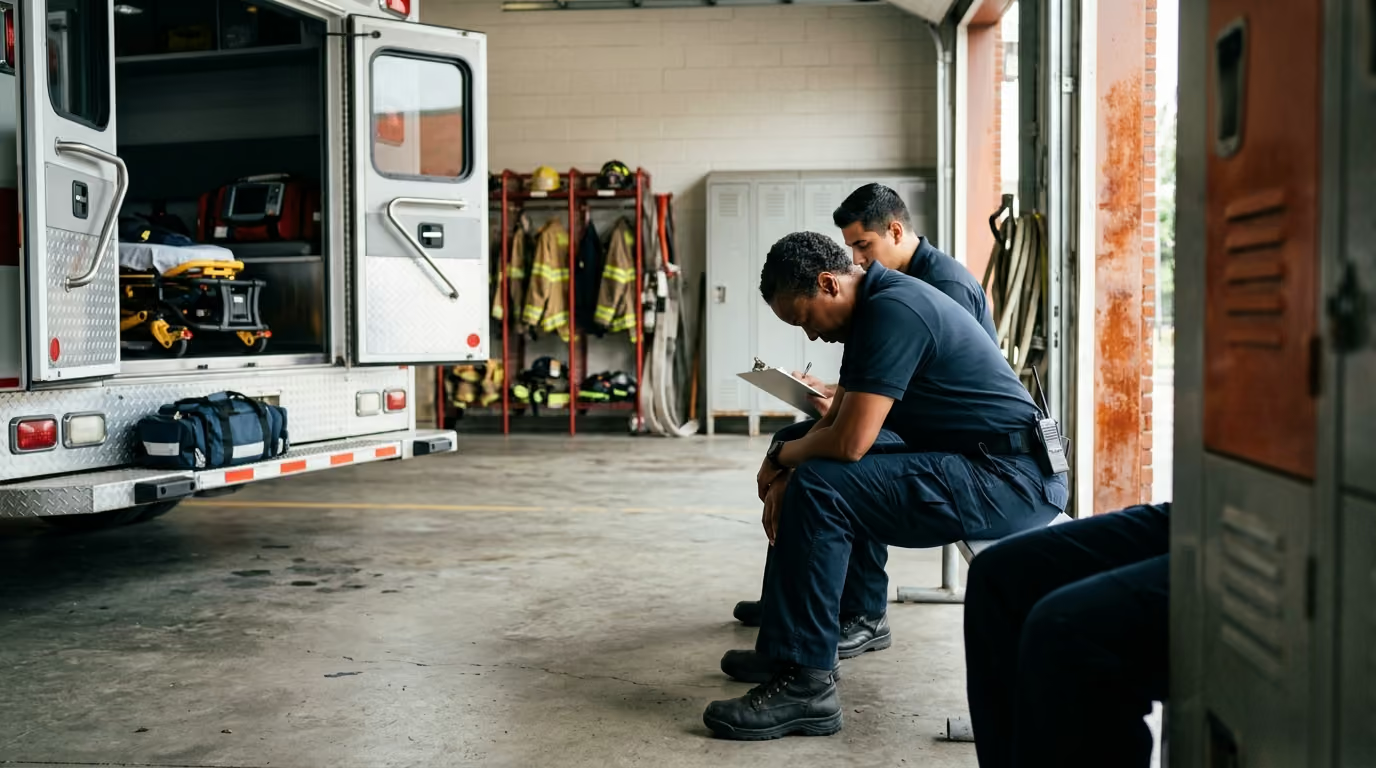

First responders can optimize strength development and recovery by modifying workout volume and intensity based on daily sleep quality, shift fatigue, and operational stress.





Many emergency service professionals search for how to adjust strength training around broken sleep, night shifts, and demanding calls. Rigid percentage-based programs frequently fail when occupational demands spike, leaving personnel exhausted, under-recovered, or injured. This guide provides a clear, evidence-based system to match daily physical training to current capacity, sleep status, and occupational workload.
Autoregulation is the structured practice of adjusting training variables such as load, repetitions, volume, intensity, or exercise selection according to your current readiness and performance. Rather than abandoning structured programming, autoregulation uses systematic decision rules to modify planned workouts based on physiological recovery and duty demands. When applied properly, it allows first responders to build physical capability, manage accumulated fatigue, and protect career longevity.
Traditional strength and conditioning programs rely on fixed percentages of a one-repetition maximum calculated during an isolated testing period. This model assumes that an individual’s physical capacity follows a predictable recovery curve between scheduled workouts. For emergency responders, daily capacity fluctuates based on sleep fragmentation, thermal strain, psychological stress, and physical occupational labor.
Autoregulation replaces static prescriptions with dynamic adjustments driven by current performance and perceived exertion. Research published in sports science journals confirms that adjusting loads based on daily performance produces strength adaptations equal to or greater than fixed percentage programs. By modulating the dose of exercise to match daily tissue tolerance, responders can achieve progressive overload without driving their nervous system into excessive fatigue.
Scientific reviews examining resistance training methods identify several distinct frameworks for implementing autoregulated programming. These include subjective rating of perceived exertion, repetitions in reserve, velocity-based monitoring, and autoregulatory progressive resistance exercise. Each approach uses specific feedback signals to answer whether a planned session should proceed as written, drop in intensity, or switch to active recovery.
A central concept in training adaptation is the distinction between internal and external workload. External load represents the objective work completed, such as barbell weight, running distance, or equipment carried on scene. Internal load describes the physiological and psychological cost of that work, including heart rate, perceived exertion, and autonomic nervous system strain. When systemic fatigue is high, a standard external load generates an elevated internal load, requiring immediate programming modifications.
First responder operational demands are not separate from physical training. A difficult structure fire, prolonged vehicle extrication, heavy patient carry, or wildland deployment acts as a major training stimulus. When an individual trains heavily after a physically demanding shift, they combine two massive stress exposures into a single recovery window.
Systematic reviews on emergency responder fatigue show that occupational stress extends beyond physical labor. Insufficient sleep during shift work, poor sleep quality, and circadian disruption degrade cognitive performance, reaction time, and physical recovery. Research examining wildland firefighters and structural crews highlights that thermal strain, dehydration, prolonged standing, and elevated cortisol create a deep systemic fatigue debt.
Physical training programs must account for this combined duty-and-exercise budget. Treating the gym as an isolated environment detached from operational reality leads to overtraining and performance decrements on duty. Personnel who balance high-output lifting with heavy shift volume often benefit from programming training around shift work to prevent total workload from exceeding their recoverable limits.
Readiness is multidimensional and involves more than muscular soreness. It includes neuromuscular firing speed, local connective tissue health, metabolic energy availability, sleep continuity, and cognitive bandwidth. Consensus statements from the International Olympic Committee emphasize that subjective measures of stress, fatigue, and muscle readiness often detect overtraining earlier and more reliably than objective physical tests.
The most practical autoregulation framework for emergency services uses rating of perceived exertion based on repetitions in reserve. This method asks the lifter to estimate how many additional repetitions they could complete with strict technique before reaching muscular failure. It requires no specialized technology and functions across diverse gym environments.
A practical repetition-in-reserve framework provides clear targets for daily training:
This effort represents light to moderate intensity, where four to five more clean repetitions could be completed. It serves as an ideal zone for movement practice, technical warm-ups, active recovery work, and sessions following high-demand shifts.
This effort represents moderate intensity with three repetitions remaining before failure. It delivers an effective training stimulus for strength and hypertrophy while keeping systemic fatigue low and preserving reserves for sudden calls.
This is a solid working intensity where two repetitions remain in the tank. It provides a robust stimulus for strength progression and muscle mass development across primary compound exercises without draining central nervous system reserves.
This is a very demanding set with only one clean repetition left. It carries a substantial fatigue cost and should be used selectively during planned, well-recovered training phases when upcoming operational volume is low.
This represents absolute technical failure, where no additional repetitions can be completed. First responders should generally avoid technical failure on heavy compound lifts, as the recovery deficit and injury risk outweigh the incremental training stimulus.
Applying this system to primary compound movements means working within a window of two to four repetitions in reserve. Assistance exercises, isolation work, and machine-based movements can safely operate at one to three repetitions in reserve. This ensures a sufficient growth stimulus while protecting the spine, joints, and operational readiness for unexpected emergency calls.
Top-set and back-off progressions fit this structure cleanly. A lifter warms up to a designated top set at a target effort, such as a set of five repetitions at three repetitions in reserve. If the load moves smoothly and matches expected performance, back-off sets proceed at a planned percentage reduction. If the top set feels excessively heavy or technique degrades, back-off volume is reduced or the session is adjusted downward.
Deciding how to train on a given day should follow a structured process rather than guesswork. A five-minute pre-session readiness check allows responders to evaluate their current capacity before touching a loaded barbell. This screening process evaluates multiple subjective and physical domains on a simple scale.
The pre-session screen examines eight key indicators:
When the majority of these indicators are positive, personnel can execute standard programming with normal progressive overload. When several indicators show moderate strain, the session should be modified by trimming volume, capping intensity, or swapping exercises. When multiple indicators reflect severe depletion or pain, the workout should pivot toward recovery modalities.
The warm-up serves as the ultimate physiological audit. Subjective feelings can sometimes deceive, but movement under progressive submaximal load reveals true neuromuscular status. If standard warm-up weights feel unusually slow, awkward, or heavy, your nervous system is signaling high residual fatigue.
A structured warm-up audit follows three deliberate steps:
If a weight that normally feels light requires maximum concentration and effort, adjust the workout parameters immediately. This is not a failure of will or discipline. It is a precise physiological adaptation that prevents unnecessary tissue breakdown and preserves capability for public safety duties.
To prevent chronic overtraining, first responders must manage total workload across weekly and monthly cycles. Research in sports medicine highlights the relationship between sudden workload spikes and elevated injury rates. While mathematical ratios should not be treated as absolute medical predictors, rapid increases in weekly activity without adequate recovery represent a genuine physical risk.
Every physical activity carries a metabolic, neuromuscular, and structural cost. A heavy deadlift session imposes high axial loading and connective tissue strain. High-intensity interval sprints tax the anaerobic energy system and neuromuscular coordination. A structural fire response imposes massive thermal strain, cardiovascular load, and eccentric muscle damage from carrying equipment.
A practical method for tracking physical cost is session workload scoring. Multiply the duration of an activity in minutes by the session rating of perceived exertion on a ten-point scale. For example, a 45-minute strength workout at an effort rating of 7 generates a session load score of 315 arbitrary units.
This same calculation can be applied to demanding duty incidents or intense field operations. Tracking these cumulative numbers helps personnel visualize their total systemic stress over weekly training blocks. If operational calls create an unexpected spike in workload, gym training volume must temporarily decrease to balance the total stress budget.
When duty stress is persistently elevated, utilizing minimum effective dose training strategies preserves muscular strength without compounding systemic exhaustion. These focused sessions maintain essential motor patterns and joint resilience while keeping total fatigue low.
Sleep disruption is the primary occupational hazard affecting physical recovery across the emergency services. Research on shift-working firefighters and medical crews confirms that overnight calls and rotating schedules degrade metabolic regulation, cognitive processing, and reaction time. Sleep loss alters pain perception, impairs glucose disposal, and increases injury susceptibility during complex motor tasks.
A single night of broken sleep does not mandate complete physical rest, but it requires specific programming adjustments. Research indicates that basic gross motor strength can remain functional after acute sleep loss, even while cognitive vigilance and fine motor precision decline. A responder might successfully lift a heavy weight while lacking the focus needed for technical Olympic lifts or complex plyometrics.
When managing significant sleep debt, follow clear session-selection rules:
Apply this option when sleep was restorative, stress is low, and duty load has been light. Execute full-volume strength training, high-intensity intervals, or power development. Keep planned progression on schedule and avoid adding unnecessary extra sets simply because energy is high.
Apply this option after moderate sleep disruption, elevated administrative stress, or a moderately busy shift. Reduce total working sets by 25 to 40 percent, keep loads at three to four repetitions in reserve, and focus on movement quality. Replace complex, technically demanding lifts with stable alternatives like dumbbell presses, trap-bar deadlifts, or chest-supported rows.
Apply this option after severe sleep deprivation, multiple overnight responses, extreme heat exposure, or illness symptoms. Eliminate heavy loading, high-velocity movements, and exhaustive conditioning. Perform light walking, gentle joint mobility, diaphragmatic breathing drills, and prioritize nutrient-dense food and sleep.
Strategic scheduling also involves building a shift-specific sleep plan to protect recovery windows between tours. When acute operational stress spikes during a shift, techniques for managing acute stress between calls help reset autonomic nervous system balance, improving physical readiness for subsequent tasks.
Using a clear shift-work training decision tree removes the emotional burden of deciding what to do when tired. The decision rules dictate the workout format, preventing personnel from either dangerously overtraining or abandoning their physical development entirely.
Commercial wearable devices, smart rings, and heart rate variability trackers have become standard equipment across emergency services. These devices track metrics such as resting heart rate, sleep duration, skin temperature, and autonomic recovery scores. While wearables offer valuable contextual data, their proprietary recovery scores must not be treated as absolute operational assessments.
Peer-reviewed validation studies demonstrate that commercial readiness scores show low to moderate correlation with actual physiological capacity. Proprietary algorithms rely heavily on heart rate variability and movement data during sleep, which can be skewed by alcohol intake, late meals, room temperature, or sleep timing shifts. A high recovery score does not guarantee that tendon tissue is ready for heavy loading, nor does a low score mean physical movement is unsafe.
Wearables serve as useful tools for identifying multi-day recovery trends and monitoring resting heart rate baselines over weeks. They help personnel spot sleep debt accumulation and track how night shifts disrupt autonomic recovery curves. This information provides an objective starting point for personal fatigue awareness and lifestyle modifications.
Never rely on a high wearable score to justify training through joint pain, extreme physical exhaustion, or acute illness. Conversely, do not allow a low score to create psychological defeatism or stop you from completing light, restorative movement. Wearable scores provide contextual data, but internal perception, localized tissue feedback, and warm-up performance remain the primary guides.
Autoregulation requires a clear distinction between normal exercise soreness and potential musculoskeletal injury. Delayed-onset muscle soreness is a common, benign response to unfamiliar physical work or eccentric exercise loading. It presents as diffuse, symmetrical tightness across muscle bellies that typically diminishes during a light cardiovascular warm-up.
Structural injury presents with distinct, localized symptoms that demand immediate training modification or clinical evaluation. Pain that is sharp, asymmetrical, localized over a joint or tendon, or accompanied by swelling indicates tissue damage. If discomfort causes an altered gait, compensatory movement mechanics, or worsens as the workout progresses, stop the movement immediately.
Clear safety thresholds separate normal training modifications from clinical concerns:
Mild symmetrical soreness, minor stiffness that resolves during warm-up, and normal joint range of motion allow standard training. Maintain prescribed technical reserves and execute the planned session.
Moderate muscular tightness, minor joint irritation that improves with movement modifications, or localized fatigue require immediate session adjustments. Lower the load, select joint-friendly exercise variations, and eliminate high-impact conditioning.
Sharp joint pain, sudden mechanical catching, visible swelling, significant muscle weakness, or radiating numbness require terminating the exercise immediately. Do not attempt to train through these symptoms or mask them with analgesics.
Systemic red flags require stopping all physical training and seeking immediate medical evaluation. These include chest tightness, unprovoked shortness of breath, dizziness, lightheadedness, heart palpitations, neurological deficits, or extreme exhaustion following heat exposure. A training readiness score should never override basic medical safety protocols or professional occupational health screenings.
For persistent joint pain, recurring movement dysfunction, chronic sleep disorders, or extreme hormonal depletion, consultation with a licensed sports physical therapist, occupational medicine physician, or board-certified sleep specialist is essential. Addressing underlying clinical issues ensures sustainable physical readiness and prevents acute strains from becoming career-ending injuries.
Effective autoregulation balances daily physical stimulus against occupational reality. By respecting sleep status, duty workload, and internal capacity, emergency responders maintain high operational readiness while building long-term musculoskeletal resilience.
Sustainable capability is built across decades, not individual workouts. When you match your training dose to your daily physiological capacity, you protect your health, your crew, and the communities you serve.
To apply autoregulation to your training this week, use this practical checklist:
Stay connected for research-led guidance on duty fitness, shift-work sleep, injury recovery, stress, nutrition and career longevity. Practical ideas for first responders who want to stay capable on the job, recover well and protect their health for the long run.



Read practical guidance on first responder fitness, recovery, sleep, nutrition and resilience for demanding work and a long, active career.
read the blog



