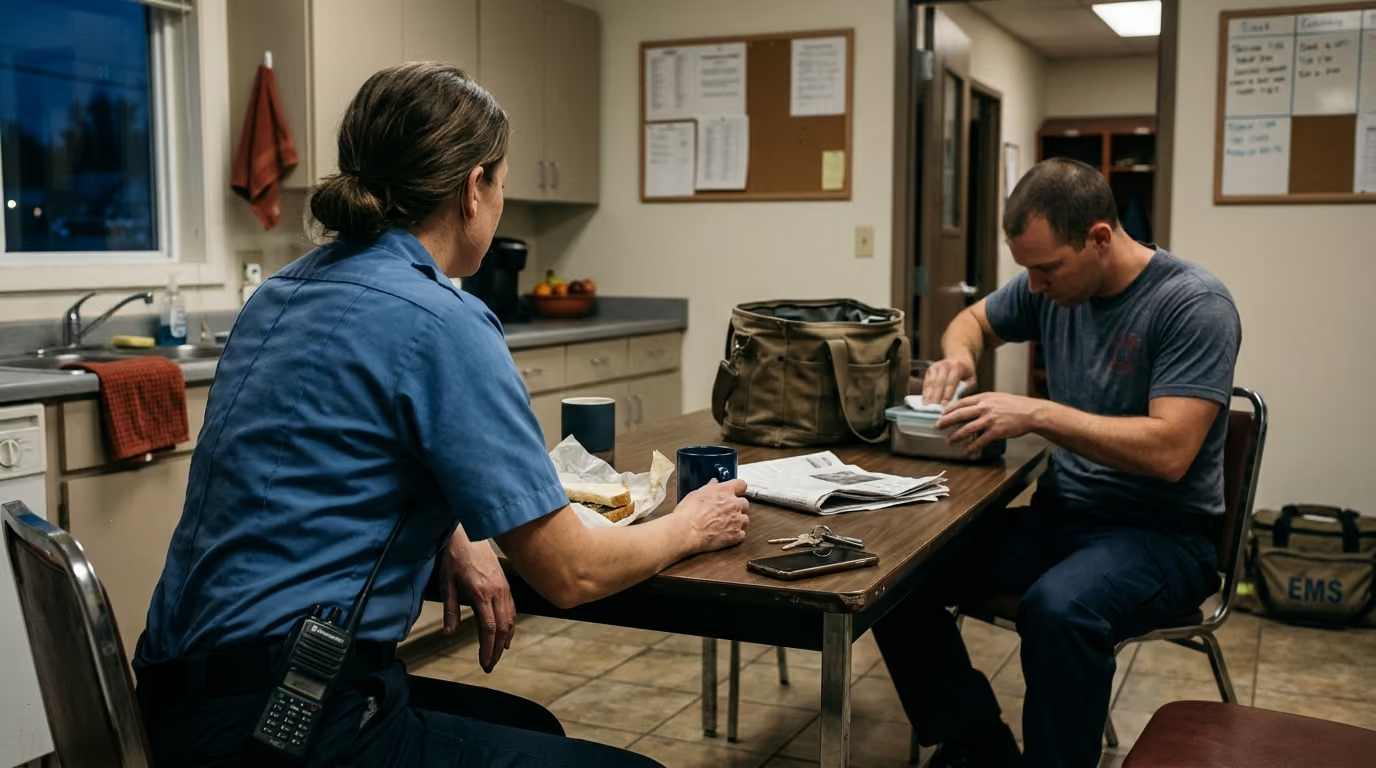

Six structured transition stages help first responders de-escalate operational stress, regulate their nervous system, and protect family relationships after high-intensity shifts.





If you or someone you know is in immediate danger, call 911. If you are experiencing thoughts of suicide, call or text 988 to reach the Suicide & Crisis Lifeline, or press 1 for the Veterans Crisis Line. You can also text 838255 for confidential support. If safety concerns involve personal access to weapons or medication, arrange secure storage with a trusted peer, family member, or clinician immediately.
You pull into the driveway after a fourteen-hour shift. The engine cuts off, but your heart rate remains elevated. Your shoulders sit high against your neck, your eyes scan the street for irregularities, and your mind continues to replay the radio traffic from your last call. When you walk inside, the television is blaring, someone asks what is for dinner, and a pile of laundry sits on the counter. Within sixty seconds, an ordinary domestic question triggers an immediate flash of irritability.
A post-shift transition routine provides a structured, repeatable bridge between emergency operations and domestic life. It does not erase traumatic memories or eliminate shift fatigue. Instead, it systematically steps down physical activation, reduces sensory overload, and establishes clear communication boundaries. This process protects both the responder and the household from the predictable friction of operational carryover.
Moving between emergency service and personal life involves distinct biological and psychological demands. Research demonstrates that acute duty stress creates physiological states that persist well past the official end of a shift.
Operational mode represents a specialized functional state. In emergency environments, high sympathetic nervous system activity supports survival and performance. Threat detection narrows attention toward immediate hazards. Procedural memory guides rapid choices under pressure. Emotional compartmentalization prevents acute distress from interfering with urgent patient care or scene management.
These responses are biologically adaptive on duty. When brought into a home environment, however, the same adaptations create severe friction. Emotional containment reads as callous detachment. Narrow threat focus appears as hypercritical monitoring of family members. Rapid, directive communication feels like harsh authoritarian control.
The nervous system cannot change operating states instantly. It requires unambiguous sensory and behavioral signals of safety to shift from sympathetic vigilance into parasympathetic recovery.
Occupational health researchers divide work-to-home strain into two distinct phenomena. A systematic review on traumatic stress in first responder families identified extensive disruption across family roles, relationship satisfaction, and home stability.
Spillover refers to the direct carryover of duty-related stress, fatigue, and emotional numbness into a responder's personal life. The responder experiences cognitive exhaustion, sleep loss, or physical pain that limits their capacity to participate at home.
Crossover occurs when that accumulated strain transfers to other family members. A responder's irritability or emotional withdrawal can directly increase a spouse's anxiety, alter parenting behavior, or shift domestic workloads entirely onto a partner. Research highlights that partners often absorb extensive household management to protect a tired responder. Over time, this dynamic creates resentment and relationship breakdown if left unmanaged.
Occupational strain across emergency services is documented by substantial data. A meta-analysis of 13 studies examining 3,722 police officers found a pooled poor sleep quality prevalence of 51 percent. Shift work, night operations, overtime, and adrenaline surges fundamentally degrade baseline rest.
Data regarding psychological injury also show consistent occupational patterns. Systematic reviews report current PTSD prevalence rates between 10 percent and 14 percent across general rescue and police personnel. Paramedics demonstrate higher pooled twelve-month prevalence rates near 20 percent. These figures reflect broad population estimates rather than inevitable personal outcomes. However, they demonstrate why post-shift recovery routines must be treated as essential occupational maintenance rather than optional wellness advice.
First responders operate under physical and environmental constraints that make standard recovery advice impractical. Generic recommendations to meditate or take long walks often ignore the reality of back-to-back calls, contaminated gear, and disrupted circadian timing.
Firefighters, police officers, and emergency medical personnel experience sustained physical loads. Heavy personal protective equipment, ballistic vests, and awkward lifting postures create structural fatigue and chronic pain. High-heat environments trigger sustained cardiovascular strain and fluid loss. Extended periods of vehicle patrol alternate with abrupt sprints of maximum physical exertion.
These physical demands are compounded by irregular shift structures. Rotating twenty-four-hour shifts, overnight runs, and mandatory overtime disrupt normal metabolic and hormonal cycles. Responders frequently consume fast meals while driving between scenes, resulting in gastrointestinal distress and poor nutrient absorption.
Sensory overload is another distinct factor. Sirens, radio chatter, flashing emergency lights, volatile crowds, and distress calls saturate the nervous system for hours. When a responder steps off duty, their auditory and visual processing centers are overstimulated.
Entering a noisy home with children playing or appliances running can feel physically overwhelming. Recognizing these occupational realities allows responders to build routines tailored to their actual operational demands. You can read more about active post-incident transition strategies to clear residual tension while managing demanding shifts.
A reliable transition routine uses progressive stages to move your body and mind from emergency readiness to home life. Each stage targets a specific physiological or behavioral checkpoint.
Transition begins before leaving the station, precinct, or base. Lingering administrative tasks keep cognitive loops open, causing your brain to rehearse unfinished business during the drive home.
Take five to ten minutes at the end of shift to complete mandatory reports, restock equipment, and conduct verbal handoffs. If tasks cannot be finished, write them down on a physical notepad left at your workstation.
Ask yourself three specific questions:
Writing down pending tasks transfers them out of working memory. Acknowledge the weight of difficult calls without forcing an immediate post-shift debrief. Once you step out of the station, your operational responsibility is closed until your next tour.
Physical cues strongly influence neurological state. Remaining in uniform keeps the brain primed for command and threat responses.
Remove your duty belt, ballistic vest, or turnout gear as soon as duty ends. Wash your hands and face with cool water, or take a warm shower at the station if facilities permit. Changing into clean civilian clothes creates a distinct boundary between public service and private life.
Check your body for minor injuries, localized muscle tension, or dehydration. Drink water and eat a light, balanced snack if you have gone hours without food.
Ensure you are physically capable of operating a motor vehicle before leaving the parking lot. If extreme fatigue or emotional shock compromises your coordination, arrange alternate transportation or sleep at the station.
The commute represents a critical buffer zone. However, it also carries substantial safety risks if fatigue or distraction impairs driving performance.
Do not use the drive home to process severe trauma or engage in emotionally charged phone conversations. Keep your focus on road safety.
Use simple physiological downshifting techniques while driving:
If intense memories or racing thoughts arise, pull into a safe parking area. Settle your breathing before resuming the drive.
Family members cannot accurately guess your internal state. Without clear communication, a need for quiet recovery can look like personal rejection or anger.
Establish a simple status framework with your household. A color-coded capacity signal prevents misunderstandings:
Send a short text message before arriving home: "I am ten minutes away, feeling Yellow. I will take a quick shower and settle in before we connect." This script sets realistic expectations and allows family members to adjust their plans without feeling dismissed.
The initial five minutes inside the home set the tone for the entire rest period. Avoid walking immediately into complex household logistical debates or disciplinary issues.
Follow a structured five-point arrival sequence:
Share broad emotional categories rather than graphic call details with family members. Saying "We had a heavy pediatric call and I am feeling drained" informs your partner of your state without exposing them to secondary trauma. Detailed operational processing should be reserved for trained peers, supervisors, or clinicians.
Restorative sleep is the primary biological mechanism for clearing occupational stress. Without structured sleep preparation, elevated cortisol and adrenaline disrupt sleep onset and deep sleep architecture.
If coming off a night shift, wear dark sunglasses during the morning drive to limit retinal light exposure. Establish a dedicated sleep room that is completely dark, quiet, and cooled between 65 and 68 degrees Fahrenheit. Use high-grade earplugs or a consistent white noise machine to mask daytime neighborhood sounds.
Silence personal phones and place work devices outside the bedroom. Establish firm agreements with household members regarding protected daytime sleep windows.
Avoid using television screens or mobile devices in bed. Blue light suppresses natural melatonin production and keeps cognitive centers engaged. For structured approaches to shift work rest, consult this guide on building a shift-specific sleep plan.
Emergency scenes overload sensory pathways through high-intensity sound, chaotic visual inputs, strong odors, and constant touch. Sensory downshifting systematically reduces incoming stimuli to allow the nervous system to recalibrate.
Step down artificial light exposure immediately after your shift ends. Bright overhead fluorescent station lighting maintains high alertness signaling in the brain. Switch to soft, indirect table lamps or low-kelvin warm bulbs at home.
Reduce domestic auditory inputs systematically. Turn off background television sets that no one is watching. If household noise cannot be avoided due to active children or pets, wear passive noise-dampening earplugs that soften sharp sounds without isolating you completely.
Avoid opening social media apps or watching intense news broadcasts immediately post-shift. Fast-moving digital media rapidly overstimulates fatigued visual processing pathways.
The skin is a major sensory organ that continuously feeds status information to the brain. Heavy gear, restrictive body armor, and duty boots keep your body in an active postural state.
Transition into loose, breathable clothing made from natural fabrics immediately upon arriving home. Taking a warm shower serves two distinct purposes: it cleanses potential bio-contaminants and initiates physical vasodilation.
As warm water dilates peripheral blood vessels, blood pressure drops slightly. This process triggers parasympathetic activity and signals physical relaxation.
Digesting heavy, greasy meals requires substantial metabolic energy and elevates resting heart rate. Responders often consume fast food after shifts due to convenience, which impairs daytime sleep quality.
Keep pre-portioned, easily digestible meals ready for post-shift recovery. Options like oatmeal with berries, whole grain wraps with lean protein, or a warm broth-based soup nourish the body without overburdening the digestive tract.
Rehydrate steadily with water or electrolyte solutions rather than chugging large volumes right before bed. Limit excessive fluid consumption during the final hour before sleep to prevent frequent nighttime awakenings. Learn practical approaches to meal timing by reviewing structured caffeine and fueling strategies for shift work.
A transition routine must adapt to different shift lengths and schedules. Rotating schedules, extended shifts, and multi-day tours each present unique physiological challenges.
Transitioning from a night shift into daytime sleep contradicts natural circadian biology. The human master clock promotes alertness as daylight emerges, increasing body temperature and cortisol levels.
To counter this drive, minimize bright light exposure during your final hour of shift and the entire commute home. Wear polarized sunglasses when stepping outside into morning sunlight.
The American Academy of Sleep Medicine supports planned strategic napping before or during night shifts to maintain alertness. They also recommend strict morning light restriction to protect subsequent daytime sleep.
Avoid consuming caffeinated beverages within six hours of your planned sleep window. Caffeine blocks adenosine receptors, masking sleep pressure while disrupting slow-wave sleep stages. For deeper insight into shift schedules, see our analysis on how 24-hour rotations and shift lengths drive circadian strain.
Extended shifts involve cumulative sleep debt, multiple callouts, and prolonged physical readiness. Arriving home after a 24-hour tour requires an extended transition buffer.
Do not schedule major home improvement projects or extensive social engagements immediately following a long tour. Your executive functioning, emotional regulation, and fine motor skills are degraded by sleep deprivation.
Dedicate the first four to six hours after shift completion to focused rest and baseline recovery. Re-enter complex household discussions only after completing an initial sleep cycle and consuming a balanced meal.
When both partners work in emergency services, healthcare, or military roles, unique operational friction can emerge. Both individuals may return home with elevated sympathetic arousal, high sensory fatigue, and limited emotional reserves.
Dual-responder couples must avoid expecting immediate emotional support from an equally exhausted partner. Establish formal agreements for alternating decompression windows.
If both individuals arrive home off duty simultaneously, use a structured 30-minute quiet protocol. Neither partner is responsible for entertaining, processing calls, or managing complex domestic logistics during this window. Once baseline physical recovery is met, partners can coordinate household tasks collaboratively.
When recovery tools are absent, responders often adopt habits that provide short-term relief while worsening long-term health. Identifying these pitfalls helps protect personal wellbeing and family stability.
Using alcohol to relax after high-stress shifts is a widespread but damaging pattern. Alcohol acts as a central nervous system depressant, inducing quick sedation that mimics sleep onset.
However, alcohol fundamentally disrupts normal sleep architecture. As the liver metabolizes ethanol, sympathetic tone rebounds sharply during the second half of the night. This rebound causes frequent micro-awakenings, night sweats, elevated resting heart rate, and suppression of vital rapid eye movement sleep.
Regular reliance on alcohol to settle down builds rapid tolerance. SAMHSA guidelines identify emergency personnel as facing elevated risks for substance misuse due to unmanaged occupational stress.
Responders often oscillate between two extremes in their domestic communication: graphic disclosure or complete emotional withdrawal.
Graphic dumping occurs when a responder shares horrific call details at the kitchen table without partner consent. Spouses and children lack the training, context, and psychological boundaries required to process severe trauma. This exposure can induce secondary traumatic stress and chronic anxiety in loved ones.
Conversely, total stonewalling involves complete silence, icy detachment, and refusal to acknowledge distress. Family members frequently interpret this silence as hostility or personal rejection.
The healthy middle ground is non-graphic category sharing. Name the emotional impact without describing gruesome visual details. Say: "I had an intense, difficult call today. I am safe, but my mind is tired. I need some quiet time to reset."
A decompression routine provides a temporary, defined buffer to lower acute arousal. It becomes destructive avoidance when it expands into permanent isolation from family life.
Taking twenty to forty minutes to shower, breathe, and step down sensory load is functional recovery. Isolating in a garage, basement, or bedroom for hours every day while ignoring family responsibilities is avoidance.
Chronic avoidance damages household relationships and prevents healthy emotional processing. If you find yourself consistently unable to re-engage with your family after a structured transition period, seek specialized professional guidance.
For short turnarounds, quick shift changeovers, or busy household schedules, a full multi-stage routine may not be feasible. This concise ten-minute sequence delivers core decompression benefits in minimum time.
A transition routine cannot succeed without direct collaboration from your family. Establishing shared domestic agreements ensures everyone's needs are met without unnecessary conflict.
Sit down with your partner during an off-duty day when stress levels are low. Discuss how post-shift activation affects your behavior and agree on a standard arrival procedure.
Agree that the first twenty to thirty minutes after arriving home are protected decompression time. During this period, the responder showers, changes clothes, and settles baseline physiological needs.
In exchange, the responder commits to re-engaging fully once that window ends. Predictability eliminates anxiety for both parties. The partner knows when help is coming, and the responder gets space without needing to argue for it.
Children are perceptive. They quickly detect when a parent is tense, quiet, or irritable, often assuming they caused the parent's bad mood.
Teach children simple, age-appropriate explanations that remove personal blame:
Never place the burden of emotional caretaking on children. A child should never be expected to monitor a parent's mood, tread lightly around anger, or manage household tension.
Never conduct complex financial discussions, major relationship reviews, or intense child discipline debates immediately post-shift. Cognitive fatigue impairs impulse control, perspective-taking, and emotional regulation.
Establish a firm household rule: difficult conversations are scheduled for well-rested off-duty hours.
If an urgent domestic issue arises, use a pause script: "This conversation is very important, and I want to give it my full attention. My brain is exhausted right now and I cannot think clearly. Let me sleep for three hours, and we will solve this over coffee."
A post-shift transition routine is a daily performance and recovery tool. It is not a cure for clinical post-traumatic stress disorder, major depression, panic disorders, or substance addiction. Recognizing when self-regulation strategies are insufficient protects your career, your family, and your life.
If duty-related distress escalates into thoughts of self-harm, suicide, or violent outbursts, transition routines must stop immediately in favor of a crisis safety plan.
If you experience thoughts of suicide, call or text 988 immediately. Veterans and active military personnel can press 1 to reach specialized support. You can also text 838255.
If intense anger, rage, or violent impulses occur at home, prioritize family physical safety above all else. Step away from the immediate area.
If weapons are present in the home, follow strict household safety protocols. Ensure firearms are securely locked in biometric safes with codes or keys held by a trusted partner or family member until clinical clearance is obtained.
Routine decompression settles normal post-shift activation within hours. If symptoms persist across multiple weeks, interfere with daily function, or worsen over time, formal clinical evaluation is warranted.
Warning signs that require licensed professional evaluation include:
Evidence-based trauma therapies provide effective care for emergency responders. The Department of Veterans Affairs and Department of Defense Clinical Practice Guidelines strongly recommend individual, manualized trauma-focused psychotherapies.
Approaches such as Cognitive Processing Therapy (CPT), Eye Movement Desensitization and Reprocessing (EMDR), and Prolonged Exposure (PE) are supported by extensive clinical trials. Connect with your department's Employee Assistance Program (EAP), a trusted peer support team member, or an independent clinician specializing in first responder care.
Use this simple, non-diagnostic check-in at the end of each tour cycle to track your recovery trends:
If negative answers persist across two consecutive rotation cycles, take proactive steps. Reach out to peer support, consult a physician, or engage a mental health specialist before accumulated strain leads to burnout or personal crisis.
Revisit this resource whenever you change shift rotations, transition between operational units, experience an increase in domestic friction, or return to duty following a critical incident or prolonged leave.
A structured transition routine bridges the gap between the operational demands of emergency service and a healthy, sustainable life at home.
Stay connected for research-led guidance on duty fitness, shift-work sleep, injury recovery, stress, nutrition and career longevity. Practical ideas for first responders who want to stay capable on the job, recover well and protect their health for the long run.



Read practical guidance on first responder fitness, recovery, sleep, nutrition and resilience for demanding work and a long, active career.
read the blog



