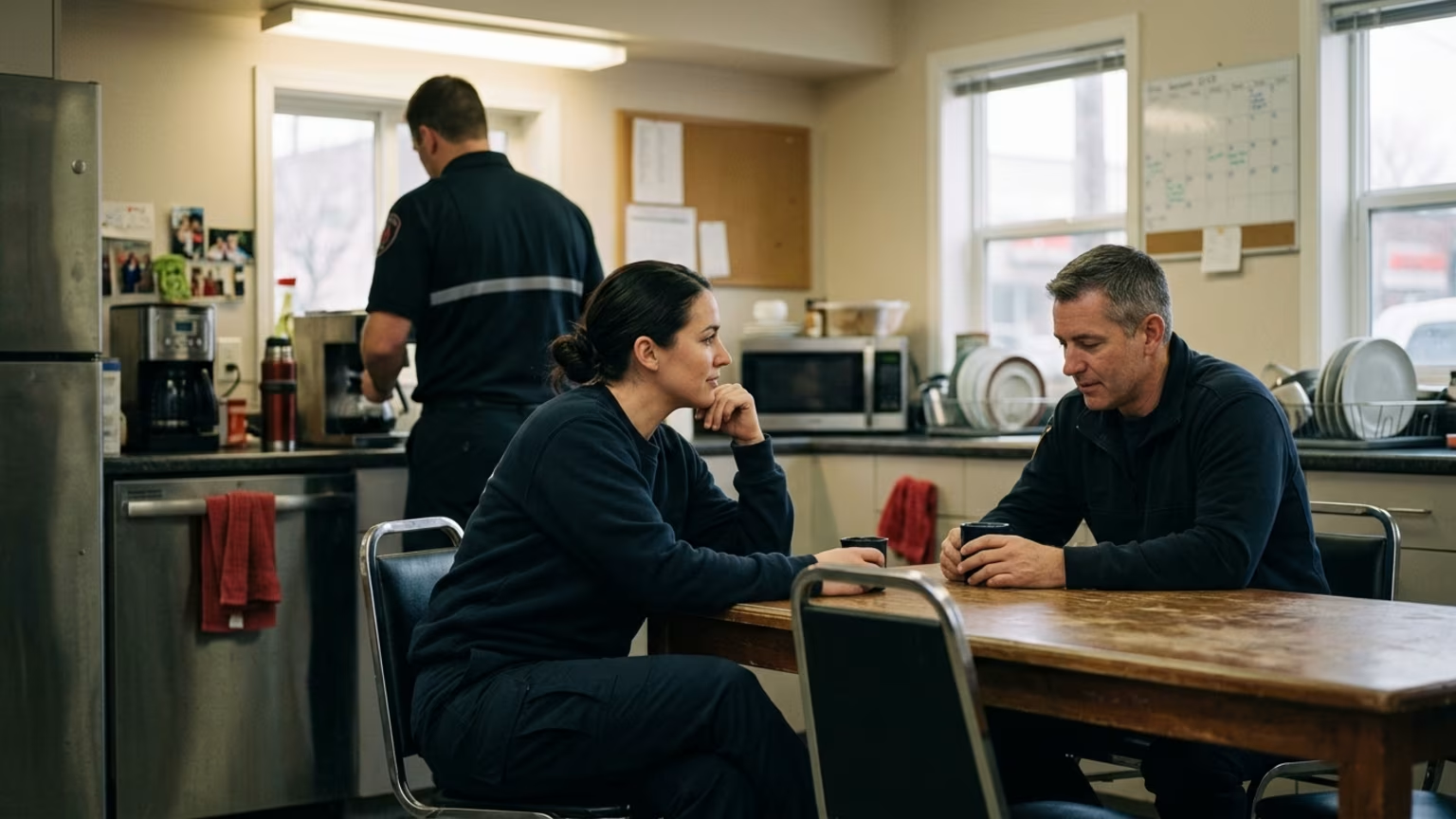

A review of Wendy Norris's argument for extending line-of-duty death support, detailing IAFF guidance, delayed operational stress and ongoing peer action.





If you or someone you know is in immediate danger, call 911. For urgent crisis support, call 988 and press 1 for the Veterans Crisis Line, or text 838255. If you are experiencing thoughts of self-harm, work with a clinician, colleague or family member to safely store firearms and medications.
On October 2, 2026, Firefighter Nation published a personal perspective by grief educator Wendy Norris arguing that departments must extend survivor support far beyond the initial aftermath of a line-of-duty death.
Norris writes from the perspective of a firefighter who lost her husband in the line of duty. She argues that immediate institutional responses fail to meet the continuing needs of survivors. Funerals and public ceremonies serve an important ceremonial function for the department and the wider community. However, true recovery requires deliberate support sustained over months and years.
Recent academic coverage reinforces the severe psychological toll of workplace fatalities. A 2025 University of Colorado Boulder dissertation examined the fallout from such events. Coverage of the research in 2026 noted that the study drew on in-depth interviews with 37 wildland firefighters in the American West. These interviews revealed lasting consequences for the personnel left behind.
The researcher documented accounts of severe grief and profound trauma following fatalities. Surviving colleagues frequently reported heavy survivor guilt and persistent anxiety. In some cases, surviving firefighters detailed intense hypervigilance and suicidal thoughts. These findings illustrate the heavy burden placed on personnel who must continue operating in hazardous environments.
The IAFF also supports the necessity of an extended care timeline. The organization states that peer support is typically offered in the first hours after a line-of-duty death. They note that services must remain visible for personnel who are not ready immediately. The IAFF reports that its peer-support model has trained more than 15,000 members to help colleagues process workplace trauma and connect them with further care.
Translating this knowledge into daily operations requires shift supervisors to update their expectations regarding crew fatigue. Grief carries a heavy physical weight that routinely compromises shift readiness. IAFF guidance identifies sleep difficulty and persistent irritability as possible signs a firefighter may be struggling. Additional indicators include appetite changes, neglect of basic needs and noticeable emotional detachment.
When these signs manifest, they directly compromise operational safety and overall physical performance. Standard recovery protocols must adapt to account for this extended psychological load. Officers should recognize that addressing ongoing sleep disruptions often intersects with unresolved workplace trauma. When personnel experience disrupted rest and altered eating habits, their baseline physical capability inevitably drops.
Ignoring these factors forces emergency professionals to operate in a state of continuous physiological deficit. Shift commanders must monitor the team for delayed reactions rather than assuming everyone has recovered. Extended grief drains the exact cognitive reserves required for rapid decision-making on complex emergency scenes. Recognizing this operational reality shifts the burden from the individual back to a structured organizational response.
The physical manifestations of prolonged stress often compound the existing challenges of irregular shift schedules. A firefighter managing delayed grief while working a rotating schedule faces an amplified risk of injury. Physical conditioning programs must adapt to this reality by incorporating necessary recovery windows. Modifying physical demands during periods of known vulnerability protects both the individual and their crew from preventable accidents.
Leaders must build a culture where noticing these behavioral shifts leads to immediate action. The IAFF advises colleagues to respond plainly and empathetically when they observe changes in a peer's routine. Direct intervention helps stabilize the team and prevents minor fatigue issues from compounding. Open communication builds a necessary bridge between standard physical conditioning and long-term psychological resilience.
The primary assumption overturned by recent advocacy is that a formal memorial brings closure to a department. Historically, administrative support peaks during the funeral week and drops sharply soon after. Norris highlights a massive divide between the organized public mourning process and the continuing private reality. Survivors and colleagues often face their most difficult moments long after official support networks step back.
The timeline for psychological recovery is highly variable and rarely predictable. Norris offers a personal example of this delayed impact in her own life. She recounts being unexpectedly affected by a routine ladder-training exercise roughly two years after her husband died. The sudden resurfacing of grief years later proves that trauma does not respect an administrative calendar.
This unpredictability requires agencies to rethink how they evaluate fitness for duty. Returning to work a week after a tragedy does not mean an individual is free from operational stress. Coverage of the Colorado dissertation noted that some wildland firefighters described persistent anxiety on the fireline following a fatality. Some reported continuing hypervigilance long after the immediate crisis passed.
Assuming a quick return to normal operations leaves personnel vulnerable to delayed stress reactions. The expectation that firefighters will simply push through the pain relies on outdated ideas of toughness. True career longevity demands an evidence-based approach to accumulated trauma. Discarding the arbitrary timeline of public mourning is a necessary step in protecting active-duty readiness.
Making actionable adjustments starts with how departments deploy their existing support networks. Peer-support teams should schedule recurring follow-ups rather than waiting for members to ask for help. Check-ins should continue over time and respect the specific preferences of the affected individuals. Norris notes that simple text messages or conversations that remember the deceased by name can provide immense comfort.
On an individual level, firefighters processing a loss need structured coping mechanisms. The IAFF advises personnel to allow ample time for grief rather than rushing the process. Setting a firm daily routine helps stabilize the nervous system during periods of high stress. Practical steps like eating well and maintaining regular physical activity provide a foundation for physiological recovery.
Personnel should practice regular self-assessment between complex shifts. Learning grounding techniques between challenging calls can help interrupt the cycle of hypervigilance. Supervisors can support this by modifying training schedules when crews show visible signs of emotional detachment. Flexibility in daily task management allows the team to prioritize recovery without compromising core operational duties.
Peers must act on the signs of struggle identified by the IAFF. Approaching a struggling colleague requires plain language about what you notice and a genuine offer of support. Direct questions eliminate the guesswork and show the individual they are not alone. Small adjustments in daily communication can significantly improve the safety and cohesion of the entire crew.
Tracking the future of departmental support means watching how agencies revise their training curriculums. Norris recommends instituting grief-informed training for chaplains and peer-support teams well in advance of an incident. Teaching firefighters about grief before they experience a loss could dramatically alter how crews process trauma. The effectiveness of these proactive education models will be a key area for ongoing observation.
Researchers will likely continue to study the impacts of extended career stress on active-duty personnel. Findings from the American West demonstrate a clear need for broader data on survival and recovery. Following these academic developments will help strategies for long-term stress management evolve beyond basic recommendations. Departments that stay current with this research will better protect their personnel.
The fire service must also evaluate how extended employee assistance programs influence long-term retention. Keeping experienced personnel in the field requires a comprehensive approach to both physical and mental recovery. Early intervention clearly prevents some acute stress reactions from ending careers prematurely. Continued observation will reveal which support frameworks offer the most sustainable results for an aging workforce.
Future studies should aim to identify the most effective methods for sustained peer intervention. While current guidelines stress empathy and continued contact, standardizing these approaches remains an administrative challenge. Agencies must balance the need for structured support with respect for individual grieving timelines. The evolution of these practices will ultimately determine the future health of the emergency services profession.
Maintaining structured psychological support sets the foundation for returning to duty, but sustaining physical readiness often requires addressing other unpredictable occupational demands. Managing nutrition, hydration and energy when meal timing is inconsistent remains a major challenge for emergency-service professionals returning to complex shift work. Rescuris provides the clear, evidence-led framework necessary to protect metabolic function and support active capability throughout a demanding career. Explore Resources
Rescuris publishes evidence-aware guidance for firefighters, police officers, paramedics and other first responders on fitness, recovery, sleep, nutrition, stress resilience and long-term capability.






Read practical guidance on first responder fitness, recovery, sleep, nutrition and resilience for demanding work and a long, active career.
read the blog
