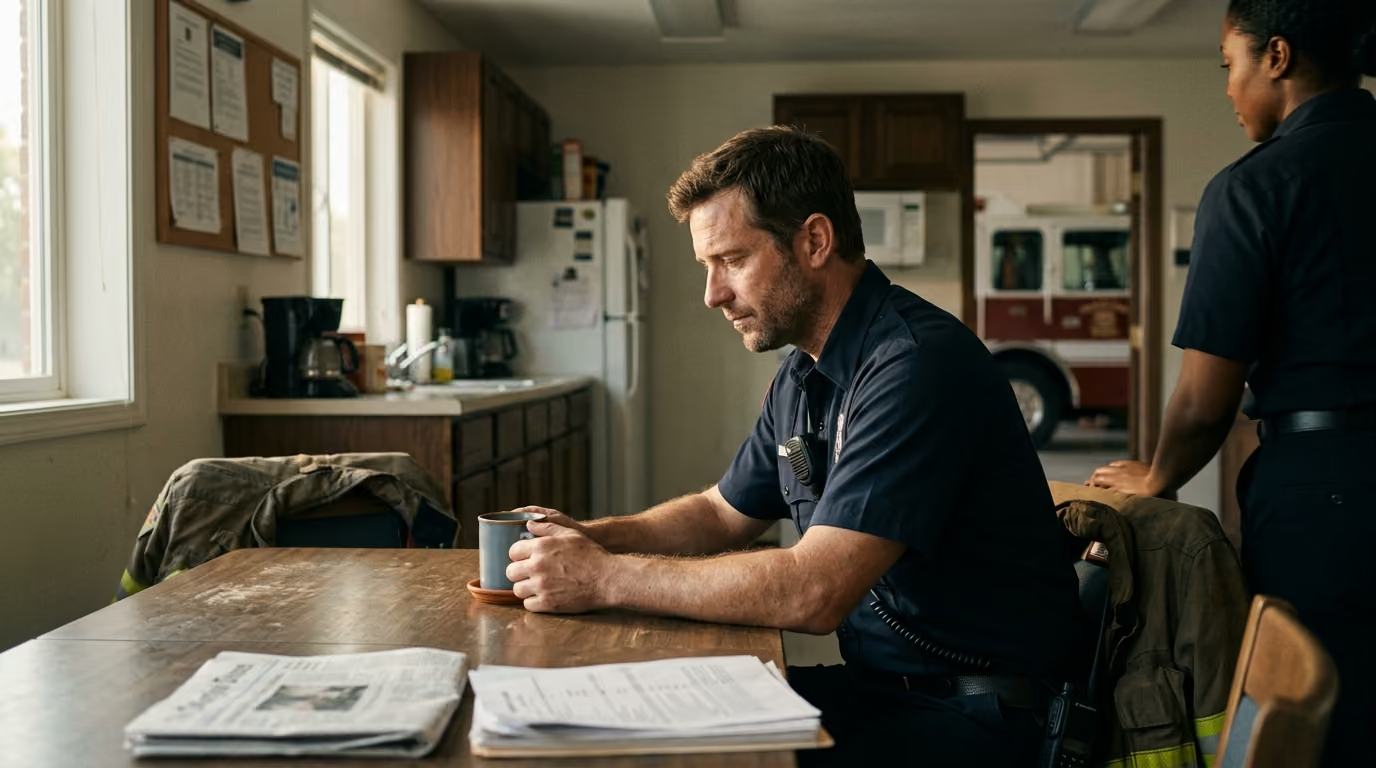

Five progressive phases guide former military and emergency personnel through nervous system regulation, sleep restoration, and healthy identity transitions beyond high-stress service.





If you or someone you know is in immediate distress or having thoughts of self-harm, call 911 for emergency assistance. You can also dial 988 to reach the Suicide & Crisis Lifeline (press 1 for the Veterans Crisis Line) or text 838255. If you are managing severe distress, consider arranging firearm and medication storage with a clinician, trusted colleague, or family member.
Stepping away from a high-threat career rarely produces immediate physical or psychological calm. Most people expect retirement or a career transition to bring instant relief. Instead, the sudden absence of operational
demands often increases internal tension, irritability, and restlessness. When a nervous system spends years adapting to high-consequence environments, ordinary civilian quiet registers not as peace, but as an unfamiliar lack of structure.
Managing this shift requires a structured approach to long-term downshifting rather than passive rest. Downshifting is the deliberate process of recalibrating autonomic reactivity, establishing predictable daily routines, rebuilding identity, and learning to choose when to mobilize. Daily stress management practices support regulation, sleep, and physical recovery, but they are not universal cures or replacements for clinical care. Achieving sustainable health after public safety, military, or emergency medical service means treating autonomic recalibration as a long-term adaptation process.
A successful transition begins by separating ordinary decompression challenges from conditions requiring formal clinical treatment. Many former operators label every post-service discomfort as stored stress or simple fatigue. This oversimplification prevents people from seeking appropriate care or leads them to pathologize normal lifestyle adjustments.
High-alert careers demand rapid threat detection, emotional control, exposure to human suffering, and readiness to act under severe uncertainty. These professions include military combat roles, law enforcement, corrections, fire suppression, emergency medical services, critical care nursing, search and rescue, and disaster response. Working in these environments conditions the brain to treat quiet environments with suspicion.
Data from the National Institute of Mental Health (NIMH) indicates that roughly 6% of the general population will experience post-traumatic stress disorder (PTSD) at some point in life. Research from the Department of Veterans Affairs (VA) shows that about 7% of all military veterans experience PTSD during their lifetime. However, among veterans who actively use VA healthcare services, estimated lifetime prevalence rises to approximately 26%, compared to 10% among veterans who do not use VA healthcare. Among actively serving first responders, literature reviews estimate PTSD prevalence between 10% and 14%, though rates vary significantly by duty exposure, role, and study methodology.
PTSD is a specific clinical diagnosis, not a catch-all term for post-career fatigue. According to clinical diagnostic frameworks, PTSD requires a specific pattern of symptoms persisting for more than one month that causes meaningful impairment in social, occupational, or daily functioning. These symptoms fall into four distinct clusters: intrusion (such as distressing memories or dreams), avoidance of trauma reminders, negative alterations in cognition and mood, and marked alterations in arousal and reactivity. Furthermore, these symptoms must not be better explained by medication side effects, substance use, or underlying medical conditions.
Understanding this distinction protects former personnel from two common traps. It prevents individuals from assuming that profound psychiatric symptoms can be fixed solely through breathing drills or gym sessions. It also reassures those experiencing standard transition restlessness that they are not automatically suffering from a clinical disorder.
To understand why the body stays on high alert after service ends, one must understand how the autonomic nervous system adapts to chronic operational stress. Physiology is designed to protect survival through constant adaptation.
Homeostasis describes the body's baseline state of maintaining stable internal metrics, such as body temperature, blood pH, and fluid balance. Allostasis refers to the active, dynamic process through which the body achieves internal stability through physiological change. When facing an emergency call, structural fire, or tactical operation, the brain initiates allostatic responses. It releases catecholamines, elevates blood pressure, sharpens focus, accelerates respiration, and increases muscle tension to meet operational demands.
Allostatic load represents the cumulative physiological wear and tear resulting from repeated, prolonged exposure to these stress-response adaptations. When operational stress continues without adequate recovery windows, multiple physiological systems can experience dysregulation.
A systematic review examining 267 investigations on allostatic load demonstrated consistent associations between elevated allostatic load and poorer physical, metabolic, and mental health outcomes. However, researchers emphasize that allostatic load is a broad conceptual framework rather than a simple consumer diagnosis. It cannot be diagnosed through a single biomarker, an isolated cortisol test, or a consumer wearable recovery score.
The autonomic nervous system balances mobilization and recovery functions:
Mobilization is not inherently harmful, nor is recovery inherently superior. Health relies on autonomic flexibility, which is the ability to shift rapidly into mobilization when performance demands it, and shift back down into recovery once the environment is safe. A high-alert career trains the nervous system to maintain continuous mobilization. When duty ends, the neural pathways governing threat detection remain highly conditioned, making it difficult for the body to recognize that immediate activation is no longer required.
A systematic review on physiological monitoring found that while heart-rate variability (HRV) is sensitive to acute operational stress and short-term recovery among emergency workers, current evidence is insufficient to infer chronic allostatic load from HRV measurements alone. Wearable metrics provide interesting general feedback on lifestyle patterns. They should never be treated as definitive medical proof of systemic autonomic failure.
Downshifting after a high-alert career involves far more than changing daily routines. It requires addressing the complex physical, environmental, and cultural conditioning built over years of service.
Shift work, 24-hour rotations, on-call schedules, and nighttime dispatch calls disrupt circadian biology. Years of irregular sleep timing alter melatonin secretion, elevate baseline evening cortisol, and fragment sleep architecture. When individuals retire, they cannot simply flip an internal switch to achieve an eight-hour, predictable night routine. Understanding shift work and sleep recovery requires patience as the circadian clock realigns. Adopting circadian nutrition strategies can also help stabilize metabolic rhythms during this extended readjustment period.
In emergency services and military operations, hypervigilance keeps personnel alive and protects the public. Scanning crowd dynamics, noting vehicle positions, observing micro-expressions, and listening for structural shifts are essential professional competencies.
When an operator leaves the job, these behaviors persist. A retired police officer may still sit facing the door in every restaurant, track the hands of strangers, and run mental contingency plans in grocery stores. This behavior is not a character flaw or a sign of mental weakness. It is an over-learned protective habit that has become mismatched with a low-threat civilian environment.
Not all psychological weight originates from direct physical danger. Moral injury occurs when personnel witness, participate in, or fail to prevent actions that transgress deeply held moral values. It can also stem from institutional betrayal, administrative callousness, or systemic failures that harmed vulnerable citizens.
Leaving the operational environment often removes the protective buffering of crew cohesion and daily purpose. Personnel may experience:
Decades of wearing body armor, hauling equipment, running hoses, or sustaining physical impacts create chronic musculoskeletal pain. Physical pain constantly feeds sensory threat signals back to the central nervous system, maintaining background arousal. Furthermore, histories of mild traumatic brain injury (TBI) or repeated blast exposures produce symptoms that closely mimic PTSD, including irritability, light sensitivity, sleep disturbances, and executive dysfunction. Comprehensive care must account for both physical damage and autonomic regulation.
Decompressing from an operational career is a multi-stage transition rather than an overnight fix. The following staged model provides a clear roadmap for long-term physiological and lifestyle realignment.
The first stage focuses on building objective self-awareness without turning monitoring into another vigilance exercise. Individuals learn to observe their internal state without self-judgment or panic.
Key tracking points include:
A daily subjective rating scale from 0 (completely calm) to 10 (extreme activation) can help track trends across weeks. These ratings serve as personal guideposts, not diagnostic measurements.
Stabilization establishes the foundational physiological baselines necessary for recovery. Attempting complex psychological processing while chronically sleep-deprived and nutrient-depleted is rarely effective.
Essential stabilization actions:
The goal of stabilization is not to eliminate all stress. It is to build a reliable physiological buffer that supports steady recovery.
Reconditioning teaches the nervous system that arousal can rise and fall safely in non-operational environments. Prolonged service conditions the brain to believe that high physiological arousal always signals imminent catastrophe.
Reconditioning practices include:
Structured exposure to traumatic memories should never be improvised during self-directed reconditioning. Trauma-focused exposure requires the guidance of a trained mental health professional.
Recovery relies heavily on social bonds. Research consistently shows that social support serves as a powerful protective buffer against persistent post-traumatic stress symptoms.
Constructive reconnection methods:
Integration is the final, ongoing stage of the transition process. It involves establishing a coherent personal narrative in which high-alert service represents a valuable chapter of life rather than the person's entire identity. Integration does not require forgetting experiences, forgiving every institutional failure, or pretending the past was easy. It means living fully in the present while using the discipline, focus, and resilience developed during service to build a meaningful civilian life.
Daily habits provide the concrete mechanisms for autonomic downshifting. These practices should be practical, repeatable, and tailored to the demanding realities of active or former responders.
A decompression ritual acts as a clear psychological boundary separating operational work or daily responsibilities from restorative home life.
This sequence must remain adaptable. If the ritual becomes a rigid rule that causes severe distress when interrupted, it can turn into an unhelpful avoidance behavior rather than a recovery tool.
Breathing practices offer a direct way to influence autonomic state. Research evaluating breathing-based interventions, including studies on Sudarshan Kriya yoga, has documented measurable reductions in PTSD and anxiety symptoms among veterans.
A practical, field-tested breathing method:
Safety Adjustment: Focusing internally on breath or heart sensations can sometimes increase panic, dissociation, or intrusive memories in trauma survivors. If internal breathing exercises create air hunger or emotional distress, stop immediately. Shift to externally oriented grounding, rhythmic walking, or listening to ambient sounds.
Grounding pulls attention away from internal threat simulations and anchors it in immediate sensory facts.
Practical grounding techniques:
Grounding does not pretend that danger never exists. Its purpose is to help the nervous system confirm whether an active threat is present right now in this room.
The Physical Activity Guidelines for Americans recommend that adults complete 150 to 300 minutes of moderate-intensity aerobic physical activity, or 75 to 150 minutes of vigorous-intensity aerobic physical activity per week, along with regular muscle-strengthening exercise. Regular physical training burns off accumulated muscle tension, supports deep sleep, and builds physical resilience.
However, high-intensity exercise should not be treated as an aggressive cure-all. Many former tactical athletes use extreme training as an emotional distraction or a way to burn off hyperarousal through exhaustion. Relying on structured reset techniques and learning autoregulation and training readiness helps personnel match daily physical volume to their actual systemic recovery capacity.
Quality sleep is both a primary driver of recovery and one of the first systems disrupted by operational stress.
Actionable sleep hygiene protocols:
Attention training develops the ability to place, hold, and shift focus intentionally. A VA/DoD guideline review supports mindfulness-based stress reduction as an adjunct option for PTSD, though evidence for many other unguided mind-body methods remains mixed.
Simple attention exercises:
Navigating life after a high-alert career involves avoiding several predictable traps. Review these practical models to identify unhelpful patterns and make necessary adjustments.
Illustrative Scenario: A retired firefighter-paramedic sleeps lightly, checks window locks four times every evening, becomes irritated by ordinary household noise, and feels lost on days without scheduled chores.
Correction:
Illustrative Scenario: A former military investigator excels at an office-based corporate security desk but avoids crowded stores, family gatherings, driving on busy highways, and medical checkups.
Correction:
Illustrative Scenario: A former police officer lifts heavy weights and runs high-mileage routes daily, feels intense panic when forced to take a rest day, and experiences worsening insomnia and joint pain.
Correction:
Illustrative Scenario: A retired corrections supervisor cuts off contact with non-service friends, believing civilians cannot understand reality. Evenings are spent browsing online responder forums and recounting past critical incidents.
Correction:
Illustrative Scenario: An emergency room nurse attends a silent meditation retreat, attempts prolonged silent breathwork, and experiences sudden panic, trembling, and intrusive clinical memories.
Correction:
Downshifting practices offer valuable support for daily stability, but they have clear boundaries. Treating lifestyle habits as a universal cure for deep psychological or psychiatric injuries is dangerous.
State-regulation tools (such as breathing drills, grounding routines, and physical workouts) change how you feel in the present moment. They calm heart rate, discharge muscular tension, and sharpen immediate focus.
However, state regulation does not process underlying traumatic memories, resolve chronic grief, or restructure distorted beliefs regarding trust, safety, and guilt. Evidence-based trauma therapies specifically target and reprocess the memory structures driving chronic hyperarousal. Regulation skills make daily life more manageable and psychotherapy easier to tolerate, but they do not replace trauma-focused clinical treatment.
There is a critical functional difference between healthy decompression and chronic avoidance:
Using alcohol, cannabis, sedatives, or stimulants to control operational arousal carries severe risks. Alcohol acts as a central nervous system depressant that temporarily numbs hyperarousal. However, as it metabolizes, the brain experiences rebound excitation, spiking midnight cortisol, fragmenting sleep architecture, and worsening next-day vigilance. Stimulants mask underlying sleep deprivation while keeping heart rate elevated and exacerbating irritability.
Knowing when to seek specialized professional medical and psychological evaluation is an essential part of long-term career longevity and life after service.
According to the NIMH, professional clinical evaluation should be pursued when symptoms persist for more than a month, worsen over time, or directly impair daily functioning.
Key indicators requiring professional assessment include:
If you are experiencing a mental health crisis, contact the Suicide & Crisis Lifeline immediately by dialing 988 (press 1 for Veterans) or text 838255. Emergency services can also be reached at 911.
The 2023 Department of Veterans Affairs and Department of Defense (VA/DoD) Clinical Practice Guideline strongly recommends individual trauma-focused psychotherapies as the most effective first-line treatment for PTSD:
When psychotherapy is unavailable, incomplete, or declined, the VA/DoD guideline recommends specific evidence-based medications, including selective serotonin reuptake inhibitors (such as sertraline or paroxetine) or serotonin-norepinephrine reuptake inhibitors (such as venlafaxine). Medication should always be managed under the direct supervision of a licensed physician or psychiatrist.
Comprehensive care also includes investigating underlying medical conditions. Concussion history, traumatic brain injuries, endocrine dysregulation, chronic pain syndromes, and obstructive sleep apnea must be evaluated by qualified medical specialists. Addressing physical health issues alongside psychological recovery offers the strongest foundation for long-term well-being.
For additional strategies on career sustainability, explore our stress resilience and mental performance library and our comprehensive career longevity and life after service resources.
Regaining long-term health after a demanding operational career is not about erasing your past strengths, but about recovering the freedom to choose when to mobilize and when to rest.
Stay connected for research-led guidance on duty fitness, shift-work sleep, injury recovery, stress, nutrition and career longevity. Practical ideas for first responders who want to stay capable on the job, recover well and protect their health for the long run.



Read practical guidance on first responder fitness, recovery, sleep, nutrition and resilience for demanding work and a long, active career.
read the blog



