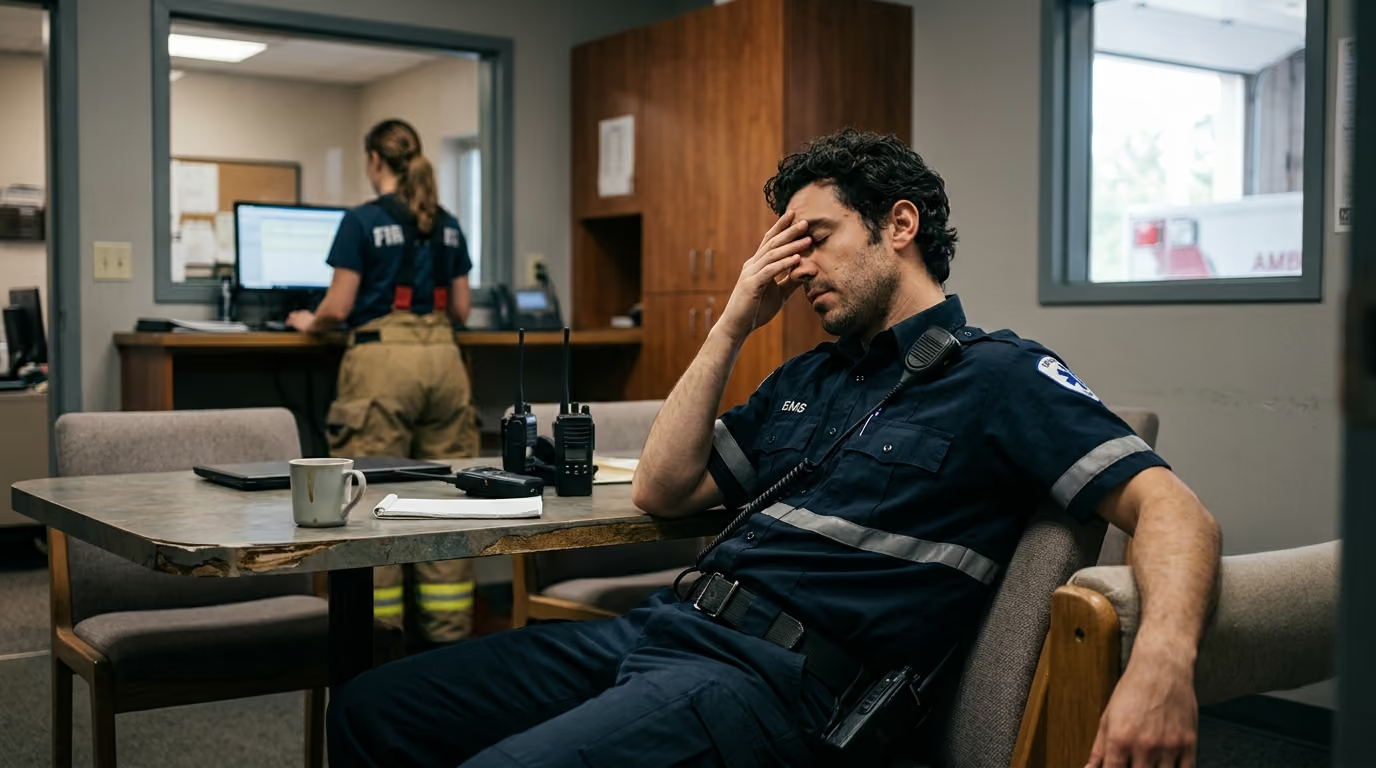

Post-service sleep disruption affects many first responders, requiring formal diagnostic testing, airway management, and practical weekly action plans for sustained long-term recovery.





If you are in immediate danger, call 911. For 24/7 support, call or text 988 and press 1 for the Veterans Crisis Line, or text 838255.
Many former first responders search for why sleep remains broken months or years after leaving emergency work. Retiring from shift work or stepping away from frontline duty does not automatically reset human physiology. This guide provides a definitive reference on identifying, diagnosing, and managing chronic sleep disruption after emergency service.
If you or someone you know is in immediate distress or having thoughts of suicide, support is available. In the United States, call 911 for immediate emergencies. You can also call or text 988 to reach the Suicide & Crisis Lifeline, press 1 for the Veterans Crisis Line, or text 838255. If safety concerns involve access to lethal means at home, arrange with a trusted family member or healthcare provider to secure those items off site.
A quick answer to why sleep fails to normalize after service involves conditioned nervous system arousal, physical airway changes, and circadian disruption. Emergency duty trains the brain to remain vigilant during rest, while irregular hours alter natural biological clocks. Furthermore, physical trauma, pain, and sleep-related breathing disorders often develop on the job and persist into civilian life. Sustainable recovery requires treating sleep problems as occupational health conditions rather than personal failures or simple bad habits.
Sleep disorders among former emergency personnel represent a widespread occupational health burden. Research demonstrates that sleep disruption is not a rare personal reaction to retirement or resignation. Instead, it reflects decades of physiological strain accumulated across demanding careers.
A systematic review and meta-analysis published in 2023 estimated that approximately 30.49% of firefighters met the criteria for a diagnosed sleep disorder. The same meta-analysis revealed that 51.43% of firefighters reported chronically poor sleep quality. These numbers demonstrate that more than half of the workforce experiences nonrestorative sleep while in active service.
A broader meta-analysis examining first responders to medical emergencies found similarly elevated rates across disciplines. The researchers identified pooled prevalence rates of 31% for shift-work disorder and 30% for obstructive sleep apnea. They also found a 28% pooled prevalence for chronic insomnia and 28% for excessive daytime sleepiness. Restless legs syndrome appeared in roughly 2% of the population, while narcolepsy was present in about 1%.
Screening studies conducted within public safety agencies show even higher numbers in specific cohorts. In a large screening initiative among active firefighters, 37.2% screened positive for at least one sleep disorder. Obstructive sleep apnea led the screening positives at 28.4%, while shift-work disorder affected 9.1% of night workers. Insomnia symptoms appeared in 6.0% of screened personnel, and restless legs syndrome affected 3.4%.
Federal public-safety research supported by the Centers for Disease Control and Prevention confirms widespread sleep deprivation across sectors. In those findings, 59% of firefighters reported acute or chronic sleep debt, and 23% described clinically meaningful insomnia symptoms. Poor sleep quality affected 64% of emergency medical services personnel and 51% of law enforcement officers.
These figures must be understood as evidence-based estimates derived from diverse screening tools and research designs. Variations in diagnostic thresholds mean that prevalence rates vary between individual departments and service branches. A positive screening questionnaire indicates elevated risk, which requires formal medical evaluation rather than an automatic clinical diagnosis. The evidence clearly shows that sleep disruption is an occupational legacy across fire, rescue, police, and paramedicine.
Understanding why sleep problems persist requires looking at how emergency service alters physical and psychological systems. Sleep is controlled by two primary processes: the homeostatic sleep drive and the circadian timing system. Emergency work routinely disrupts both processes while adding chronic physical and psychological strain.
The homeostatic sleep drive builds pressure to sleep for every hour a person stays awake. Shift work, extended tours, and emergency call-outs repeatedly disrupt this natural pressure cycle. Many responders spend decades working 24-hour rotations, consecutive 12-hour night shifts, or mandatory overtime. These irregular patterns force the body to sleep when biological drive is low and stay awake when biological drive is high.
Years of nocturnal alarms create conditioned autonomic hyperarousal. During service, tones, radios, and sirens train the brain to transition from deep rest to maximum adrenaline output in seconds. Over time, the brain learns that sleeping in a quiet or dark room is potentially dangerous. After retirement, ordinary sounds like a closing door or a passing siren trigger an immediate stress response. The nervous system remains on alert, preventing the brain from transitioning into deep, slow-wave sleep.
Long careers also generate significant musculoskeletal wear, soft-tissue injuries, and systemic inflammation. Chronic joint pain, lower back injuries, and neck stiffness physically interrupt sleep continuity. Responders often shift positions constantly during the night to alleviate physical pressure on worn joints. Pain triggers frequent micro-arousals that shatter sleep architecture without the person consciously waking up.
The transition away from active service removes structured physical demands and predictable crew routines. Without morning muster or regular shift start times, daily rhythms often drift. This loss of occupational structure can cause irregular bedtimes, erratic morning wake times, and unplanned daytime naps. These erratic habits weaken the circadian rhythm, creating long-term schedule instability that mimics active shift-work disorder.
Effective recovery begins with establishing precise clinical definitions. Former responders often describe their primary symptom as restless sleep. Restless sleep is a non-specific description rather than a medical diagnosis. Clinicians separate sleep complaints into several distinct physiological categories.
Insomnia involves difficulty falling asleep, difficulty staying asleep, or waking up too early despite adequate time and opportunity. To meet the clinical definition of chronic insomnia, symptoms must occur at least three times per week for at least three months. It must also cause measurable daytime distress or functional impairment. Acute insomnia often resolves when an immediate stressor ends, whereas chronic insomnia is sustained by conditioned psychological and behavioral patterns.
Obstructive sleep apnea occurs when upper airway tissues repeatedly collapse during sleep, causing pauses in breathing. These breathing pauses lead to sudden drops in blood oxygen and trigger brief brain awakenings to reopen the airway. Loud snoring is a common indicator, but it is not universally present in every patient. Many former responders present with morning headaches, dry mouth, frequent nighttime urination, and unrefreshing sleep rather than dramatic snoring.
Circadian rhythm sleep-wake disorders occur when internal biological clocks fall out of alignment with the external environment. A delayed sleep-wake phase causes a person to remain fully alert until late at night, making conventional wake times difficult. An irregular sleep-wake rhythm distributes sleep across fragmented blocks throughout the 24-hour day. Persistent schedule instability occurs when the brain fails to establish a regular sleep pattern after leaving rotating shifts.
Restless legs syndrome is a neurological sensory-motor condition characterized by an uncomfortable urge to move the limbs. The sensations typically occur during periods of rest or inactivity, especially in the evening and night. Moving the legs provides temporary relief, but symptoms return when rest resumes. Restless legs syndrome must be distinguished from periodic limb movements, which involve repetitive, involuntary muscle jerks during sleep.
Excessive daytime sleepiness differs fundamentally from general physical fatigue. Sleepiness is a physiological drive that results in an inability to stay awake during passive activities. Fatigue refers to low energy, muscle weakness, or mental exhaustion without an immediate tendency to fall asleep. Hyperarousal describes feeling exhausted while simultaneously feeling wired and unable to rest. Recognizing these distinct categories ensures that diagnostic testing targets the real underlying cause.
Sleep disruption rarely exists in isolation after an emergency services career. It frequently interacts with psychological stress, post-traumatic stress symptoms, and secondary lifestyle adaptations. Disentangling these factors is necessary to create an effective recovery plan.
Trauma exposure can profoundly alter nocturnal physiology. Intrusive memories, daytime flash-backs, and sustained threat appraisal produce heightened sympathetic nervous system activity at night. Trauma-related sleep disturbances include severe nightmares, nocturnal panic attacks, and an active avoidance of sleep. Many responders report a subconscious fear of letting their guard down in the dark. This hypervigilance fragments REM sleep, which is the exact sleep stage responsible for emotional processing.
Medical guidelines provide specific recommendations for managing sleep in the presence of trauma. The clinical practice guidelines from the Department of Veterans Affairs and the Department of Defense address post-traumatic stress. These guidelines recommend Cognitive Behavioral Therapy for Insomnia as the primary behavioral treatment for chronic insomnia in people with post-traumatic stress. The guideline group noted that clinical evidence remains insufficient to recommend for or against the universal use of medications like prazosin for trauma-related nightmares.
Self-medication with alcohol represents a common trap for former responders struggling with broken sleep. Alcohol acts as a central nervous system depressant, which may shorten the time it takes to fall asleep. However, as the liver metabolizes alcohol during the night, it causes severe rebound sleep fragmentation. Alcohol relaxes upper airway muscles, worsening obstructive sleep apnea events and oxygen desaturations. It also suppresses critical REM sleep, intensifying vivid nightmares and emotional volatility during the second half of the night.
Physical and mental health conditions create bidirectional feedback loops that worsen sleep quality. Chronic pain delays sleep onset, while poor sleep lowers the body's pain tolerance threshold the following morning. Depression exacerbates daytime fatigue and promotes excessive time in bed, which weakens the homeostatic sleep drive. Obstructive sleep apnea can mimic symptoms of depression and anxiety by flooding the cardiovascular system with nighttime stress hormones. A comprehensive treatment plan must address these interconnected conditions simultaneously rather than treating sleep in isolation.
For those navigating major career shifts, reviewing resources on career longevity and life after service can offer valuable guidance on managing post-uniform health transitions.
Navigating the medical system requires an objective, step-by-step approach. Former emergency personnel should expect a comprehensive diagnostic evaluation rather than a quick prescription. Professional sleep testing establishes an accurate baseline and rules out complex sleep disorders.
The first step in clinical evaluation is capturing concrete sleep parameters. Clinicians must gather precise information regarding actual bedtime, sleep latency, nighttime awakenings, and final morning wake time. The interview must document daytime symptoms, including unintended dozing, near-miss driving events, memory lapses, and occupational limitations. Maintaining a detailed two-week sleep diary provides clinicians with clear data regarding sleep continuity, napping habits, and schedule stability.
Validated screening questionnaires help medical providers assess symptom severity and occupational risk. Common tools include the Insomnia Severity Index, which quantifies the impact of insomnia on daily function. The Epworth Sleepiness Scale evaluates the likelihood of falling asleep during everyday situations. The STOP-Bang questionnaire screens for obstructive sleep apnea risk based on snoring, tiredness, observed apneas, blood pressure, body mass, age, neck size, and gender. While useful for triage, screening questionnaires do not replace diagnostic polysomnography.
Diagnostic testing for obstructive sleep apnea follows established professional standards. The American Academy of Sleep Medicine states that sleep apnea testing must occur within a comprehensive sleep evaluation. An uncomplicated adult with symptoms indicating high risk for moderate-to-severe sleep apnea may use an attended in-lab study or a home sleep apnea test. High clinical risk is defined as daytime sleepiness combined with at least two indicators: loud snoring, witnessed gasping or choking, or diagnosed hypertension.
Home sleep apnea testing has specific clinical limitations that patients must understand. Home tests monitor breathing, airflow, and oxygen, but they do not measure actual brain waves or sleep stages. If a home test yields a negative, inconclusive, or technically inadequate result, formal in-lab polysomnography is required. In-lab testing is also required for patients with significant heart failure, neuromuscular disease, chronic opioid use, or severe chronic insomnia. Polysomnography remains the gold standard for detecting complex sleep apnea, periodic limb movements, and non-respiratory parasomnias.
Certain clinical symptoms demand rapid medical attention rather than routine scheduling. Red-flag symptoms include falling asleep at the wheel, waking with severe chest pain, or experiencing sudden shortness of breath. Violent dream enactment behaviors, which involve physically kicking, punching, or leaping out of bed during sleep, require immediate neurological assessment. Rapidly escalating use of sedatives, uncontrolled panic, or inability to function safely also warrants immediate clinical intervention.
Non-drug therapies represent the first-line standard of care for resolving chronic sleep difficulties. Decades of research confirm that structured behavioral interventions produce longer-lasting improvements than sleep medications. These approaches retrain the brain to associate the bed with restful sleep rather than frustration and alertness.
Cognitive Behavioral Therapy for Insomnia is the primary treatment recommended by the American Academy of Sleep Medicine for chronic insomnia. Unlike generic sleep advice, this therapy is a structured multi-week behavioral program. It directly targets the conditioned arousal and cognitive distortions that keep the nervous system awake at night. A qualified clinician guides the patient through specific behavioral modifications that rebuild natural sleep architecture.
Stimulus control therapy is a core component designed to break the conditioned association between the bed and wakefulness. Responders who spent years waiting for alarms often lie in bed feeling hypervigilant and frustrated. Stimulus control establishes a strict rule: the bed is reserved exclusively for sleep and physical intimacy. If sleep does not occur within approximately twenty minutes, the individual leaves the bedroom and engages in a quiet, low-light activity until sleepiness returns.
Sleep restriction therapy, also known as sleep compression, consolidates fragmented sleep into a continuous block. Spending nine hours in bed to achieve five hours of broken sleep dilutes the homeostatic sleep drive. This therapy temporarily limits total time in bed to match the actual hours of sleep obtained. Consolidating this window builds significant homeostatic sleep pressure, leading to faster sleep onset and fewer nighttime awakenings. As sleep efficiency improves above 85%, the clinician gradually extends the time in bed.
Environmental modifications and circadian realignment provide essential support to behavioral therapy. Former responders must establish a dark, quiet, and temperature-controlled sleeping environment. Morning exposure to bright natural sunlight helps anchor the circadian clock and suppresses daytime melatonin production. Limiting high-intensity artificial light and screen exposure two hours before bedtime protects natural evening melatonin release. Planning relaxing transition periods between evening activities and bedtime signals the nervous system that operational vigilance is no longer required.
To better understand how irregular work impacts biological rhythms, explore our analysis of circadian timing and sleep debt across rotating shifts.
When diagnostic testing identifies obstructive sleep apnea, airway stabilization is essential. Leaving sleep apnea untreated increases long-term cardiovascular risks, including hypertension, cardiac arrhythmias, and stroke. Modern medicine offers several effective therapies to maintain an open airway during sleep.
Positive airway pressure therapy remains the most effective and widely prescribed treatment for obstructive sleep apnea. Continuous positive airway pressure devices deliver a steady stream of pressurized air through a mask, acting as a pneumatic splint. This air pressure prevents the soft palate, tongue, and throat tissues from collapsing into the airway. Automatic positive airway pressure machines adjust pressure levels continuously throughout the night based on airway resistance.
Adapting to positive airway pressure requires patience, proper equipment fitting, and clinical follow-up. Many former responders discontinue therapy early due to mask discomfort, mouth dryness, claustrophobia, or air leaks. Working closely with a sleep specialist to trial different mask styles, such as nasal pillows or full-face masks, resolves most comfort issues. Heated humidifiers and ramp features, which gradually increase pressure as the patient falls asleep, significantly improve treatment tolerance.
Oral appliance therapy serves as an evidence-based alternative for individuals with mild to moderate obstructive sleep apnea. Custom-fabricated mandibular advancement devices are fitted by qualified dental sleep specialists. These devices gently hold the lower jaw and tongue forward, increasing the physical space in the upper airway. While oral appliances are generally easier to travel with, they require ongoing dental monitoring to prevent bite changes or jaw pain.
Surgical evaluations may be warranted when anatomical obstructions prevent successful non-invasive therapy. Procedures may include uvulopalatopharyngoplasty, tonsillectomy, nasal septoplasty, or hypoglossal nerve stimulation. Hypoglossal nerve stimulators use an implanted device that delivers mild electrical pulses to the tongue nerve during sleep, preventing airway collapse. Surgical options require careful anatomical assessment by an otolaryngologist specializing in sleep surgery.
Medication reviews represent an essential step in post-service sleep management. Many prescription drugs taken for blood pressure, pain, depression, or respiratory conditions can interfere with sleep quality. Over-the-counter sleep aids, particularly those containing sedating antihistamines, often cause severe morning grogginess and carry risks of cognitive impairment. A licensed physician or clinical pharmacist should review all medications, supplements, and timing of use to eliminate pharmacological drivers of sleep disruption.
Understanding operational fatigue is critical for long-term health, as detailed in our guide on shift work and sleep disruption.
Securing appropriate healthcare requires effective communication with medical providers. Civilian physicians may not fully grasp the physical and psychological toll of emergency service schedules. Presenting structured, objective data allows clinicians to choose appropriate diagnostic tests quickly.
Patients should prepare a comprehensive occupational and sleep history before their medical appointments. The occupational history must outline the total years of service, typical shift lengths, and rotation patterns. It should document the frequency of nocturnal alarms, mandatory overtime demands, and the exact date of transition away from shift work. Explaining whether sleep difficulties began during active service or emerged after retirement provides vital diagnostic context.
Symptom documentation must be descriptive, precise, and focused on functional impact. Instead of stating that you sleep poorly, describe your exact sleep routine, estimated sleep latency, and frequency of awakenings. Documenting physical symptoms like gasping, dry mouth, morning headaches, and leg discomfort helps clinicians differentiate between insomnia and airway collapse. Gathering collateral observations from a bed partner regarding snoring intensity, breathing pauses, or limb movements adds critical diagnostic evidence.
Using a structured opening statement helps direct the clinical conversation effectively during a consultation. A clear and direct statement might sound like:
> "Since retiring from the fire department, I have adequate time in bed, but it takes me over an hour to fall asleep, and I wake up gasping several times a night. My partner notes heavy snoring and breathing pauses, and I experience frequent daytime fatigue and morning headaches. I would like a formal evaluation for obstructive sleep apnea and chronic insomnia."
This approach clearly presents the symptoms without confusing clinical interpretations. It provides the physician with actionable details that justify ordering formal sleep testing and behavioral therapy.
To optimize your daily energy and recovery windows, review our practical strategies on shift-specific sleep planning.
Rebuilding restorative sleep after an emergency services career requires consistent, deliberate action. Sleep systems respond best to predictable cues and steady routines. Below is a structured checklist of practical steps you can implement this week to start your recovery process.
Rebuilding healthy sleep after a lifetime of emergency calls is a gradual physiological process. Consistent habits, accurate medical testing, and targeted therapies can restore the natural rest your body needs. Taking deliberate steps to protect your sleep ensures sustained physical capability, mental clarity, and long-term health throughout life after service.
Stay connected for research-led guidance on duty fitness, shift-work sleep, injury recovery, stress, nutrition and career longevity. Practical ideas for first responders who want to stay capable on the job, recover well and protect their health for the long run.



Read practical guidance on first responder fitness, recovery, sleep, nutrition and resilience for demanding work and a long, active career.
read the blog



