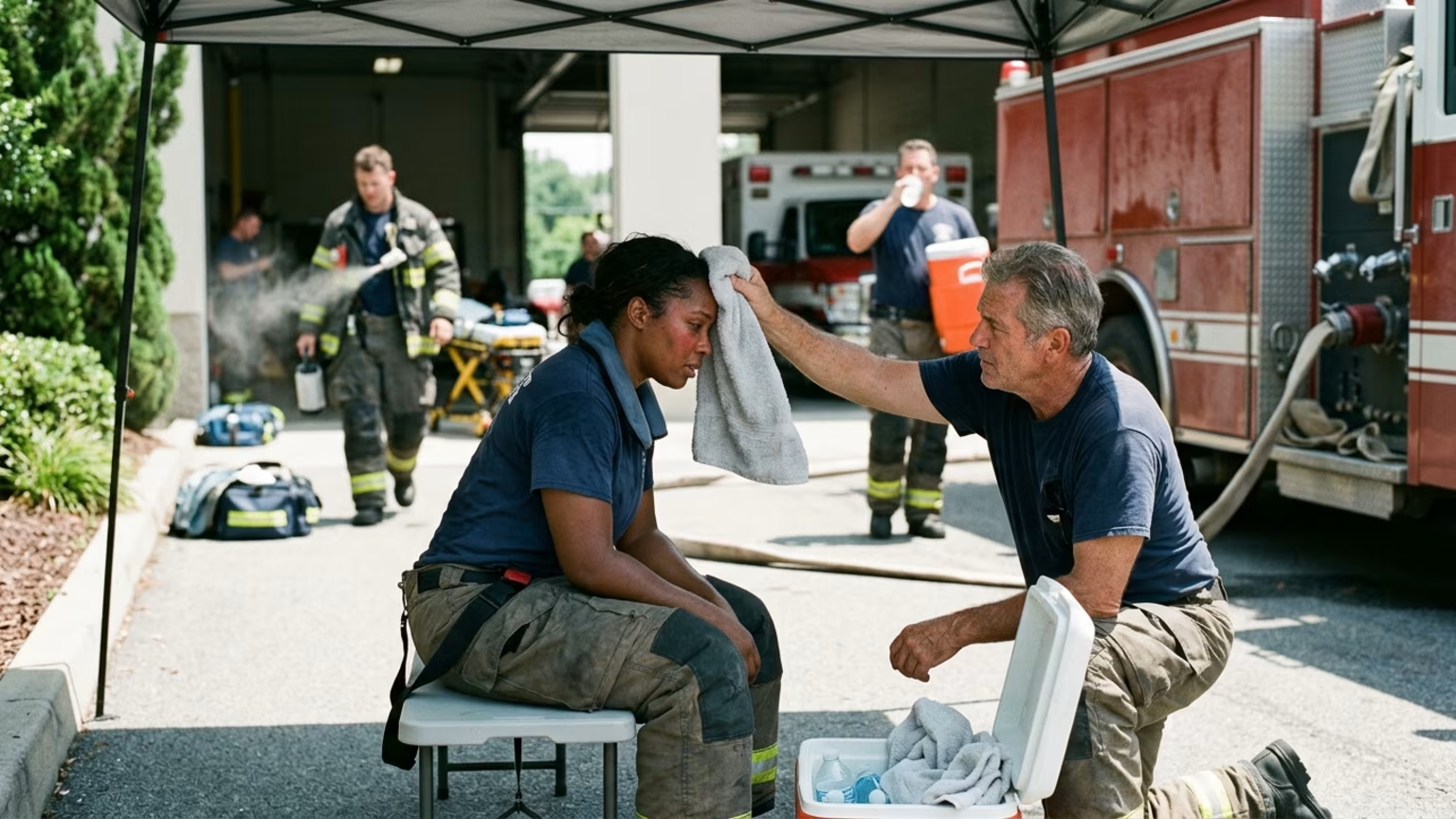

A September 2026 report details the Texas County Emergency Response Team's structured approach to on-scene firefighter cooling, hydration and physical recovery.





On September 30, 2026, KY3 reported that the Texas County Emergency Response Team has established a structured support model to provide cooling and medical services to firefighters at active scenes. The nonprofit organisation operates in Texas County, Missouri, where it actively helps emergency personnel recover during physically demanding fire incidents. The KY3 broadcast documents a growing local effort to formalise incident rehabilitation for departments facing severe operational strain.
The central takeaway from the Texas County operation is the necessity of direct physical intervention over passive supply drops. Texas County ERT director Travis Maddox described a deeply hands-on process at active fires. Responders do not simply hand out water bottles to exhausted crews and walk away. Instead, team members physically help firefighters remove their heavy jackets and boots before getting them seated in a designated area.
Once personnel are out of their structural gear, the team applies cool rags to their skin and provides cold drinks. Maddox characterises this specific service as a straightforward way to help firefighters relax, hydrate and recover from severe physical exertion. Physical assistance is a core component of this operation. Exhausted firefighters often struggle to manage their own gear removal, making structured help a vital part of the recovery process.
The organisation initially started as a neighbourhood-watch-style effort because emergency services can sometimes take an hour to reach rural parts of the large county. Firefighter support has since become the organisation's biggest service. The demand for structured rehabilitation is evident across the region. KY3 reported that the team's services had already been requested by departments in neighbouring counties, noting that the fire season was just beginning at the time of the report.
This field model directly supports physiological evidence that fluid intake alone cannot completely solve occupational heat strain. A September 2026 article in The Conversation notes that hydration supports heat dissipation but may not prevent overheating. Overheating occurs when heat gain and metabolic heat production outpace the body's capacity to release that heat to the environment. Physical cooling must happen alongside fluid replacement to properly manage rising core temperatures.
Firefighters face immense thermal burdens from heavy protective clothing and direct environmental exposure. The Conversation highlighted a study of 221 wildland firefighters to illustrate this severe physiological strain. In that study, 61% of personnel reached a core temperature of at least 100°F (38°C) while working. Furthermore, about 50% of the observed wildland crews reached a physiological strain index of 6 or higher on a 0 to 10 scale.
These figures show why the Texas County ERT approach of removing structural jackets and boots is absolutely critical for immediate recovery. Trapped heat must be allowed to escape the body efficiently. Applying wet rags further accelerates cooling, moving beyond basic fluid intake to actively pull heat from the skin during structured rest periods. Teams reviewing hydration protocols for heat and long calls must incorporate this type of active thermal management.
The Conversation coverage also identifies meaningful recovery time for cooling, rehydration and sleep as deeply relevant to physical restoration. Proper management on the fireground dictates how well personnel can recover between demanding shifts. Focusing entirely on water consumption without addressing core temperature elevation leaves personnel exposed to dangerous physiological stress over long operational periods.
The Texas County model addresses the persistent gap between clinical research and the chaotic reality of incident scenes. Much of the available data on heat management comes from environments that look nothing like a rural fireground. A 2026 scoping review published in the Journal of Occupational and Environmental Medicine highlights this exact discrepancy across the occupational health sector. The scoping review included 90 occupational heat-stress intervention studies.
However, the review reported that 68% of those included studies were conducted in controlled laboratory settings. This high percentage limits how directly that evidence translates to unscripted field operations with heavy gear. Emergency crews rarely work in climate-controlled spaces with perfectly timed work and rest cycles. Real-world incident response involves unpredictable physical loads that lab environments simply cannot replicate.
The scoping review grouped interventions into work-practice controls, administrative controls, active and passive cooling, wearable cooling and rehydration. Despite these broad categories, researchers noted significant evidence gaps in settings and populations beyond the controlled research base. Field observations remain critical for understanding how firefighters actually experience and manage heat stress on active fire lines.
Emergency personnel operate in unpredictable conditions where lab-tested cooling stations are rarely available. The news coverage situates Texas County ERT's support in a practical, incident-level setting where teams respond when departments request assistance. This local capacity bridges the gap between academic recommendations and the logistical realities of prolonged incident response. It demonstrates that effective interventions require practical deployment strategies.
Departments reviewing their own heat-exposure management can use this report to evaluate how their incident rehabilitation is supplied. The Texas County ERT models a system built on specific material needs and structured community support. An Ozark Radio News report listed the exact items the organisation requested to maintain its operational capacity. These requested items included bottled water, sports drinks and electrolyte drink packets.
Providing flexible nutrition options during shifts is important, but fireground recovery requires immediate energy replacement. Ozark Radio News reported that the team specifically requested high-carbohydrate protein snacks to support tired crews. KY3 reported that the team also sought physical cooling supplies like towels, clean shirts and dry socks. Replacing sweat-soaked base layers helps regulate body temperature and prevents skin breakdown over long operational periods.
The physical act of removing structural turnout gear requires designated safe zones away from immediate hazards. Texas County ERT responders get firefighters seated, which immediately reduces cardiovascular strain associated with standing in heavy equipment. When personnel remain standing during rehab periods, their lower extremity muscles continue working to maintain balance. Seated rest allows the body to redirect blood flow from postural muscles back to critical core functions and digestion.
The organisation asked supporters to arrange drop-off or pickup of supplies by contacting the team directly. The KY3 story provided the team's contact number as 417-318-0880 and their email as Tmaddox@texascountyert.org, while Ozark Radio News mentioned a financial-contribution option. This reliance on community donations highlights the logistical challenge of sustaining rehabilitation efforts. Departments must plan ahead so they do not run out of cooling materials or appropriate food during extended operations.
Supervisors must evaluate if they have personnel designated to enforce gear removal and monitor mandatory rest periods. Establishing basic nutrition and body composition baselines off duty only matters if crews are protected during acute physical stress. Having dedicated staff to manage cooling stations removes the burden from active responders. It creates a safer operational environment for crews rotating out of hazardous zones.
While the Texas County support model is highly practical, future analysis must look for measured outcomes in field rehabilitation. Maddox stated clearly that his team wants to help firefighters get home safely. However, he explicitly acknowledged that he could not say whether the organisation had saved a firefighter's life. The current story does not provide measured cooling effects, medical outcomes or a formal written rehabilitation protocol.
Metrics like reduced heart rates or lower cardiac event risks are stated as rationales for the service rather than reported outcome data. The news coverage does not list the number of firefighters served, specific call volumes, staffing metrics or precise equipment details. The organisation stated it did not want to refuse a department because it lacked supplies. The available reports do not state their budget or true ability to meet fluctuating demand.
Tracking how similar local models structure their medical escalation thresholds and return-to-duty decisions will clarify best practices. Many departments currently rely on informal rest cycles rather than structured physiological monitoring. As departments refine their responses, standardising these interventions will help protect crews from the compounding effects of severe thermal strain. Measuring physiological recovery in these specific field settings remains a vital next step for occupational health researchers.
Evaluating how cooling protocols affect overall fatigue recovery requires moving past inconsistent practices and establishing sustainable shift guidelines. Conflicting advice that prioritises short-term performance while ignoring long-term health frequently leaves emergency personnel guessing about their physical readiness, and Rescuris outlines clear parameters to help professionals maintain consistent capabilities over their careers. Explore Resources
Rescuris publishes evidence-aware guidance for firefighters, police officers, paramedics and other first responders on fitness, recovery, sleep, nutrition, stress resilience and long-term capability.






Read practical guidance on first responder fitness, recovery, sleep, nutrition and resilience for demanding work and a long, active career.
read the blog
