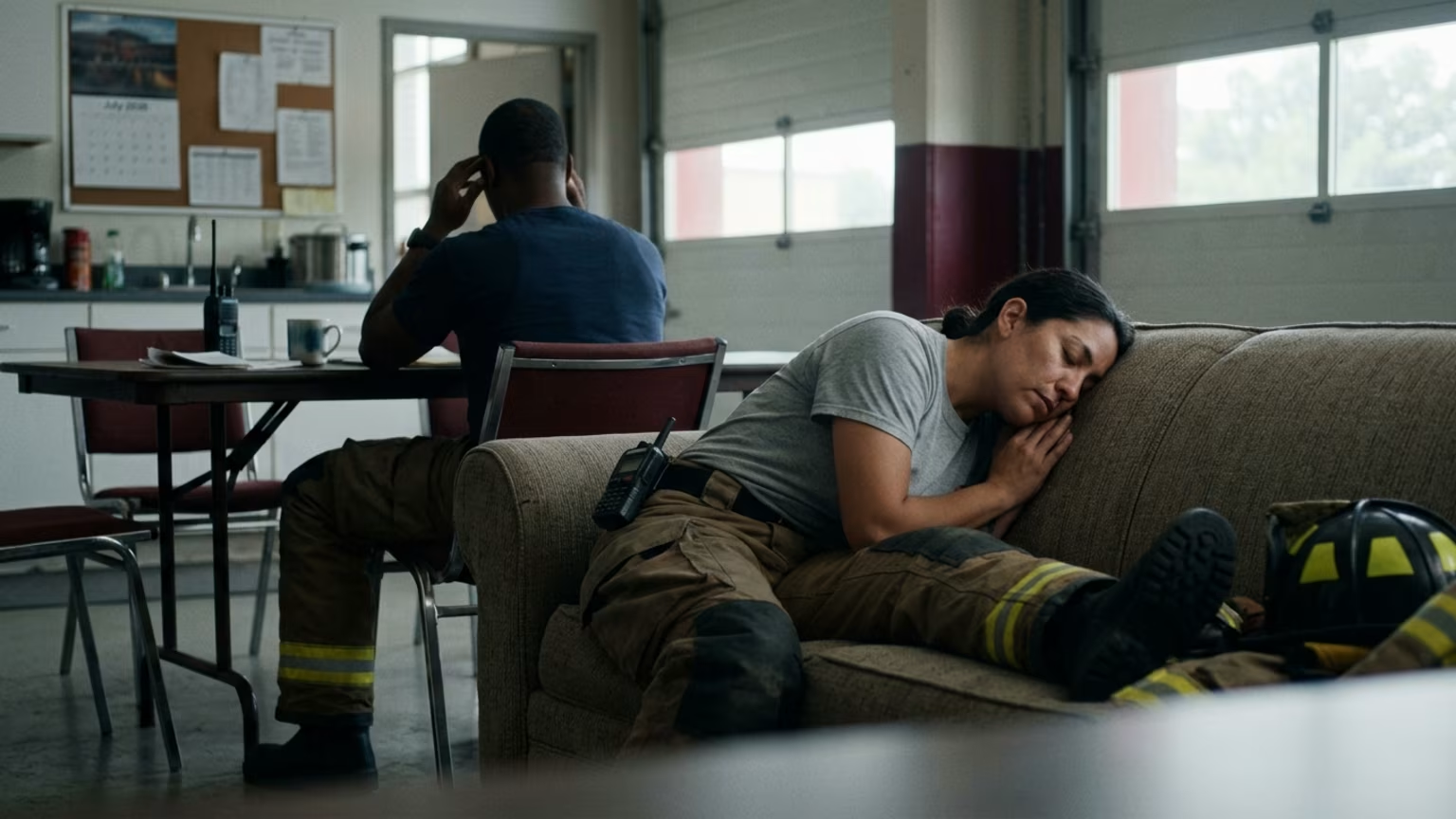

Wildland firefighters report severe physical exhaustion and sleep deprivation during an intense 2026 fire season. Learn why agencies must enforce rest cycles.





In mid-September 2026, nine current wildland firefighters and several retired professionals warned that crews are facing severe exhaustion following near-continuous deployments dating back to April. These emergency professionals reported widespread sleep deprivation, increased accident rates and significant nutritional deficits during an unusually intense national fire season.
The sheer scale of the 2026 fire season placed unprecedented physical pressure on available emergency personnel across the country. The Guardian reported that approximately 54,400 fires had burned more than 8.4 million acres by mid-September, representing 149 percent of the 10-year average. A separate Weather.com report, citing the National Interagency Fire Center, estimated that about 13,200 square miles had burned by the middle of September. This estimate was roughly 50 percent above the 10-year average and nearly double the acreage burned at the same point in 2025.
To manage this widespread fire activity, the United States spent 48 consecutive days at Preparedness Level 5. Weather.com noted this highest national readiness period lasted seven full weeks from July 18 through September 4. The readiness status eventually dropped to Level 4 and then to Level 3 a few days later. However, thousands of firefighters still remained committed to dangerous incidents well after the administrative downgrade.
The physical toll of these sustained, high-intensity operations is highly measurable on the ground. One firefighter interviewed by The Guardian stated that accidents have increased significantly after months of continuous, unrelieved assignments. By mid-August, 12 firefighter entrapments had been officially reported in the field. This alarming figure marks the highest number of entrapments documented in 20 years, while the reporting also confirmed 14 on-duty firefighter fatalities during 2026.
Fire ecologist Timothy Ingalsbee observed that these grueling conditions threaten critical operational capabilities and basic safety. He noted that cumulative sleep deprivation, smoke exposure, exhaustion and malnutrition can severely impair clear thinking. Wildland firefighting inherently requires responders to make high-consequence decisions under rapidly changing terrain and volatile weather conditions. Prolonged sleep loss directly degrades a responder's ability to act decisively, leading Ingalsbee to characterize the season as a perfect firestorm where climate change was half the explanation.
This new reporting validates the urgent need to treat rest as a non-negotiable safety requirement rather than a personal luxury. Wildland firefighting often involves moving directly from one incident to another with virtually zero structural recovery time in between. When assignments run continuously for months, responders completely lose the biological capacity to process complex situational information. Incident commanders must begin treating sleep planning with the exact same rigor as communications, accountability and equipment checks.
Departments that fail to measure sleep leave their personnel exposed to severe cognitive decline. Prolonged wakefulness closely mimics the physical effects of intoxication on reaction time, emotional regulation and situational awareness. Managing this risk requires tracking the cumulative physical load across multiple incidents rather than just looking at the current operational period. An individual who has been deployed repeatedly since April carries a massive physiological debt and will inevitably experience dangerous microsleeps.
Implementing structured fueling and hydration logistics is equally critical for sustaining human performance over extended campaigns. The Guardian specifically cited malnutrition as a heavy component of the cumulative strain reported among deployed crews. Agencies must mandate that nutrition support becomes a fully funded, core part of all incident logistics rather than leaving meal planning entirely to individual responders. This proactive approach helps emergency professionals drive circadian strain and responder sleep debt downward during active multi-agency campaigns.
The consequences of ignoring these strict recovery constraints are visibly serious on the fireground. Failing to build a sleep plan for nights and extended tours only compounds the existing environmental hazards of the job. Systemic rest must finally become an enforced operational parameter.
The frontline accounts from field personnel deeply challenge the official administrative position regarding federal workforce readiness. U.S. Forest Service Chief Tom Schultz told a congressional subcommittee in July 2026 that the firefighting workforce was stronger than at any point in recent years. He stated the workforce was fully staffed and equipped to safely respond to unplanned ignitions. However, widespread field reports clearly indicate that fully qualified personnel were unavailable in many affected Western communities.
A September letter from five U.S. senators warned that federal agencies faced a rapid depletion of their combined $6 billion suppression budget. The same letter noted that temporary supervisory structures were being utilized extensively because routine crew requests remained unfilled. Retired fire chief Bobbie Scopa argued that federal staffing shortages had actually existed for 20 years and only worsened. She warned that doubling leadership responsibilities sets everyone up for failure on the line, noting adequate staffing exists to keep people alive rather than to satisfy bureaucracy.
The strategic mandate for constant direct attack is also facing necessary operational scrutiny. The Guardian reported that 2026 directives from Agriculture Secretary Brooke Rollins and Interior Secretary Doug Burgum heavily emphasized fast, full suppression. Firefighters already successfully stop 98 percent of fires before they can spread out of control. Trying to aggressively extinguish the final fraction at all costs can consume limited resources faster, increasing physical exposure and leading to reported burn injuries when tactics prove ineffective.
This strategic disagreement matters deeply for long-term fatigue management across the entire wildland sector. Every additional direct-attack assignment aggressively consumes personnel hours, sleep opportunity and finite leadership capacity. Scientists and forest managers often support allowing some remote fires to burn when they are too dangerous to attack directly. Scopa warned that ignoring this reality to pursue total suppression could consume substantial public money while killing firefighters.
Agencies must establish clear administrative triggers to prevent total physical collapse among active field crews. Supervisors should heavily review a responder's recent deployment history, travel time, overnight work and prolonged smoke exposure. They must use this concrete data to decide if an individual is physiologically fit for another high-risk deployment. A responder experiencing confusion, poor emotional control or unsafe driving requires immediate relief rather than motivational pressure, as continuing to silently accept new assignments is not evidence of safe operational capacity.
Planners must deliberately build relief into the assignment timeline before fatigue becomes a critical safety event. A KCRA report on the Floriston Fire demonstrated how incoming crews can effectively rotate existing personnel out for much-needed rest. Agencies should clearly identify the relief crew, the secure sleeping location and the structured handoff plan before the initial crew reaches exhaustion. Proper logistics for nutritious food, clean supplies and quiet sleeping accommodations must be firmly in place before the incident scales up.
Establishing highly conservative escalation triggers is a practical step for actively managing depleted crew rosters. Severe shortages of qualified operational leaders or repeated assignment extensions should prompt heightened tactical caution from command staff. If a crew arrives on scene without adequate relief available, incident commanders should immediately reconsider aggressive offensive tactics. Separating individual recovery practices from organizational responsibility is no longer acceptable, as the overarching operational system must fully support the physiological limits of the human beings within it.
Protecting the physical capability of emergency professionals requires looking far beyond the immediate, chaotic incident. Prioritizing structured, enforced recovery systems helps dedicated responders successfully maintain career longevity long after the fire season eventually ends. Adequate recovery capacity simply has to be designed into the foundational operational framework from day one.
Future industry developments must focus heavily on rebuilding the depleted pipeline for experienced incident management personnel. The reporting makes clear that the most critical workforce issue is a deeply documented shortage of seasoned leaders who can safely manage complex incidents. These highly specialized positions include task-force leaders, division supervisors and heavy-equipment bosses. Filling these demanding roles safely requires decades of hard-earned field experience, making them impossible to replace with entry-level personnel.
When these vital senior positions remain vacant, the remaining junior personnel are forced to unsafely combine responsibilities. This harsh operational reality massively increases the cognitive burden on individuals who are already operating with severe, unmanaged sleep deficits. We will continue tracking how federal fire agencies plan to address these specific supervisory gaps over the coming months. Observing whether future federal suppression budgets finally include dedicated funding for fatigue management and structured crew rotation will also be essential.
Addressing severe physical exhaustion during prolonged fire assignments requires operational standards built for the realities of field deployment, which is exactly where Rescuris directs its tactical recovery frameworks. When sleep disruption from nights, rotating shifts, overtime and unpredictable calls threatens situational awareness, we help departments translate physiological data into enforced rest cycles. This systemic approach protects both immediate safety and long-term responder capability. Explore Resources
Rescuris publishes evidence-aware guidance for firefighters, police officers, paramedics and other first responders on fitness, recovery, sleep, nutrition, stress resilience and long-term capability.






Read practical guidance on first responder fitness, recovery, sleep, nutrition and resilience for demanding work and a long, active career.
read the blog
