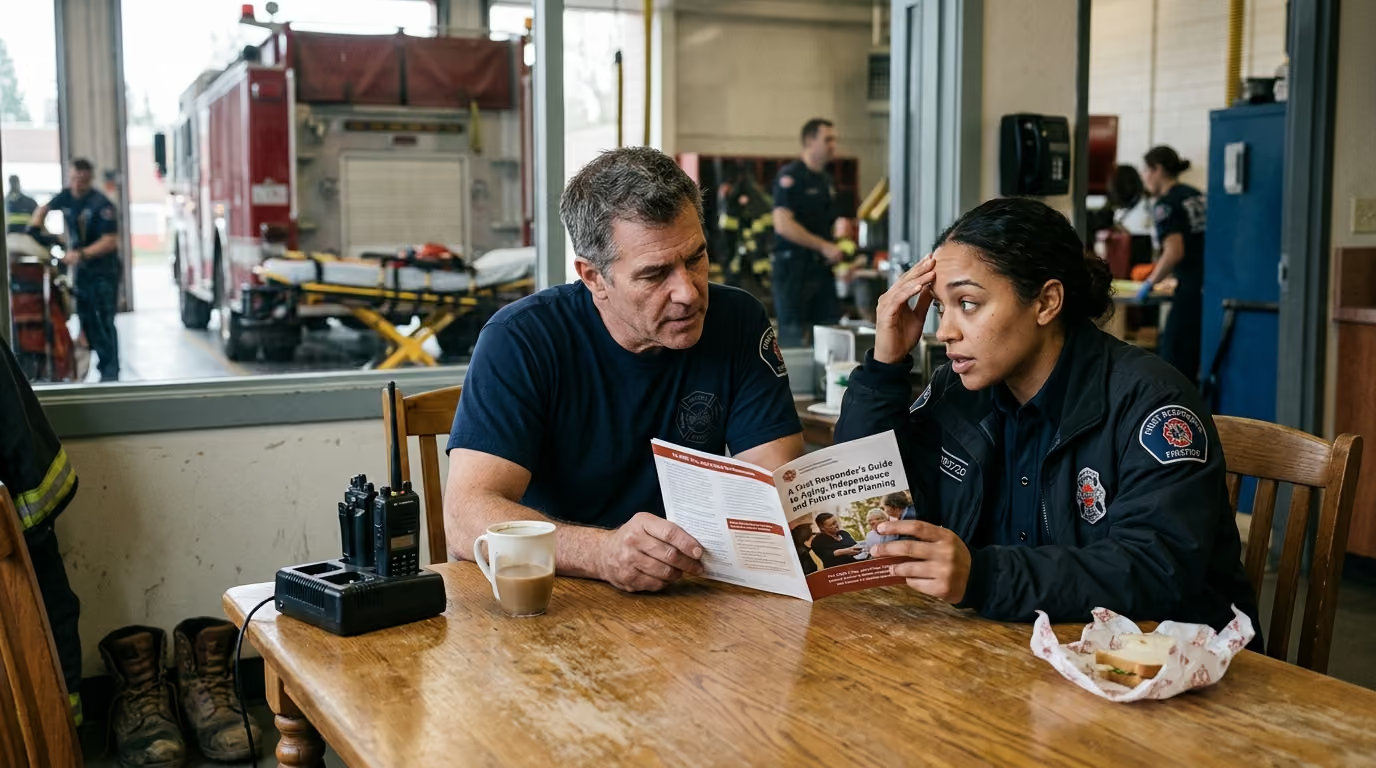

Aging first responders need practical strategies to evaluate functional independence, overcome public safety cultural barriers, and construct reliable long-term care contingency plans.





Most emergency personnel believe that preparing for future care is an admission of defeat. They spend decades answering emergency calls, managing physical risk, and solving crises for strangers. Admitting that age, illness, or a line of duty injury could reduce personal autonomy feels like surrendering command.
Planning for future care is not an acceptance of decline. It is an operational strategy to retain command over your personal, medical, and financial life. If an unexpected trauma or gradual aging affects your capacity to communicate, a documented plan protects your autonomy. It specifies who speaks for you, details your exact care preferences, and establishes legal boundaries before an acute event occurs.
Without a structured plan, critical decisions fall to hospital administrators, distant relatives, or state probate courts. Preparing your future care arrangements allows you to dictate your terms, safeguard your family, and maintain dignity throughout your post-service years.
Needing assistance with daily living is a statistical reality for the majority of aging adults. According to data from the Administration for Community Living, an individual turning 65 today has nearly a 70 percent chance of requiring long-term services and supports during their remaining years. Approximately 20 percent will require support for more than five years. Women require care for an average of 3.7 years, while men require assistance for an average of 2.2 years.
Understanding what long-term care entails requires separating medical treatment from custodial support. Long-term services and supports encompass assistance with basic self-care and household management over extended periods. These services occur across multiple settings, including private homes, adult day programs, assisted living facilities, and skilled nursing centers.
Functional independence is measured through two primary clinical categories. Activities of Daily Living, known as ADLs, represent fundamental self-care tasks. These include:
Instrumental Activities of Daily Living, or IADLs, represent complex tasks required for independent community living. These include:
A person may remain physically strong enough to perform basic ADLs yet lose the cognitive capacity to manage IADLs safely. When financial management or medication compliance slips, independent living becomes hazardous without structured outside intervention.
The burden of long-term support falls heavily on unpaid family members. A joint report from AARP and the National Alliance for Caregiving established that 63 million Americans provided unpaid care for an adult or child with complex needs in the prior year. Among those caring for adults aged 50 and older, 74 percent lived with or within 20 minutes of the care recipient.
Caregivers of older adults provide an average of 26 hours of care per week over an average span of five years. Forty-four percent of these caregivers provide high-intensity care involving complex medical and personal tasks. Nearly one in four manages care for an individual suffering from cognitive decline or dementia. Furthermore, approximately 17 million Americans operate as sandwich-generation caregivers, caring simultaneously for a minor child and an aging adult.
Despite these high probabilities, formal preparation remains rare. A clinical trial summarized by the National Institute on Aging revealed that only about one in three American adults has an advance care plan in place. Structured planning interventions doubled the rate of formal documentation for end-of-life preferences and medical orders. The evidence demonstrates that without formal prompts, most individuals delay planning until an acute health crisis forces emergency decisions.
First responder careers introduce distinct variables to future care planning. Decades of heavy physical load, toxic exposures, rotating shift work, and high-stress operations alter both the timing and nature of potential care needs.
Unlike the general population, emergency service personnel face substantial risks of sudden, career-ending occupational injuries. Severe spinal trauma, traumatic brain injuries, blast-related injuries, or sudden cardiac events can alter functional capacity overnight. Managing recovery after severe occupational incidents requires structured planning, as detailed in our guide on rehabilitation and recovery planning after major duty injuries.
Cumulative wear also accelerates physical limitations. Data from the Centers for Disease Control and Prevention indicates that 18.2 percent of American adults report difficulty walking or climbing stairs. Decades of wearing heavy structural gear, running up stairwells, carrying patients down tight hallways, and prolonged vehicle operations compound joint degeneration. Planning must account for both acute orthopedic trauma and progressive mobility decline.
The command mindset that makes emergency personnel effective during field crises creates significant obstacles during personal care planning. First responders are trained to manage chaos, project authority, and provide aid. Receiving aid feels unnatural and threatening to their professional identity.
Peer culture frequently views physical limitations or cognitive changes as vulnerabilities to hide rather than logistics to manage. This reluctance often leads retired personnel to mask worsening functional deficits from spouses and adult children. Acknowledging that you may eventually need assistance with transfers, driving, or finances is not weakness. It is operational risk management designed to protect your household from preventable crises.
First responders rely on a complex network of public benefits that require specialized coordination:
Integrating these specialized assets into your legal and financial portfolio guarantees that your public safety benefits actively support your future care requirements.
Effective future care planning requires an objective inventory of personal functional capacity. Evaluating your capabilities across five core operational domains helps identify vulnerabilities before they trigger an emergency.
Evaluate current musculoskeletal health, cardiovascular endurance, and sensory capabilities:
Review mental sharpness, processing speed, and organizational capacity. Sustained occupational fatigue takes a toll over decades, a topic explored in our analysis of cumulative duty fatigue across emergency services.
Analyze the physical layout of your primary residence:
Map out your local support system:
Review your administrative readiness:
Abstract wishes fail during medical crises. Family members cannot act effectively on statements like "do what is best." You must establish concrete, conditional operational triggers that dictate specific actions when functional thresholds shift.
Converting care preferences into explicit operational protocols removes ambiguity for your appointed surrogate:
Care needs progress along a spectrum rather than shifting abruptly from complete independence to total institutionalization. Structuring support along a defined staircase helps match interventions directly to current needs.
Understanding this progression prevents knee-jerk decisions and allows families to deploy proportionate resources at each stage. For broader strategies on sustaining long-term capability, explore our resources on career longevity and life after service.
A complete future care plan requires legally binding instruments recognized by healthcare systems and state courts. Without executed legal instruments, privacy statutes like HIPAA and state financial laws prevent even spouses from managing affairs during a crisis.
A Durable Power of Attorney for Health Care appoints a surrogate, also known as a health care proxy or agent. This individual possesses legal authority to make medical decisions on your behalf if you lose capacity to communicate.
Choosing the right agent requires objective judgment. Do not automatically default to your oldest child, spouse, or closest relative. Select someone who remains calm during severe stress, communicates clearly with medical specialists, and commits to honoring your expressed wishes rather than their own emotional preferences.
Always designate a primary agent and at least one successor agent. If your primary agent becomes ill, dies, or cannot be reached during an emergency, a designated successor steps in without requiring court intervention.
A living will is an advance directive detailing your specific preferences regarding life-sustaining medical treatments. It provides legal guidance when you face a terminal condition, end-stage illness, or persistent vegetative state.
Key areas to address include:
A health care proxy grants zero authority over financial assets. To ensure your mortgage, utilities, medical bills, and home care aides are paid, you must execute a separate Durable Financial Power of Attorney.
This document authorizes a trusted agent to manage bank accounts, file taxes, handle public safety pensions, execute real estate transactions, and manage investment portfolios if you become incapacitated. Ensure the document is durable, meaning the authority remains active even if you experience severe cognitive decline or physical disability.
A Physician Orders for Life-Sustaining Treatment, or POLST, translates your broad advance directive preferences into actionable, actionable medical orders. Depending on your state, these forms are known as MOLST, POST, or MOST.
A POLST is not intended for every healthy adult. As emphasized by the National POLST Collaborative, these orders are intended for individuals diagnosed with advanced frailty, serious life-limiting illnesses, or those at high risk of sudden acute events. Unlike standard advance directives, a POLST is signed by a licensed physician, nurse practitioner, or physician assistant. It is directly recognized by emergency medical technicians and paramedics in the pre-hospital setting.
Federal healthcare privacy regulations restrict clinicians from disclosing medical status to unauthorized parties. A standalone HIPAA release document allows medical personnel to share vital health updates with your chosen circle of family, close friends, or retired colleagues without granting them decision-making control.
Documenting preferences on legal paper is only half the process. Legal forms cannot anticipate every clinical scenario. Your appointed agents must understand the fundamental philosophy and core values guiding your choices.
First responders respond better to structured operational briefings than emotional discussions about mortality. Frame these conversations as contingency planning, equivalent to standard operating guidelines on the fireground or incident command protocols.
Schedule a dedicated time for this discussion outside of holidays or family celebrations. Distribute copies of your living will and document inventories in advance. State clearly that your objective is to relieve your family of the emotional trauma of guessing your preferences during a hospital crisis.
Surrogates often struggle when clinical situations fall into gray areas. Guide your proxy by exploring core value statements:
Care planning must navigate messy interpersonal realities:
Most retirees express a strong preference for aging in place within their existing homes. According to the National Institute on Aging, maintaining independence at home requires systematic environmental assessments and targeted modifications before functional limitations occur.
Aging in place must never be treated as an absolute, unconditional promise. It is an operational plan that functions only as long as the home environment remains safe and care requirements do not overwhelm your family support network.
Systematically evaluate your living space to eliminate hazards:
Remaining at home successfully requires knowing how to access community-level infrastructure. The Older Americans Act network provides critical community supports through local Area Agencies on Aging. These services deliver more than 250 million meals, provide 14 million rides, and coordinate millions of hours of caregiver respite annually across the United States.
Family caregivers cannot provide continuous, high-intensity support without periodic relief. Introducing structured respite care, whether through adult day programs or short-term facility stays, prevents physical injury and emotional burnout. You can explore additional planning frameworks through our collection of performance, recovery, and longevity resources.
Financial confusion represents one of the greatest risks to long-term independence. Many individuals mistakenly believe that public healthcare programs cover custodial home aides and residential care.
Medicare is a federal health insurance program designed for acute medical care, surgical treatment, and short-term rehabilitation. Medicare does not pay for long-term custodial care when non-medical help with ADLs is the only care required.
Medicaid covers long-term custodial care and nursing facility stays for individuals who meet strict state-specific income and liquid asset limits. Qualifying for Medicaid often requires spending down personal assets to statutory thresholds.
Navigating Medicaid eligibility, look-back periods, and asset-protection trusts requires professional guidance. Consulting a certified elder-law attorney ensures you protect your spouse's living standards while structuring assets legally.
Review and coordinate all potential funding mechanisms:
A comprehensive care plan is a dynamic strategy that requires continuous maintenance. Major life shifts, medical diagnoses, and relational changes necessitate routine updates.
Review and update your legal and logistical portfolio at least once per year. An annual review ensures all details remain accurate and legally enforceable.
Conduct a comprehensive review whenever you experience significant life events:
Examining standard scenarios demonstrates how operational planning functions across real-world situations.
A 48-year-old police lieutenant suffers severe spinal trauma during an emergency response, resulting in temporary incapacity and prolonged hospitalization. Because the officer previously executed a Durable Power of Attorney for Health Care and a Financial Power of Attorney, the appointed spouse immediately accesses banking records to maintain mortgage payments.
The spouse presents the health care directive to the trauma team, authorizing aggressive surgical and rehabilitation interventions aligned with the officer's expressed wishes. Union benefit representatives receive immediate documentation, securing line-of-duty disability coverage without delay.
A 62-year-old retired firefighter develops severe osteoarthritis and balance instability from decades of structural firefighting. Rather than waiting for a catastrophic fall, the retiree conducts a home audit.
The family converts a main-floor den into a master suite, replaces a standard bathtub with a curbless walk-in shower, installs exterior zero-step ramps, and utilizes a local paratransit service for community travel. The retiree retains full social and physical independence while safely remaining at home.
A retired paramedic provides continuous, full-time care for a spouse suffering from advanced Parkinson's disease. The retired paramedic attempts to handle all bathing, lifting, medication management, and overnight supervision alone, resulting in sleep deprivation and acute lumbar strain.
Recognizing that the care plan is failing, the family activates their conditional "if-then" triggers. They enroll the spouse in a certified adult day health program three days per week and hire a paid home health aide for morning personal care. The structured respite allows the retired paramedic to recover physical capacity while sustaining high-quality home care.
A 70-year-old retired fire captain begins displaying signs of vascular dementia, missing financial deadlines and getting lost while driving. Because the captain completed an advance directive and named a successor proxy five years earlier, the family avoids contentious guardianship court proceedings.
The appointed health care proxy activates the durable financial power of attorney, transitions vehicle keys smoothly, coordinates with the primary care physician, and arranges structured daytime support. The captain's documented core values guide every care decision with dignity.
A single, retired emergency medical technician lives alone with no children and a sibling residing across the country. The retiree establishes a relationship with a licensed professional geriatric care manager and appoints a private fiduciary as financial agent.
The retiree installs an exterior key lockbox, provides the local 911 communications center with emergency access protocols, and establishes scheduled weekly check-ins with retired union members. This operational network guarantees rapid intervention if a health crisis occurs.
Maintaining independence does not mean managing complex legal, financial, and clinical challenges alone. Knowing when to engage licensed professionals protects your safety and legal rights.
State laws governing powers of attorney, advance directives, guardianship, and Medicaid eligibility vary substantially. Retain a qualified elder-law attorney to draft your legal documents. An attorney ensures your documents comply with state statutes, prevents unintended tax liabilities, and establishes robust protections against legal challenges.
Do not guess which home modifications are necessary. An occupational therapist can perform an in-person functional home assessment. They evaluate your specific biomechanics, analyze your daily movement patterns, and recommend targeted modifications that maximize safety while avoiding unnecessary construction expenses.
If you or your family notice persistent memory lapses, uncharacteristic financial mistakes, motor instability, or personality shifts, schedule a comprehensive evaluation with a board-certified geriatrician or neurologist. Diagnostic assessments distinguish between treatable conditions, medication side effects, and progressive neurodegenerative diseases. Establishing a baseline early preserves your legal capacity to sign documents, direct care preferences, and appoint chosen proxies before your autonomy is compromised.
Planning your future care today relieves your family of crisis-driven guesswork and protects the capability, dignity, and autonomy you spent your entire career defending.
Stay connected for research-led guidance on duty fitness, shift-work sleep, injury recovery, stress, nutrition and career longevity. Practical ideas for first responders who want to stay capable on the job, recover well and protect their health for the long run.



Read practical guidance on first responder fitness, recovery, sleep, nutrition and resilience for demanding work and a long, active career.
read the blog



