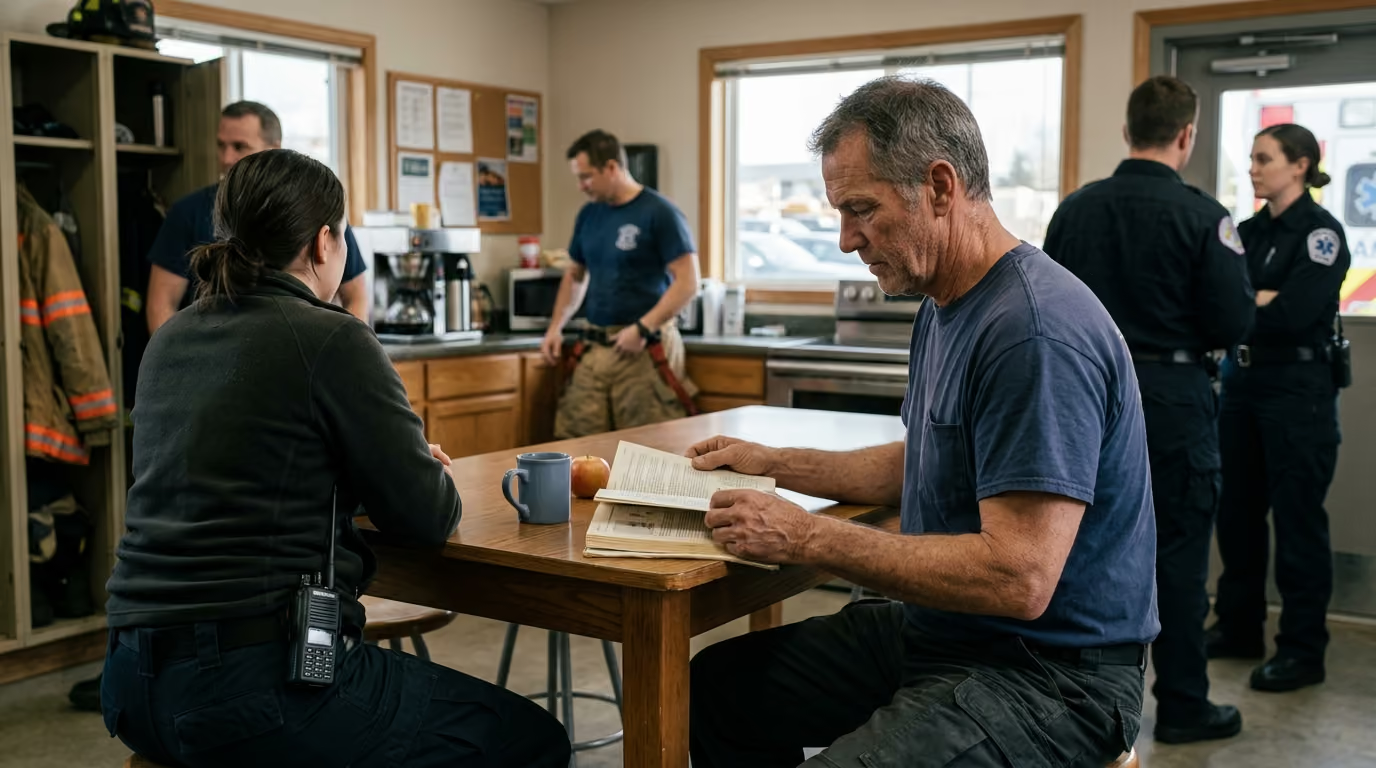

Over one in four older adults falls each year, making proactive bone density management and balance training essential for retired first responders.





Many retired emergency personnel search for ways to fix persistent joint pain, restore declining balance, or rebuild strength after years of heavy duty and injury. Decades of wearing heavy gear, enduring interrupted sleep, recovering from broken bones, or inhaling combustion products can leave your skeleton and nervous system vulnerable.
Skeletal strength and fall prevention require two distinct solutions. Bone density determines the structural load your skeleton can absorb, while muscular strength, balance, visual acuity, and your environment determine whether you fall in the first place. You can preserve independence and protect your skeletal health after service by combining progressive resistance training, impact-appropriate movement, targeted nutrition, and systematic hazard reduction.
Bone is dynamic living tissue that adapts to mechanical strain. Throughout your life, specialized cells continuously remove damaged bone tissue and replace it with fresh mineralized matrix. During your active duty years, running, lifting, and carrying gear stimulated bone remodeling. When retirement, chronic pain, or medical conditions reduce your daily physical load, the rate of bone resorption can outpace bone formation.
Bone mineral density measures the amount of calcium and other minerals packed into a segment of bone. Dual-energy X-ray absorptiometry scans evaluate this mineral content at the hip, spine, and forearm. While bone mineral density provides a clear snapshot of mineral quantity, it does not tell the whole story of structural strength. Total bone strength also depends on trabecular microarchitecture, cortical wall thickness, accumulated microcracks, and collagen quality.
When mineral density drops below the standard reference range for young adults, clinicians classify the state as osteopenia. Osteopenia is not a harmless or inevitable part of aging. A former responder with osteopenia who has poor balance or joint instability still carries a meaningful risk of fracture. If bone loss progresses further, skeletal fragility reaches the threshold of osteoporosis, where bones become porous and susceptible to fractures from routine daily activities.
A fragility fracture occurs from low-energy mechanical force, such as slipping from a standing height or stumbling over a curb. Healthy skeletal tissue absorbs these minor impacts without failing. When a retired responder fractures a wrist, rib, or hip during a minor slip, it indicates compromised bone architecture. Dismissing these injuries as normal wear from past duty delays essential medical evaluation.
Falls depend on a complex interaction between internal physiology and external surroundings. Skeletal fragility dictates whether a bone breaks upon impact, but neuromuscular control, sensory perception, reaction speed, and environmental hazards determine whether an impact happens. Protecting yourself after service requires addressing both bone strength and fall mechanics simultaneously.
Data from the Centers for Disease Control and Prevention show that more than one in four older adults report falling each year. These incidents result in roughly 43,000 deaths annually among adults aged 65 and older. Falls represent the leading cause of fatal injury within that demographic. The age-adjusted fall death rate rose by 21 percent between 2018 and 2024, climbing from 64.7 to 78.4 deaths per 100,000 individuals.
Emergency departments treat approximately 4.5 million fall-related injuries among older adults every year. About 1.4 million of these visits lead to hospital admission, while 3.1 million require acute treatment before discharge. Around one in ten falls causes a serious injury that restricts daily activity for at least 24 hours or demands formal medical care.
Public health screening guidelines vary significantly by sex. The U.S. Preventive Services Task Force recommends routine bone measurement screening for all women aged 65 and older. It also recommends screening postmenopausal women younger than 65 who carry clinical risk factors that raise their calculated fracture probability.
For men, the U.S. Preventive Services Task Force finds current population-level evidence insufficient to issue a blanket screening mandate. This finding reflects a lack of broad randomized clinical trials rather than an absence of male disease. The Department of Veterans Affairs identifies advancing age, low body weight, involuntary weight loss, physical inactivity, long-term corticosteroid use, and androgen deprivation as major drivers of male osteoporosis. Retired male responders with these risk factors should seek targeted clinical evaluations rather than assuming they are safe.
The evidence base confirms that bone loss and fall vulnerability are modifiable. Clinical research demonstrates strong evidence that progressive resistance training and weight-bearing exercise improve physical function and slow bone mineral loss. Epidemiological research shows that environmental home modifications and medication reconciliation programs reduce fall rates across community-dwelling populations.
Occupational demands create distinct risk profiles for emergency personnel. While active field duty demands high physical output, the accumulated exposures of an emergency career can accelerate bone loss later in life.
Acute trauma during service often forces prolonged periods of skeletal unloading. Disuse osteoporosis occurs when a limb or the whole body is immobilized in a plaster cast, splint, or bed rest. When skeletal muscles stop pulling against bone, local cellular signals accelerate bone resorption while suppressing bone formation.
Long-term immobilization damages both dense cortical bone and spongy trabecular structures. The duration of non-weight-bearing recovery directly determines the severity of structural bone loss. Responders who spent months recovering from reconstructed knees, spinal surgeries, or compound fractures often enter retirement with localized bone deficits that never fully recovered.
Trauma to the nervous system introduces rapid skeletal changes. Department of Veterans Affairs clinical data indicate that bone mineral content drops sharply in the hips and lower extremities following a spinal cord injury. This loss begins within weeks of the initial trauma.
Neurological impairment also alters balance reflexes, sensation, and gait patterns. Responders managing partial paralysis, peripheral neuropathy from crush injuries, or vestibulocochlear damage from blast overpressure face elevated fall frequencies. For these individuals, fall prevention must account for transfer mechanics, wheelchair stability, and muscle spasticity.
Active cigarette smoking decreases bone mineral density and increases the risk of skeletal fracture. Research from the National Institute of Arthritis and Musculoskeletal and Skin Diseases emphasizes that secondhand smoke exposure also damages bone health.
First responders face additional lifetime respiratory burdens from structural fire smoke, wildland combustion, and diesel exhaust. While combustion exposure alone does not automatically cause osteoporosis, the secondary consequences do. Occupational lung disease frequently leads to sedentary routines, low oxygen tolerance, and systemic inflammation, which disrupt normal bone remodeling.
Emergency personnel frequently rely on medications to manage service-related pain, respiratory conditions, and mental health challenges. Systemic corticosteroids used for severe asthma, smoke inhalation injuries, or autoimmune conditions suppress osteoblast activity and reduce intestinal calcium absorption. Long-term glucocorticoid exposure remains one of the most common causes of medication-induced osteoporosis.
Other medications elevate fall risk through central nervous system effects. Sedatives, sleep medications, muscle relaxants, and opioid analgesics impair alertness, reaction times, and motor coordination. Blood pressure medications can cause orthostatic hypotension, producing sudden lightheadedness when rising from a seated or lying position.
Protecting aging bone and preventing falls requires structured mechanical loading. Cardiovascular exercises like swimming and stationary cycling offer excellent heart health and joint benefits, but they do not provide the ground reaction forces needed to stimulate bone formation. Your training must combine resistance training with impact-appropriate weight-bearing activity.
Former responders often attempt to resume the high-intensity conditioning of their youth. Moving directly from inactivity to jumping, heavy loaded carries, or sprinting increases injury risk. You must establish joint mobility, tissue tolerance, and baseline strength before introducing higher mechanical impacts.
Begin with controlled bodyweight movements that restore basic strength. Practice standing up from a chair without using your hands, perform wall push-ups, and complete supported heel raises. Once you can execute these movements with good form and without joint pain, introduce external resistance.
The Bone Health and Osteoporosis Foundation recommends performing muscle-strengthening exercises two to three days per week. Target the major muscle groups of the hips, spine, legs, chest, and back. Select eight to twelve exercises, performing one to two sets of eight to ten repetitions with challenging resistance.
Safe, effective strength exercises for retired emergency personnel include:
For those managing accumulated physical fatigue from years on shift, adjusting training volume around physical fatigue prevents overtraining while protecting joint integrity. Applying minimum effective dose training approaches allows you to stimulate bone remodeling without triggering chronic joint inflammation.
Weight-bearing exercise requires your bones to support your body mass against gravity. Walking, stair climbing, hiking, and low-impact dance are weight-bearing activities. Swimming and cycling remove gravitational load from the skeleton, making them non-weight-bearing.
While swimming and cycling protect arthritic knees and hips, they should not serve as your sole form of exercise. Pair joint-friendly non-weight-bearing conditioning with structured weight-bearing walks or resistance training. This combination protects your joints while providing the skeletal strain necessary to preserve bone mass.
Individuals with diagnosed osteoporosis or prior vertebral compression fractures must adapt their exercise mechanics. Avoid rapid, unassisted forward spinal flexion, heavy spinal rotation, and ballistic lifting. Forward bending under load increases compressive forces on the front of the vertebral bodies, raising the risk of compression fractures.
Learn to hinge at the hips rather than rounding the lumbar and thoracic spine. Keep loads close to the body when lifting objects from the ground. Perform abdominal bracing and back extension movements from neutral positions rather than doing traditional sit-ups, crunches, or weighted twisting machines.
Muscular strength provides the power to move, but neuromuscular coordination keeps you upright. Balance naturally degrades over time due to reduced sensory input from the feet, slower nerve conduction, and decreased inner ear function. Daily balance training sharpens these sensory systems and trains reactive stepping reflexes.
The "Too Fit to Fracture" clinical consensus recommends challenging balance exercises every day for 15 to 20 minutes, or roughly two hours per week. These exercises should progress systematically from stable, wide-stance positions to narrow, dynamic, and unpredictable tasks.
Always practice static balance drills near a sturdy kitchen counter, wall, or heavy table so you can grab support instantly if you lose your footing:
Once you master these static positions, increase the challenge by closing your eyes, turning your head side to side, or performing gentle arm reaches while balancing.
Real-world falls rarely occur while standing perfectly still. They happen when stepping off a curb, avoiding a pet, or turning rapidly on slick surfaces. Dynamic balance drills train your body to manage shifts in your center of mass during movement:
Exercise provides the mechanical trigger for bone building, but nutrition supplies the raw physical materials. Bone remodeling requires a continuous supply of dietary minerals, fat-soluble vitamins, and amino acids.
Calcium is the primary mineral component of the bone matrix. Department of Veterans Affairs nutritional guidance recommends 1,000 milligrams of calcium daily for men aged 50 to 70. The recommendation increases to 1,200 milligrams daily for women aged 51 and older, as well as men aged 71 and older.
Obtain calcium from dietary sources whenever possible. Whole foods contain complementary nutrients that support absorption without spiking blood calcium levels.
Rich dietary sources of calcium include:
Avoid mega-dosing calcium supplements. High-dose calcium pills can cause gastrointestinal distress and increase the risk of kidney stones. If your dietary intake falls short of daily targets, work with a clinician to choose an appropriate low-dose supplement.
Vitamin D acts as a hormone that regulates intestinal calcium absorption. Without adequate vitamin D, your body cannot absorb dietary calcium efficiently, forcing it to draw calcium from your skeleton. Research from the National Institute of Arthritis and Musculoskeletal and Skin Diseases shows that vitamin D deficiency also weakens muscle tissue, directly increasing your risk of falling.
The general target for adults aged 50 and older is 800 to 1,000 International Units of vitamin D daily. First responders who worked nocturnal shifts, suffered indoor confinement during injury recovery, or live in northern latitudes often carry low vitamin D levels. Request a 25-hydroxyvitamin D blood test from your primary care provider to determine whether you need targeted supplementation.
Skeletal bone is composed of a protein collagen matrix mineralized with calcium and phosphorus. Adequate dietary protein preserves muscle mass, improves physical strength, and supports post-exercise recovery.
Former emergency workers should consume protein consistently across the day. Aim for 25 to 35 grams of high-quality protein at each main meal from poultry, fish, eggs, dairy, legumes, or lean meats. Distributing protein evenly stimulates muscle protein synthesis more effectively than consuming your entire daily intake at dinner.
Excessive alcohol consumption disrupts osteoblast function, impairs liver metabolism of vitamin D, and damages balance reflexes. Limit alcohol consumption to no more than one drink per day for women and two drinks per day for men, or eliminate it entirely.
High sodium intake forces the kidneys to excrete excess calcium in the urine. VA clinical guidelines advise capping sodium intake at 2,300 milligrams per day. Quitting all tobacco products and avoiding secondhand smoke stops the direct toxic effects of nicotine and combustion gases on bone microvascular circulation.
Many falls occur when physical limitations meet an unsafe home environment. Emergency personnel often pride themselves on navigating chaotic environments during their working years. However, retirement requires an objective evaluation of home hazards to keep daily routines safe.
Conduct a methodical safety audit of your living space to eliminate common trip hazards:
Rushing is a primary contributor to post-service injuries. Former responders are conditioned to move rapidly during emergencies, but applying that same urgency to routine tasks around the house increases fall risks.
For more insights into managing post-duty health, visit our dedicated resources on career longevity and life after service and explore proven injury prevention and physical recovery strategies.
Silent bone loss produces no pain or warning signs until a structural failure occurs. If you have a history of service-related injuries, prolonged immobilization, or steroid treatments, work with your healthcare team to establish your baseline bone status.
Schedule a comprehensive medical evaluation if you recognize any of the following clinical indicators:
A primary care physician can order laboratory tests to evaluate serum calcium, 25-hydroxyvitamin D, parathyroid hormone, thyroid function, and kidney performance. If indicated, they can schedule a DXA scan to quantify your bone mineral density and calculate your ten-year fracture risk.
If you have osteoporosis, severe joint instability, or a fear of falling, consult a licensed physical therapist before beginning an aggressive exercise program. A physical therapist will evaluate your balance, gait mechanics, joint limitations, and movement patterns. They can design a customized routine that strengthens your muscular stabilizers without placing dangerous compressive loads on vulnerable bones.
Rebuilding skeletal resilience requires consistent, manageable habits. Rather than overhauling your entire life overnight, establish a baseline routine and build upon it weekly.
Monitor your functional capabilities over time using objective benchmarks rather than guesswork:
Preserving bone health and preventing falls protects the independence you earned through years of demanding service. Consistent strength training, mindful home safety, and proper nutrition ensure your body remains capable, resilient, and ready for an active retirement.
Stay connected for research-led guidance on duty fitness, shift-work sleep, injury recovery, stress, nutrition and career longevity. Practical ideas for first responders who want to stay capable on the job, recover well and protect their health for the long run.



Read practical guidance on first responder fitness, recovery, sleep, nutrition and resilience for demanding work and a long, active career.
read the blog



