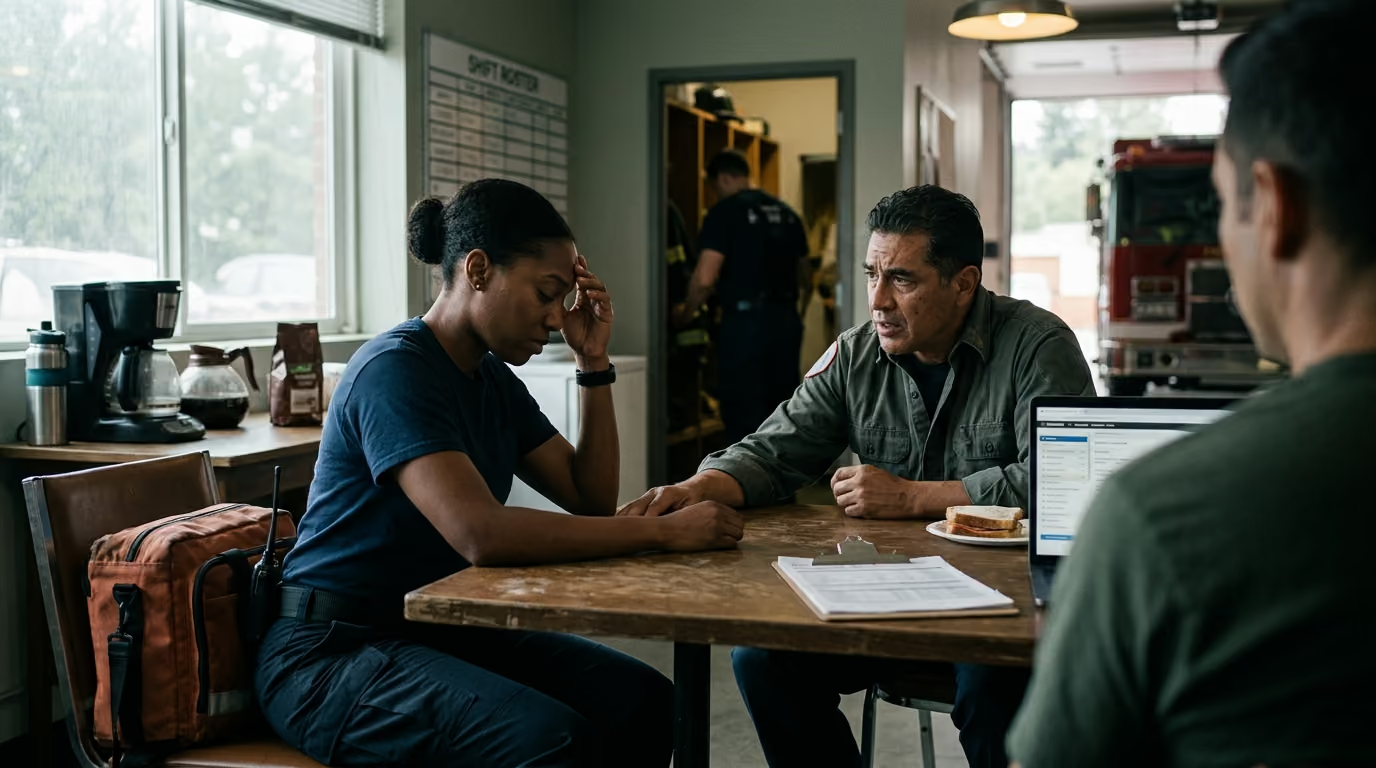

Sudden surges of adrenaline during chaotic field incidents require step-by-step emotional control strategies to keep first responders focused, professional, and safe.





If you are in immediate danger, call 911. For 24/7 support, call or text 988 and press 1 for the Veterans Crisis Line, or text 838255.
Many emergency personnel search for how to keep their temper under control during hostile calls, difficult family disputes, or sharp disagreements with coworkers. The practical answer is that emotional regulation is not about suppressing feelings or passively tolerating abuse. It is a systematic performance skill that keeps your physiology, voice, positioning, and decision-making aligned with tactical safety and clear communication while under pressure.
Regulating arousal during conflict protects your situational awareness and prevents impulsive reactions. It allows you to maintain professional authority, de-escalate tension where possible, and enforce clear boundaries when safety is threatened.
Emotional regulation during high-stress interactions involves recognizing internal physiological changes and intentionally guiding your behavioral output. When a patient screams, a bystander interferes, or a coworker challenges a decision, your sympathetic nervous system initiates an automatic threat response. Heart rate accelerates, peripheral vision narrows, and muscles tighten across the neck and shoulders.
Current behavioral science views regulation through distinct stages: recognition, interpretation, modulation, behavioral choice, post-incident recovery, and long-term integration. Recognition requires noticing bodily cues such as a clenched jaw, shallow breathing, or a sudden surge of heat in the chest. Interpretation separates verified facts on scene from internal assumptions or perceived personal insults. Modulation adjusts nervous system arousal so that cognitive flexibility remains intact.
Research demonstrates that attempting to suppress all emotional experience increases cardiovascular strain and leads to faster cognitive fatigue. A more functional operational objective is regulated responsiveness. This state maintains sufficient autonomic arousal to keep you physically alert and decisive without allowing panic, anger, or tunnel vision to dictate your actions.
Autonomic arousal exists along a predictable spectrum known as the window of effective response:
Staying within the optimal window requires distinguishing between internal emotional states, physiological arousal, action urges, and outward behavior. You cannot always stop an initial surge of anger or fear. You can, however, control the words you speak, your physical distance, your posture, and the tactical decisions you execute.
Emergency personnel operate under unique operational conditions that amplify interpersonal friction. Chronic sleep disruption, extended shift patterns, unpredictable call volumes, and repeated exposure to traumatic scenes degrade baseline patience and emotional reserves. When physical fatigue accumulates, the central nervous system becomes more reactive to minor irritations, making routine interactions feel like direct threats. You can read more about how shift fatigue and sleep debt compound autonomic strain across long tours of duty.
The occupational burden across public safety is well documented. According to SAMHSA, approximately 30 percent of first responders develop behavioral health conditions, including depression and post-traumatic stress disorder. Data from NIOSH indicates that between 17 and 24 percent of public safety telecommunicators experience significant post-traumatic stress symptoms, while 24 percent report symptoms of depression. Dispatchers experience repeated acute activation without physical release, which can lead to cumulative sympathetic fatigue over time.
Occupational violence adds another layer of physical risk to everyday conflict management. Data published by NIOSH shows that healthcare workers experienced 14 nonfatal workplace violence injuries requiring days away from work per 10,000 full-time employees in 2021 and 2022. This rate is substantially higher than the private industry average of 4.3 per 10,000 workers. CDC surveillance indicates that intentional injuries by patients account for a major portion of nonfatal hospital emergency department visits among medical staff.
If you or a colleague are experiencing overwhelming distress, professional crisis resources are available 24 hours a day:
CDC analyses of National Violent Death Reporting System data reveal that first responders accounted for 1 percent of all documented suicides across participating states from 2015 to 2017. Among those cases, intimate partner conflict, job problems, and physical health struggles were common contributing factors. This reinforces why emotional regulation skills must extend beyond the emergency scene into the firehouse, the patrol car, and life at home.
To manage acute activation during volatile calls, emergency personnel can rely on a structured five-step framework: the A-B-C-D-E model. This sequence creates an intentional pause between the physiological threat response and operational action.
Begin by scanning your own internal state alongside the external environment. Notice early somatic warnings such as shallow breathing, a tight grip on equipment, or an urge to talk over someone. At the same time, evaluate physical exits, environmental hazards, bystander locations, and potential concealed weapons. Recognizing your own rising tension prevents unconscious escalation.
Create a micro-recovery window using quick physiological modulation. Lengthen your exhalation relative to your inhalation to engage vagal braking mechanisms. Plant both feet firmly on the ground, drop your shoulders, and deliberately unclamp your teeth. Expanding your visual scan from a narrow focal point back to the wider room breaks perceptual tunnel vision. You can practice structured quick grounding techniques during transit to build this autonomic control before arriving on scene.
Before speaking, identify the exact operational goal required for the call. Common objectives include gathering clinical history, separating disputing parties, protecting an exit path, or securing patient consent for transport. Conflicts frequently escalate when a responder abandons the operational objective in favor of winning an argument or demanding immediate deference. Professional success means maintaining control of the scene, not forcing an agitated person to admit fault.
Communicate with measured cadence, clear structure, and neutral authority. Lower the pitch and tempo of your voice slightly below the speaker who is yelling. Use short, concrete sentences that are easy for an overwhelmed nervous system to process. Avoid sarcasm, personal insults, or unnecessary threats that create defensiveness.
After delivering an instruction or boundary, reassess the situation. Observe whether the individual's muscle tension is decreasing or if their physical posture is becoming more rigid. Check your partner's positioning and confirm your exit paths remain clear. Once the encounter concludes, take deliberate steps to reset your autonomic baseline before taking the next assignment.
De-escalation is a tactical process designed to lower emotional intensity enough to allow safe assessment, communication, and resolution. A 2025 systematic review noted that academic definitions and outcome measures for de-escalation vary widely across policing and emergency services. Because no single script works across every human interaction, de-escalation must be applied as an adaptable operational sequence rather than a rigid formula.
Clinical guidance on psychiatric emergencies emphasizes several foundational nonverbal and verbal principles:
Procedural fairness plays a substantial role in conflict reduction. People are far more likely to cooperate when they feel heard and understand the reasons behind an enforcement or medical decision. Explaining what is happening, what comes next, and what choices remain available preserves human dignity and reduces volatile resistance.
Clear boundaries are essential when safety is challenged. A functional boundary consists of four distinct elements:
For example, a responder might say: "You are stepping into our treatment circle and shouting. I need you to step back five paces so we can treat your brother. You can stand by the doorway, or you can wait outside on the porch. If you continue to step forward, we will pause treatment and have law enforcement move you from the room."
Different operational environments trigger distinct emotional dynamics. Applying targeted communication strategies across predictable field scenarios helps crews maintain command while protecting scene safety.
Family members watching a medical emergency often express acute fear as anger toward arriving crews. They may accuse responders of taking too long, question clinical choices, or crowd the patient.
Assign one crew member to manage communication with the family while others focus on clinical care. Acknowledge their panic directly: "I know this is terrifying to watch. Our primary focus right now is supporting her breathing. Please stand behind this chair so we have room to work, and I will give you an update as soon as we finish this assessment." Providing clear physical boundaries and predictable updates channels their anxiety into structured cooperation.
Patients experiencing acute distress, mild intoxication, or head trauma often interpret physical assessment as an attack on their autonomy. Attempting to force compliance through physical dominance without prior communication often increases violence.
Offer limited, controlled choices to restore a sense of agency. Explain what you are doing before touching the patient. You might say: "You do not want to lie on the stretcher right now, and I hear that. I need to check your pulse and blood pressure to make sure you are safe. You can sit on the edge of the bed or stay in that chair while I do that."
Intoxication from alcohol or illicit substances impairs impulse control, working memory, and language processing. Lengthy explanations or moralizing lectures usually provoke hostility.
Keep verbal instructions short, repetitive, and completely devoid of sarcasm. Use the same phrase multiple times without changing words, which allows a slowed central nervous system to register the request. Keep your hands up, maintain extra reactionary distance, and continuously scan the subject's hands and immediate reach for weapons.
High-stakes calls often generate sharp disagreements between crew members, supervisors, or different responding agencies. Disagreements over clinical protocols, incident command decisions, or driving routes can compromise scene safety if voiced openly.
Use closed-loop communication to lock down the immediate tactical priority: "I hear your concern about the transport route. Right now we are initiating this line, and we will decide the hospital destination in two minutes." Defer detailed tactical debates until the patient is transferred or the fire is suppressed. Address the disagreement during a structured post-incident review using objective, behavior-focused feedback rather than personal character attacks.
Crowds gather quickly during public incidents, frequently filming responders and shouting critical commentary. Engaging in verbal debates with bystanders pulls vital attention away from patient care or hazard suppression.
Designate a single responder to maintain scene perimeter awareness and manage public contact. State the safety boundary neutrally: "You have every right to stand on the sidewalk and film. You cannot cross this yellow barrier or block the ambulance doors. Step back behind the line so our crew can move the stretcher." Avoid arguing about legal rights or personal opinions.
Even experienced personnel can fall into predictable communication traps when emotional activation runs high. Recognizing these errors helps preserve professional effectiveness.
Managing conflict effectively does not end when the call clears. The physiological stress response leaves residual neuroendocrine markers that take time to return to baseline. Without deliberate post-incident habits, cumulative tension carries over into subsequent calls or home life. Managing baseline stress through balanced physical habits and managing cumulative duty fatigue is essential for maintaining career capability.
A structured operational review allows crews to process demanding interactions without descending into finger-pointing or excessive rumination. The review should follow five objective questions:
Structured peer support programs are widely utilized across emergency services to offer timely operational debriefing and personal check-ins. However, scientific evidence regarding formal post-incident crisis interventions remains nuanced. A comprehensive systematic review of peer support and crisis-focused interventions noted that research on programs like Critical Incident Stress Management (CISM) shows mixed or limited results in preventing clinical post-traumatic stress. Another review found that mandatory psychological debriefing models did not show superior mental health outcomes compared to informal, voluntary support systems.
These scientific findings do not mean peer connection is useless. Peer support provides vital validation, reduces occupational isolation, and builds practical pathways to clinical resources. Research from SAMHSA highlights that peer programs succeed most when they operate with clear ethical boundaries, maintain strict confidentiality, avoid mandatory emotional disclosure, and facilitate warm handoffs to licensed mental health professionals when persistent symptoms emerge. Organizations must support long-term career longevity by providing accessible mental health resources rather than expecting personnel to manage severe stress alone.
De-escalation and emotional regulation must never compromise tactical safety. Communication is an operational tool to resolve conflict peacefully when feasible, but it cannot replace physical defense, protective equipment, or tactical withdrawal when violence is imminent.
De-escalation efforts should immediately pause under specific conditions:
Under these conditions, your objective transitions from verbal de-escalation to immediate tactical repositioning, physical containment, or law enforcement intervention. Professional regulation during a physical assault means applying approved defensive tactics and safety protocols with clear, controlled judgment rather than uncontrolled panic or retaliatory aggression.
Furthermore, individual resilience training cannot fix systemic organizational deficits. Fire, EMS, and police departments have an institutional duty to maintain safe staffing models, provide functional communications equipment, establish violence prevention reporting systems, and deliver accessible psychological support. Expecting individual responders to regulate away the effects of chronic understaffing, forced overtime, and unsafe field conditions is an organizational failure.
Professional behavioral health care is strongly indicated when an individual notices signs of persistent operational wear:
Emergency responders experiencing these symptoms should seek immediate, confidential evaluation from licensed clinical professionals specializing in public safety populations.
Building robust emotional regulation during volatile encounters requires systematic station practice rather than relying on good intentions under pressure. Crews can integrate these practical steps into their weekly training routines:
Maintaining emotional regulation during high-stress conflict preserves your situational awareness, protects your physical safety, and defends your clinical judgment when conditions are at their worst. Building these deliberate habits ensures you can serve your community with steady authority while protecting your physical and mental health across a full career.
Stay connected for research-led guidance on duty fitness, shift-work sleep, injury recovery, stress, nutrition and career longevity. Practical ideas for first responders who want to stay capable on the job, recover well and protect their health for the long run.



Read practical guidance on first responder fitness, recovery, sleep, nutrition and resilience for demanding work and a long, active career.
read the blog



