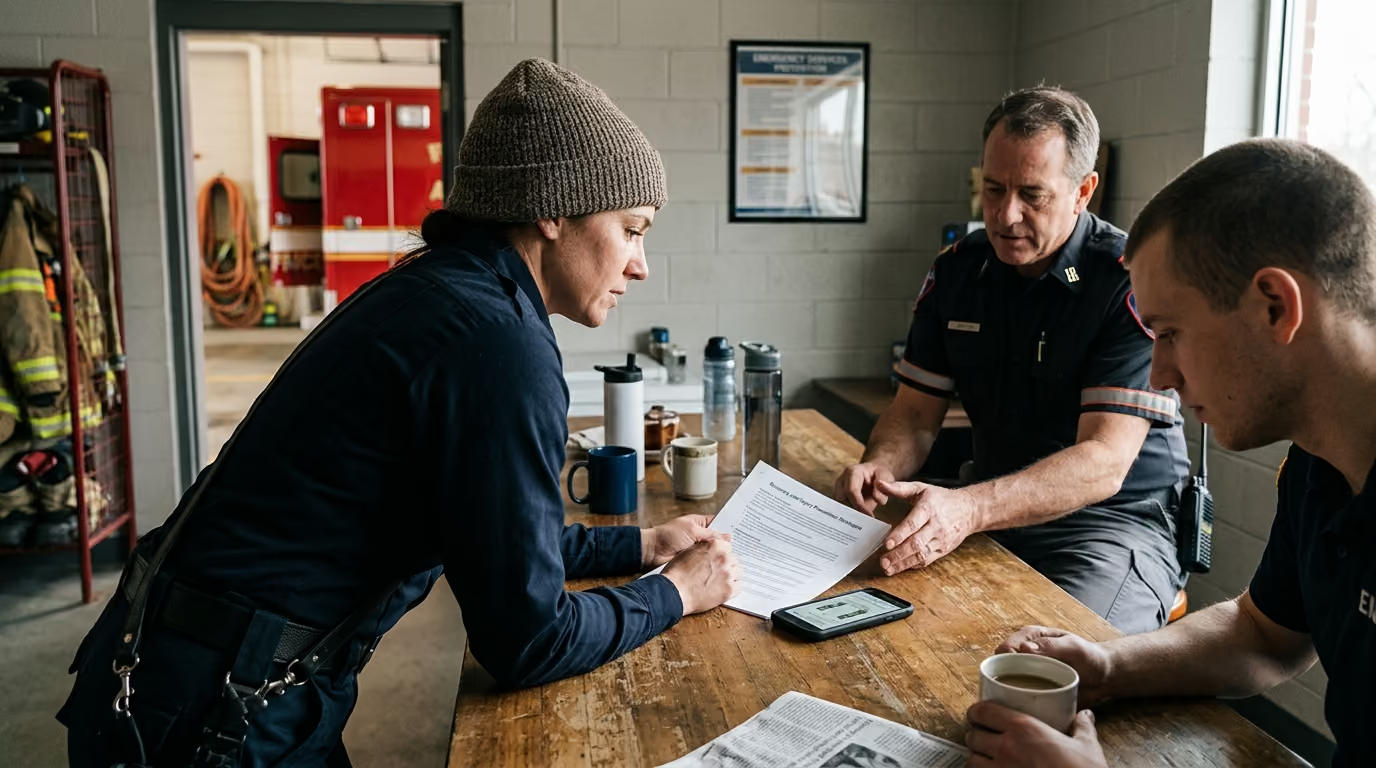
The most complex, science-heavy recovery routine online is often the least effective tool for an active crew. While athletic influencers debate cold plunges, proprietary supplements, and specialized stretching flows, emergency personnel face an entirely different physical environment. First responders work unpredictable 24-hour shifts, wear heavy protective equipment, carry combative or immobile patients down narrow stairwells, and manage sudden spikes in autonomic arousal.
To determine if an injury-prevention claim or recovery protocol actually works, you must look past scientific jargon and evaluate it as an occupational-health decision. A useful intervention must show a measurable benefit for a specific job task, carry low operational risk, and fit around irregular sleep and demanding calls.
- THE 5 CORE EVALUATION QUESTIONS
- 1. Biological Plausibility: Does the proposed physical mechanism make sense?
- 2. Controlled Measurement: Did it produce measurable changes in a strict trial?
- 3. Occupational Relevance: Does it improve a tangible duty outcome (lost time)?
- 4. Context Match: Does it fit your specific role, gear, and shift?
- 5. Operational Safety: Can it be used safely without adding job hazards?
Federal data indicates that sprains and strains account for 33% to 41% of all injuries across emergency medical services, firefighting, and law enforcement. At the same time, the specific hazards behind those strains differ drastically across professions. Paramedics face high rates of spinal load from patient transfers. Firefighters manage extreme thermal strain and awkward equipment carries. Police officers face sudden physical confrontations and roadway hazards.
Treating recovery advice as a one-size-fits-all solution is ineffective and can compromise safety on duty. Evaluating claims requires checking the population tested, the primary outcome measured, and whether the intervention addresses workplace hazards or simply masks symptoms.
Recognize How Occupational Realities Diverge from General Fitness Claims
Standard fitness advice assumes predictable recovery windows, controlled environments, and planned training progressions. Emergency services operate under the opposite conditions. A routine that works for a collegiate athlete or a gym-goer with a steady sleep schedule may fail when applied to a paramedic working their third night shift.
- ATHLETIC TRAINING VS. FIRST RESPONDER REALITY
- ATHLETIC FITNESS PARADIGM FIRST RESPONDER OPERATIONAL REALITY
- • Predictable training blocks • Unscheduled calls and broken rest
- • Controlled gym environments • Extreme heat, cold, and uneven ground
- • Scheduled recovery and sleep • Circadian disruption and night shifts
- • Uniform, rules-based movements • Awkward, heavy, asymmetrical loads
- • Planned off-seasons and rest periods • Year-round physical readiness demands
Data from the Centers for Disease Control and Prevention shows that career firefighters and police officers experience high injury rates, reaching 7.4 and 8.5 injuries per 100 full-time-equivalent workers, respectively. Population studies indicate that first responders file workers' compensation claims at more than triple the rate of the general workforce. Injury patterns also reflect the distinct physical demands of each branch. Ambulance officers sustain the highest proportion of upper-body musculoskeletal injuries, while fire and rescue personnel experience elevated rates of lower-body trauma.
Evaluating online advice requires screening whether the program accounts for these occupational distinctions:
- Hazard exposure profiles: EMS providers face confined spaces, awkward patient transfers, and prolonged kneeling. Firefighters carry heavy self-contained breathing apparatus, navigate zero-visibility structures, and absorb extreme heat. Law enforcement officers carry duty belts that alter hip mechanics, sit in patrol vehicles for long durations, and engage in sudden sprints or physical control situations.
- Denominator accuracy: Online claims often present raw injury counts rather than normalized rates. Comparing total injuries without adjusting for exposure hours, shift length, or agency size produces misleading claims about what actually reduces risk.
- Multi-hazard environments: Musculoskeletal pain is only one component of duty injury. Police officers face significant vehicle crash and assault risks, while firefighters face cardiovascular events, toxic smoke, and heat illness. Paramedics experience nonfatal assault rates that exceed general industry averages by more than five times.
An online program that promises to make a responder injury-proof by targeting a single muscle group ignores the real-world operational stressors identified in injury prevention and physical recovery strategies. Real injury mitigation requires building physical reserves while respecting the uncontrollable demands of emergency scenes.
Classify the Five Core Types of Online Claims
Online content creators frequently mix distinct biological and operational concepts. A claim that sounds scientific often describes an isolated laboratory marker rather than a functional benefit. Before adopting a new training method, device, or supplement, classify the claim into one of five categories.
- THE 5 TYPES OF ONLINE CLAIMS
- 1. MECHANISM CLAIM: "Lowers oxidative stress" (Biological pathway only)
- 2. SURROGATE CLAIM: "Boosts heart rate variability" (Lab marker, not duty)
- 3. PERFORMANCE CLAIM: "Adds 20 lbs to your bench press" (Gym metric, not safety)
- 4. OCCUPATIONAL CLAIM: "Reduces lost duty time by 20%" (Meaningful field outcome)
- 5. DISEASE CURE CLAIM: "Reverses chronic disc herniations" (Medical overreach)
1. Mechanism Claims
A mechanism claim describes an isolated biological event inside a cell or tissue. Marketers frequently use phrases like lowers oxidative stress, alters fascia, or increases localized blood flow.
While the biological pathway may be real, that mechanism does not guarantee fewer injuries on shift. For instance, the National Institutes of Health Office of Dietary Supplements notes that while high-dose antioxidants like vitamins C and E reduce cellular free radicals, trials show they do not improve exercise performance and may actually blunt training adaptations.
2. Surrogate-Outcome Claims
Surrogate claims highlight changes in indirect markers, such as heart rate variability, skin temperature, range of motion on a single test, or subjective muscle soreness.
These markers provide data points, but they are not the same as job capability. A protocol that temporarily decreases muscle soreness does not necessarily restore the reactive strength or balance needed to pull a charged hose line safely.
3. Performance Claims
Performance claims focus on physical outputs like maximum deadlift strength, vertical jump height, or sprint speed.
Strength and conditioning build vital physical capacity. However, research examining physical fitness test scores and emergency responder injury rates shows a complex relationship. Better aerobic fitness correlates with lower overall injury risk, but gym performance metrics alone do not fully shield a responder from sudden operational hazards.
- THE OUTCOME RELEVANCE LADDER
- LEVEL 1
- LEVEL 2
- LEVEL 3
- LEVEL 4
- LEVEL 5
- LEVEL 6
4. Occupational Outcome Claims
Occupational claims are the most relevant for first responders. These claims state that an intervention reduces line-of-duty injuries, decreases lost-time workdays, limits modified-duty assignments, or improves safety during emergency tasks.
Demonstrating this level of effectiveness requires field trials tracking real workers over extended operational periods. These outcomes are difficult to prove, which is why commercial advertisements rarely feature them.
5. Disease and Injury Treatment Claims
Any claim stating that an over-the-counter product, mobility gadget, or supplement cures disc herniations, resolves tendonitis, or eliminates post-traumatic stress is a medical claim.
Under federal regulations, dietary supplements cannot legally claim to diagnose, treat, cure, or prevent any disease. When an online influencer presents a supplement or simple physical routine as a cure for structural trauma or chronic illness, they are operating outside regulatory and evidence-based standards.
Apply an Evidence Ladder to Tactical and Wellness Marketing
Evaluating the credibility of a recommendation requires examining the type of data supporting it. Scientific evidence exists on a hierarchy. A compelling story from a single veteran firefighter does not carry the same weight as a controlled trial conducted within active fire departments.
- THE RESCURIS EVIDENCE LADDER
- RUNG 8
- RUNG 7
- RUNG 6
- RUNG 5
- RUNG 4
- RUNG 3
- RUNG 2
- RUNG 1
- Rung 1: Testimonials and anecdotes. Individual stories are vulnerable to the placebo effect, natural healing timelines, and personal bias. The fact that an exercise helped one officer recover from a back strain does not make it a universal solution.
- Rung 2: Expert opinion. Professional commentary provides clinical ideas, but it remains a low level of evidence unless supported by rigorous testing.
- Rung 3: Mechanistic and laboratory studies. These investigations examine cellular responses, tissue samples, or isolated muscle contractions in healthy volunteers. They establish whether a concept is biologically plausible, but they do not confirm real-world utility.
- Rung 4: Uncontrolled observational studies. These studies track groups of workers without using a control group. They help identify associations, but they cannot prove that an intervention caused the observed improvements.
- Rung 5: Controlled trials. Researchers compare an active intervention against a control group, usual care, or an alternative program.
- Rung 6: Systematic reviews and meta-analyses. Independent researchers pool data from multiple controlled trials to assess the consistency and overall size of an effect.
- Rung 7: Occupational consensus guidelines. National safety agencies like the National Institute for Occupational Safety and Health evaluate literature across entire sectors to issue formal recommendations.
- Rung 8: Real-world occupational trials. The highest standard of practical evidence tests interventions inside active departments, measuring lost-time shifts, injury recurrences, and long-term compliance.
A study can sit on a high rung and still fail to help your specific situation if it lacks external validity. A well-controlled trial conducted on 20-year-old collegiate rowers has limited relevance to a 45-year-old paramedic lifting bariatric stretchers on night shift. Always ask whether the study population matches your age, schedule, equipment load, and physical demands.
Audit Prevention Advice Using the Hierarchy of Controls
The tactical fitness industry often suggests that injuries are caused by individual physical weakness. Responders are told that if they do enough core exercises, functional movement drills, or mobility work, they will become injury-proof. This mindset ignores established occupational safety principles.
NIOSH outlines a clear Hierarchy of Controls for workplace safety. Individual physical training sits at the base of this hierarchy as an administrative control. It is an important baseline, but it is the least reliable method for eliminating workplace hazards.
- HIERARCHY OF OCCUPATIONAL CONTROLS
- 1. ELIMINATION: Physically remove the hazard (e.g. Powered stretchers)
- 2. SUBSTITUTION: Replace the hazard (e.g. Mechanical CPR devices)
- 3. ENGINEERING: Redesign tools and apparatus (e.g. Low-load hose beds)
- 4. ADMINISTRATIVE: Shift scheduling, staffing models, lifting procedures
- 5. PERSONAL EQUIPMENT: Turnout gear, ballistic vests, boots, gloves
- 6. INDIVIDUAL FITNESS: Strength, conditioning, mobility, and recovery routines
Physical conditioning builds an essential reserve capacity, helping tissues tolerate the physical stress of the job. However, fitness alone cannot offset structural hazards, poor staffing, or broken equipment:
- Engineering and equipment controls: Implementing powered ambulance cots, powered stair chairs, and mechanical chest compression devices removes tons of cumulative spinal loading from an EMS crew during a single tour.
- Administrative and staffing controls: Establishing mandatory minimum staffing levels for heavy patient transfers, setting realistic shift length caps, and using smart dispatching directly reduce fatigue-related injuries.
- Individual preparation: Structured strength and conditioning improves joint stability and force production. This prepares the body to safely manage the remaining, unavoidable demands of the job.
When evaluating prevention advice, be skeptical of programs that frame injuries as personal failures. An online protocol that claims to bulletproof your spine while ignoring awkward lifting mechanics, understaffed apparatus, and sleep deprivation is misrepresenting how occupational injuries happen. Physical preparation is a valuable component of safety, but it works alongside systemic controls rather than replacing them.
Separate Real Recovery from Superficial Symptom Suppression
Recovery is the physiological restoration of muscular, neurological, hormonal, and cognitive systems. Masking discomfort is not the same as full physical recovery. Many trending recovery tools alter sensory feedback and dull pain without restoring operational capacity.
- THE 5 DIMENSIONS OF OPERATIONAL RECOVERY
- • NEUROMUSCULAR: Restoration of dynamic balance, motor control, and power
- • SYSTEMIC: Return of baseline autonomic balance and low inflammation
- • COGNITIVE: Restoration of rapid reaction time, memory, and judgment
- • PSYCHOLOGICAL: Downregulation of high autonomic stress and hypervigilance
- • CELLULAR: Replenishment of glycogen stores and localized tissue repair
A responder who rubs an analgesic cream on an aching shoulder or uses a massage gun on their calves may experience temporary relief. However, if their deep stabilizer strength is compromised, their central nervous system is fatigued, or their reaction time is delayed, their injury risk remains elevated.
The Role of Sleep in Recovery
Sleep is the cornerstone of physiological recovery. Systematic reviews on occupational fatigue in emergency responders connect sleep disruption directly to reduced cognitive function, slower reaction times, impaired decision-making, and increased musculoskeletal injury rates.
CDC reports highlight that cumulative sleep debt degrades physical performance in ways that passive recovery tools cannot fix. Using energy drinks, stimulants, or massage tools to push through chronic exhaustion does not restore operational readiness. You can learn more about managing shift strain in our guide on how shift length and circadian disruption drive fatigue.
- SYMPTOM SUPPRESSION VS. TRUE RESTORATION
- INTERVENTION IMMEDIATE SENSATION TRUE PHYSIOLOGICAL STATE
- • High-Dose Caffeine Alertness, reduced sleepiness Elevated cortisol, poor fine motor control
- • Cold Immersion Numbed pain, refreshed feeling Blunted hypertrophy, delayed tissue rebuild
- • Percussion Gun Reduced local muscle tightness Unaltered central fatigue and joint capacity
- • NSAID Medications Blocked inflammatory pain Masked tissue strain, potential GI stress
- • Deep Sleep & Fuel Gradual systemic restoration Restored reaction time, motor unit firing
Concussion Recovery and Return-to-Duty Standards
Head trauma represents an area where symptom suppression is dangerous. CDC HEADS UP guidance emphasizes that recovery from a mild traumatic brain injury requires a supervised, symptom-guided progression.
Emergency responders face unique operational risks during brain injury recovery. Returning to duty before reaching full neurological recovery compromises safety during:
- Operating emergency vehicles at high speeds under sirens and lights
- Navigating low-visibility, high-heat structural environments
- Making rapid, high-consequence medical or tactical decisions
- Engaging in physical control situations or handling firearms
- Working at heights, on ladders, or around heavy extrication machinery
CDC clinical protocols state that being mostly symptom-free at rest does not mean a responder is cleared for duty. True readiness requires tolerating physical exertion, cognitive load, and dual-task challenges without symptoms returning. Any protocol promising rapid, guaranteed concussion recovery via supplements or proprietary therapies contradicts established return-to-work guidelines.
Screen Supplements and Performance Products for Practical Value
The dietary supplement and tactical wellness market is filled with bold promises. Influencers frequently claim their products speed recovery, eliminate joint pain, and boost energy. Evaluating these claims requires understanding how supplements are regulated and how ingredients function in the body.
- SUPPLEMENT EVALUATION & REGULATORY CHECKLIST
- premarket efficacy approval from the FDA.
- banned substances (NSF Sport, Informed-Choice).
- (avoid underdosed proprietary blends).
- cardiovascular strain on shift.
- or occupational health screening standards.
Regulatory Realities
Under the Dietary Supplement Health and Education Act, the Food and Drug Administration does not approve dietary supplements for safety or effectiveness before they reach store shelves. Manufacturers do not have to prove that a product works before marketing it to consumers.
- Available for purchase does not mean proven effective: A product can sit on a shelf simply because its ingredients are not currently banned.
- Clinically studied does not mean validated: Marketers often use this phrase when a single ingredient was studied in a laboratory, even if the finished product uses a much lower dose.
- Natural does not automatically mean safe: Herbal extracts and high-dose compounds can interact with prescription medications, alter blood pressure, or cause gastrointestinal issues.
Independent Purity Testing
Because premarket federal oversight is limited, contamination and label inaccuracies occur in the supplement industry. Third-party testing organizations provide an objective check on product quality.
Organizations such as NSF Certified for Sport, Informed-Choice, and the Banned Substances Control Group verify that a product contains the ingredients listed on its label without dangerous contaminants or unlisted drugs.
However, independent certification only verifies purity. It does not prove that the supplement will improve your physical recovery or reduce your injury risk on duty.
Common Supplement Claims
Evaluating popular supplements through evidence-based resources like the NIH Office of Dietary Supplements helps separate real benefits from marketing hype:
- COMMON PERFORMANCE SUPPLEMENTS EVALUATED
- SUPPLEMENT PROPOSED MECHANISM EVIDENCE & OCCUPATIONAL CONTEXT
- • Creatine Increases cellular energy Strong evidence for power output
- Monohydrate (phosphocreatine resynthesis) and lean mass. Safe and cheap.
- • High-Dose Scavenges free radicals and Mixed evidence. May blunt normal
- Antioxidants reduces oxidative stress muscular training adaptations.
- • Multi-Staged Blocks adenosine receptors Temporarily masks fatigue. Can
- Pre-Workouts and spikes central drive disrupt sleep and elevate HR.
- • Collagen Supports joint cartilage and Limited evidence. Requires load
- Peptides tendon collagen synthesis and vitamin C to show benefit.
- Creatine monohydrate: Backed by substantial research showing reliable improvements in repeated high-intensity power output, lean mass retention, and short-term work capacity. It is well-tolerated and cost-effective.
- High-dose antioxidants (Vitamins C and E): Promoted to speed muscle recovery by reducing oxidative stress. However, research shows that high doses do not accelerate return to function and can interfere with the cellular signals that drive cardiovascular and muscular adaptations.
- High-stimulant pre-workout blends: These formulas rely on large doses of caffeine and exotic stimulants to create an artificial sense of energy. While they increase immediate alertness, they spike resting heart rates, elevate blood pressure, and disrupt daytime sleep after a night shift.
- Collagen and joint complexes: Marketed as structural cures for damaged cartilage and tendons. Current research shows limited benefits, and any potential collagen synthesis requires targeted mechanical loading alongside supplementation.
Avoid the Most Common Pitfalls in First Responder Programming
Navigating online injury and performance advice requires recognizing common logical fallacies. Avoiding these eight pitfalls will help protect your health and career longevity.
- 8 COMMON FITNESS & RECOVERY PITFALLS
- 1. Confusing biological plausibility with real-world proof.
- 2. Treating correlation as causation in physical fitness scores.
- 3. Applying athletic sports models directly to emergency response shifts.
- 4. Using subjective muscle soreness as the primary recovery metric.
- 5. Assuming more training volume and intensity is always safer.
- 6. Viewing physical pain as either completely meaningless or catastrophic.
- 7. Ignoring psychological stress, autonomic arousal, and sleep debt.
- 8. Treating return-to-duty as a simple binary choice rather than a progression.
Pitfall 1: Confusing Plausibility with Proof
A creator may spend ten minutes explaining muscle pennation angles, fascial chains, or inflammatory cytokines. While the anatomical terms are accurate, a logical explanation of how something could work does not prove that it actually does. Always look for measurable outcomes over theoretical explanations.
Pitfall 2: Treating Correlation as Causation
First responders with high aerobic fitness frequently have lower injury rates. However, this does not mean that running alone makes you immune to injury. Fit individuals may also have better sleep habits, more years on the job, better lifting mechanics, or less hazardous duty assignments. Increasing fitness is helpful, but it is not a standalone shield against injury.
Pitfall 3: Copying Athletic Training Programs
Athletic strength programs are built around fixed seasons, scheduled games, and planned rest weeks. First responders do not have an off-season. Designing your training like a competitive powerlifter or collegiate athlete can leave you exhausted when an emergency call comes in. Training should support your job performance, not compete with it.
Pitfall 4: Relying on Muscle Soreness as a Recovery Metric
Delayed onset muscle soreness simply reflects your body's response to unfamiliar exercise movements. Feeling less sore does not mean your central nervous system, joint stabilizers, or cognitive processing are ready for heavy loads. Conversely, mild soreness does not mean your tissues are damaged.
Pitfall 5: Assuming More Training Is Always Better
Grind-culture fitness often suggests that working harder is the answer to every problem. For shift workers carrying substantial fatigue, adding high-volume workouts can increase injury risk. Effective long-term programs emphasize intelligent progression and autoregulating training based on daily readiness.
- TRAINING VOLUME VS. OPERATIONAL FATIGUE
- OPTIMAL ADAPTATION ZONE
- • 2-4 structured strength sessions weekly
- • Autoregulated volume based on sleep and call volume
- • Focus on movement quality, core stability, and aerobic base
- OVERTRAINING & INJURY RISK ZONE
- • High-volume daily workouts regardless of shift fatigue
- • Masking exhaustion with excessive stimulants and pre-workouts
- • Ignoring joint aches, poor sleep quality, and elevated resting HR
Pitfall 6: Misinterpreting Pain Signals
Pain is a complex protective signal generated by the nervous system. It does not always indicate acute tissue damage, but it should never be ignored. Dismissing pain as weakness can worsen an underlying strain, while treating every minor ache as a severe injury leads to unnecessary fear and physical deconditioning.
Pitfall 7: Overlooking Psychological and Sleep Stress
Focusing entirely on joint mechanics while ignoring occupational stress, critical incident strain, and sleep debt creates an incomplete recovery plan. Psychological stress keeps the sympathetic nervous system elevated, which slows tissue repair, alters movement patterns, and increases injury risk across all branches of emergency services.
Pitfall 8: Treating Return-to-Duty as an All-or-Nothing Switch
Returning to full duty after an injury should follow a step-by-step progression rather than jumping straight from bed rest to a 24-hour shift. Working through light duty, modified tasks, and supervised drills ensures that injured tissues can handle job demands before you face an unpredictable emergency.
Score Any Online Claim with an Objective Six-Point Rubric
To quickly evaluate a training program, recovery protocol, or wellness product, evaluate it against this practical scoring rubric. Rate each category from 0 to 5 to assess its overall quality and occupational relevance.
- THE RESCURIS 6-POINT EVALUATION RUBRIC
- 1. EVIDENCE QUALITY (0 Testimonial only - 5 Systematic review/guideline)
- 2. OUTCOME RELEVANCE (0 Pure marketing - 5 Lost-time injury reduction)
- 3. POPULATION MATCH (0 Sedentary/Athletes- 5 Same emergency occupation)
- 4. SAFETY TRANSPARENCY (0 No risks stated - 5 Clear contraindications/stop)
- 5. PRACTICALITY (0 Impractical on shift - 5 Sustainable on duty)
- 6. CLAIM PRECISION (0 Miracle promises - 5 Cautious, specific scope)
- RUBRIC SCORING BREAKDOWN GUIDE
- 1. EVIDENCE QUALITY
- 0: Social media testimonial or single influencer endorsement
- 1: Plausible biological mechanism explained without experimental data
- 2: Uncontrolled observational report or retrospective survey
- 3: Controlled trial in a laboratory or gym setting
- 4: High-quality systematic review, meta-analysis, or national agency guideline
- 5: Multi-site occupational implementation trial inside emergency services
- 2. OUTCOME RELEVANCE
- 0: Vague wellness claims ("supports resilience", "cleanses toxins")
- 1: Cellular or blood biomarker (antioxidant status, localized lactate)
- 2: Short-term subjective feeling (transient muscle soreness, perceived pump)
- 3: Isolated gym metric (bench press 1RM, sit-and-reach flexibility)
- 4: Validated functional capacity (loaded stair climb, victim drag endurance)
- 5: Concrete duty outcome (reduced workers' comp claims, lower lost duty time)
- 3. POPULATION MATCH
- 0: Sedentary general population or animal models
- 1: Healthy recreationally active adults with normal sleep schedules
- 2: Competitive collegiate or professional sports athletes
- 3: Mixed tactical or military populations in training environments
- 4: First responders in a similar branch (e.g. career fire vs. volunteer fire)
- 5: Same occupation, shift structure, gear profile, and physical task demands
- 4. SAFETY TRANSPARENCY
- 0: Claims zero risk, zero side effects, and universal safety
- 1: Generic, small-print legal disclaimer
- 2: Lists common minor side effects only
- 3: Identifies clear contraindications, medication interactions, and load limits
- 4: Outlines symptom-monitoring protocols and when to decrease intensity
- 5: Clear clinical stop rules and mandatory professional referral criteria
- 5. PRACTICALITY ON SHIFT
- 0: Conflicts with station life, emergency dispatches, and shift work
- 1: Requires expensive, specialized machinery or extreme time commitments
- 2: Difficult to maintain during busy shifts or call-heavy tours
- 3: Feasible during scheduled off-days with access to standard gym equipment
- 4: Adaptable to station gyms, shift work, and varying call volumes
- 5: Sustainable, low-friction, and easily integrated into station operations
- 6. CLAIM PRECISION
- 0: Absolute promises ("bulletproof your body", "cures all back pain")
- 1: Unsubstantiated claims to treat or reverse diagnosed medical conditions
- 2: Broad, overgeneralized promises of improved performance
- 3: Realistic
- claims highlighting possible benefits for specific goals
- 4: Evidence-matched claims outlining both benefits and clear limitations
- 5: Highly specific, rigorously bounded claim detailing exactly who benefits
Applying the Rubric: Three Case Studies
To see how this rubric works in practice, examine how three common online claims hold up under systematic evaluation:
Example 1: The 10-Minute Mobility Routine for Low Back Pain
- Evidence Quality: 2 (Supported mainly by personal client reviews and basic movement principles).
- Outcome Relevance: 3 (Improves hip range of motion on a test, but lacks data on duty injury rates).
- Population Match: 2 (Tested on general gym members rather than shift workers wearing duty belts).
- Safety Transparency: 3 (Provides basic coaching cues but lacks clear clinical stop rules for nerve symptoms).
- Practicality: 5 (Quick, requires no specialized gear, and fits easily into station downtime).
- Claim Precision: 1 (Promoted with overbroad statements like "eliminate back pain forever").
- Total Score: 16 / 30.
- Verdict: This routine provides a convenient way to move and warm up. However, its claims of preventing on-duty back injuries are unsubstantiated.
Example 2: High-Stimulant Tactical Pre-Workout Powders
- Evidence Quality: 3 (Caffeine reliably improves acute physical vigilance in controlled trials).
- Outcome Relevance: 2 (Increases short-term workout focus but does not reduce injury risk or build durability).
- Population Match: 3 (Tested in military and athletic settings, though often with normal sleep routines).
- Safety Transparency: 1 (Minimizes risks regarding elevated blood pressure, cardiac strain, and sleep disruption).
- Practicality: 4 (Easy to consume, but can disrupt restorative sleep if taken late in a shift).
- Claim Precision: 1 (Marketed as an all-in-one fix for chronic operational fatigue).
- Total Score: 14 / 30.
- Verdict: While caffeine can provide a temporary boost in alertness, using high-stimulant blends to compensate for chronic sleep loss increases cardiovascular strain and disrupts long-term recovery.
Example 3: Symptom-Guided Concussion Return-to-Duty Protocol
- Evidence Quality: 5 (Built directly on peer-reviewed CDC and occupational health consensus guidelines).
- Outcome Relevance: 5 (Directly measures symptom-free task performance, vehicle safety, and duty readiness).
- Population Match: 5 (Structured specifically for emergency service personnel and high-risk duties).
- Safety Transparency: 5 (Includes clear stop rules, symptom checklists, and required medical sign-offs).
- Practicality: 4 (Requires department coordination and light-duty options, but remains manageable).
- Claim Precision: 5 (Focuses on structured rehabilitation without making unrealistic promises).
- Total Score: 29 / 30.
- Verdict: A highly credible protocol that prioritizes long-term neurological health and operational safety over short-term expediency.
Determine When Professional Evaluation Must Take Precedence
Self-directed recovery protocols and fitness adjustments are valuable tools for maintaining daily physical readiness. However, they cannot replace clinical evaluation when significant injuries or persistent symptoms occur.
- CLINICAL EVALUATION RED FLAGS
- • NEUROLOGICAL: Numbness, tingling, radiating pain, weakness, or drop foot
- • TRAUMATIC: Inability to bear weight, visible deformity, joint instability
- • SYSTEMIC: Chest tightness, unexplained shortness of breath, heat illness
- • HEAD INJURY: Dizziness, visual changes, cognitive fogginess, light nausea
- • CHRONIC: Pain persisting past 2-3 weeks despite load modification
Schedule an evaluation with a licensed physical therapist, athletic trainer, occupational medicine physician, or primary care provider when facing:
- Neurological warning signs: Radiating pain, numbness, tingling, or sudden muscle weakness in the arms, legs, hands, or feet.
- Traumatic joint symptoms: Inability to bear weight, joint locking, sudden instability, or noticeable joint swelling following an acute incident.
- Suspected concussion or blast exposure: Dizziness, light sensitivity, confusion, persistent headaches, or memory lapses after a fall, vehicle collision, structural collapse, or explosive event.
- Cardiovascular and systemic red flags: Unexplained shortness of breath, chest pressure, heart palpitations, or severe heat exhaustion symptoms that persist after cooling down.
- Persistent pain: Pain or functional limitations that fail to improve after two to three weeks of sensible rest and modified training.
When seeking care, look for clinicians who understand the physical demands of emergency services. A physical therapist or physician familiar with occupational injury and recovery research can structure a rehabilitation plan that prepares you for real-world tasks like carrying gear, advancing hose lines, and moving patients safely.
A sustainable career in emergency services is built on durable physical capacity, consistent recovery habits, and a realistic approach to workplace hazards. Using an objective, evidence-based method to evaluate online claims helps you filter out commercial hype and focus on what genuinely supports your health and readiness on shift.
- KEY TAKEAWAYS
- • Evaluate recovery and fitness claims as occupational decisions, not trends.
- • Treat physical fitness as a capacity builder, not an absolute shield.
- • Biological plausibility in a lab does not equal injury prevention on duty.
- • Address root operational hazards before relying on individual willpower.
- • Prioritize consistent sleep over passive recovery tools and stimulants.
- • Verify dietary supplement purity using NSF Sport or Informed-Choice testing.
- • Follow symptom-guided progressions for head trauma and joint rehabilitation.
- • Autoregulate training intensity based on shift fatigue and call volume.
Prioritizing evidence-informed training and true physiological recovery over online fitness trends protects your operational readiness on shift and preserves your long-term health for life after the uniform.
Sources
- Occupational injuries among emergency responders
- Occupational Injuries Among Emergency Responders - CDC Stacks
- The Nature and Burden of Occupational Injury Among ... - PubMed
- A Systematic Review of Workplace Violence Against Emergency Medical Services Responders - Regan M. Murray, Andrea L. Davis, Lauren J. Shepler, Lori Moore-Merrell, William J. Troup, Joseph A. Allen, Jennifer A. Taylor, 2020
- Safety Guidelines: Emergency Response and Recovery Workers
- Emergency Responder Health Effects
- A Systematic Review of Workplace Violence Against ...
- Fatal Occupational Injuries to Emergency Responders
- Occupational Injuries and Exposures among Emergency Medical ...
- Comparison of public safety provider injury rates
- NSCA's TSAC Report
- 4. Discussion
- 18 First Responder Fatigue Statistics: 2026 Data, Causes, and ...
- Identification and prevention strategies for musculoskeletal injuries among firefighters: A rapid review - Monica M Teegardin, Nicholas B Kelly, William S Zoughaib, Michaela A Wilson, Andrew Veith, Vanessa Kleinschmidt, Carolyn Muegge, Justin Miller, Steven Moffatt, Mark Urtel, 2025
- Research Review: Sleep Deprivation Impact 85% of First ...
- Dietary Supplements for Exercise and Athletic Performance
- Dietary Supplements for Exercise and Athletic Performance