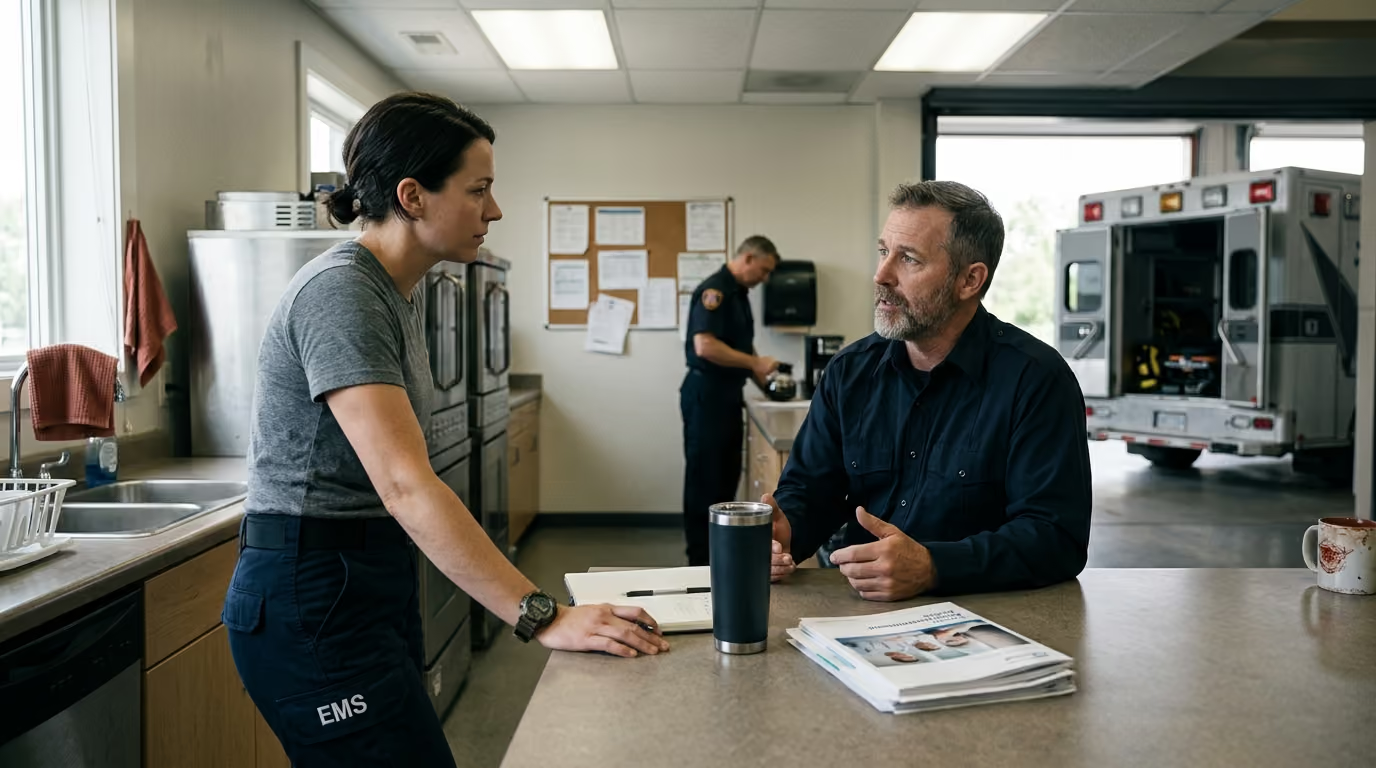

First responders can prepare for low testosterone evaluations by tracking shift fatigue, gathering sleep records, and completing standard multi-step lab testing.





You finish a grueling forty-eight-hour rotation, drag yourself home, and realize your physical drive has evaporated. Your gym sessions feel like moving through wet concrete, your recovery takes days, and your focus feels blunted. It is easy to look at online advertisements, assume your testosterone has crashed, and walk into a clinic demanding a prescription.
Approaching the conversation this way often backfires. A productive medical visit is not a transaction for a predetermined medication. It is a structured investigation into your symptoms, shift exposures, sleep architecture, and lab values.
The goal of this guide is to help you prepare for that conversation. By bringing organized data about your physical routine, shift schedules, and symptoms, you help your clinician build an accurate diagnosis. This approach prevents missed medical conditions and keeps your long-term health intact.
Testosterone deficiency, clinically termed hypogonadism, cannot be diagnosed from a single blood draw or a list of general symptoms. Medical guidelines from major endocrine and urological organizations require two distinct elements: consistent, clinically recognized symptoms and unequivocally low early morning blood testosterone levels measured on at least two separate days.
Fatigue, brain fog, and reduced physical output are common across emergency services. These symptoms often stem from chronic sleep debt, untreated sleep apnea, high training volumes, occupational stress, or medication side effects.
A thorough evaluation investigates the underlying cause of your symptoms rather than offering a quick chemical fix. If your clinician determines that low testosterone is present, they must also determine whether the root problem lies in the testes or in pituitary signaling before discussing treatment options.
The Endocrine Society and the American Urological Association establish clear standards for evaluating testosterone deficiency. Both organizations agree that a diagnosis requires clinical signs combined with confirmed biochemical deficiency.
The American Urological Association identifies a total testosterone level below 300 ng/dL as the standard cutoff for low testosterone. However, a number on a lab report does not constitute a diagnosis on its own. Many men have testosterone levels below this threshold without experiencing adverse symptoms, while others experience classic symptoms despite normal hormone concentrations.
Evidence also shows that circulating hormone levels fluctuate based on acute physiological stressors. A single night of severe sleep loss, an acute infection, intense prolonged training, or sudden caloric restriction can temporarily suppress serum testosterone. Because of this variability, clinical guidelines recommend confirming any low result with a second morning test drawn weeks later under stable baseline conditions.
Researchers classify hypogonadism into two primary categories based on where the hormonal signaling breaks down:
This occurs when the testes cannot produce adequate testosterone despite receiving strong hormonal signals from the brain. In this scenario, blood tests typically show low testosterone alongside elevated luteinizing hormone and follicle-stimulating hormone.
This occurs when the hypothalamus or pituitary gland fails to signal the testes to produce testosterone. In secondary hypogonadism, both testosterone and pituitary gonadotropins remain low or inappropriately normal. Common causes include chronic opioid use, glucocorticoid treatments, severe metabolic dysfunction, pituitary tumors, head trauma, and previous anabolic steroid exposure.
Distinguishing between these categories is essential. Simply prescribing exogenous testosterone without investigating secondary causes can mask serious underlying conditions like pituitary adenomas or systemic metabolic disease.
First responder shift work directly affects endocrine physiology. Firefighters, paramedics, police officers, and dispatchers rarely maintain predictable sleep schedules. This biological reality complicates standard diagnostic protocols.
Healthy civilian guidelines state that blood for testosterone testing must be drawn between 7:00 AM and 10:00 AM. In men with regular diurnal schedules, testosterone production peaks during REM sleep and reaches its highest systemic concentration shortly after waking.
For emergency workers coming off a twenty-four-hour shift or a series of overnight shifts, this standard window loses its clinical validity. If you draw blood at 8:00 AM after being awake for twenty-four hours, your levels will naturally look depressed. Circadian misalignment shifts the diurnal peak toward the period immediately following your main sleep block, regardless of the clock time. You must coordinate with your doctor to time blood draws after an adequate sleep cycle rather than at arbitrary morning hours.
Emergency services create an environment where lifestyle symptoms mimic endocrine disorders. The daily demands of the job can produce significant physiological strain:
These operational factors frequently cause profound exhaustion, decreased libido, poor gym recovery, and mood irritability. While these complaints match the symptom profile of hypogonadism, they frequently stem from accumulated sleep debt or autonomic nervous system strain rather than primary testicular failure.
Research on the direct relationship between shift work, sleep loss, and testosterone shows mixed results. Controlled lab studies indicate that severe sleep restriction can blunt the normal overnight testosterone rise. Conversely, other clinical trials show that modest, short-term sleep disruptions do not permanently impair baseline production in healthy men.
Furthermore, obstructive sleep apnea is highly prevalent among first responders due to neck circumference, shift stress, and irregular sleep postures. While sleep apnea causes severe daytime fatigue and blunts morning recovery, clinical reviews show it does not always cause low testosterone independently of body weight. Documenting your actual sleep patterns helps your physician separate occupational sleep debt from true endocrine dysfunction.
Walking into a clinic without documentation forces the clinician to rely on vague descriptions. You can improve the diagnostic process by preparing a concise, organized dossier covering your daily health patterns.
Do not offer general complaints like "I feel tired all the time." Create a simple, factual record of your physical changes over the past six to twelve months. Group your notes into distinct categories:
Track spontaneous morning erections, general libido, changes in erectile quality, and any immediate fertility plans.
Document specific problems with focus, unusual irritability on shift, memory lapses, or feelings of depression and apathy.
Note measurable losses in strength, unexplainable reductions in lean muscle mass, unexpected increases in abdominal body fat, or changes in testicular size.
Clarify whether these changes began gradually or started abruptly after an injury, a tactical deployment, a shift change, or an illness.
Provide your clinician with an accurate window into your operational schedule. Record your daily data for at least two complete shift rotations:
Building a clear shift-specific sleep plan helps establish a baseline that clinicians can evaluate alongside laboratory data.
Prescription drugs, over-the-counter products, and sports supplements can substantially alter hormone production. Bring a complete list of everything you consume:
Clinicians must know about past hormone use to accurately interpret pituitary blood tests. Hidden ingredients in over-the-counter muscle-building supplements can also suppress your natural endocrine axis.
First responders frequently combine high operational workloads with aggressive physical training. Bring a brief summary of your exercise program:
Understanding proper training around shift work helps determine whether your symptoms are driven by overreaching rather than endocrine failure.
If your symptoms and physical exam warrant blood testing, your clinician should follow a methodical, multi-step lab evaluation.
Your primary screening test should measure total serum testosterone using an accurate assay method. This test must be drawn in a fasted state following a period of normal, restorative rest. For personnel on rotating shifts, schedule this test on an off-duty day after a full night of sleep rather than immediately after a night shift.
If your first result comes back low or borderline, guidelines from the American Urological Association mandate a second early morning test on a separate date. During this round, your clinician should evaluate additional biomarkers:
The unbound, biologically active fraction of testosterone circulating in your bloodstream.
The primary carrier protein that binds testosterone. Alterations in SHBG from obesity, thyroid disorders, or high-protein diets can make total testosterone appear falsely low or high.
When low testosterone is confirmed across two separate tests, your clinician must run diagnostic labs to pinpoint the root cause:
Use these structured questions during your visit to guide a thorough, objective medical evaluation:
Testosterone replacement therapy is a significant medical treatment that requires ongoing clinical oversight. It is not an anti-aging supplement or a performance booster. Initiating therapy carries distinct physiological risks that must be managed carefully.
Exogenous testosterone delivers steady androgen levels to your bloodstream, which shuts down the brain's production of LH and FSH through negative feedback. This signaling shutdown halts natural intratesticular testosterone production and suppresses spermatogenesis.
For first responders planning to have children in the near or medium term, standard testosterone therapy is contraindicated. Clinicians managing patients who wish to preserve fertility may explore alternative therapies, such as selective estrogen receptor modulators or human chorionic gonadotropin, which stimulate natural testicular production rather than replacing it.
Testosterone stimulates erythropoiesis, increasing red blood cell production in the bone marrow. This causes an elevation in hematocrit, which is the percentage of whole blood composed of red cells.
The American Urological Association recommends checking baseline hematocrit before starting therapy. If your baseline hematocrit exceeds 50%, treatment should be delayed until the cause is fully explained.
Common causes of elevated baseline hematocrit include tobacco use, living at high altitudes, and undiagnosed sleep apnea. If your hematocrit reaches 54% or higher during treatment, clinical guidelines mandate stopping therapy, lowering the dose, or performing therapeutic phlebotomy to reduce the risk of hyperviscosity and vascular events.
Hormone therapy does not cause prostate cancer. However, exogenous testosterone can stimulate the growth of pre-existing, androgen-dependent prostate tumors. Clinicians must perform a digital rectal exam and establish a baseline PSA in men over forty prior to treatment.
The cardiovascular effects of testosterone replacement remain nuanced. Large clinical trials indicate that restoring normal testosterone in men with confirmed hypogonadism does not significantly increase major adverse cardiac events compared to placebo. However, the American Urological Association advises that counseling must acknowledge existing uncertainties, especially in men with pre-existing cardiovascular disease.
The Endocrine Society explicitly advises against initiating testosterone therapy in men with:
Many primary care clinicians manage basic hormone testing competently. However, specific clinical scenarios require specialized referral to an endocrinologist, urologist, or sleep medicine physician.
Request an endocrine referral if your blood tests reveal secondary hypogonadism with severely suppressed LH and FSH, markedly elevated prolactin, or symptoms pointing to broader endocrine disorders like adrenal insufficiency or thyroiditis. An endocrinologist can order and interpret specialized pituitary imaging, perform dynamic hormone stimulation testing, and manage complex metabolic interactions.
A urologist specializing in male reproductive medicine is the appropriate specialist if you have a history of testicular trauma, undescended testes, varicoceles, previous prostate complications, or a desire to maintain biological fertility while addressing low hormone levels.
If your shift log reveals chronic daytime sleepiness, loud snoring, gasping for air, or frequent morning headaches, request an overnight polysomnography study or a validated home sleep test. Resolving airway obstruction through continuous positive airway pressure (CPAP) therapy often restores daytime energy, improves body composition, and normalizes recovery without endocrine interventions.
Occupational stress, cumulative trauma, and shift work take a measurable psychological toll. If your primary symptoms involve emotional numbness, chronic anxiety, clinical depression, or post-traumatic stress, address these issues directly with a qualified mental health provider who understands emergency services.
Testosterone is not an antidepressant, and hormonal therapy cannot resolve occupational burnout or untreated trauma.
Approaching your clinician with an objective, data-driven mindset turns a potentially frustrating appointment into a productive clinical evaluation. Sustainable physical readiness and career longevity across emergency services depend on finding the true physiological causes of your fatigue, not chasing quick hormonal fixes.
By tracking your symptoms, shift patterns, sleep quality, and training load, you advocate for your health while respecting clinical safety standards. Whether your symptoms stem from occupational sleep debt, metabolic strain, or true endocrine failure, an evidence-based medical partnership protects your capability on duty and your health long after retirement.
Review this guide whenever you experience persistent, unexplained drops in recovery, when your shift schedule changes significantly, or before any scheduled medical checkup where hormone testing will be discussed. Use these checklists to keep your operational data clear, objective, and medically useful.
Stay connected for research-led guidance on duty fitness, shift-work sleep, injury recovery, stress, nutrition and career longevity. Practical ideas for first responders who want to stay capable on the job, recover well and protect their health for the long run.



Read practical guidance on first responder fitness, recovery, sleep, nutrition and resilience for demanding work and a long, active career.
read the blog



