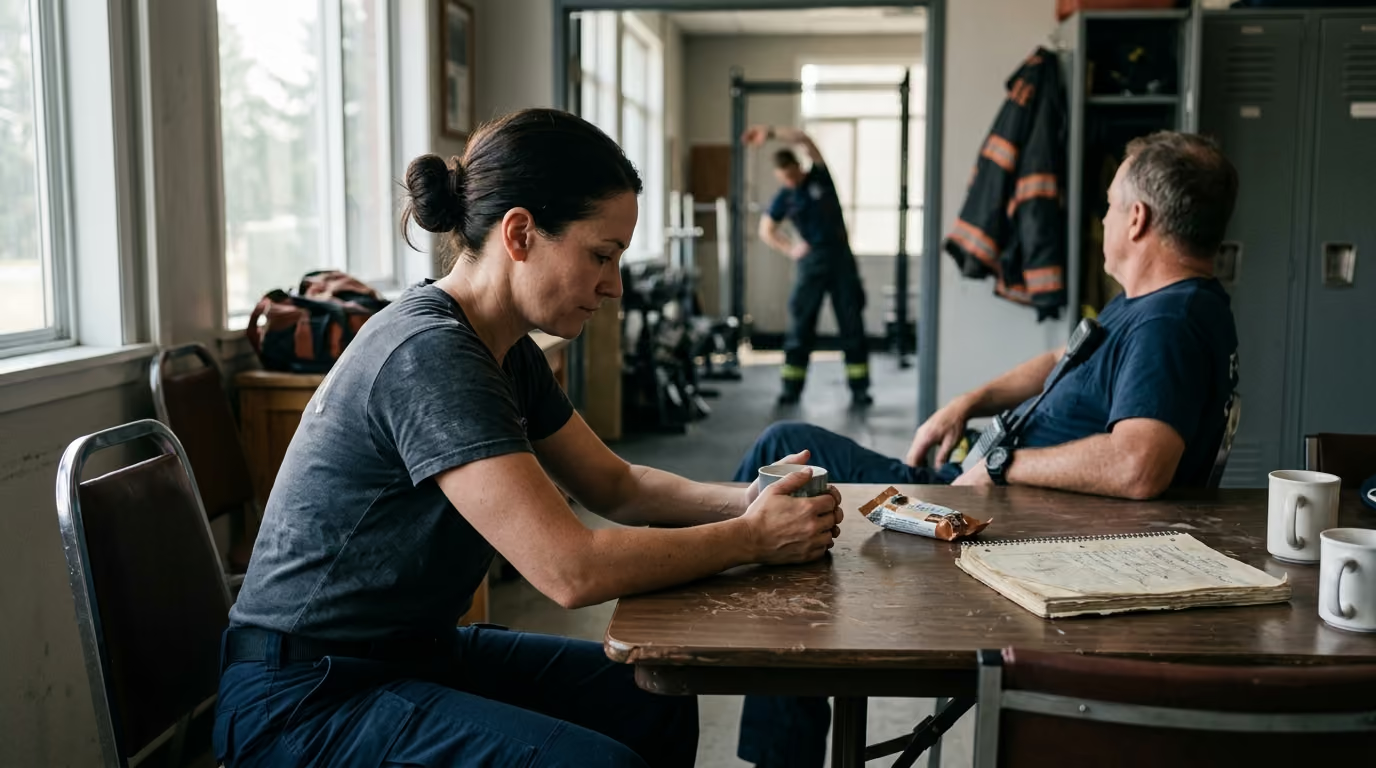

Two structured phases in the first off-duty hour help responders downshift their sympathetic nervous system and improve recovery sleep after intense calls.





If you are in immediate danger, call 911. For 24/7 support, call or text 988 and press 1 for the Veterans Crisis Line, or text 838255.
Post-incident recovery is not about forcing immediate relaxation or pretending that intense calls have no physical impact. It is a structured process of downshifting the central nervous system from emergency response to baseline safety. This guide examines how operational stress alters sleep biology, how shift work complicates recovery, and how responders can protect sleep while monitoring their long-term health.
If you or someone you know is in immediate crisis, support is available around the clock. Call 911 for immediate operational emergencies, or call or text 988 to reach the Suicide & Crisis Lifeline (press 1 for the Veterans and Military Crisis Line). You can also text 838255 for confidential support. If safety concerns involve personal access to lethal means at home, work directly with a trusted colleague, family member, or healthcare professional to store those items securely outside the immediate living environment until the acute crisis resolves.
Transitioning from high arousal to restorative rest requires practical steps rather than generic wellness advice. The sections below provide concrete methods to help your body recognize safety, protect your sleep window, and identify when acute reactions require clinical evaluation.
The primary objective after a high-stress call is not to force instant sleep or suppress normal stress reactions. The real goal is helping your body transition from operational vigilance to physiological safety while protecting your next recovery window.
Acute activation, racing thoughts, and light sleep are natural short-term responses to intense operational demands. You can support this transition by meeting basic physical needs first, marking a clear end to the operational shift, and lowering environmental stimulation without forcing aggressive relaxation techniques.
When symptoms such as severe insomnia, nightmares, emotional numbness, or hypervigilance persist past four weeks or impair your daily duties, formal assessment by a licensed healthcare professional is the appropriate next step.
An emergency response activates the sympathetic nervous system, flooding the body with adrenaline and cortisol. Heart rate climbs, peripheral blood vessels constrict, pupils dilate, and muscle tension increases to prepare you for immediate physical action. In high-consequence environments, this survival state sharpens focus and accelerates decision-making.
The challenge occurs when the incident ends but the threat-detection circuitry remains active. Your brain does not instantly register that the environment is secure just because the tones stopped or the vehicle returned to quarters. This lingering physiological arousal can make you feel exhausted yet completely unable to sleep.
Research indicates that sleep disturbance is exceptionally common across the emergency services. Studies estimate that between 51% and 70% of first responders experience meaningful sleep disruption or poor sleep quality. This rate is substantially higher than figures observed in the general population.
Sleep and post-incident stress share a direct, bidirectional relationship. A prospective study evaluating trauma symptoms found that elevated daytime distress predicted shorter sleep duration and poorer sleep quality that night. The same study revealed a reciprocal effect where shorter sleep duration predicted increased trauma-related symptoms the following day.
When an individual experiences an acute critical incident, the nervous system can present several distinct reaction patterns:
This state includes elevated resting pulse, heightened alertness, muscle stiffness, and involuntary scanning of the surroundings. It represents the immediate tail of the emergency response.
Hyperarousal involves persistent agitation, an exaggerated startle response, irritability, and insomnia. A responder might find themselves jumping at minor household sounds or checking window locks repeatedly.
Intrusions involve uninvited mental images, sensory flashbacks, or vivid dreams relating to the incident. These fragments can intrude during quiet moments when external operational distractions fade.
Avoidance occurs when a responder makes conscious or subconscious efforts to suppress thoughts, avoid specific streets, bypass certain calls, or withdraw from colleagues. While avoidance offers temporary comfort, it prolongs nervous system dysregulation over time.
This reaction pattern manifests as pervasive guilt, emotional detachment, hopelessness, or profound cynicism about community safety and organizational support.
Dissociation involves feeling disconnected from one's own body, experiencing events in slow motion, or feeling as though the surrounding environment is unreal.
Adequate sleep in the acute period following severe operational stress serves as a biological buffer. Research on acute trauma interventions indicates that obtaining consolidated rest after difficult events reduces the likelihood of developing chronic psychological difficulties. When sleep is repeatedly lost immediately after high-stress calls, emotional memory consolidation is impaired, which can increase the vulnerability to prolonged trauma disorders.
Understanding managing shift work and sleep disruption requires recognizing that being physically tired does not automatically generate sleepiness. When hyperarousal is high, your body treats sleep as an unsafe loss of vigilance. Recovery strategies must focus on reducing threat perception before attempting to sleep.
Human sleep is governed by two main physiological mechanisms: circadian timing and homeostatic sleep pressure. Circadian rhythms are controlled by the central clock in the hypothalamus, which uses light and dark cycles to promote alertness during the day and sleepiness at night. Homeostatic sleep pressure builds continuously the longer a person remains awake, driven by the accumulation of adenosine in the brain.
First responders rarely operate within ideal biological windows. A paramedic finishing a 14-hour night shift that concluded with a pediatric resuscitation faces an intense physiological mismatch. Sleep pressure is exceptionally high due to prolonged wakefulness, but the circadian system is actively signalling daytime alertness.
Morning sunlight hits the eyes during the drive home, suppressing melatonin production and boosting morning cortisol. When combined with lingering adrenaline from the call, this circadian drive for wakefulness easily overrides high sleep pressure. The responder arrives home physically exhausted but physiologically wired.
Environmental disruption further degrades daytime sleep quality. Sunlight penetrating standard curtains, neighborhood traffic, ambient temperature rises, and household activity repeatedly fragment the sleep architecture. These interruptions disproportionately cut into deep slow-wave sleep and rapid eye movement (REM) sleep, which are critical for physical repair and emotional processing.
Another major operational obstacle is sleep inertia. Sleep inertia is the period of impaired cognition, grogginess, and reduced reaction time that occurs immediately upon waking from deep sleep. Research published by the National Institute for Occupational Safety and Health (NIOSH) highlights that sleep inertia can significantly impair decision-making if a worker is forced into high-stakes duties immediately after waking.
Responders who nap in the station or wake up to sudden alarms must navigate this temporary cognitive deficit safely. Managing these biological constraints requires deliberate protocols for light exposure, environmental control, and post-shift transitions. Addressing these factors ensures that poor sleep is not mistakenly attributed solely to psychological distress when circadian misalignment is also present.
Responders can also review evidence-based guidelines on nutrition and meal timing on night shifts to minimize metabolic strain that further interferes with daytime recovery.
The first hour following a critical incident should focus exclusively on biological stabilization. Jumping straight into deep emotional discussions or analytical processing while the nervous system is highly activated is counterproductive. Clinical guidelines from the Department of Veterans Affairs and the Department of Defense prioritize meeting basic physical needs first when managing acute stress reactions.
Begin with basic metabolic and somatic stabilization. Responders often finish intense calls dehydrated, physically depleted, and carrying high muscle tension.
The human brain responds well to physical and environmental boundary markers. Establish a clear, repeatable post-incident routine to signal that the operational threat has passed.
Responders can integrate actionable reset protocols between calls to clear residual physical tension before clearing the hospital or apparatus bay.
Forcing yourself to relax after an adrenaline-heavy call often backfires. When you demand that your brain empty all thoughts or immediately achieve calm, you create secondary frustration. A more effective method is low-demand downshifting, which uses mechanical, bottom-up physical inputs to dial down sympathetic output.
Scientific reviews on early trauma interventions emphasize that evidence for rapid relaxation techniques immediately post-event is modest. These exercises should be treated as low-pressure tools to lower physical stimulation, not performance tests you can fail.
When you inhale, your heart rate accelerates slightly. When you exhale slowly, the vagus nerve releases acetylcholine, gently slowing the heart rate.
High-threat calls cause involuntary muscle guarding in the jaw, shoulders, neck, and lower back. Progressive muscle release systematically discharges this tension.
When mental replays are loud, silence can sometimes increase focus on intrusive thoughts. Replace high-intensity media or operational debriefs with low-arousal auditory input.
Listen to a familiar audiobook, ambient soundscape, or steady white noise. This gives the cognitive centers of your brain an engaging baseline focus without demanding problem-solving or emotional engagement. Avoid listening to emergency service dispatch recordings, crime podcasts, or high-tempo music during this wind-down period.
When sleeping during daylight hours following a high-stress shift, your environment must be deliberately engineered. Uncontrolled light, heat, and sound will easily disrupt sleep that is already vulnerable to stress hormones. Guidance from NIOSH outlines several key environmental modifications for shift workers.
Morning light exposure via the retinal ganglion cells immediately suppresses melatonin.
Daytime environments feature unpredictable intermittent noises that trigger micro-awakenings.
Core body temperature must drop by roughly two degrees Fahrenheit to facilitate deep slow-wave sleep.
Substance timing plays an enormous role in post-call sleep architecture. NIOSH guidance recommends cutting off caffeine intake at least five hours before your planned sleep window. Those who metabolize caffeine slowly may need an eight-hour buffer to avoid sleep latency disruption.
Alcohol requires clear boundaries. While alcohol acts as a central nervous system depressant and can shorten the time it takes to fall asleep, it wrecks sleep architecture. As the liver metabolizes ethanol into acetaldehyde, the body experiences a sympathetic rebound. This rebound causes frequent awakenings, night sweats, vivid nightmares, and suppression of REM sleep. Using alcohol to shut off thoughts after distressing calls significantly raises the risk of chemical dependence while worsening baseline hyperarousal.
If you have not fallen asleep after roughly 20 to 25 minutes, avoid lying in bed getting angry or clock-watching. Remaining in bed while agitated conditions your brain to link your mattress with frustration and alert threat-scanning.
For broader context on sustainable fatigue protocols, read the analysis of occupational fatigue guidelines.
When shift rotations, extended emergency scenes, or late-running calls disrupt regular consolidated sleep, strategic naps provide an operational bridge. Napping does not eliminate deep sleep debt or resolve trauma reactions, but it offers temporary alertness while reducing fatigue-related risks.
NIOSH occupational guidelines identify brief naps lasting 15 to 30 minutes as effective tools for reducing acute drowsiness during working hours. Short naps provide stage 1 and stage 2 non-rapid eye movement (NREM) sleep without transitioning into slow-wave deep sleep. This allows you to wake quickly with minimal sleep inertia before returning to operational response.
A 90-minute sleep block allows the brain to complete an entire sleep cycle, progressing through light sleep, deep slow-wave sleep, and REM sleep before natural waking. Full-cycle naps are especially useful prior to reporting for an overnight shift or during an extended break between mandatory overtime shifts. Because waking from deep sleep causes transient grogginess, allow a 15 to 20-minute cognitive buffer after waking before driving or handling safety-sensitive tasks.
A caffeine nap combines pharmacological and biological recovery mechanisms. Caffeine requires approximately 30 minutes to be absorbed through the gastrointestinal tract and reach peak concentration in the bloodstream.
This countermeasure is intended strictly for operational alertness management on duty. It should never be used close to your primary sleep window.
Experiencing emotional distress, disturbed sleep, or vivid memories immediately after a critical incident is a normal human response to abnormal events. It does not automatically mean you have developed Post-Traumatic Stress Disorder (PTSD). A clinical evaluation considers the duration, intensity, and functional impairment of your symptoms over time.
Clinical guidelines from the National Institute for Health and Care Excellence (NICE) recommend a period of watchful waiting for mild trauma-related symptoms that have been present for less than four weeks. Watchful waiting is not about ignoring symptoms. It means tracking their course while maintaining supportive recovery routines, stable sleep habits, and active social connections.
Use the four-point monitoring framework below to evaluate your recovery trajectory:
In a normal recovery path, the intensity of intrusive thoughts and physical hyperarousal gradually decreases over days and weeks. While the decline is rarely a straight line, the overall direction should be toward recovery. If symptoms are static, intensifying, or broadening to unrelated environments after several weeks, a clinical evaluation is warranted.
Evaluate your ability to carry out core duties. Warning signs of clinically significant distress include unsafe driving, making repetitive clinical or tactical errors, severe conflict at home, withdrawing from friends, or an inability to manage personal hygiene.
Because sleep disruption directly influences daytime trauma symptoms, tracking sleep quality offers valuable diagnostic information. Persistent early-morning awakenings, severe sleep onset insomnia, nightmares that recreate the incident, or a growing dependence on sedatives are reasons to seek clinical guidance.
Immediate clinical intervention is required if an individual experiences active suicidal thoughts, intent to harm others, episodes of severe dissociation, or unmanageable panic that makes working or driving dangerous.
Responders often use well-intentioned recovery strategies that inadvertently prolong nervous system activation and disrupt sleep architecture.
For decades, many emergency services mandated formal critical incident stress debriefings within hours of a severe event. These sessions often required every crew member to recount the trauma in detail.
Systematic reviews demonstrate no consistent evidence that mandatory single-session debriefings prevent PTSD, and some studies suggest they may worsen distress for individuals who prefer private processing. NICE guidelines explicitly advise against routine single-session trauma debriefing. Group discussions should remain voluntary, supportive, and focused on practical assistance rather than forced emotional disclosure.
Drinking alcohol after a difficult shift is a common but dangerous habit in emergency services. While it helps induce unconsciousness, it disrupts REM sleep, causes middle-of-the-night waking, and worsens post-call anxiety. Relying on alcohol to manage acute stress prevents natural emotional processing and builds physical tolerance over time.
Responders often search news feeds, social platforms, or departmental forums to read public reactions to the incident. Consuming civilian commentary or sensationalized media keeps the cognitive centers of your brain locked in operational analysis. This constant exposure prevents your threat-detection circuitry from powering down.
Exercise is an exceptional tool for physical health, but running an intense cardiovascular or heavy powerlifting session immediately after an exhausting call adds further strain to an overtaxed body. High-intensity training elevates core body temperature and spikes circulatory catecholamines, which pushes your sleep window further away. Keep post-incident physical movement limited to light mobility work or low-intensity walking.
Recognizing when stress responses have crossed from temporary operational strain into clinical territory protects both your health and career longevity. Seeking care early prevents acute reactions from developing into chronic, treatment-resistant conditions.
A systematic review and meta-analysis on psychological interventions for first responders demonstrated significant reductions in PTSD symptoms (standardized mean difference of -0.86), depression (-0.63), and anxiety (-0.38). These results highlight that evidence-based clinical therapies provide reliable, measurable improvements for operational personnel.
For chronic sleep onset or maintenance problems lasting more than three months, the American Academy of Sleep Medicine strongly recommends multicomponent CBT-I as the first-line treatment over sleep medications. CBT-I combines stimulus control, sleep restriction protocols, cognitive restructuring, and circadian regulation to fix broken sleep patterns.
When trauma-related reactions persist past four weeks, clinical guidelines from the VA, DoD, and NICE support trauma-focused therapies. These structured approaches help desensitize traumatic memories and reduce nervous system hyperarousal in safe, controlled settings.
Not every post-shift sleep problem stems from psychological trauma or shift work. Physical conditions common among operational personnel can directly cause chronic insomnia, daytime sleepiness, and mood changes. A thorough medical evaluation should rule out:
Responders interested in maintaining their physical baseline across an entire career can review key principles in long-term health across career longevity.
Incidents involving pediatric deaths, serious injuries to colleagues, or victims who resemble family members often bypass normal emotional detachment. These calls trigger stronger identification, which can make intrusive imagery more vivid.
Experiencing an intense reaction to these calls is a normal biological response, not a sign of weakness. Focus on basic physical recovery first, stick to your sleep environment routines, and reach out to a trusted peer support member or counselor without waiting for symptoms to compound.
Standard traumatic stress is usually driven by fear, physical threat, or immediate danger, activating acute fight-or-flight circuits. Moral injury occurs when an incident breaches your deeply held ethical values, personal rules, or sense of justice. Examples include situations where rescue efforts were blocked by operational limits, errors occurred under chaotic conditions, or resource shortages dictated care.
Moral injury often presents as deep guilt, shame, anger, and social withdrawal rather than classic startle reactions. Healing usually involves targeted psychological support, structured peer discussions, and processing personal responsibility rather than simple nervous system downshifting.
Operational personnel frequently rely on mission-focused compartmentalization to stay effective during chaotic calls. This ability allows responders to perform complex tasks under pressure, but it can delay emotional processing.
When operational demands ease, when a secondary stressor occurs, or when an anniversary approaches, those compartmentalized experiences can surface as delayed-onset stress symptoms. Delayed reactions are genuine post-incident responses that warrant the same structured care, sleep protection, and clinical evaluation as immediate reactions.
Trauma in emergency services is rarely limited to one headline event. Responders face repeated exposures to suffering, critical decision-making, disrupted sleep, and circadian shifts across a 20- or 30-year career.
This steady operational load can gradually reset baseline sympathetic tone upward, leaving you in a state of chronic, low-grade hyperarousal. Over time, this causes fragmented sleep, irritability, and emotional fatigue even if you cannot point to a single traumatic call. Managing cumulative stress requires sustainable daily sleep routines, strict boundary setting off shift, and regular clinical check-ins.
Post-incident recovery is a physiological process that requires addressing basic physical needs, establishing clear off-duty boundaries, and engineering a dark, cool, quiet sleep environment. Protecting sleep after high-stress calls preserves daytime cognitive capability, shields your nervous system, and builds sustainable health throughout a long emergency services career.
Stay connected for research-led guidance on duty fitness, shift-work sleep, injury recovery, stress, nutrition and career longevity. Practical ideas for first responders who want to stay capable on the job, recover well and protect their health for the long run.



Read practical guidance on first responder fitness, recovery, sleep, nutrition and resilience for demanding work and a long, active career.
read the blog



