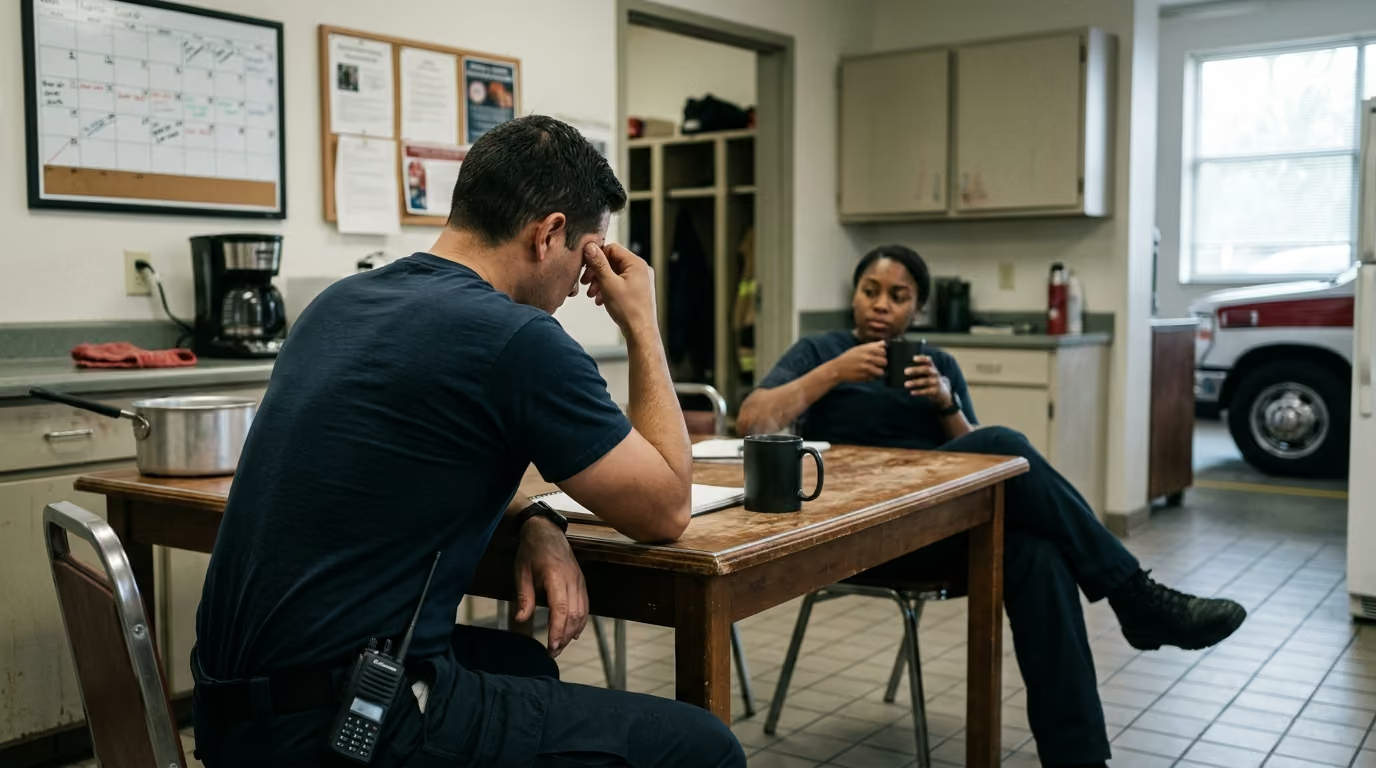

Explosive outbursts over everyday domestic delays become manageable when former first responders learn to recognize early physiological triggers and recalibrate their nervous systems.





If you or someone you know is experiencing thoughts of suicide or self-harm, immediate support is available. Call 911 for immediate life safety emergencies. In the United States, call or text 988 to reach the Suicide & Crisis Lifeline, or press 1 to connect directly to the Veterans Crisis Line. You can also text 838255. When someone is in acute distress, work together with a trusted professional or support person to store firearms and medications securely away from immediate reach.
Anger after a career in emergency service is rarely a sudden moral failure or a collapse of personal character. It is usually the predictable biological cost of adaptations that kept you effective under pressure. When rapid command, emotional suppression, and constant threat detection remain running long after service ends, the nervous system begins misinterpreting everyday family life as an operational hazard. Reclaiming stability does not mean eliminating anger completely. It means widening the gap between feeling an impulse and taking an action, restoring physical regulation, and selecting behaviors that serve your life today.
Research indicates that post-service emotional reactivity is tied to nervous-system conditioning, cumulative trauma exposure, and physical wear. Emergency responders experience repeated acute stressors across decades of operational duty. Epidemiological reviews show that post-traumatic stress disorder affects emergency personnel at elevated rates compared to the general population. Meta-analyses estimate PTSD prevalence at approximately 10 percent to 14 percent among ambulance and police personnel, with firefighter rates hovering between 9 percent and 10 percent.
These figures vary depending on screening methods, exposure volume, and retirement status. Work-related trauma exposure across military and emergency populations increases the risk of post-traumatic stress by 15 percent to 89 percent across published literature. Irritability, impulsive anger, and hyperarousal are core features of this diagnostic profile. Research also links duty exposure to elevated rates of depression, generalized anxiety, sleep disorders, and chronic pain.
A vital finding in first responder emotion research centers on expressive suppression. Suppressing outward emotional expression during an active call is often necessary to complete complex tasks. However, studies show that habitual reliance on suppression strongly correlates with higher levels of PTSD, mood disorders, and generalized anxiety. Conversely, cognitive reappraisal, which involves deliberately reframing an event's meaning, associates with fewer psychological symptoms. When emotional suppression becomes a permanent lifestyle rather than a temporary field tool, it primes the nervous system for explosive outbursts.
Research also shows a clear link between emotional dysregulation, trauma symptoms, and substance use. Studies demonstrate that individuals struggling to manage negative emotional states often turn to alcohol or stimulants for temporary relief. This creates a rebound cycle that intensifies irritability, degrades sleep architecture, and reduces behavioral impulse control. Managing anger requires addressing the whole physiological and psychological system rather than viewing irritability in isolation.
Emergency response conditions the brain and body to function in high-threat environments. On duty, rapid threat detection keeps crews safe. Direct commands cut through confusion and save lives. Intolerance of delay prevents operational failure. Suspicion protects against ambush or dynamic hazards.
When you leave emergency service, these survival traits do not disappear automatically. They remain hardwired into your autonomic nervous system. In a domestic or civilian setting, these same traits create friction. A direct command feels like intimidation to a spouse. Hypervigilance reads ordinary household noise as a security breach. Intolerance of delay turns grocery shopping or minor scheduling changes into perceived crises.
Understanding this contrast clarifies why domestic life feels frustrating after retirement or career transition:
Retirement also brings profound identity disruption. Leaving the uniform removes a structured hierarchy, a defined sense of purpose, daily camaraderie, and an unquestioned social status. Former personnel frequently channel unexpressed grief, loss of relevance, or isolation into irritability. Anger feels strong and protective, whereas grief or loneliness feels vulnerable and uncertain. Recognizing that your nervous system is operating on outdated protocols is the first step toward long-term recovery and career longevity and life after service resources.
Physical factors amplify this psychological transition. Decades of irregular shift rotations disrupt circadian rhythms, while structural injuries generate persistent pain signals. Clinical studies confirm that sleep deprivation severely impairs the prefrontal cortex, which governs executive function and impulse restraint. When you combine sleep debt, chronic musculoskeletal pain, and hyperarousal, the threshold for emotional reactivity drops drastically.
Anger is an internal emotional state signaling that a boundary has been crossed, a value violated, or a threat perceived. Aggression is an external behavior intended to dominate, intimidate, damage, or harm. You can feel profound anger without behaving aggressively. Aggression can also occur without conscious rage.
Treating anger requires understanding it as a predictable sequence rather than a sudden explosion. Learning to map this progression gives you the opportunity to interrupt the cycle before behavior becomes destructive.
These are background conditions that drain your baseline tolerance. They include poor sleep, unmanaged musculoskeletal pain, dehydration, excessive caffeine, alcohol intake, isolation, or financial pressure. When vulnerability factors are high, small inconveniences trigger intense reactions.
The immediate external or internal event that starts the cascade. Common triggers include running late, household disorganization, perceived disrespect from strangers, loud unpredictable noises, or sensory reminders of past trauma calls.
The instant story your brain creates about the trigger. Common operational appraisals include: "They are disrespecting me," "Nobody is paying attention," "I have to take control right now," or "This environment is unsafe."
Your autonomic nervous system triggers a fight-or-flight response. Heart rate climbs, blood pressure spikes, peripheral vision narrows, the jaw and fists clench, and breathing becomes shallow. Blood flows away from higher-level reasoning centers toward large muscle groups.
The reflexive impulse to discharge physical tension and regain control. Urges include yelling, issuing sharp commands, interrogating family members, breaking objects, speeding in traffic, or slamming doors.
The immediate outcome of the action. You may experience a fleeting sense of control, relief from physical tension, or an immediate end to the uncomfortable conversation. This temporary relief acts as a psychological reward, reinforcing the aggressive habit.
The delayed, cumulative fallout. Family members become fearful and walk on eggshells. Trust erodes, emotional isolation deepens, physical fatigue worsens, and feelings of guilt or shame trigger the cycle all over again.
Tracking this cycle daily helps you spot patterns. Use a simple sequence: Trigger, Story, Body, Urge, Choice, Consequence. By writing down these stages after an incident, you identify your specific early warning signs and create opportunities to apply active reset strategies to clear residual tension.
Managing emotional reactivity requires catching physiological activation at a low level. Waiting until you are in a state of full rage makes cognitive control nearly impossible. You must learn to read the subtle signals across four distinct categories.
Emotional shutdown is the flip side of post-service anger. Hyperarousal and emotional numbing stem from the same underlying nervous-system strain. When overwhelming sensory input or emotional demands exceed your capacity, your brain may drop into an overmodulated state. You become silent, detached, and unable to process what people are saying.
Spouses often interpret shutdown as callousness, contempt, or abandonment. In reality, it is a primitive defense mechanism to prevent explosive overwhelm. Recognizing shutdown as a warning sign allows you to step back, regulate your nervous system, and re-engage safely rather than completely disappearing from your relationships.
Downshifting is not about repeating positive mantras while your heart is racing at 130 beats per minute. It is an intentional physical process designed to lower sympathetic arousal so that your prefrontal cortex can come back online. You cannot reason your way out of a physiological fight-or-flight response using willpower alone. You must use somatic mechanisms to signal physical safety to the brain.
When you detect early physical warning signs, immediately execute a downshifting sequence:
Shift your breathing pattern to make the exhale longer than the inhale. Inhale through the nose for a count of four seconds, then exhale smoothly through pursed lips for six to eight seconds. Continue this cycle for two full minutes. Prolonged exhalations activate the vagus nerve, slowing heart rate and lowering blood pressure.
Look around your immediate environment and deliberately name five objects you can see. Notice their specific color, texture, and distance. Place both feet firmly flat on the floor, feeling the pressure beneath your soles. Touch a solid, textured surface, such as a wooden desk or a cold metal water bottle. This sensory grounding interrupts mental threat simulations and brings focus back to present reality.
Systematically unclench the physical areas that hold tension. Drop your tongue away from the roof of your mouth. Unclench your jaw and let your teeth separate slightly. Drop your shoulders down away from your ears. Open your hands, spread your fingers wide for five seconds, and let them rest loosely. Soften your abdominal wall rather than bracing for impact.
Splash cold water directly over your face, or hold an ice cube in your palm for thirty seconds. The sudden temperature drop stimulates the mammalian dive reflex, rapidly downshifting cardiac output. Step outside into fresh air or move into a quieter, darker room to reduce sensory stimulation.
Silently repeat a clear, objective factual anchor: "My body is reacting to an old protocol. There is no active threat in this room. I am safe enough to slow down." Remind yourself that an activated nervous system does not mean danger is present.
These somatic techniques are field-tested regulatory tools to help with managing cumulative duty fatigue. They are not instant cures for post-traumatic stress, but they reliably restore baseline behavioral control.
In emergency operations, brevity, volume, and absolute authority resolve chaos. In civilian relationships, those exact traits destroy communication. If you feel your activation crossing into an unmanageable range, attempting to push through the conversation will inevitably lead to verbal damage. You need a structured, pre-negotiated time-out protocol.
A safe time-out is not an act of rejection, a silent treatment, or an excuse to storm away. It is an agreed-upon tactical pause to preserve relational safety.
During emergency service, you rely on declarative commands. In personal relationships, command language provokes immediate rebellion or emotional withdrawal. Transitioning to collaborative language preserves authority over yourself while respecting others.
When an outburst does occur, execute a prompt behavioral repair. A sincere repair is not a groveling apology followed by excuses. It is an objective statement of what occurred, an acknowledgement of impact, and a clear preventative action plan.
State clearly: "I raised my voice and took a commanding tone when we were discussing finances earlier. That was intimidating and uncalled for. You did not deserve that reaction. Next time I feel that surge, I will call a twenty-minute pause before I speak."
Transitioning out of high-tempo service involves navigating common behavioral traps. Avoiding these pitfalls prevents minor relational friction from becoming permanent domestic isolation. Moving forward means moving past tough-it-out response cultures and recognizing self-defeating habits.
Many former personnel normalize constant rage, viewing it as a badge of honor or an unchangeable consequence of service. While trauma exposure is common, living in perpetual hostility is not mandatory. Thousands of retired responders build peaceful, rewarding civilian lives by retraining their stress response.
Attempting to treat anger without evaluating sleep quality, alcohol consumption, chronic pain, or underlying trauma is ineffective. Irritability is usually a downstream symptom of a dysregulated physiological foundation. Addressing your physical health and addressing shift work sleep disruption directly restores your emotional margin.
Drinking alcohol after a frustrating day appears to provide quick relief by artificially depressing the central nervous system. However, alcohol fragments sleep architecture, eliminates restorative REM stages, and causes rebound hyperarousal the next day. This rebound lowers your frustration threshold, triggering further irritability and deepening dependence.
Withdrawing into silence, retreating to a garage for hours, or refusing to engage in family logistics is not healthy emotional control. Emotional shutdown is simply a freeze response. While it avoids loud screaming matches, chronic withdrawal inflicts profound psychological damage on spouses and children over time.
On duty, showing fear, uncertainty, or hesitation can compromise operational safety. At home, admitting that you feel overwhelmed, exhausted, or emotionally activated is a sign of psychological strength. Pretending to be an invulnerable commander inside your living room only isolates you from the people you care about most.
Do not pressure yourself or a partner to dissect traumatic memories immediately when emotions are high. Effective psychological first aid prioritizes physical safety, quiet grounding, meeting basic physiological needs, and stabilizing the nervous system before processing heavy emotional material.
Self-regulation tools, structured communication, and lifestyle adjustments build a strong operational baseline. However, self-management has definitive limits. Post-traumatic stress, moral injury, and neurological conditions require formal clinical assessment from qualified licensed healthcare providers.
Evidence-based treatment protocols established by the VA and Department of Defense strongly endorse trauma-focused cognitive behavioral therapies. Cognitive Processing Therapy (CPT) and Prolonged Exposure (PE) systematically desensitize trauma triggers and reshape unhelpful cognitive appraisals. Eye Movement Desensitization and Reprocessing (EMDR) provides another validated clinical pathway for reprocessing traumatic memories.
For sleep-specific breakdown, Cognitive Behavioral Therapy for Insomnia (CBT-I) shows exceptional clinical success without the dependency risks of sedative medications.
A comprehensive medical workup is equally critical. Chronic systemic inflammation, traumatic brain injury (TBI) from concussive impacts, severe obstructive sleep apnea, and endocrine disruptions can directly generate explosive irritability. A licensed physician can rule out metabolic or neurological drivers, optimize pain management plans, and evaluate whether short-term pharmacotherapy is appropriate alongside psychotherapy.
When navigating high distress, prioritize practical home safety. If anger surges or severe depression occurs, work with a clinician, family member, or trusted peer to establish a clear safety plan. Secure locking devices for personal firearms and placing keys or combinations with an accountability partner dramatically reduces the risk of impulsive self-harm during acute crises. Creating physical space between a temporary surge of despair and lethal means saves lives.
Mastering emotional reactivity after emergency service is the definitive transition from operational survival to lifelong capability, protecting your health, your family, and your future.
Stay connected for research-led guidance on duty fitness, shift-work sleep, injury recovery, stress, nutrition and career longevity. Practical ideas for first responders who want to stay capable on the job, recover well and protect their health for the long run.



Read practical guidance on first responder fitness, recovery, sleep, nutrition and resilience for demanding work and a long, active career.
read the blog



