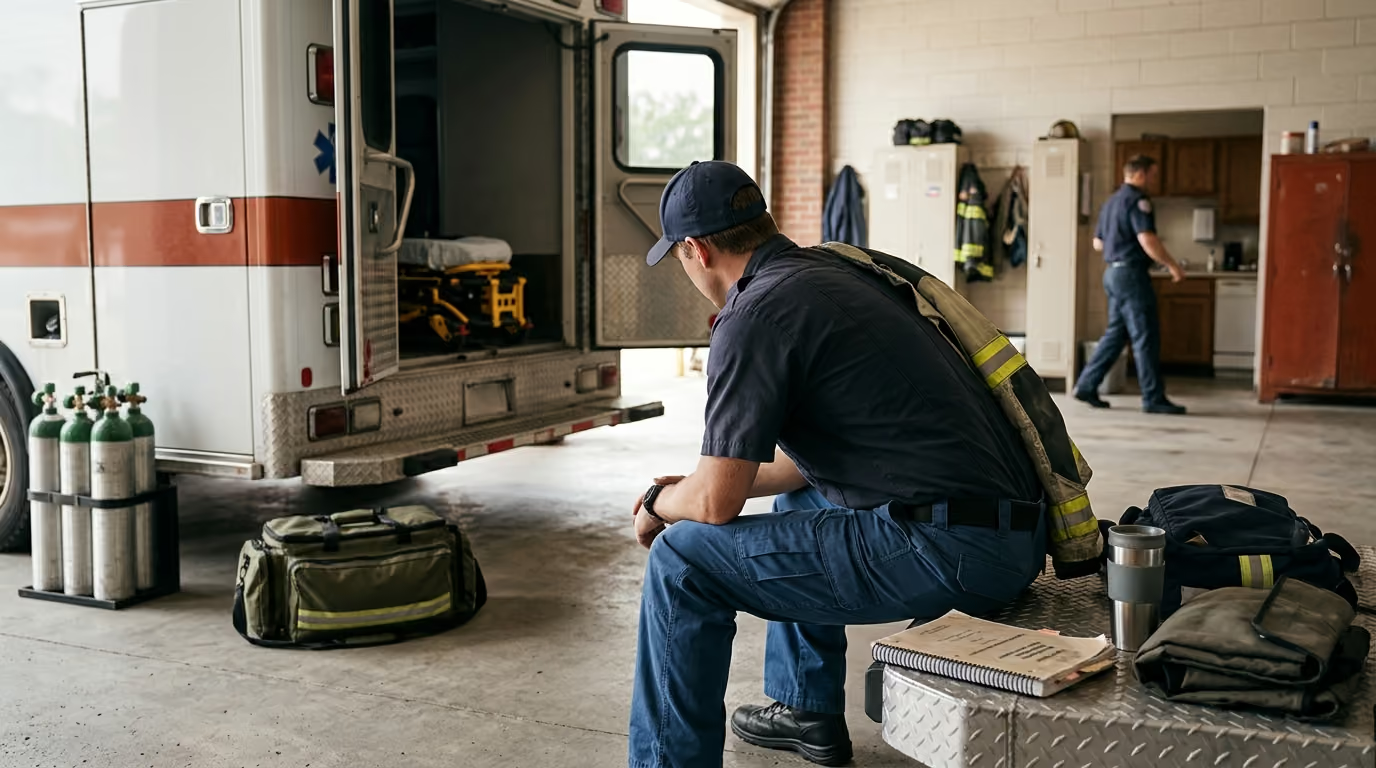

Effective mental health care for emergency personnel utilizes proven trauma therapies, targeted sleep solutions, and medical management to treat operational stress.





If you or someone you know is in immediate danger, call 911 right away. If you are experiencing thoughts of suicide or overwhelming distress, call or text 988 to reach the Suicide & Crisis Lifeline (press 1 for the Veterans Crisis Line), or text 838255. When working through severe distress or thoughts of self-harm, work with a clinician, peer, or family member to arrange temporary, secure storage of firearms and household medications.
Many emergency personnel search for mental health options only after sleep falls apart, irritability strains relationships at home, or memories from difficult calls begin intruding off duty. Finding clear, practical answers about what clinical care looks like, what the research supports, and how therapy affects a career can feel unnecessarily difficult.
Evidence-based care for first responders centers on structured, time-limited psychological therapies, targeted medical treatments, and specialized behavioral interventions. Proven approaches such as Cognitive Processing Therapy, Prolonged Exposure, Eye Movement Desensitization and Reprocessing, and Cognitive Behavioral Therapy for Insomnia provide reliable relief for trauma, depression, anxiety, and sleep debt. This guide provides a detailed breakdown of evidence-supported care options, operational considerations, confidentiality questions, and actionable steps to prepare for an informed conversation with a qualified clinician.
Emergency service professionals are not a single clinical group. The first responder community includes firefighters, paramedics, emergency medical technicians, police officers, dispatchers, corrections staff, and disaster response teams. Each role involves distinct operational environments, shift rotations, organizational hierarchies, and physical hazards. Despite these differences, responders share repeated exposure to critical incidents, routine sleep disruption, and the physiological burden of sustained hypervigilance.
Behavioral health encompasses far more than a formal diagnostic label. For emergency personnel, stress injuries often show up as sleep disruption, physical exhaustion, emotional withdrawal, chronic irritability, or changes in off-duty drinking habits. Assessing behavioral health requires looking across five distinct operational domains:
Distinguishing between normal short-term stress responses, acute stress disorder, and post-traumatic stress disorder (PTSD) prevents mislabeling normal processing while ensuring timely care. An intense physical and emotional reaction in the first forty-eight hours after a catastrophic call is a normal human response to abnormal events. Acute stress disorder involves persistent, impairing trauma symptoms occurring between three days and one month following exposure. PTSD is diagnosed when characteristic clusters of intrusive memories, avoidance, negative mood changes, and hyperarousal persist beyond one month and create substantial functional impairment.
Moral injury represents another distinct operational challenge. Moral distress occurs when events violate deeply held ethical values, such as being unable to save a victim due to scene constraints, witnessing severe negligence, or experiencing organizational betrayal. While moral injury frequently co-occurs with trauma symptoms, its primary features involve profound guilt, shame, and loss of trust rather than fear-based startle responses. Effective clinical treatment addresses these cognitive and moral conflicts alongside nervous system arousal.
Clinical research demonstrates that psychological interventions significantly reduce symptoms of PTSD, depression, and anxiety in emergency personnel. Systematic reviews and clinical practice guidelines, including the Department of Veterans Affairs and Department of Defense clinical guidelines, strongly recommend structured, trauma-focused psychotherapies over unstructured talk therapy.
Manualized trauma therapies follow established clinical protocols. They teach the brain and nervous system that traumatic memories, while distressing, do not pose an active, immediate threat.
Cognitive Processing Therapy (CPT) is a structured cognitive therapy delivered over twelve sessions. It focuses on identifying and evaluating "stuck points," which are unhelpful beliefs formed during or after traumatic events. These beliefs often involve distorted assumptions about safety, trust, control, competence, and self-blame.
In emergency services, common stuck points include:
CPT does not rely on forced positive thinking. The clinician guides the responder through formal worksheets to test whether their interpretations are factually accurate, balanced, and helpful. By systematically uncoupling trauma memories from unwarranted self-blame and exaggerated threat perceptions, CPT resolves guilt, moral distress, and hyperarousal.
Prolonged Exposure (PE) is an evidence-based behavioral therapy designed to break the cycle of trauma-related avoidance. Responders who experience traumatic calls often avoid reminders of the incident, including specific intersections, hospital bays, call types, uniform items, or conversations. While avoidance provides short-term relief, it reinforces panic and prolongs operational stress injuries over time.
PE utilizes two core clinical strategies under professional guidance:
Through repeated exposure, the nervous system habituates to the memory, and emotional distress naturally declines. Responders learn that trauma reminders are not dangerous and that anxiety peaks and subsides on its own. Exposure plans are built collaboratively with the clinician to respect actual occupational safety requirements rather than confronting real physical hazards.
Eye Movement Desensitization and Reprocessing (EMDR) is an eight-phase trauma-focused psychotherapy recommended by major clinical guidelines. EMDR helps the brain reprocess traumatic memories that have become improperly stored alongside high physiological distress.
During EMDR sessions, the responder identifies a specific traumatic image, negative self-belief, and associated physical sensations. While holding these elements in mind, the clinician introduces bilateral sensory stimulation, typically through side-to-side eye movements, alternating auditory tones, or rhythmic tactile taps.
Bilateral stimulation reduces the vividness and emotional intensity of the memory. This allows the responder to integrate the event into long-term memory without triggering an overwhelming fight-or-flight surge. Responders should verify that their clinician holds formal training and certification from recognized professional training bodies.
Other evidence-supported psychotherapies provide valuable alternatives when responders prefer non-trauma-focused formats or present with unique clinical profiles:
While peer support, stress inoculation drills, and somatic practices offer valuable baseline resilience, they do not replace structured, trauma-focused therapy when a full clinical disorder is present. Practicing grounding skills between calls can stabilize acute arousal on shift, but long-standing trauma symptoms require comprehensive clinical intervention.
Medication can be an effective component of a comprehensive mental health treatment plan. Clinical guidelines generally place first-line trauma psychotherapies ahead of pharmacotherapy due to their long-lasting benefits after treatment ends. However, medications provide essential support when psychotherapy is temporarily unavailable, when symptoms are severe enough to impair basic daily functioning, or when a responder prefers medical management.
All medication decisions must involve a licensed medical prescriber, such as a psychiatrist, psychiatric nurse practitioner, or occupational physician. The provider must evaluate shift rotations, physical demands, cardiovascular health, and departmental safety regulations.
Clinical practice guidelines recommend three specific medications as first-line pharmacologic agents for PTSD and co-occurring major depressive disorder:
These medications require adequate dosage and consistent administration over an eight to twelve-week trial period to evaluate their therapeutic benefit. Abruptly starting, stopping, or altering doses without medical supervision can cause uncomfortable discontinuation symptoms or rebound anxiety.
Prazosin is an alpha-1 adrenergic receptor antagonist traditionally prescribed for high blood pressure. In behavioral health, clinicians sometimes prescribe prazosin off-label to reduce trauma-related nightmares and nocturnal sleep disruptions. By dampening excessive central nervous system adrenaline surges during sleep, prazosin helps reduce severe night sweats and distressing dreams.
Because prazosin lowers blood pressure, prescribers must monitor the responder for morning lightheadedness, orthostatic hypotension, or dizziness, particularly when rolling out of bed for overnight calls.
Clinical guidelines strongly advise against using benzodiazepines (such as alprazolam, clonazepam, or diazepam) and cannabis products for treating PTSD.
Benzodiazepines carry significant risks of physical dependence, tolerance, cognitive slowing, and impaired psychomotor reaction times, creating severe hazards for driving and operational decision-making. Furthermore, benzodiazepines can interfere with emotional processing, reducing the long-term effectiveness of exposure-based psychotherapies.
Cannabis products, while frequently used for self-medication, disrupt rapid eye movement (REM) sleep architecture and carry significant regulatory, cognitive, and legal risks for emergency personnel.
Sleep disruption is rarely a secondary symptom in the emergency services. It is often a primary driver of emotional exhaustion, physical breakdown, and cognitive error. Irregular shift rotations, overnight tones, prolonged call times, and occupational adrenaline surges directly disrupt normal sleep architecture. Responders seeking behavioral health care must have their sleep patterns thoroughly evaluated alongside mood and trauma symptoms.
Understanding fatigue and circadian strain is critical because poor sleep maintains hyperarousal and limits the brain's ability to process stress. Effective sleep management combines specialized behavioral therapy with medical sleep diagnostics and targeted recovery scheduling.
The American Academy of Sleep Medicine strongly recommends Cognitive Behavioral Therapy for Insomnia (CBT-I) as the first-line treatment for chronic insomnia in adults. CBT-I is a structured, four to eight-week protocol that outperforms sleeping pills over the long term without side effects or dependency risks.
CBT-I addresses the psychological and behavioral patterns that maintain insomnia through several core components:
Responders who apply a
shift-specific sleep plan alongside CBT-I principles achieve better sleep consolidation during off-duty blocks.
Many first responders suffer from undiagnosed physical sleep disorders that therapy alone cannot solve. Obstructive sleep apnea (OSA) is prevalent in emergency personnel due to neck circumference, chronic sleep fragmentation, physical body composition, and elevated upper airway inflammation.
Signs warranting an immediate polysomnography (overnight sleep study) include:
Continuous Positive Airway Pressure (CPAP) therapy effectively resolves airway obstruction, restoring deep restorative slow-wave and REM sleep. When sleep apnea is treated, depression, anxiety, and PTSD symptoms frequently show marked clinical improvement.
Responders should also evaluate their daily intake patterns. Relying on caffeine to manage night duty late in a shift can impair off-duty sleep quality and aggravate underlying insomnia.
Substance use among first responders is often an attempt to manage acute arousal, physical pain, intrusive call memories, or severe sleep disruption. Research shows high rates of hazardous alcohol consumption across emergency services. While alcohol can initially induce sedation, it destroys sleep quality, increases midnight awakenings, worsens trauma-related nightmares, and escalates long-term depression.
Addressing substance concerns requires objective assessment without moral judgment or disciplinary fear. Emergency personnel face unique cultural pressures where off-duty drinking is often normalized as a primary coping mechanism.
Clinical studies confirm that PTSD, depression, anxiety, and hazardous alcohol use frequently occur together. Co-occurring substance use is not a valid reason to delay evidence-based trauma therapy. Clinical practice guidelines confirm that trauma-focused psychotherapies can be safely and effectively delivered alongside substance use treatment.
Integrated dual-diagnosis care simultaneously targets the roots of trauma and the physiological cycles of substance dependence. Treatment options include:
Responders who consume large volumes of alcohol daily or show signs of physical dependence must never stop drinking abruptly on their own. Alcohol and sedative withdrawal can trigger life-threatening medical emergencies, including severe tremors, diaphoresis, cardiac arrhythmias, hallucinations, and grand mal seizures.
Medical detoxification provides safe, supervised, 24-hour medical management using tapered medications to stabilize vital signs and prevent severe withdrawal complications. Following medical stabilization, responders transition into residential, intensive outpatient, or outpatient psychotherapy programs.
Peer support programs serve as vital early-warning systems within public safety agencies. Trained peer support personnel help demystify behavioral health, offer active listening, identify stress injuries early, and provide confidential referrals to qualified professionals.
However, clear boundaries must separate peer support from clinical treatment. Peer supporters are not licensed therapists, cannot diagnose medical conditions, and cannot provide psychotherapy. Agencies must establish clear operational boundaries for peer teams, including regular clinical supervision by a licensed psychologist and strict protocols for handling imminent safety risks.
For decades, mandatory Critical Incident Stress Debriefing (CISD) was standard practice across fire, police, and EMS agencies following traumatic calls. Under this model, entire crews were gathered within 24 to 72 hours to recount the incident and detail their emotional reactions.
Modern clinical research has changed this standard:
Modern agencies use Psychological First Aid (PFA) and supportive operational monitoring instead of mandatory debriefings. PFA focuses on practical support, ensuring basic physical safety, providing restful environments, monitoring symptoms, and offering voluntary access to confidential behavioral health professionals.
Recovering from a behavioral health condition does not always require taking extended leave or surrendering active-duty status. Many responders maintain full duty while attending weekly outpatient psychotherapy or managing their sleep protocols.
When operational performance or safety is temporarily compromised, agencies and clinicians can coordinate reasonable duty modifications:
Proactive coordination within stress resilience and mental performance systems protects operational readiness while respecting the clinical timeline needed for lasting recovery.
A primary barrier preventing emergency personnel from accessing mental health care is fear of career consequences. Responders worry that seeking help will lead to administrative scrutiny, loss of carrying privileges for armed personnel, missed promotions, or peer alienation.
Navigating these concerns requires understanding how clinical confidentiality operates and knowing how to select a culturally competent provider.
Mental health clinicians are bound by state licensing boards and federal privacy laws, including the Health Insurance Portability and Accountability Act (HIPAA). A private healthcare provider cannot contact your fire chief, police commander, or supervisor without your explicit, written consent.
There are distinct legal exceptions where clinicians are legally required to break confidentiality:
Responders must distinguish between voluntary clinical treatment and formal employer-mandated fitness-for-duty evaluations (FFDE). In voluntary therapy, your medical records remain private. In a fitness-for-duty evaluation ordered by an employer, the evaluating psychologist works for the agency, not you, and will provide a formal report regarding your operational readiness.
Clarify the nature of the evaluation, the payer source, and the exact limits of confidentiality before beginning any professional session.
Working with a therapist who does not understand emergency service culture can cause frustration. Responders should not have to spend multiple paid sessions explaining operational acronyms, rank structures, call triage, shift rotations, or scene safety fundamentals.
When interviewing a prospective therapist or clinic, ask the following screening questions:
Finding a therapist who understands cumulative operational stress ensures therapy remains practical, focused, and effective from day one.
Preparing for a behavioral health appointment helps responders get the most out of their time with a clinician. Bringing specific observations about sleep, daily habits, and work stress makes it easier to build a targeted treatment plan.
Use this operational worksheet to organize your thoughts before your first clinical intake:
Organizing these details helps the clinician design a focused plan matched to your operational schedule and career goals.
Taking the first step toward behavioral health care does not require committing to months of treatment immediately. Follow this simple checklist this week:
Proactive, evidence-based care protects cognitive sharpness, emotional balance, and physical resilience throughout a demanding career and into retirement.
Stay connected for research-led guidance on duty fitness, shift-work sleep, injury recovery, stress, nutrition and career longevity. Practical ideas for first responders who want to stay capable on the job, recover well and protect their health for the long run.



Read practical guidance on first responder fitness, recovery, sleep, nutrition and resilience for demanding work and a long, active career.
read the blog



