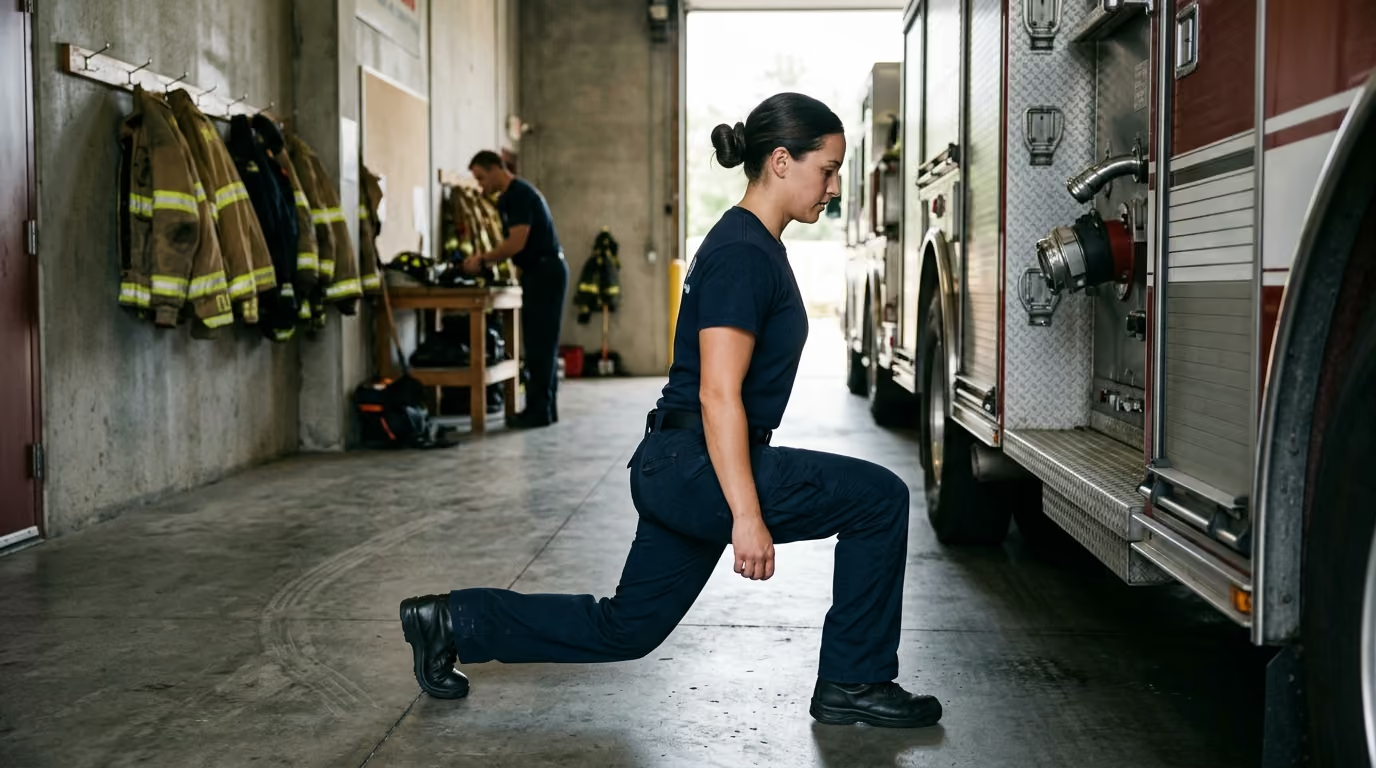

Emergency calls that cut workouts short no longer compromise physical conditioning when responders use evidence-based split sessions to build strength and injury resistance.





The tones drop twenty minutes into a planned lifting session. You rack the barbell, disconnect the monitor, and pull on your turnout gear or duty belt. By the time the call clears, paperwork is filed, and equipment is restocked, your training window is gone.
For firefighters, police officers, paramedics, and emergency medical technicians, unpredictable schedules make traditional sixty-minute gym blocks difficult to sustain. Missing planned sessions often leads to frustration, inconsistent physical capacity, or chronic fatigue from trying to make up lost volume on exhausted days.
Dividing physical preparation into micro-workouts and split sessions offers a realistic way forward. These short, purposeful bouts preserve strength, build aerobic capacity, and maintain movement quality during fragmented shifts. They serve as a practical supplement to a structured program, allowing you to bank useful training volume without compromising your readiness for the next emergency response.
A micro-workout is a short, focused training bout that lasts between two and fifteen minutes. It targets a clear physical quality, such as aerobic output, local muscular endurance, trunk stability, or joint mobility. Because these bouts are short, you can complete them between station tasks, during report-writing breaks, or before a shift.
Split sessions take a full daily workout and divide it into two or three distinct parts. Instead of completing a fifty-minute session in one continuous block, you might perform twenty minutes of compound strength work in the morning and twenty minutes of aerobic intervals later in the afternoon. This structure maintains the progressive overload of a formal program while reducing the risk that an unexpected call will wipe out your entire daily effort.
These approaches work because physiological adaptations respond to total accumulated stress, mechanical tension, and energetic demand over time. Public health organizations, including the World Health Organization and the American College of Sports Medicine, recognize that physical activity accumulated in bouts of any duration contributes to weekly volume targets. When combined with smart duty fitness strategies, micro-workouts allow first responders to accumulate meaningful training stimulus across demanding shift rotations.
Short sessions do not eliminate the need for progressive overload or maximal strength development. Instead, they provide operational flexibility. When a full session is impossible, completing two or three high-quality sets preserves neuromuscular efficiency and prevents the detraining that occurs during high-call-volume tours.
Clear definitions prevent confusion when designing a training week around emergency shift patterns. Different short formats serve distinct physiological and operational purposes.
A movement break is a low-intensity activity period designed to interrupt prolonged sitting, vehicle cab confinement, or static station work. These bouts last two to five minutes and involve light walking, bodyweight mobility, positional resets, and controlled breathing drills.
Movement breaks do not create structural fatigue or heavy metabolic debt. Their main goal is tissue restoration, joint lubrication, and postural variation. For patrol officers sitting in patrol vehicles or dispatchers at desks, movement breaks help maintain hip and spinal comfort without draining energy needed for sudden physical calls.
An exercise snack is a brief bout of moderate to vigorous exercise distributed throughout the day. Studies evaluating exercise snacks describe protocols lasting from twenty seconds up to two minutes, separated by several hours of normal activity. Common modalities include stair climbing, stationary cycling sprints, kettlebell swings, and bodyweight intervals.
Exercise snacks stimulate the cardiovascular and metabolic systems rapidly. They provide an acute stimulus that can maintain cardiorespiratory fitness when long continuous sessions are impossible. However, because the intensity is high, you must choose movements that do not compromise technical safety or leave you trembling before a call.
Split sessions break a single structured workout into distinct, planned modules separated by hours. A typical split might involve squatting and upper-body pressing in the morning, followed by posterior chain work and aerobic capacity work in the late afternoon.
Unlike random exercise snacks, split sessions preserve the precise exercise order, volume, and intensity of a comprehensive strength-and-conditioning plan. They are ideal for station days where thirty minutes of uninterrupted time is available twice per shift, but a single seventy-minute block is impossible.
A modular station workout is organized into independent training blocks that can be stopped at any time. A fifteen-minute modular workout might consist of a five-minute dynamic warm-up block, an eight-minute primary strength block, and a two-minute breathing reset block.
If an emergency call occurs at minute seven, you simply walk out the door knowing the warm-up and first working sets are complete. When you return, you can log what you finished and decide whether to complete the second block later or move on with the shift.
A growing body of exercise science examines how brief, intermittent training bouts affect human performance and health markers. Understanding what the research proves, and where its limits lie, helps set realistic expectations for operational training.
Research on exercise snacks demonstrates clear benefits for cardiorespiratory fitness. A 2026 systematic review and meta-analysis reported that exercise snacks significantly improved cardiorespiratory fitness in adults, showing a large standardized effect size with moderate certainty of evidence.
A separate comprehensive meta-analysis encompassing 21 studies and 921 participants confirmed significant improvements in maximal oxygen uptake and peak power output from brief bouts. Furthermore, a systematic review focusing on high-intensity exercise snacks found that eight of nine included trials produced increases in peak oxygen consumption ranging from 4 percent to 27 percent.
These improvements occur because short, intense efforts demand rapid oxygen kinetics and high cardiac output. For emergency personnel with limited aerobic training time, brief stair climbs or bike efforts offer a scientifically supported method to maintain baseline cardiovascular capacity.
The evidence for strength development through micro-bouts is more nuanced. The 2026 systematic review identified modest improvements in muscular endurance among older adults, but found very low certainty of evidence for meaningful gains in maximal force production.
Maximal strength development requires heavy loading, sufficient rest intervals, and progressive mechanical tension across multiple sets. Brief bodyweight intervals or light resistance bands can maintain local muscular endurance and motor patterns. However, they cannot fully replace heavy compound lifting for building absolute force capacity.
Evidence regarding body composition and cardiometabolic markers following exercise snacks remains mixed. While some trials note improvements in postprandial glucose regulation and insulin sensitivity, systematic reviews show inconsistent changes in overall body fat percentage or lipid profiles.
Brief workouts can increase daily energetic expenditure and improve glycemic control during sedentary shifts. However, substantial changes in body composition still depend on total weekly caloric balance, nutritional quality, sleep duration, and overall activity levels.
Most published exercise-snack trials were conducted on previously sedentary or recreationally active individuals in controlled laboratory or office settings. First responders face distinct occupational stressors, including heavy protective gear, thermal strain, erratic sleep, and acute psychological stress.
While the physiological mechanism remains valid, emergency personnel cannot assume that a five-minute bodyweight routine will prepare them for the extreme physical demands of a structural fire or tactical entry. Micro-workouts must be seen as an adjunct tool within a broader physical preparation plan, not a standalone replacement for comprehensive training.
Emergency operations impose heavy physical demands that require a combination of aerobic capacity, anaerobic power, absolute strength, and muscular endurance. Physical preparation must support these specific tasks rather than chasing isolated gym metrics.
Firefighting, emergency medical service, and law enforcement duties involve physically punishing movements performed under stress:
A meta-analysis examining 32 studies on muscle and anaerobic performance in firefighting tasks confirmed that anaerobic capacity and power, along with lower-body strength and upper-body endurance, showed the strongest relationships with occupational task completion speed.
Research consistently links baseline physical fitness to occupational efficiency and reduced musculoskeletal injury risk. Fire service studies show inverse associations between task completion times and measures such as absolute maximal oxygen consumption, leg strength, grip strength, and push-up capacity.
Observational data from firefighter cohorts indicates that higher aerobic capacity and upper-body endurance correlate with lower odds of reported musculoskeletal injuries. While these correlations do not prove that exercise alone prevents every injury, maintaining an adequate physical reserve ensures that daily operational tasks do not push workers to their absolute physiological limits.
Occupational guidelines often cite an aerobic capacity of roughly 42 milliliters per kilogram per minute as a baseline reference point for structural firefighting tasks. Maintaining this level of fitness creates an operational reserve, which is the buffer between your maximum physical capacity and the energy required to do the job.
When your operational reserve is high, standard duty tasks consume a smaller percentage of your maximum capacity. You work with a lower heart rate, experience less cognitive tunnel vision, and recover faster between task cycles. Micro-workouts help protect this operational reserve during weeks when formal gym sessions are disrupted.
Emergency professionals train across diverse environments, each offering distinct advantages and logistical constraints. Matching your training objective to the right setting optimizes time and energy.
Station gyms vary widely, from well-equipped strength rooms to a single set of mismatched dumbbells on the apparatus floor. The primary advantage of station training is proximity. You can train on duty without travel time and build crew cohesion through shared physical work.
The primary challenge is operational unpredictability. Alarms, public walk-ins, daily chores, and scheduled equipment inspections can interrupt training at any moment. Station training works best when formatted into modular blocks that allow immediate disengagement.
Commercial fitness centers and dedicated public safety training facilities offer the widest selection of heavy resistance equipment and cardiovascular machines. These spaces provide the ideal environment for progressive overload, heavy bilateral squatting, deadlifting, and maximal strength work.
The main limitation is logistical friction. Commute times, membership costs, and scheduling conflicts make gym visits challenging on shift days. Gym training should be prioritized on scheduled days off or during designated physical training periods when you are fully relieved of operational duties.
Home workouts provide high convenience for post-shift recovery days, off-duty maintenance, or periods when family obligations restrict travel. A modest home setup allows you to complete efficient strength or conditioning work without spending time commuting.
The main obstacle at home is progressive loading. Without heavy weights, training must rely on unilateral variations, altered tempos, and increased movement complexity to drive adaptation.
Field training occurs inside patrol cars, ambulances, or staging areas during long operational shifts. These sessions consist exclusively of low-fatigue movement breaks and positional resets.
Field movements require zero equipment and zero setup time. They offset the physical strain of sitting in rigid vehicle seats while wearing heavy body armor or duty belts.
To organize training without getting overwhelmed by chaotic schedules, use a five-layer hierarchy. This framework helps you decide what type of session to execute based on available time and current recovery status.
The minimum effective dose is the smallest amount of training required to maintain a specific physical capacity. This layer is your operational safety net during weeks with high call volume, poor sleep, or intense department drills.
Instead of abandoning training when time is short, you perform a brief, concentrated bout. This might consist of two heavy sets of three to five repetitions on a primary compound lift, or six minutes of steady aerobic work on a stationary bike. Adopting minimum effective dose training maintains neuromuscular pathways and tissue tolerance until your schedule normalizes.
A targeted micro-dose focuses on a single, isolated physical quality that complements your primary program. These bouts last five to ten minutes and address areas that are often neglected in standard workouts.
Examples include focused grip endurance, rotator cuff and scapular stability, ankle dorsiflexion, or anti-rotational core strength. Micro-dosing allows you to accumulate high annual volume on small, injury-prone structures without lengthening your main gym sessions.
Split-session completion divides a standard, full-volume strength-and-conditioning workout across two or three distinct parts of the day. This is the preferred method when you have moderate blocks of time available throughout a shift.
By separating heavy compound lifts from accessory work or conditioning, you maintain higher movement quality and bar speed. Each mini-block is completed with fresh focus, reducing the technical breakdown that often occurs at the end of long, exhausting workouts.
Recovery micro-sessions focus on restoring the nervous system and easing muscular tension. These ten- to fifteen-minute bouts combine low-intensity walking, gentle cyclical movement, passive joint mobilization, and down-regulation breathing drills.
Recovery bouts are particularly valuable after difficult operational calls or during the transition from night shift to off-duty life. They facilitate lymphatic clearance, reduce residual muscle stiffness, and signal the autonomic nervous system to shift toward a parasympathetic state.
Operational micro-sessions rehearse job-specific physical patterns under controlled conditions. These include short bouts of hose drags, high-rise stair climbing with weighted packs, dummy carries, or controlled forcible entry striking drills.
These sessions should be applied conservatively. Because job simulation movements generate substantial joint stress and systemic fatigue, they must be dosed carefully and should never be combined with severe sleep deprivation or acute operational exhaustion.
Executing a modular training system requires clear decision rules. You must assess your daily readiness, define the session objective, and adjust loading to protect operational safety.
Before touching a weight or starting an interval, evaluate your current recovery status using a simple three-tier traffic light system:
Every short session must have one clear
objective. Avoid the temptation to blend heavy lifting, metabolic conditioning, and mobility into a ten-minute scramble.
Ask yourself what quality you are addressing:
Focusing on one objective ensures that the physiological stimulus is clear and manageable.
Build sessions around foundational human movement patterns that translate directly to emergency duties. Group movements into paired non-competing blocks to save time:
Even brief workouts must follow progressive overload principles over time. Choose one variable to progress each week while keeping the overall duration fixed:
Remember that physical training is only one component of your daily biological load. Emergency runs, extreme ambient temperatures, heavy protective gear, and psychological stress all draw from the same recovery capacity.
When operational demands spike, dial back your training intensity immediately. Never allow workout fatigue to compromise your cognitive alertness or physical safety during emergency responses. Reviewing evidence on training around shift work helps ensure your training volume matches your real-world recovery budget.
These sample templates demonstrate how to apply micro-workouts and split sessions across various emergency service roles and shift schedules.
This template uses a modular three-block approach across the duty day, allowing easy disengagement if an alarm sounds.
This routine offsets prolonged sitting and gear-belt strain during a 10- or 12-hour patrol shift.
When back-to-back calls prevent continuous training, short exercise snacks maintain cardiovascular tone and spine stability.
For scheduled days off when time is restricted by family commitments.
Implementing micro-workouts requires discipline. Avoiding common programming errors ensures your training builds capacity without creating dangerous on-duty fatigue.
A common mistake is believing that high-intensity bodyweight circuits eliminate the need for progressive heavy lifting. While short conditioning snacks improve aerobic capacity, developing the absolute strength needed to lift an unconscious civilian or handle a charged hose line requires heavy mechanical resistance.
Micro-workouts should maintain physical readiness during difficult shift stretches. Whenever your schedule allows, return to comprehensive, structured gym sessions that progressively overload basic strength patterns.
Pushing short sets to complete muscular failure is counterproductive for emergency responders. Failure training generates severe central nervous system fatigue, prolonged muscle soreness, and motor control breakdown.
Always leave one to three solid repetitions in reserve on every set. This preservation of technical reserve ensures that if an alarm sounds ten minutes after a workout, you remain capable of handling emergency physical tasks safely.
In many station environments, casual workouts quickly escalate into competitive, high-intensity metcons. While high-intensity circuits have their place, performing them daily on top of poor sleep, dehydration, and heavy calls leads to burnout and overuse injuries.
Match workout intensity to your actual physiological state. Use light movement breaks and aerobic base work far more frequently than all-out anaerobic intervals.
Exercise creates a stimulus, but adaptation and tissue repair occur during sleep. Attempting to compensate for poor sleep by performing punishing micro-workouts elevates circulating stress hormones and increases injury risk.
On days marked by severe sleep deprivation, prioritize rest, proper nutrition, and low-stress walking. Reviewing practical frameworks for shift work and sleep management can help you establish sustainable boundaries between training and biological recovery.
Never initiate a workout that leaves you physically incapacitated or in an unsafe condition to operate emergency vehicles and machinery. If you experience dizziness, lightheadedness, chest tightness, or joint pain during a micro-session, stop immediately.
Emergency responders must maintain continuous situational awareness. When training on duty, keep communications gear accessible, maintain visual awareness of apparatus bays, and ensure equipment does not obstruct rapid egress paths.
While short exercise bouts are broadly accessible, certain physical symptoms and career transitions warrant individualized evaluation by qualified professionals.
Short workouts should not aggravate chronic joint irritation. If you experience sharp, localized, or radiating pain during compound movements, consult a licensed physical therapist or sports medicine physician.
A physical therapist can evaluate movement mechanics, identify structural limitations, and provide specific corrective modifications that integrate into your modular shift routine.
Due to the extreme cardiovascular strain of emergency operations, baseline medical monitoring is essential. The National Fire Protection Association and occupational medicine standards emphasize regular medical screenings for first responders.
Seek immediate clinical evaluation if you experience unexplained shortness of breath, palpitations, chest pressure, uncharacteristic fatigue, or dizziness during exercise. Do not attempt to work around these symptoms with micro-workouts.
Designing an effective long-term training plan that balances irregular shift work, duty demands, and recovery requires specialized knowledge. Working with a certified Tactical Strength and Conditioning Facilitator (TSAC-F) or a qualified strength coach can streamline your programming.
A tactical coach can help you establish realistic seasonal training blocks, set appropriate volume thresholds, and teach proper lifting mechanics that support a long, healthy career.
Revisit this resource when your shift schedule changes, when call volume spikes, or when you find yourself repeatedly missing planned gym sessions. It is also worth reviewing when returning to duty after an illness, operational deployment, or planned vacation.
Sustainable duty capability is built on consistency rather than perfection. Breaking your physical preparation into purposeful, manageable sessions protects your health and keeps you prepared to serve your community across a long, resilient career.
Stay connected for research-led guidance on duty fitness, shift-work sleep, injury recovery, stress, nutrition and career longevity. Practical ideas for first responders who want to stay capable on the job, recover well and protect their health for the long run.



Read practical guidance on first responder fitness, recovery, sleep, nutrition and resilience for demanding work and a long, active career.
read the blog



