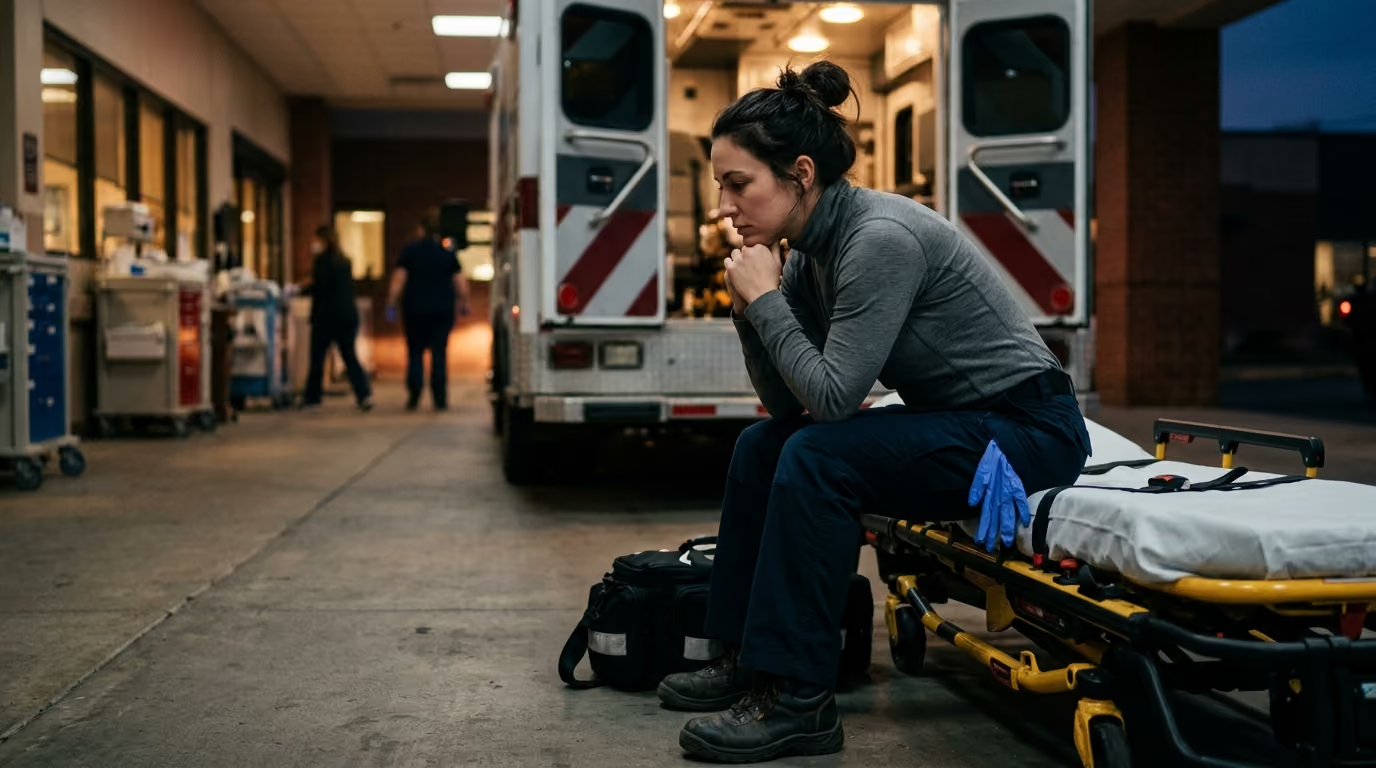

Moral injury is widely mistaken for ordinary occupational burnout, but it actually represents a distinct ethical crisis driven by guilt, shame, and institutional betrayal.





If you or a colleague are experiencing overwhelming distress or thoughts of self-harm, support is available immediately:
When distressing thoughts or overwhelming guilt feel unmanageable, putting distance between yourself and potential means of self-harm is a vital protective step. Work with a trusted partner, family member, or clinician to temporarily store lethal items outside your immediate reach.
You return from a shift where an impossible call unfolded. The apparatus arrived on scene to a multi-vehicle collision with severe entrapment and limited resources. You followed standard protocols, triaged based on operational guidelines, and made the hardest call available to you.
Nobody on shift faulted your actions. The incident review confirmed that your decisions aligned with department operating procedures. Yet weeks later, the memory does not feel like an ordinary bad call. You do not just feel tired or shaken. You feel a persistent, heavy conflict about who you are, what occurred, and whether your actions violated an unwritten ethical contract you made with your community.
This experience is known as moral injury. It is not a sign of personal weakness, nor is it simply another name for occupational burnout or fear-based trauma. Understanding how moral injury develops, how it differs from other duty-related conditions, and how to address it is essential for long-term psychological health and operational capability.
Moral injury is the lasting psychological, social, and existential distress that occurs when a first responder perpetrates, fails to prevent, witnesses, or learns about actions that violate deeply held moral beliefs. It can also stem from severe institutional betrayal by leaders or agencies during high-stakes situations.
Unlike post-traumatic stress disorder, which is primarily organized around physical threat and fear, moral injury centers on guilt, shame, profound anger, and a loss of trust in oneself or authority. It is not currently a formal psychiatric diagnosis, but rather a research construct and clinical formulation that captures profound moral conflict. Recovery focuses on rebuilding trust, recalibrating unrealistic self-blame, processing grief, and restoring a coherent sense of meaning and shared values.
In emergency services, personnel are routinely placed in high-consequence environments where outcomes cannot be completely controlled. Moral injury refers to the psychological, behavioral, relational, and spiritual aftermath of a potentially morally injurious event, often abbreviated as a PMIE.
A PMIE is an incident that cuts directly against a person's core ethical framework or expectations of justice. The injury itself is not the event. The injury is the lasting disruption to a responder's identity, trust, and worldview that follows.
These events generally fall into distinct categories:
An act of commission occurs when a responder believes they personally caused harm or participated in an action that violated their moral standards. Examples include a split-second driving decision that resulted in an accident, a physical restraint that caused unexpected injury, or an error in medical dosage during a chaotic resuscitation.
An act of omission involves the belief that a responder failed to prevent harm, protect a victim, or intervene when they should have. Responders often experience this after triage scenarios, delayed response times due to system overloads, or instances where operational safety rules prevented an immediate rescue attempt.
Responders frequently witness human cruelty, severe neglect, domestic violence, or grotesque injustice perpetrated by members of the public. Watching profound harm inflicted on vulnerable populations, especially children or the elderly, can shatter a responder's belief in a fair and orderly world.
Moral distress can emerge when a responder learns that respected colleagues, supervisors, or partner agencies engaged in unethical behavior, covered up critical errors, or mistreated the public. This damages the professional pride and cohesion that emergency teams rely on for mutual support.
Institutional betrayal occurs when trusted agency leadership or governing bodies violate ethical obligations during critical moments. This can include sending crews into hazardous environments without adequate safety equipment, suppressing incident reports to protect administrative reputations, or publicly scapegoating frontline crews for systemic failures.
Many first responder situations involve tragic trade-offs where every available choice leads to harm. In these dilemmas, following policy or choosing the least catastrophic option still leaves the responder feeling as though they abandoned a core duty to protect human life.
Emergency personnel encounter many forms of occupational strain. While these conditions can overlap, confusing them leads to ineffective coping strategies.
Ordinary stress represents the physiological and psychological response to heavy workloads, erratic call volumes, time pressure, and circadian disruption from shift work. Responders asking "How do I keep up with these physical demands?" are managing general stress. The primary emotional markers are physical fatigue, irritability, and muscle tension.
Burnout is driven by chronic workplace demands, administrative frustration, and inadequate resources. A burned-out responder feels emotionally exhausted, develops cynicism toward the job, and feels ineffective. The internal dialogue centers on exhaustion: "The department expects too much, and nothing I do makes a difference."
Compassion fatigue focuses on the emotional depletion that comes from continuous empathetic engagement with suffering individuals. While burnout and compassion fatigue drain energy, they do not necessarily involve the self-condemnation or shattered ethical beliefs seen in moral injury.
Post-traumatic stress disorder is fundamentally organized around fear, physical threat, and autonomic survival systems. When a responder experiences PTSD, their nervous system treats a past traumatic event as an ongoing danger. The dominant thoughts are "I am not safe" or "Danger is everywhere," leading to physiological hyperarousal, startle responses, panic, and avoidance of trauma triggers.
Moral injury is organized around moral transgressions, ethical violations, and disruptions of meaning rather than physical threat. The central questions are not about safety, but about character and duty: "Did I fail someone who trusted me?", "Can I ever forgive myself?", or "How can leadership treat human lives this way?"
A responder can develop moral injury without experiencing physical terror. For instance, an administrative order that forces a paramedic to deny transport to a vulnerable patient carries little physical threat, but immense moral distress.
These conditions frequently co-occur. A responder may simultaneously experience PTSD from a violent incident, burnout from chronic understaffing, and moral injury from the ethical compromises forced by that incident. Identifying moral injury ensures that clinical care addresses guilt, shame, and betrayal alongside standard threat-regulation work.
Moral injury affects how a person feels, thinks, relates to others, and views their place in the world. Recognizing these domains helps distinguish moral distress from general operational fatigue.
Guilt is the distressing feeling that you did something wrong or failed to take necessary action. In emergency response, guilt often fastens onto decisions made with incomplete information, limited resources, or extreme time constraints.
Constructive guilt can prompt honest reflection and improved practice. In moral injury, however, guilt often becomes distorted by hindsight bias, where the responder convinces themselves they should have predicted an unpredictable tragedy.
Shame is an identity-focused emotion that transforms specific actions into global self-condemnation. While guilt says "I made a terrible decision," shame says "I am a flawed, dangerous, or unredeemable person."
Shame drives personnel toward secrecy, social withdrawal, and emotional isolation. Responders experiencing intense shame frequently hide their pain because they believe their peers would reject them if the full reality of their thoughts were known.
When a PMIE involves leadership failure, equipment neglect, or administrative indifference, the primary emotional outcome is often intense anger. This is not simple irritability. It is a profound, burning indignation toward authorities who violated ethical responsibilities while expecting frontline personnel to absorb the consequences.
Betrayal-based injuries often generate profound cynicism toward departmental leadership, regulatory agencies, and the broader public. Over time, this cynicism can erode teamwork and professional dedication.
Moral injury dismantles basic trust across multiple dimensions of life:
For many first responders, emergency service is more than an occupation. It is a vocational identity built on helping others and upholding social order.
When a catastrophic call challenges that foundation, responders may experience an existential crisis. They may question long-held religious faith, struggle with the concept of justice, or conclude that their career has lacked meaningful purpose.
Moral distress frequently drives observable changes in behavior:
Research into moral injury among civilian emergency workers has expanded significantly, drawing on foundational work originally conducted with military veterans.
Exposure to potentially morally injurious events is widespread across the emergency services sector. In a study examining urban firefighters, 80.8% of personnel reported witnessing an event that violated their personal morals or values. In that same cohort, 48.6% reported doing something, or failing to do something, that went against their moral standards.
A broader survey of 479 personnel across nine fire and emergency medical service agencies found that 57.6% reported experiencing a morally injurious event during their career.
Across broader healthcare and first responder literature, reported exposure rates vary widely, from 4.1% to 69.44%. This wide range reflects differences in operational roles, measuring tools, and agency environments across different studies.
A critical finding in the research is the distinction between exposure and clinically significant impairment. Experiencing a PMIE is common, but it does not guarantee that a responder will develop lasting psychological injury.
In the urban firefighter research, while over 80% reported PMIE exposure, approximately 18.4% of exposed individuals met screening thresholds for clinically meaningful moral injury. When calculated across the entire surveyed department, including those who did not complete all symptom inventories, the rate was estimated at 9%.
A national study using the Moral Injury and Distress Scale found that 41.6% of first responders reported exposure to a PMIE, while 4.1% demonstrated functionally impairing moral injury that disrupted work, relationships, or health.
These data demonstrate that many responders possess natural resilience or supportive social networks that allow them to process moral distress without developing persistent psychological injury.
Moral injury rarely exists in isolation. Studies consistently show that responders with probable PTSD report significantly higher moral injury scores, particularly in domains related to shame and trust violation.
However, researchers emphasize that the presence of PTSD does not confirm moral injury, nor does the absence of PTSD rule it out. A responder can experience severe existential shame after an administrative decision without having any fear-based PTSD symptoms.
Research indicates an association between moral injury and elevated suicide risk. In broad occupational samples, individuals screening positive for probable moral injury demonstrated higher adjusted odds of suicidal ideation and lifetime suicide attempts. This statistical association held true even after controlling for demographic variables, substance use, and general psychiatric symptoms.
The self-condemnation, profound alienation, and belief that one is fundamentally flawed or a burden to others make moral injury an important consideration during routine behavioral health evaluations.
Examining how moral injury appears during regular duty illustrates the complex ethical territory first responders navigate.
A paramedic crew is first on scene at a multi-vehicle highway collision with ten critical patients. Protocol mandates rapid triage, tagging expectant individuals, and directing limited transport resources toward those with the highest probability of survival.
The primary paramedic must bypass a severely injured patient who is pleading for help to treat two individuals with better prognoses. Months later, the medic cannot stop seeing that patient's eyes. Even though the medic's actions strictly followed triage protocols and saved multiple lives, the medic experiences crushing guilt over choosing who received care.
A police officer encounters an armed individual experiencing an acute psychiatric crisis. When the individual charges with a weapon, the officer discharges their firearm, causing fatal injuries. An internal review, grand jury, and independent investigation confirm that the use of force was entirely lawful, necessary, and aligned with policy.
Despite total administrative clearance, the officer experiences deep moral disruption. The officer entered the profession to protect life, and the reality of taking a life conflicts with their spiritual and personal values. The officer withdraws from family, develops intense shame, and struggles with feeling unworthy of their badge.
A fire company is dispatched to a working structure fire. Command is aware that municipal water pressure in the sector is compromised and that the engine's supply lines are overdue for replacement, but orders an aggressive interior attack regardless. During the operation, water supply fails, and a rookie firefighter suffers critical burn injuries before escaping.
In the aftermath, department leadership conceals maintenance records and attributes the incident to crew-level operational errors. The company officer experiences severe betrayal-based moral injury. The officer's distress is characterized by profound anger, loss of trust in the organization, and intense guilt for leading their crew into a preventable catastrophe.
An emergency communications dispatcher answers a call from a mother whose infant is experiencing severe respiratory distress. Due to high call volume and regional ambulance shortages, the nearest available unit is twenty-five minutes away. The dispatcher delivers CPR instructions over the telephone, but the child dies before field crews arrive.
The dispatcher logically understands that ambulance availability is an administrative and municipal issue outside their control. However, the emotional impact creates a belief that they failed to save the child. The dispatcher develops persistent self-blame, sleep disturbances, and dread whenever the emergency phone rings.
Moral injury does not always stem from a single dramatic event. A seasoned paramedic may spend years operating in a broken social service landscape, repeatedly transporting vulnerable individuals back into unsafe living conditions without long-term support.
Over time, the repeated feeling of participating in an inadequate system causes moral erosion. The responder becomes numb, cynical, and detached, feeling like a complicit cog in a broken machine rather than a helping professional.
Evaluating moral distress requires an approach that examines the specific event, the responder's personal appraisal, and their current level of functional disruption. Clinicians and peer supporters should avoid evaluating symptoms in the abstract. Instead, focus on the specific event connected to the distress.
Begin by establishing a clear, nonjudgmental timeline of the incident. Key questions include:
Explore how the responder interprets the meaning of the incident. Identify which internal statement resonates most strongly:
Review which emotional domains are driving the responder's distress:
A critical step in evaluating moral injury is separating actual wrongdoing from subjective guilt. Responders frequently assume full personal responsibility for outcomes that were dictated by systemic limits, equipment malfunctions, or chaotic operational environments.
Evaluate the incident against realistic standards:
If genuine misconduct or professional error occurred, the focus shifts toward appropriate accountability, amends, and systemic correction rather than simply validating the responder's distress.
Always assess for co-occurring mental health challenges:
Healing from moral injury requires approaches that go beyond conventional fear-extinction techniques used for standard trauma. Recovery is an active process of moral repair, identity reconstruction, and the restoration of social trust.
When moral injury significantly impairs daily functioning, professional psychological care can provide a structured environment for processing complex ethical distress.
Standard trauma therapies such as Cognitive Processing Therapy (CPT) and Prolonged Exposure (PE) remain gold-standard treatments for PTSD. Clinicians trained in moral injury adapt these protocols to address guilt, hindsight bias, and self-blame directly. CPT helps responders identify and challenge stuck points related to responsibility, trust, and safety.
Adaptive Disclosure is an evidence-informed intervention designed to help personnel address moral injury and traumatic loss. Responders recount the morally injurious event and participate in an imaginal dialogue with a compassionate mentor or the person affected by the incident. This structured dialogue helps personnel process deep grief, receive perspective, and explore meaningful avenues for repair.
Acceptance and Commitment Therapy (ACT) focuses on helping individuals accept painful thoughts and emotions without becoming consumed by them. For moral injury, ACT helps responders clarify their core values, recognize that their identity is broader than a single past incident, and commit to living a purposeful life aligned with those values.
Psychological distress interacts closely with physical health. Chronic moral distress dysregulates autonomic balance and impairs sleep quality.
Using practical stress regulation tools, such as grounding techniques between calls, helps personnel down-regulate intense nervous system arousal. Pairing psychological repair with structured shift-specific sleep planning and strategies for managing cumulative duty fatigue creates a physiological foundation that supports emotional recovery.
Peer support is a powerful tool for addressing moral injury because fellow emergency responders understand operational realities that clinicians without emergency service experience may not grasp.
For peer support to be effective and safe:
Because moral injury frequently touches questions of meaning, forgiveness, and existential purpose, chaplains and spiritual care providers play an important role in comprehensive care. Responders do not need to be religious to benefit from spiritual care. Qualified chaplains can help personnel explore grief, process profound existential questions, and navigate feelings of unworthiness in a confidential setting.
For some responders, recovery involves moving beyond cognitive reflection into tangible action. When an incident involved real or perceived harm, engaging in constructive service can help restore a sense of moral integrity.
Examples of constructive repair include:
Moral injury cannot be resolved solely through individual psychological coping mechanisms when the root cause is systemic failure, administrative betrayal, or unsafe working conditions. Fire, police, and EMS agencies must actively foster an ethical operating climate.
Key organizational practices include:
Misunderstandings about moral injury can prevent first responders from seeking support or lead well-meaning leaders to implement ineffective programs.
Moral injury and PTSD frequently co-occur, but they are fundamentally distinct processes. PTSD is primarily a fear-based disorder driven by traumatic threat memories and nervous system hyperarousal. Moral injury is an existential and psychological conflict driven by guilt, shame, broken trust, and violated values. Treating moral injury solely with fear-extinction techniques often leaves core moral distress unresolved.
Subjective guilt is an emotional experience, not legal or operational proof of wrongdoing. First responders frequently feel intense guilt because they care deeply about their communities and wish an outcome had been different. Hindsight bias, incomplete situational awareness, and impossible operational environments routinely create profound feelings of guilt in personnel who acted entirely appropriately.
Standard operating guidelines are designed to manage broad operational risk, not to eliminate moral complexity. A paramedic can follow clinical protocols perfectly and still feel shattered by having to withhold resuscitation on a young patient. Operational compliance does not inoculate human beings against moral distress.
Well-meaning advisors often tell morally injured responders that they simply need to forgive themselves or forgive their leadership. Forcing premature forgiveness can invalidate legitimate grief, obscure necessary accountability, and minimize genuine administrative betrayal. Moral repair is about truth-telling, responsibility calibration, and values-aligned action, not hasty emotional closure.
While post-incident support is valuable, forcing entire crews into mandatory, highly detailed emotional debriefings immediately after a traumatic incident can increase distress for some personnel. Effective support requires voluntary, well-paced, and confidential access to trusted peers, chaplains, and clinicians.
Agency leadership cannot resolve institutional betrayal or unsafe operating environments by offering basic stress seminars. Resilience training is valuable for individual wellness, but it cannot substitute for adequate staffing, safe equipment, and transparent administrative accountability.
Working through moral injury involves navigating significant psychological vulnerabilities. Responders, leaders, and clinicians must recognize the boundaries and safety precautions necessary during this process.
Deep moral distress can impair situational awareness, reaction time, and decision-making on the fireground, on the road, or during high-stakes tactical operations. When a responder is experiencing intense intrusive guilt, profound sleep deprivation, or severe depressive symptoms, continuing to perform safety-sensitive duties can place themselves, their crew, and the public at risk.
Taking temporary leave or requesting modified duty to engage in intensive recovery work is a responsible operational decision, not a professional failure. Returning to full operational capability should be coordinated with qualified medical and behavioral health professionals.
Because severe moral injury is associated with elevated suicide risk, direct and honest conversations about safety are essential. If you notice a colleague expressing profound self-loathing, giving away valued possessions, withdrawing entirely from personal relationships, or expressing that their family or crew would be better off without them, treat the situation as an immediate priority.
Creating a collaborative safety plan with a mental health provider, establishing crisis contacts, and securing lethal means at home are proven, practical interventions that save lives during acute crises.
While peer support and personal reflection are valuable components of wellness, certain presentations require comprehensive evaluation by a licensed mental health professional who understands emergency service culture:
Seeking specialized professional care is an investment in your career, your family, and your long-term capability. Finding a provider experienced in trauma, moral injury, and first responder occupational stress ensures that therapy directly targets the root causes of moral distress. Investing in comprehensive psychological recovery is essential for protecting your career longevity and health.
Revisit this guide whenever you or your crew experience an operationally chaotic call involving impossible choices, after significant administrative conflict, or during career transitions when accumulated duty experiences begin to weigh heavily on your daily life.
Moral injury is not a career-ending defect, but a natural human response to navigating impossible dilemmas in an imperfect world. By understanding its mechanisms, rejecting unfounded self-blame, and utilizing structured pathways for repair, first responders can maintain operational capability and protect their long-term health across a lifetime of service.
Stay connected for research-led guidance on duty fitness, shift-work sleep, injury recovery, stress, nutrition and career longevity. Practical ideas for first responders who want to stay capable on the job, recover well and protect their health for the long run.



Read practical guidance on first responder fitness, recovery, sleep, nutrition and resilience for demanding work and a long, active career.
read the blog



