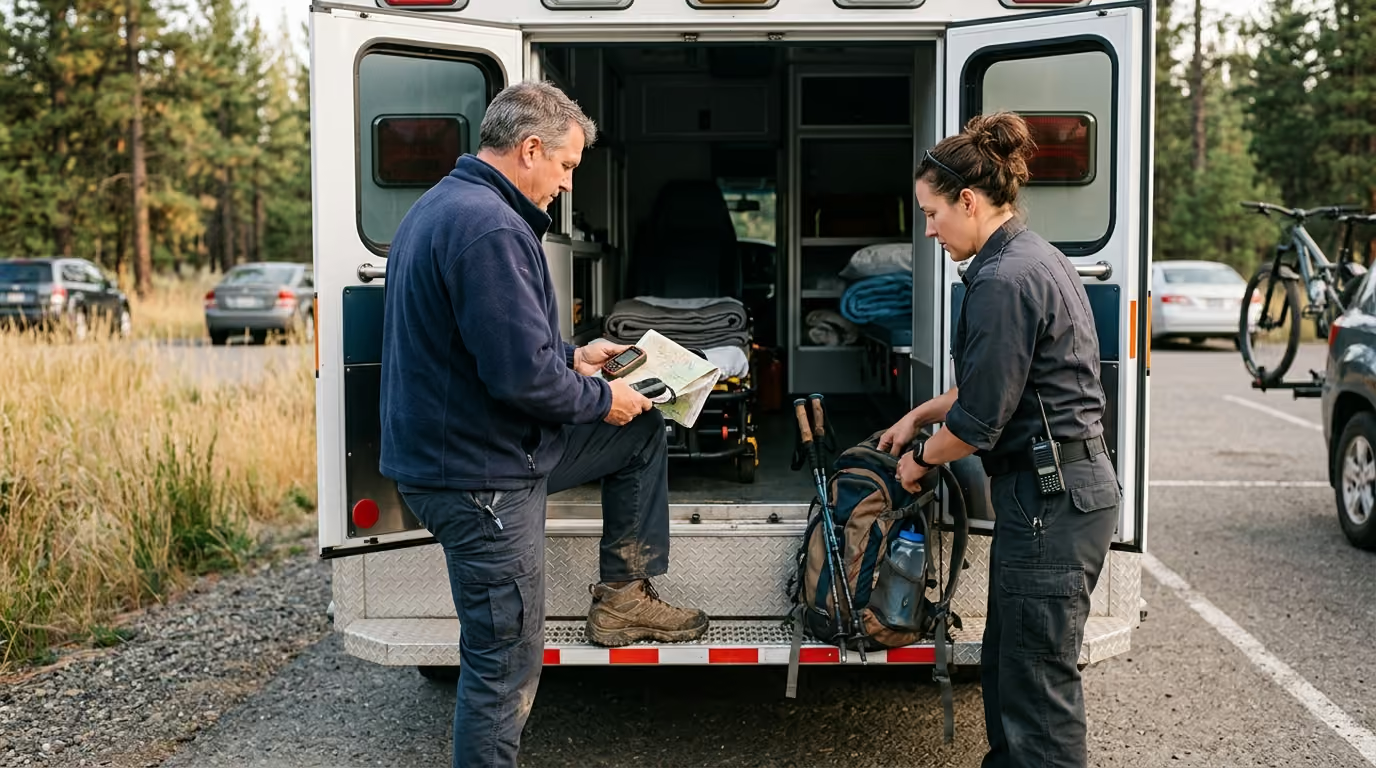

Retired emergency personnel can safely pursue rigorous wilderness adventures by combining functional mobility, proactive recovery planning, and deliberate environmental risk mitigation.





If you are in immediate danger, call 911. For 24/7 support, call or text 988 and press 1 for the Veterans Crisis Line, or text 838255.
Many retired firefighters, police officers, and paramedics search for ways to continue hiking, hunting, paddling, or backcountry travel without worsening chronic joint pain or suffering sudden medical events. The transition out of emergency service often creates an abrupt shift in physical habits. You may wonder if your body can still handle demanding wilderness terrain after decades of occupational wear.
The definitive answer is that retirement from emergency service does not require leaving the outdoors behind. Lifelong participation requires changing your operating system. You must replace the occupational habit of pushing through exhaustion with a deliberate method based on preparation, pacing, environmental monitoring, redundancy, and conservative margins.
The primary goal in retirement is continued participation across decades rather than peak operational performance. By managing route difficulty, pack weight, weather windows, and recovery time, you can pursue remote environments safely well into later life.
Emergency service demands rapid physical output under unpredictable conditions. Firefighters carry heavy protective gear up stairwells in extreme heat. Police officers sprint over obstacles and manage physical resistance while wearing duty belts. Paramedics lift patients in awkward positions and navigate tight spaces on broken sleep.
These tasks build remarkable capacity for short, intense, adrenaline-driven efforts. However, occupational fitness does not automatically create durability for sustained, multi-hour backcountry recreation. A retired responder may have exceptional upper-body strength, yet lack the steady aerobic base needed for an eight-mile mountain traverse.
Long-term outdoor participation requires shifting from an operational mindset to a recreational longevity model. Operational work rewards pushing past fatigue to complete a call or protect a partner. Backcountry recreation offers no operational mandate to endure dangerous exposure.
A practical rule for life after service is to keep the adventure while expanding the safety margin. Expanding the margin means choosing routes with clear escape options, lowering pack weight, and planning earlier turnaround times. It means measuring success by returning with physical reserve left over rather than reaching a summit at any cost.
When you retire, your physical profile changes. Chronological age matters far less than functional capacity, which includes joint stability, aerobic endurance, balance, and recovery rate. Tracking these functional variables lets you match personal capacity to route demand with precision.
Planning for wilderness travel relies on a simple relationship: safety margin equals available capacity minus trip demand. Trip demand includes elevation changes, heat, cold, trail technicality, pack load, and distance to medical care. If unseasonable heat or poor sleep reduces your capacity, you must adjust the trip demand to maintain a stable margin.
Understanding this dynamic allows retired emergency personnel to enjoy rigorous outdoor pursuits. It prevents the common cycle of overexertion, injury, and forced inactivity. For more on structuring longevity, review our resources on career longevity and life after service.
The physiological demands of a first responder career create distinct long-term health considerations. Systematic reviews show that emergency personnel experience high rates of musculoskeletal wear, joint degeneration, and cardiovascular strain compared to the general public. Research examining firefighter health demonstrates elevated rates of physical ailments and traumatic stress disorders over the course of a career.
These occupational exposures do not mean a retired responder is medically fragile. They do mean that outdoor planning must account for prior joint wear, cardiovascular health, and nervous system recovery.
Federal physical activity guidelines and data from the Centers for Disease Control and Prevention highlight that adults maintain physical function best through multicomponent exercise. This involves combining aerobic endurance, muscle strengthening, and balance training. For older adults, evidence strongly supports performing at least 150 minutes of moderate aerobic work each week, alongside two or more days of strength training and dedicated balance practice.
Aerobic capacity naturally declines over time if it is not deliberately trained. Muscle mass and tendon elasticity also decrease with age. However, structured resistance training significantly slows this decline and preserves the strength needed to navigate uneven terrain safely.
Balance and neuromuscular control require specific maintenance. Research on falls prevention emphasizes that balance exercises performed multiple times per week substantially reduce trip and fall risk in older populations. Backcountry terrain constantly challenges postural stability through loose scree, wet roots, and shifting mud.
Cardiovascular demand during wilderness travel can match or exceed occupational stress. When chronic underlying vascular changes interact with sudden physical strain, cold, or high altitude, cardiovascular risk increases. Evidence shows that gradual conditioning, proper hydration, and objective pacing provide strong protection against acute exertion-related events.
Recovery capacity changes with age. Muscles, tendons, and connective tissues take longer to repair after heavy eccentric loading, such as walking downhill with a loaded backpack. Sleep architecture also shifts over time, which affects how rapidly the nervous system settles after strenuous exertion.
The evidence confirms that older adults can safely complete ambitious outdoor adventures. The requirement is that training, itinerary design, and environmental exposure must respect current physical limits rather than relying on past conditioning.
Responders often face unique psychological challenges when adjusting to recreational outdoor travel. Decades in uniform build behavioral habits that can become liabilities in the backcountry if left unmanaged.
The most common liability is high pain tolerance. Emergency personnel are trained to ignore physical discomfort to complete an assignment. In recreation, pain serves as an essential warning signal for tendon strain, joint damage, or systemic exhaustion. Ignoring pain on an isolated trail often turns a minor issue into an evacuation scenario.
Another common pitfall is overconfidence based on historical capability. It is easy to remember the physical feats of your early thirties and assume your body will respond the same way today. Relying on outdated benchmarks leads to underestimating trail difficulty and carrying excessive pack weight.
Retired responders frequently fall into the default rescuer trap. Even on personal trips, they may feel responsible for managing every difficulty, carrying extra group equipment, and shielding others from physical effort. Taking on disproportionate physical loads while ignoring personal fatigue compromises the safety of the entire group.
Pride can also distort conservative decision-making. Turning around before reaching an objective can feel like operational failure to someone accustomed to completing difficult assignments. In the backcountry, turning around before weather closes in or energy runs out is a mark of sound leadership.
A final behavioral trap involves emergency medical bias. Responders are trained to treat severe trauma and acute crises in others, but they frequently minimize their own early symptoms. A retired paramedic may dismiss their own shortness of breath, dizziness, or headache as mild dehydration rather than recognizing early altitude illness or heat exhaustion.
Overcoming these patterns requires redefining outdoor success. A successful outing is not measured by summiting or finishing a difficult trail fast. Success means returning to the trailhead with energy in reserve, healthy joints, and the ability to train again later that week.
Sustaining lifelong outdoor capability requires a balanced physical preparation plan. Relying solely on weekend outings creates an irregular training load that increases injury risk. A structured training base should focus on four distinct components: aerobic conditioning, targeted strength, balance control, and joint mobility.
Aerobic development provides the endurance engine for long hikes, paddling trips, and mountain approaches. Training should focus on sustainable, low-intensity work where you can converse in full sentences without gasping.
Building this base improves cardiovascular efficiency and accelerates recovery between strenuous travel days. To understand balancing training volume with duty fatigue, explore our guide on minimum effective dose training.
Musculoskeletal strength protects joints from impact and stabilizes the spine under load. Downhill travel places heavy eccentric braking demands on the quadriceps and calves, which must be trained deliberately.
Strengthening these major muscle groups twice weekly supports joint integrity and reduces muscle soreness after technical travel.
Wilderness trails require rapid neuromuscular adjustments to slipping rocks, loose gravel, and uneven ground. Balance training reduces fall risk and improves movement efficiency over technical surfaces.
Progressing these exercises over time sharpens the reflexes needed to catch your balance when a foot slips on a descent.
Outdoor mobility is not about extreme flexibility. It is about possessing sufficient range of motion to step over deadfall, climb over boulders, and navigate steep switchbacks without straining surrounding tissues.
Dedicate ten to fifteen minutes daily to these active mobility drills to maintain smooth movement patterns.
Managing physical load requires evaluating how your body responds after an adventure. You can monitor your post-trip condition using a simple recovery scale:
Using this recovery framework keeps your training within sustainable limits. To adapt your routine around changing physical baselines, read our analysis on readiness and autoregulation.
Environmental conditions heavily influence physiological demand. Factors that present minor inconveniences during a vehicle-based shift can become serious hazards during remote backcountry travel.
Age-related changes in sweat gland function and skin blood flow make older adults more vulnerable to heat-related illness. When high ambient temperatures combine with solar radiation and physical exertion, the cardiovascular system works significantly harder to cool the body.
According to the Wilderness Medical Society clinical practice guidelines, preventing heat illness requires adjusting trip timing and managing exertion. Plan strenuous ascents during early morning hours before solar heating peaks. Seek shaded rests, wear light-colored protective clothing, and wear a broad-brimmed hat to reduce thermal gain.
Certain medications common among retired personnel, such as blood pressure drugs and diuretics, can impair thermoregulation and fluid balance. If you take prescription medications, consult your physician about their specific effects on heat tolerance before planning strenuous summer trips.
Recognizing early heat exhaustion is critical. Symptoms include heavy sweating, pale or clammy skin, muscle cramps, dizziness, nausea, and headache. If these appear, stop hiking immediately, move to shade, loosen clothing, and cool the skin with water and fanning.
Heat stroke is a life-threatening medical emergency marked by confusion, slurred speech, irrational behavior, vomiting, or loss of consciousness. The Wilderness Medical Society guidelines identify cold-water immersion as the gold-standard treatment for heat stroke in wilderness settings. If immersion is impossible, aggressive evaporative cooling with water and continuous fanning must begin while activating emergency evacuation services.
Proper hydration supports blood volume, cardiac output, and body temperature control. However, forcing excessive fluid intake can lead to exercise-associated hyponatremia, a dangerous drop in blood sodium levels that causes cerebral edema and confusion.
The Wilderness Medical Society guidelines recommend drinking according to thirst rather than forcing rigid hourly fluid quotas. Drinking to thirst effectively prevents significant dehydration while protecting against dangerous fluid overload.
Monitor your fluid status by checking urine color and output rather than relying on arbitrary gallon targets. Carry reliable filtration tools or purification tablets so you can replenish water supplies without carrying excessive initial pack weight. If you engage in heavy sweating for several hours, integrate electrolyte replacement into your hydration plan.
Cardiovascular conditioning at sea level does not make you immune to altitude-related illnesses. The atmospheric pressure drop at high elevations reduces oxygen availability, requiring steady physiological acclimatization.
Wilderness Medical Society guidelines for altitude illness emphasize slow, gradual ascent as the primary prevention method. When traveling above 8,000 to 10,000 feet, avoid rapid single-day ascents. Increase your sleeping elevation gradually, aiming for no more than 1,500 to 1,600 feet of sleeping altitude gain per day above 10,000 feet, with a rest day every three to four days.
Acute mountain sickness typically manifests as a throbbing headache accompanied by nausea, poor appetite, dizziness, fatigue, and insomnia. The foundational rule of mountain safety is simple: never ascend to a higher sleeping elevation with unresolved symptoms of altitude illness.
High-altitude cerebral edema and pulmonary edema are severe conditions that require urgent descent. Warning signs include an uncoordinated, staggering gait, confusion, persistent coughing with pink sputum, and severe breathlessness at rest. If these signs appear, descend immediately to lower elevation, as descent is the definitive treatment.
Uneven wilderness terrain presents mechanical challenges that demand deliberate equipment and movement strategies. Fall prevention is one of the most critical safety priorities for older outdoor adventurers.
Ascending a mountain places high metabolic demand on the heart and lungs, but descending places mechanical strain on joints and muscles. Downhill walking forces the quadriceps and knee stabilizers to absorb repeated impact shock through eccentric contraction.
To manage downhill strain, shorten your stride and keep your center of mass balanced over your base of support. Avoid overstriding with a locked knee, which transfers heavy impact directly into the knee joint and lumbar spine. Take small, controlled steps and maintain an active, shock-absorbing bend in your knees.
Plan your itineraries so steep descents do not occur at the end of a long day when neuromuscular fatigue is highest. A tired hiker with depleted leg strength is far more prone to slipping on wet roots or twisting an ankle on loose rocks.
Trekking poles significantly reduce knee joint stress during descents and provide supplementary points of contact on technical terrain. Research confirms that using two poles improves balance and stability across uneven ground.
While trekking poles provide valuable assistance, they do not replace dedicated strength and balance training. Use them to complement your physical stability rather than leaning on them as a crutch for poor conditioning.
Selecting appropriate footwear requires balancing weight, ankle support, and traction. Heavy, rigid mountaineering boots increase energy expenditure and fatigue, while overly minimalist shoes offer minimal protection against stone bruising and lateral ankle rolls.
Keep your backpack weight as low as safety allows. Excess gear places unnecessary compressive load on the lumbar spine and knees, raises your center of gravity, and increases fall probability on uneven surfaces.
Emergency responders understand the critical value of redundant systems and clear incident action plans. Applying these operational disciplines to personal recreation ensures you remain self-sufficient in remote environments.
The National Park Service outlines essential elements for trip planning and emergency preparedness. An effective outdoor plan begins long before reaching the trailhead.
Never head into remote terrain without leaving a comprehensive trip itinerary with a trusted person at home. This document should detail:
Your designated contact should know the local county sheriff or search-and-rescue dispatch numbers. They should know precisely when to initiate a search rather than guessing whether you are delayed by traffic.
Relying entirely on a smartphone for navigation and communication is a frequent cause of wilderness distress. Phone batteries drain rapidly in cold weather, screens break when dropped on rocks, and cellular coverage is non-existent in deep canyons.
Carry a physical topographic map of the area alongside a magnetic compass, and maintain the skill to use them. If you use a dedicated GPS device or phone mapping app, download all maps for offline use and carry an external charging bank.
For remote trips, carry a two-way satellite messenger. These devices allow you to send check-in texts outside cellular range, receive updated weather alerts, and transmit an SOS signal with exact GPS coordinates during life-threatening emergencies.
Carry an emergency whistle attached to your pack strap. Sound carries further than human shouting, and three sharp whistle blasts serve as the universal distress signal while conserving vital energy.
In emergency operations, single points of failure are avoided through teamwork. When traveling in a small outdoor group, avoid concentrating all critical gear or navigation duties with a single person.
If the most experienced hiker carries the only map, water filter, and satellite messenger, a slip or injury to that individual leaves the entire group vulnerable. Distribute first-aid gear, communication tools, and navigation resources across multiple packs. Ensure every member knows the planned route, the location of emergency shelters, and the protocol for calling for help.
Applying conservative decision-making requires objective criteria established before stepping onto the trail. When you are tired, hungry, or behind schedule, cognitive biases can cloud judgment.
Establish clear trigger points for turning around. For example, determine that if you do not reach a specific trail junction by noon, you will turn back regardless of how close you are to the lake or summit. This simple rule prevents descending in darkness or running out of water.
The following scenarios demonstrate how operational habits can conflict with wilderness safety, along with practical frameworks for managing them.
A former firefighter maintains solid upper-body strength and lifts weights regularly. Assuming his operational baseline remains intact, he joins a strenuous ten-mile mountain backpacking trip carrying a fifty-pound pack on a hot July afternoon.
A retired police officer takes daily blood pressure medication that causes mild orthostatic dizziness. He chooses a narrow, exposed ridgeline trail with loose footing and steep drops.
A retired paramedic ascends rapidly to 11,500 feet for an elk hunting trip. On the second morning, she develops a throbbing headache, nausea, and unusual fatigue.
A retiree plans a fifty-mile road cycling trip during late summer. An active wildfire thirty miles away fills the valley with visible smoke, pushing the Air Quality Index into the unhealthy range.
To explore related strategies for managing joint health and physical longevity, explore our section on injury recovery and joint health.
Outdoor adventure places demands on every physiological system. Before dramatically increasing mileage, carrying heavy loads, or traveling to high altitudes, schedule a comprehensive health review with a physician who understands your active goals.
A pre-participation review should assess:
Cardiovascular caution is essential. Never ignore new chest tightness, pressure, radiating arm or jaw pain, sudden palpitations, uncharacteristic shortness of breath, or unexplained lightheadedness during exertion. In remote settings where advanced medical care is hours away, early recognition and prompt evacuation are life-saving.
Outdoor participation also supports mental and emotional well-being after leaving service. The natural world provides quiet, perspective, and physical purpose. However, wilderness activity is a complement to, not a replacement for, clinical mental health care.
If you experience severe panic, intrusive traumatic memories, heavy alcohol reliance, chronic sleep breakdown, or thoughts of self-harm, seek support from licensed mental health professionals. Combining professional medical care with outdoor recreation creates a durable foundation for life after service. If you are interested in broader wellness strategies, visit our career longevity hub.
You can begin building your lifelong outdoor longevity system this week using practical, structured steps.
Preserving outdoor adventure throughout retirement depends on replacing the occupational drive to push through pain with disciplined preparation, environmental awareness, and conservative margins. By matching trip demands to your current capacity, you protect your physical reserve and ensure decades of rewarding backcountry exploration.
Stay connected for research-led guidance on duty fitness, shift-work sleep, injury recovery, stress, nutrition and career longevity. Practical ideas for first responders who want to stay capable on the job, recover well and protect their health for the long run.



Read practical guidance on first responder fitness, recovery, sleep, nutrition and resilience for demanding work and a long, active career.
read the blog



