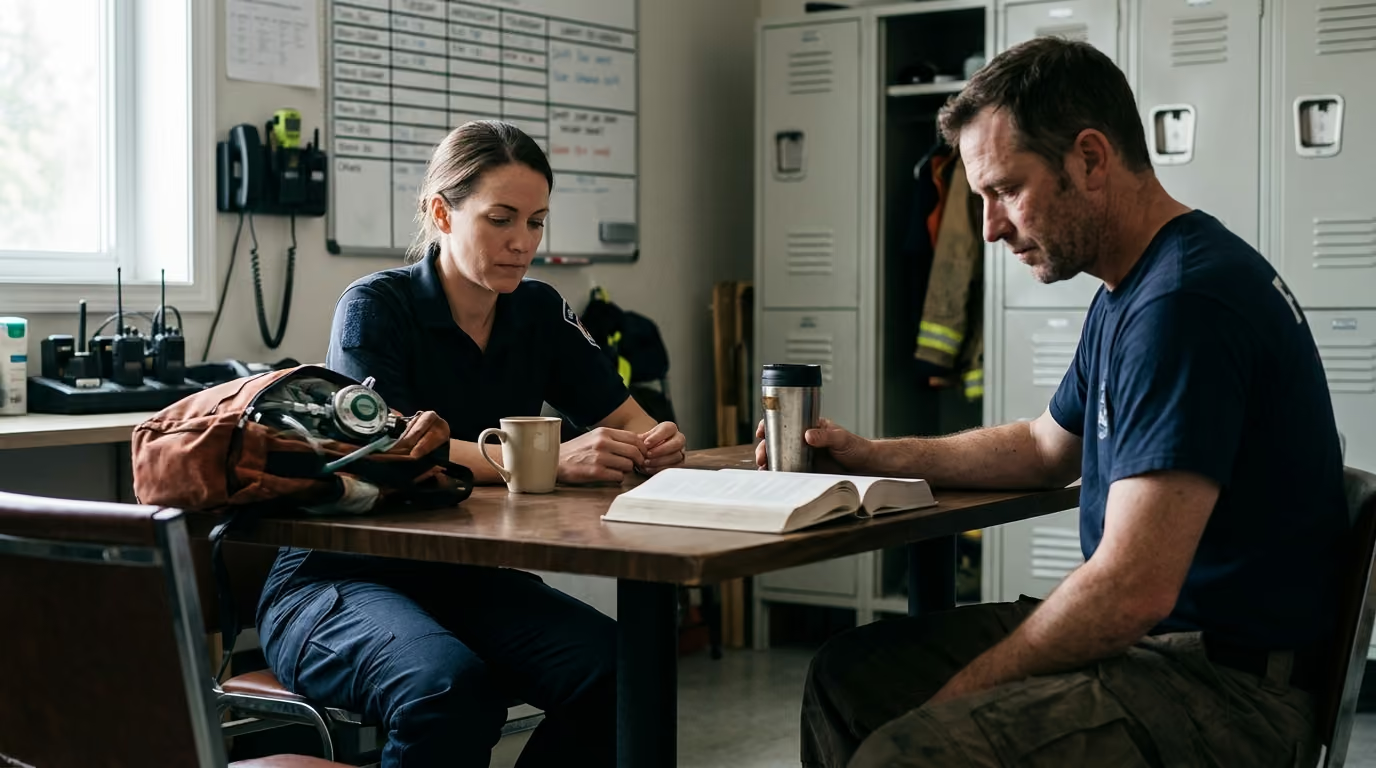

Managing overwhelming pressure on chaotic operational scenes requires practical psychological flexibility skills that help first responders take effective action during crises.





If you or someone you know is in immediate danger, call 911. For immediate mental health support, call or text 988 to reach the Suicide & Crisis Lifeline (press 1 for the Veterans Crisis Line) or text 838255. If you have concerns about safety at home, work with a clinician, trusted peer, or family member to store firearms, medications, and other lethal means securely outside your immediate reach.
Many first responders search online for ways to stay calm under pressure, manage racing thoughts after critical incidents, or stop bringing operational stress home to their families. The search often reveals generic advice about deep breathing, positive thinking, or total emotional detachment.
Psychological flexibility provides a practical, evidence-supported alternative. It is not emotional control, toxic positivity, or passive resignation. It is the ability to stay present, notice uncomfortable internal experiences without being dictated by them, and choose the most effective action aligned with your professional and personal values.
Psychological flexibility is the capacity to contact the present moment fully, recognize difficult internal states, and persist with or adapt behavior in service of chosen values. It originates primarily from Acceptance and Commitment Training and Acceptance and Commitment Therapy (ACT). In emergency services, psychological flexibility is both a real-time operational performance tool and a long-term mental health safeguard.
The foundational principle is straightforward:
Psychological flexibility is not emotional control. It is effective action in the presence of strong emotion, uncertainty, fatigue, and distress.
Emergency work exposes crews to intense physiological activation. Heart rates spike, adrenaline surges, and the mind generates rapid threat assessments. Traditional mental toughness models often suggest that responders must eliminate fear, disgust, grief, or anger to perform well. That expectation is biologically unrealistic and psychologically exhausting.
When responders try to forcefully suppress thoughts or sensations, the brain often experiences a rebound effect. Trying not to feel fear on a dangerous scene or trying not to think about a pediatric arrest during off-duty hours usually amplifies the distress. Psychological flexibility teaches personnel to acknowledge internal activation while keeping their hands on the wheel of their actual behavior.
At an individual level, psychological flexibility comes down to six operational questions:
Psychological inflexibility is the opposite pattern. Inflexibility occurs when behavior is driven entirely by avoidance, rigid operational habits, fused beliefs, or attempts to escape internal discomfort. Inflexibility is rarely a character flaw. It is usually an overlearned coping strategy that worked in one context but creates damage when applied everywhere.
Examples of psychological inflexibility include:
The research base for psychological flexibility and ACT across general, occupational, and public safety populations is substantial. A comprehensive meta-analytic review of 67 unique studies representing over 9,000 participants found that interventions targeting psychological flexibility consistently reduced global inflexibility, cognitive fusion, experiential avoidance, and inaction. The same meta-analysis demonstrated meaningful increases in acceptance, defusion, present-moment contact, and values-based committed action.
Workplace-specific research confirms these mechanisms. A systematic review evaluating workplace ACT trials found strong evidence for reductions in cognitive fusion and moderate, consistent evidence for improvements in mindful awareness and experiential acceptance.
In public safety and first responder populations, clinical interventions that incorporate cognitive and behavioral principles show clear utility. A systematic review and meta-analysis examining psychological interventions for emergency personnel found significant reductions in post-traumatic stress symptoms, depression, and anxiety. The analysis reported standardized mean differences of -0.86 for post-traumatic stress symptoms, -0.63 for depression, and -0.38 for anxiety. The review also observed that clinician-delivered cognitive behavioral interventions yielded the largest reductions in post-traumatic stress.
Resilience-training research in emergency services also highlights important caveats. A randomized controlled trial comparing a group-based resilience program with standard psychoeducation among police, paramedics, and firefighters found no significant intervention-specific differences on primary health outcomes at follow-up.
This finding demonstrates that brief resilience workshops do not automatically inoculate personnel against occupational stress. Training must be grounded in specific behavioral skills, repeated across training cycles, and supported by organizational safety practices.
Emergency response is not a single uniform profession. It encompasses structural firefighters, wildland crews, patrol officers, investigators, emergency medical technicians, paramedics, telecommunicators, and corrections staff. Each role carries distinct physical, cognitive, and environmental demands.
Responders encounter acute critical incidents, including severe trauma, violence, child abuse, mass casualty events, and operational line-of-duty deaths. Systematic reviews examining occupational exposure to suicide show that between 31.5% and 95.0% of public safety personnel experience work-related suicide exposure during their careers.
Acute trauma is only one part of the operational equation. The greater mental load often stems from cumulative operational stress. A responder may handle dozens of routine critical calls without clinical impairment, only to experience severe strain when chronic sleep deprivation, administrative scrutiny, staffing shortages, and unaddressed moral injury accumulate over a decade.
Prevalence syntheses across international emergency services reflect this burden:
Suicide risk remains an ongoing concern across emergency services. A CDC analysis of first responder suicide decedents found that emergency personnel represented 1% of all workplace-identified suicide decedents in the dataset. Among those first responder decedents, 58% were law enforcement personnel, 21% were firefighters, 18% were EMS clinicians, and 2% were public safety dispatchers.
These data do not mean that psychological inflexibility causes suicide or post-traumatic stress. Mental health outcomes are shaped by biological factors, cumulative trauma exposure, social support, access to lethal means, shift schedules, and organizational culture. Psychological flexibility is simply a practical behavioral framework that helps responders navigate these severe occupational pressures without resorting to destructive avoidance strategies.
The core architecture of psychological flexibility is organized around six interconnected operational processes. These components function as a dynamic network rather than a rigid step-by-step checklist.
Acceptance means making room for unpleasant thoughts, physical sensations, memories, and emotional urges without trying to suppress them or letting them dictate your actions. In the field, acceptance is the alternative to experiential avoidance.
Acceptance is not approval of terrible events, moral surrender, passive resignation, or tolerating unsafe workplace conditions. It simply means acknowledging what is happening internally so you can respond effectively.
For example, a paramedic arriving at a mass-casualty scene may experience intense autonomic arousal, including tachycardia, peripheral vasoconstriction, and gut tightness. Experiential avoidance leads to panic or attempts to fight the physical sensation. Acceptance allows the paramedic to acknowledge the bodily surge as normal sympathetic activation and immediately begin triage protocols.
Cognitive defusion is the ability to notice thoughts as passing mental events rather than treating them as literal truths, immediate facts, or direct commands. Fusion occurs when a responder becomes entirely hooked by internal dialogue, mistaking an internal narrative for an objective external threat.
Defusion creates a functional gap between a thought and a response. Responders do not need to argue with the thought, practice forced positive thinking, or analyze childhood origins. They simply observe the thought as an internal message generated by a stressed brain.
Examples of operational defusion include:
Present-moment awareness is flexible, voluntary attention directed to the immediate environment and current task requirements. In operational settings, present-moment contact is closely linked to situational awareness and tactical focus.
When responders lose present-moment contact, attention is usually trapped in the past or projected into an imagined catastrophe. A driver replaying an earlier confrontation during emergency vehicle operations is operating with compromised awareness.
Mindfulness in emergency services is functional, not mystical. It means noticing when your attention has drifted away from the operational scene, dropping unnecessary cognitive baggage, and deliberately redirecting attention to radio traffic, visual cues, patient vitals, or team positioning. Applying structured grounding techniques between emergency calls can rapidly re-establish sensory awareness during high-tempo shifts.
Self-as-context, often called the observing self, provides a stable psychological perspective from which thoughts, emotional states, injuries, and occupational roles can be observed without identifying entirely with them.
Responders often fuse their entire human identity with their operational rank, physical toughness, or uniform. When an injury occurs, an investigation opens, or a call goes badly, this narrow identity collapses into severe psychological distress.
Self-as-context establishes functional perspective:
Values are freely chosen, continuous qualities of purposeful action and relationship. They are directions of travel rather than static checklist goals. Completing a 24-hour shift is a goal; demonstrating clinical excellence and team loyalty throughout the shift is an expression of values.
Emergency work often pushes responders into survival mode, where behavior is driven almost entirely by avoiding disciplinary action, avoiding discomfort, or chasing adrenaline. Values clarification reconnects duty performance with personal meaning.
Core values for emergency personnel often center on courage, professional craft, protection of the vulnerable, team integrity, compassion, physical capability, and family presence. When responders clarify what genuinely matters to them, they can make difficult, uncomfortable decisions that serve those principles instead of reacting impulsively to stress.
Committed action is the disciplined execution of values-guided behavior, particularly when internal discomfort, fatigue, or operational obstacles are present. It involves building sustainable habits, adapting tactics when circumstances change, and taking practical steps forward.
Committed action is not stubborn persistence in a broken strategy. True commitment is flexible. If an officer values public safety and de-escalation, committed action might mean holding a perimeter and calling for specialized resources rather than forcing an immediate physical confrontation.
Examples of committed action include:
The Choice Point framework provides a clear model for applying psychological flexibility under operational and interpersonal pressure. It translates complex psychological theory into a simple, observable behavioral decision tree.
Every challenging operational scenario, disciplinary encounter, or distressing call presents a choice point. Responders experience a specific external trigger accompanied by uncomfortable internal experiences, including rapid heart rate, muscle tension, anger, shame, or fear.
From that trigger, behavior can move in one of two directions:
Away moves are actions taken primarily to escape, numb, suppress, or eliminate uncomfortable internal experiences. Away moves frequently provide immediate, short-term relief, but they move the individual away from their core values, long-term health, and professional standards.
Common away moves in emergency services include:
Toward moves are concrete actions that align with chosen values and operational excellence, even while internal discomfort, anxiety, or fatigue remain present. Toward moves often feel harder in the immediate moment because they require tolerating internal activation, but they build capability, trust, and resilience over time.
Common toward moves include:
To use the choice point in real time, personnel can follow a four-part mental sequence:
Psychological flexibility is most effective when integrated into the normal workflow of emergency duty. The operational timeline can be divided into four distinct phases: pre-shift preparation, on-scene performance, post-incident transition, and off-duty recovery.
Before stepping onto the apparatus floor, taking the dispatch console, or starting patrol, responders can run a brief psychological readiness check alongside their equipment checks:
A concise pre-shift prompt is: "What quality of responder do I choose to be today, and what unhelpful thoughts or physical discomfort might show up during this tour?"
During a hot call, there is no time for extended introspection. The focus must remain entirely on situational awareness, crew safety, and clinical or tactical execution. Psychological flexibility on scene functions as a rapid cognitive reset:
Immediately following a severe call, crews often oscillate between two extremes: mandatory emotional processing or complete emotional avoidance masked by dark humor and immediate return to service. Psychological flexibility offers a balanced middle ground:
Long-term recovery requires using psychological flexibility to protect sleep, family life, and physical health. Responders who stay trapped in operational hypervigilance off duty quickly burn out.
Sustainable recovery involves recognizing when operational habits are being inappropriately applied at home. Hypervigilance, tactical command language, and emotional stoicism are necessary on scene, but they create severe friction in personal relationships. Applying flexibility means choosing warmth, active listening, and vulnerability with loved ones, even when doing so feels unfamiliar or uncomfortable. Learning how to balance physical training demands by managing cumulative duty fatigue is equally vital for career endurance.
The following scenarios illustrate how psychological flexibility operates across different public safety disciplines. These examples serve as practical behavioral models.
A critical-care paramedic with twelve years of field experience responded to a fatal pediatric drowning. Over subsequent weeks, the paramedic noticed surging anxiety, diaphoresis, and nausea whenever responding to calls in residential neighborhoods with pools.
A patrol officer working in an urban district was involved in a physical altercation where a suspect attempted to access a weapon. Following the incident, the officer experienced intense hypervigilance, interpreting minor non-compliance during routine vehicle stops as an immediate lethal threat.
An emergency communications officer handled a prolonged 911 call involving a home invasion that ended in a fatal shooting before units arrived on scene. During subsequent shifts, the dispatcher found attention constantly drifting back to the caller's screams, missing radio transmissions from patrol units on other channels.
Replay memory is active"), pressed both feet into the floor, took a slow exhalation, and deliberately pulled visual and auditory focus back to the CAD screens and live radio transmissions. Off-shift, the dispatcher engaged in structured peer debriefing and a factual review that confirmed all dispatch timelines met national standards.
A veteran fire lieutenant was trapped during a structural collapse and suffered a significant shoulder injury alongside acute carbon monoxide exposure. Following medical stabilization, the officer experienced chronic pain, severe nightmares, and panic in enclosed spaces.
Psychological flexibility is an evidence-supported skill set, but it is not a panacea for all emergency service challenges. Training programs must establish strict operational guardrails and avoid common misconceptions.
One of the most dangerous misapplications of resilience training is treating systemic organizational failures as individual mental weaknesses. Psychological flexibility cannot fix:
When agencies offer resilience seminars while ignoring severe structural sleep deprivation, personnel rightfully perceive the training as bad-faith liability management. Psychological flexibility helps an individual operate effectively within hard realities, but leadership retains the legal and ethical responsibility to fix broken working conditions.
Responders must never confuse acceptance with tolerating unsafe operational conditions. Acceptance applies to internal cognitive and physiological states, such as fear, sorrow, and fatigue. It does not apply to broken safety protocols, freelancing on the fireground, or operating under an impaired partner.
If a structural condition is unsafe, the flexible and values-driven response is to speak up, report the hazard, or execute an emergency withdrawal. True psychological flexibility empowers personnel to challenge dangerous groupthink rather than quietly complying out of fear of social rejection.
For decades, many public safety organizations mandated Critical Incident Stress Debriefing (CISD) immediately following high-stress events. Rigorous systematic reviews have demonstrated that compulsory psychological debriefing immediately post-incident is ineffective and can, in some cases, increase the risk of post-traumatic stress by disrupting natural human coping mechanisms.
Psychological flexibility aligns with modern, trauma-informed psychological first aid. Support should be voluntary, non-intrusive, focused on practical needs, respectful of personal processing timelines, and paired with access to confidential, licensed clinical care when required.
Psychological flexibility practices are designed for training, self-regulation, and peer support. They do not constitute clinical treatment for diagnosable psychiatric disorders.
Responders, supervisors, and peer teams must recognize the indicators that signal a need for formal clinical evaluation by a licensed mental health professional:
When public safety personnel require clinical care, treatment should be delivered by licensed clinicians who understand emergency service culture and utilize evidence-based protocols:
Responders seeking professional support should look for clinicians with verified cultural competence in emergency services, law enforcement, or military trauma. Maintaining confidential access through dedicated Employee Assistance Programs, specialized public safety clinics, or vetted peer networks preserves operational privacy while securing necessary care. Committing to these clinical pathways supports long-term career longevity and protects health well into retirement.
Implementing psychological flexibility does not require hours of meditation or complete personality changes. It requires small, consistent behavioral adjustments integrated into daily duty routines.
Psychological flexibility provides emergency personnel with the operational capacity to confront extreme human suffering, danger, and fatigue without sacrificing their humanity, their families, or their professional competence. Sustainable duty capability is not built on total emotional detachment or false bravado, but on the disciplined ability to stay present, make room for discomfort, and take purposeful action when it matters most.
Stay connected for research-led guidance on duty fitness, shift-work sleep, injury recovery, stress, nutrition and career longevity. Practical ideas for first responders who want to stay capable on the job, recover well and protect their health for the long run.



Read practical guidance on first responder fitness, recovery, sleep, nutrition and resilience for demanding work and a long, active career.
read the blog



