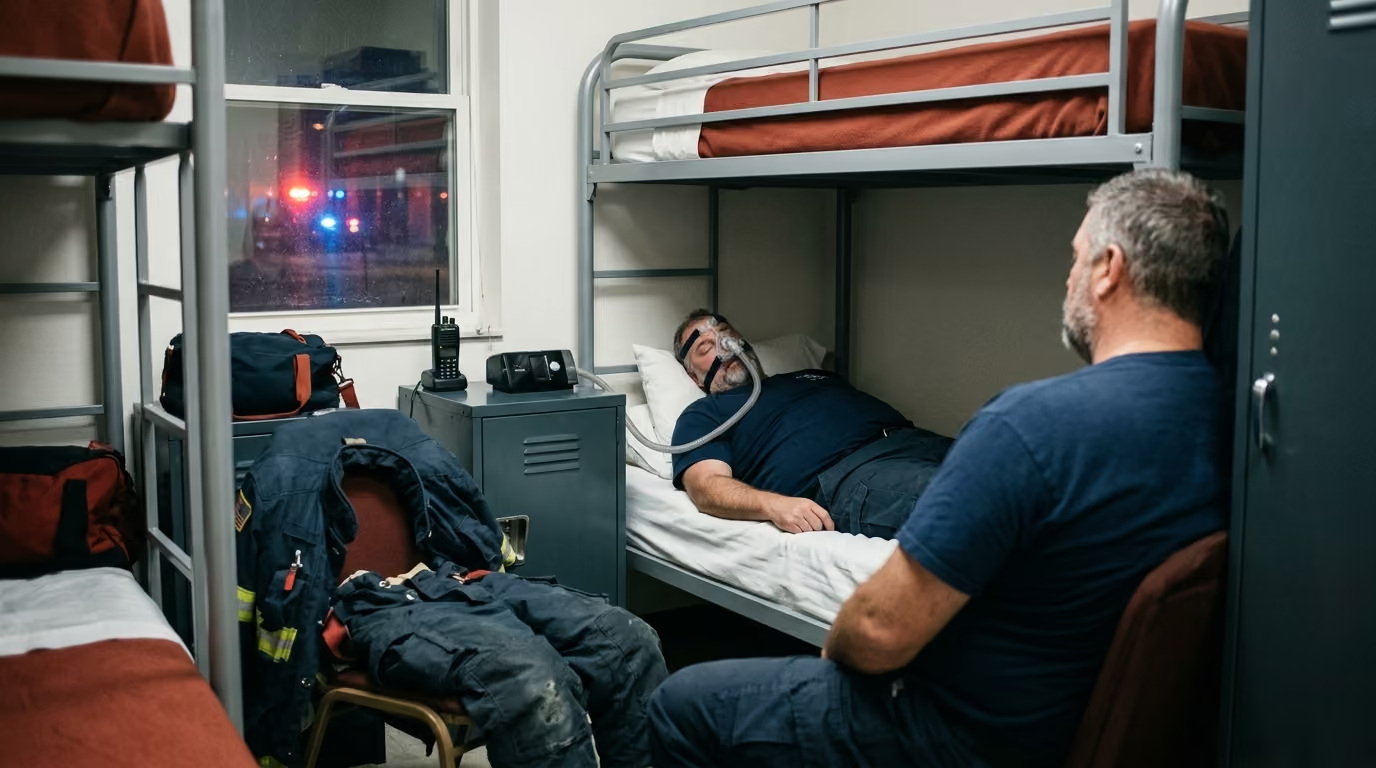

Sleep apnea poses serious operational hazards for first responders by driving chronic daytime exhaustion, increasing vehicle crash rates, and degrading emergency scene decision-making.





If you have searched for whether your exhaustion is normal shift fatigue or obstructive sleep apnea, you are facing a common first responder problem. Emergency-service professionals frequently write off heavy daytime sleepiness as an unavoidable part of the job. This guide provides a definitive breakdown of sleep apnea risks, diagnostic pathways, station-friendly treatments, and operational safety realities for responders.
Obstructive sleep apnea is not just about snoring in the bunkroom. It is a physiological sleep-breathing disorder that compromises operational reaction time, elevates cardiovascular strain, and increases crash risks behind the wheel. The condition is treatable, manageable, and fully compatible with an active emergency-service career when approached with objective medical testing and consistent therapy.
Obstructive sleep apnea, commonly known as OSA, is a sleep-related breathing disorder characterized by repeated collapse or narrowing of the upper airway. When a person sleeps, the muscles of the soft palate, tongue, and pharynx naturally relax. In individuals with sleep apnea, this relaxation causes the airway tissue to obstruct the flow of air into the lungs.
These breathing interruptions fall into two main categories: complete cessations of airflow called apneas, and partial airway reductions accompanied by oxygen drops called hypopneas. Each event forces the brain to trigger a brief survival arousal to reopen the airway. These arousals shatter sleep architecture, keeping the body in a state of chronic autonomic strain.
Clinical diagnosis relies heavily on the Apnea-Hypopnea Index, or AHI. The AHI measures the average number of apneas and hypopneas recorded per hour of sleep or recording time. A related metric, the Respiratory Disturbance Index, or RDI, also counts respiratory effort-related arousals that fragment rest.
Clinical guidelines classify adult obstructive sleep apnea into three distinct severity brackets based on objective testing:
While AHI provides an objective benchmark, it is only one piece of the clinical picture. A responder with mild OSA who experiences severe daytime sleepiness may face greater operational danger than someone with a higher AHI who shows fewer neurocognitive symptoms. Blood oxygen desaturation levels, total sleep time, cardiac response, and duty demands all factor into overall severity.
It is vital to distinguish between routine muscular fatigue and excessive daytime sleepiness. Fatigue is a subjective feeling of low physical energy or muscle weariness following strenuous calls or heavy physical training. Rest, nutrition, and downtime typically relieve fatigue.
Excessive daytime sleepiness represents an involuntary neurobiological pressure to fall asleep during waking hours. Responders with sleepiness fight heavy eyelids during station training sessions, nod off while completing incident reports, or experience dangerous lapses in vigilance behind the wheel. The Epworth Sleepiness Scale is widely used to screen for subjective sleepiness, but normal scores do not rule out safety hazards if near-miss events occur on duty.
Every obstructive event forces the central nervous system out of deep, restorative slow-wave sleep and rapid eye movement sleep. The responder may never fully wake up or remember these micro-arousals. The result is severe sleep fragmentation, leaving the individual physically spent despite spending eight hours in bed.
This fragmentation directly drives microsleeps, which are involuntary lapses into unconsciousness lasting from a fraction of a second up to thirty seconds. In an office setting, a microsleep causes a head nod at a desk. In emergency services, a microsleep while driving an apparatus or engine can cause a fatal collision.
First responders work in operational settings that make identifying and managing sleep disorders uniquely challenging. Shift structures across fire, emergency medical services, and law enforcement disrupt normal circadian biology. Night calls, extended overtime tours, and unpredictable alert tones consistently fragment the sleep window.
Understanding how shift work disrupts circadian timing and sleep helps contextualize why responders are vulnerable to sleep disorders. When chronic sleep restriction overlaps with an undiagnosed upper-airway obstruction, operational readiness degrades quickly.
Research consistently shows high rates of sleep disorders among emergency personnel. A large systematic review and meta-analysis of first responders estimated the pooled prevalence of obstructive sleep apnea at 30 percent across studied cohorts. In the same meta-analysis, pooled rates for shift-work disorder reached 31 percent, insomnia reached 28 percent, and excessive daytime sleepiness reached 28 percent.
Individual studies within the literature show wide variation based on screening methods and population characteristics, with OSA estimates ranging from roughly 10 percent to over 80 percent. In a landmark study of over 6,800 United States firefighters led by researchers at Brigham and Women's Hospital, 28.4 percent screened positive for obstructive sleep apnea. Overall, 37.2 percent of the surveyed firefighters screened positive for at least one major sleep disorder.
The most striking finding from first responder sleep research is the rate of underdiagnosis. In the large firefighter study, 80.9 percent of personnel who screened positive for sleep apnea reported having no formal clinical diagnosis. Responders frequently assume their exhaustion is merely the price of working 24-hour or 48-hour rotations.
Station bunkrooms also mask the problem. Noise machines, private dorms, earplugs, and constant awakenings for emergency calls make it difficult for crew members to notice breathing pauses in their peers. Responders who sleep alone off duty may have nobody to tell them that they gasp or choke during the night.
Shift-work disorder is a circadian rhythm disorder where work hours conflict with the body's natural internal biological clock. Responders frequently suffer from both shift-work disorder and obstructive sleep apnea at the same time. This compound effect creates severe sleep debt that cannot be resolved simply by sleeping longer on days off.
Treating sleep apnea with positive airway pressure will stabilize upper airway mechanics, but it does not fix a disrupted circadian clock. Responders must understand that sleep hygiene, consistent off-duty sleep timing, and medical sleep-apnea therapy must work together.
The physical and cognitive demands of emergency services leave zero margin for unmanaged sleep-related impairment. When an individual operates an emergency vehicle with lights and sirens, rapid visual scanning and split-second decisions dictate public safety. Undiagnosed sleep disorders turn routine responses into high-risk scenarios.
Departments that want to protect their personnel must examine the connection between fatigue, vehicle safety, and physical readiness. Building sustainable capability requires recognizing how sleep pathology degrades physical performance across an entire career.
Transportation research and occupational studies confirm a clear link between untreated sleep apnea and vehicle crashes. In the large-scale firefighter cohort study, personnel who screened positive for a sleep disorder had twice the odds of being involved in a motor vehicle crash compared to those who screened negative.
The safety data revealed several critical risk markers among personnel screening positive for sleep disorders:
These findings show that drowsy driving is an active occupational risk in the emergency response community. Falling asleep at the wheel after a demanding shift is a clinical warning sign that requires immediate medical attention.
Beyond driving, obstructive sleep apnea impairs executive cognitive function. The prefrontal cortex is sensitive to oxygen desaturation and sleep fragmentation. This brain region governs risk calculation, working memory, emotional regulation, and attention switching.
On a dynamic fireground or complex medical scene, responders must calculate structural hazards, track crew locations, compute drug dosages, and interpret cardiac rhythms. Sleep-deprived individuals experience cognitive tunnel vision, where they fixate on single tasks and miss broader environmental danger cues. Reaction times slow to levels equivalent to legal alcohol intoxication.
Sleep apnea is not just a fatigue issue; it is a cardiovascular hazard. Every apnea triggers a surge in sympathetic nervous system activity, spiking blood pressure and releasing systemic stress hormones. Over years of service, this repetitive nightly stress drives arterial stiffness and left ventricular hypertrophy.
The firefighter study identified significant health associations among those screening positive for sleep disorders:
These associations highlight the need for comprehensive medical evaluations. When sleep apnea remains untreated, efforts to manage blood pressure, cholesterol, and blood glucose through diet and exercise alone often fail.
A dangerous myth in emergency services is that sleep apnea only affects individuals who shake the station walls with loud snoring. Snoring is simply acoustic vibration caused by turbulent airflow across relaxed tissue. It is a potential symptom, not a diagnostic confirmation.
Relying on snoring alone leads to two major operational errors. It causes loud snorers without apnea to worry needlessly, while allowing quiet sleepers with severe airway obstruction to go completely unnoticed and untreated.
Snoring can occur without significant oxygen desaturation, sleep fragmentation, or complete airway closure. This condition, known as primary snoring, causes acoustic noise without the systemic cardiovascular stress of true apnea. Conversely, severe obstructive events can occur with minimal audible vibration if airflow is completely blocked from the start of the breath.
Clinical guidelines from the American Academy of Sleep Medicine emphasize that objective diagnostic testing is required. Questionnaires and acoustic observations can suggest risk, but they cannot measure blood oxygen drops, autonomic arousals, or sleep stages.
Many first responders who have severe sleep apnea do not fit the traditional stereotype of the older, heavily built, loud snorer. Younger, highly athletic personnel with muscular neck anatomy, narrow pharyngeal spaces, or specific craniofacial structures can develop airway collapse during deep sleep.
These quiet sleepers often slip through the cracks. Because they do not disrupt the bunkroom, their peers never suggest they get checked. The only warning signs may be waking up with a dry mouth, morning headaches, elevated blood pressure, and overwhelming daytime exhaustion.
From a safety and performance perspective, daytime alertness is a far more reliable indicator of operational readiness than nighttime noise. A responder who rarely snores but struggles to stay awake during an afternoon training session is at higher acute safety risk than a loud snorer who wakes up fully refreshed.
The American Academy of Sleep Medicine identifies excessive daytime sleepiness paired with witnessed apneas, choking episodes, or hypertension as a high-risk clinical pattern. If you fight to stay awake during routine waking tasks, your airway mechanics during sleep require objective evaluation regardless of how quiet you are in bed.
A thorough self-check for sleep apnea requires looking at a wide range of physical and cognitive symptoms. Responders should evaluate their health against these recognized clinical signs:
Navigating medical testing does not have to disrupt your career or place your duty status in jeopardy. Modern sleep medicine provides streamlined, accessible pathways designed to give accurate answers quickly.
Understanding how to move through clinical evaluation allows responders to take charge of their recovery. When you notice persistent daytime symptoms, following a structured clinical pathway protects both your health and your livelihood.
Medical providers and occupational health clinics use validated screening tools to evaluate sleep apnea risk. Common tools include the STOP-BANG Questionnaire, the Berlin Questionnaire, and the Epworth Sleepiness Scale.
The STOP-BANG tool evaluates eight specific factors:
While these questionnaires help identify who needs testing, they cannot provide a definitive diagnosis. A high score simply indicates that an objective sleep study should be scheduled.
Home Sleep Apnea Testing, or HSAT, has transformed diagnostic sleep medicine. Rather than spending a night in a sleep laboratory, an uncomplicated adult can wear a portable monitoring device while sleeping in their own bed at home.
These devices typically measure respiratory effort, airflow through a nasal cannula, blood oxygen saturation via pulse oximetry, and heart rate. Guidelines from the American Academy of Sleep Medicine state that home sleep testing is appropriate for uncomplicated adult patients with symptoms suggesting increased risk of moderate-to-severe OSA.
However, home tests have specific limitations that responders must understand:
In-laboratory polysomnography, or PSG, remains the gold standard of sleep diagnostics. During an in-lab study, technicians monitor brain waves, eye movements, chin muscle tone, heart rhythm, leg movements, airflow, chest wall motion, and blood oxygen levels.
Polysomnography is required when a responder has significant underlying medical conditions, such as pulmonary disease, neuromuscular weakness, or congestive heart failure. It is also necessary when there is suspicion of central sleep apnea, severe insomnia, periodic limb movement disorder, or parasomnias.
A major clinical trap is accepting a negative home sleep test as the final word when serious symptoms persist. Home devices tend to underestimate the severity of sleep apnea because they calculate AHI based on total recording time rather than actual total sleep time.
If a home test returns negative or inconclusive, but you continue to experience daytime microsleeps, morning headaches, or witnessed apneas, clinical guidelines recommend an in-laboratory polysomnography. Never ignore active operational impairment based on an inconclusive home recording.
Receiving a sleep apnea diagnosis is not a career-ending event. Effective treatment rapidly restores cognitive clarity, stabilizes cardiovascular metrics, and reduces operational fatigue. The primary goal of therapy is keeping the upper airway pneumatic splint open throughout every stage of sleep.
Developing a personalized management plan requires working closely with a qualified sleep physician. For responders building a broader routine, combining medical treatment with a structured shift-work sleep and recovery strategy provides the best foundation for sustained duty readiness.
Positive Airway Pressure, or PAP, is the frontline medical treatment for obstructive sleep apnea. A PAP device pulls ambient room air, filters it, pressurizes it according to your prescribed settings, and delivers it through a flexible hose and mask into your upper airway. This constant air pressure prevents the soft tissues of the pharynx from collapsing.
PAP therapy comes in several forms:
Starting PAP therapy requires an adjustment period. Modern devices feature heated humidification, heated tubing to eliminate condensation, ramp functions that start at lower pressures while you fall asleep, and pressure-relief settings that make exhaling comfortable.
While PAP therapy remains the most reliable treatment, alternative options exist for specific anatomical profiles or mild-to-moderate cases:
Using a PAP device in a fire station, police substation, or during deployed emergency operations requires simple planning. Modern PAP units are compact, whisper-quiet, and feature stealth display modes that do not illuminate dark bunkrooms.
To make station use seamless, implement these practical habits:
In commercial transportation and occupational fitness-for-duty evaluations, administrative compliance is often defined as using a PAP device for at least 4 hours per night on 70 percent of nights. For an emergency responder, this minimum standard is clinically inadequate.
If you sleep seven hours but only wear your PAP mask for four hours, your airway remains completely unprotected during the final three hours of sleep. This final third of the night is when rapid eye movement (REM) sleep dominates, which is precisely when airway collapse and oxygen desaturations are often most severe. True clinical adherence means wearing your device for the entire duration of every sleep window, including station recovery naps.
Some responders achieve excellent objective PAP adherence but continue to feel exhausted on duty. This situation should never be dismissed as treatment failure or personal weakness.
If residual sleepiness persists despite low device-recorded AHI numbers, evaluate these contributing factors with your medical team:
Understanding why willpower alone cannot overcome cumulative operational fatigue reinforces the need for medical problem-solving rather than simply attempting to grind through persistent exhaustion.
Reviewing real-world clinical patterns helps illustrate how sleep apnea presents across diverse emergency-service environments. The following illustrative scenarios demonstrate common pitfalls and practical solutions.
A 42-year-old firefighter is known across his battalion for loud bunkroom snoring. He reports no daytime fatigue, has never had a near-miss while driving, and claims he feels ready for duty every morning. However, an annual department physical reveals newly developed stage 2 hypertension.
Operational takeaway: The absence of subjective sleepiness does not mean an airway is healthy. Chronic loud snoring accompanied by rising blood pressure warrants objective clinical evaluation. Screening should assess nocturnal oxygen saturation and cardiovascular strain rather than relying solely on self-reported alertness.
A 29-year-old paramedic sleeps quietly in station dorms and has no history of snoring. Over six months, she experiences terrifying moments of drowsy driving on her commute home and nods off while writing electronic patient care reports. She attributes the problem entirely to busy 12-hour night rotations.
Operational takeaway: Absence of snoring never excludes obstructive sleep apnea. Unexplained daytime microsleeps, morning dry mouth, and cognitive slowing represent urgent safety signals. A comprehensive clinical evaluation is needed to differentiate between shift-work sleep debt and true sleep pathology.
A police patrol officer with witnessed nocturnal choking episodes, a 18.5-inch neck circumference, and severe afternoon fatigue completes an unmonitored single-night home sleep test. The automated report lists his AHI as 4.2 events per hour, labeling him normal. His operational exhaustion continues to worsen.
Operational takeaway: Home sleep testing devices can underestimate disease severity, particularly if sleep duration was short or sensors shifted during the night. When clear clinical symptoms persist alongside a negative home study, an in-laboratory polysomnography should be scheduled to capture full neurophysiological data.
A lieutenant diagnosed with moderate OSA uses his auto-PAP machine faithfully when sleeping in his home bedroom. However, he leaves the device at home during his 24-hour shifts because he dislikes cleaning it at the station and fears slow turnout times. He reports heavy brain fog on duty days.
Operational takeaway: Sleep apnea therapy cannot be treated as a part-time medical intervention. Inconsistent use leaves personnel vulnerable to acute operational fatigue and autonomic strain while performing their most hazardous duties. Station equipment setups, rapid-release headgear, and duplicate travel gear solve logistical barriers.
An emergency medical technician uses his PAP machine for seven hours every sleep period with a verified residual AHI below 2.0 events per hour. Despite perfect technical adherence, he struggles with severe fatigue, irritability, and poor physical training recovery.
Operational takeaway: PAP therapy treats mechanical airway obstruction, but it does not cure circadian misalignment, chronic sleep restriction, or psychological stress. Persistent symptoms require a broader medical review looking at shift timing, nutrition, caffeine timing, medication side effects, and co-occurring mood or sleep disorders.
A veteran engineer suspects he has severe sleep apnea after nodding off at a traffic light in his personal vehicle. He avoids seeing a physician because he fears his department will pull him from driving the apparatus, place him on unpaid leave, or end his operational career.
Operational takeaway: Untreated sleep disorders carry massive legal, operational, and personal safety risks that far outweigh the temporary inconvenience of a medical workup. Most public safety agencies support confidential medical evaluation and treatment. Documented, successful therapy protects an emergency-service career and ensures long-term fitness for duty.
Integrating medical sleep therapy into rotating shift work requires deliberate system design. Responders do not work fixed nine-to-five hours, which means standard consumer medical advice rarely fits their routine.
Developing reliable habits around equipment care, daytime recovery sleep, and shift transitions ensures that positive airway pressure therapy supports operational readiness rather than becoming an added chore.
Using therapy devices in shared station environments requires simple adjustments to equipment and bunk space. Protecting sleep quality in a station setting means optimizing every variable under your control.
Consider these practical adjustments for station sleep:
Responders who want to build a comprehensive framework can examine shift-specific sleep planning for emergency services to align their medical therapy with changing shift rotations.
When working 24-hour, 48-hour, or extended emergency deployments, sleep opportunities occur in broken blocks rather than a single continuous night. Treatment devices should be applied whenever a structured sleep window is available.
If you have a two-hour opportunity for recovery sleep between calls or after morning shift handover, use your PAP device during that window. Applying positive pressure during daytime recovery sleep prevents airway collapse, protects blood oxygen levels, and ensures the rest you obtain provides true cellular and neurocognitive recovery.
Responders balancing high call volume can also review practical strategies for managing alertness and caffeine on shift to avoid using stimulants as a substitute for restorative sleep.
Navigating sleep health requires knowing when self-management ends and professional clinical medicine begins. Sleep-related breathing disorders cannot be fixed with lifestyle changes alone if severe anatomical obstruction is present.
If you or a crew member experience any of the following safety-critical warning signs, schedule a formal evaluation with a licensed physician specializing in sleep medicine:
A comprehensive medical workup will review your complete health history, assess your airway anatomy, screen for overlapping disorders like insomnia or restless legs syndrome, and order the appropriate objective testing.
Building sustainable operational capability requires taking immediate, practical steps to protect your sleep health. Sleep apnea is a manageable medical condition that responds well to structured treatment.
Addressing airway health protects your cognitive sharpness on the fireground, preserves your cardiovascular system, and supports long-term career longevity and health well into retirement.
Take these concrete actions to assess your sleep health and establish clear baseline habits:
Taking control of your sleep health is a fundamental operational responsibility. When you eliminate sleep-disordered breathing, you protect your crew, safeguard the public you serve, and secure your health for the future.
Stay connected for research-led guidance on duty fitness, shift-work sleep, injury recovery, stress, nutrition and career longevity. Practical ideas for first responders who want to stay capable on the job, recover well and protect their health for the long run.



Read practical guidance on first responder fitness, recovery, sleep, nutrition and resilience for demanding work and a long, active career.
read the blog



