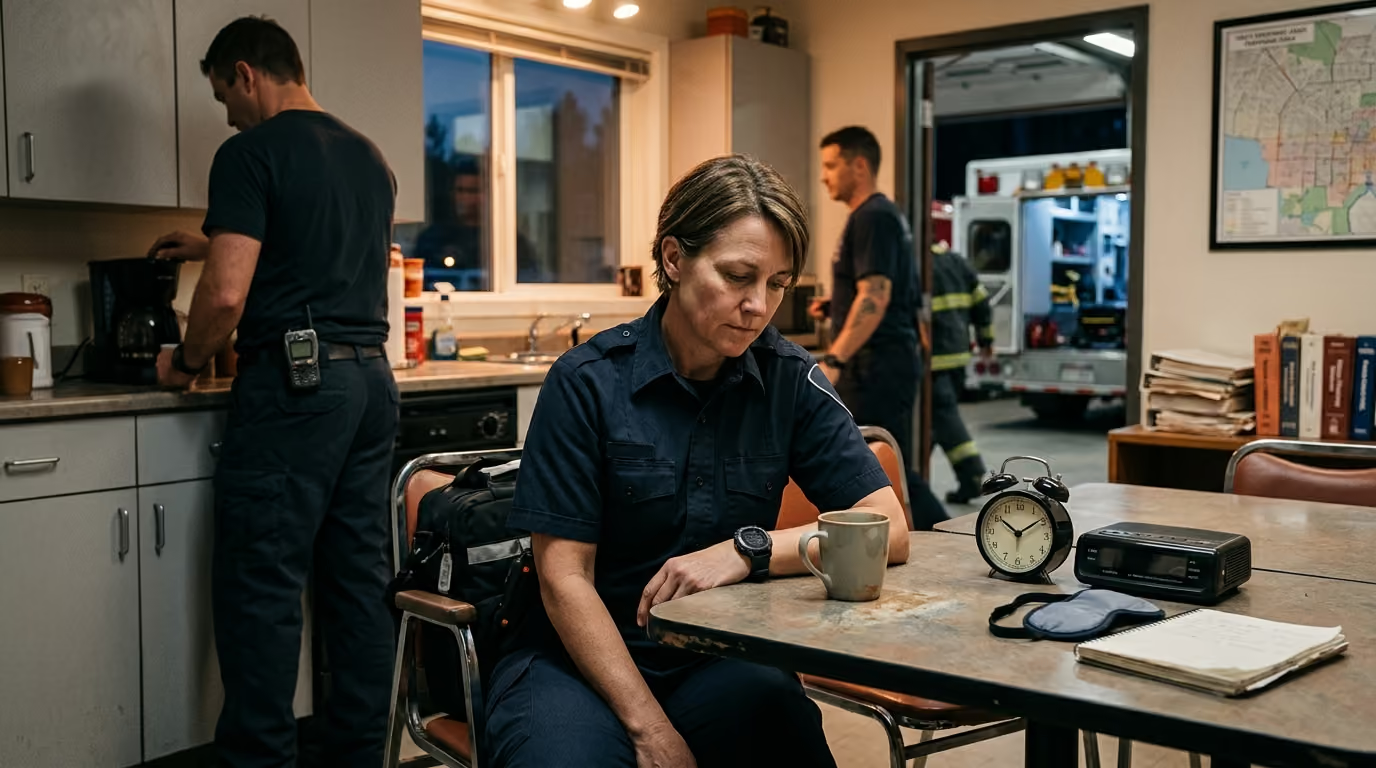

Restorative rest on rotating shifts becomes achievable by protecting anchor sleep, managing light exposure, and following structured transition routines between changing work schedules.





You finish a run of night shifts, walk through the front door at seven in the morning, and look at the clock. In two days, your schedule flips back to early day shifts. Standard sleep advice tells you to go to bed and wake up at the exact same time every day. In emergency services and rotating shift work, that advice is completely detached from reality. When your duty hours change every few days, keeping a fixed clock bedtime is impossible.
Sleep regularity on rotating shifts does not mean maintaining identical bedtimes and wake times across the week. Instead, real-world regularity means keeping the process of recovery consistent. When your schedule changes, you protect your sleep opportunity, maintain a recurring core sleep window, preserve a repeatable wind-down routine, control light exposure, and manage stimulant cutoffs. By stabilizing these core elements, you protect your physical health and mental sharpness across changing shifts.
Scientific research shows that rotating schedules present distinct physiological challenges compared to steady day or permanent night work. Rotating workers frequently experience longer sleep latency, more frequent nocturnal awakenings, greater daytime sleepiness, and higher rates of work-related errors. Shift workers consistently obtain less sleep than day workers, averaging an estimated loss of 10 hours of sleep per week.
Circadian biology explains why this disruption occurs. The central circadian pacemaker, located in the suprachiasmatic nucleus of the hypothalamus, regulates body temperature, hormone release, alertness, and sleep propensity across an approximate 24.2-hour cycle. When work requires wakefulness during the biological night and sleep during the biological day, internal timing conflicts with external demands. This circadian misalignment is compounded by homeostatic sleep pressure, which builds continuously during wakefulness. Even when sleep pressure is exceptionally high after a long shift, the circadian alerting signal during daytime hours can fragment sleep and cause early spontaneous awakenings.
Evidence evaluating schedule designs provides useful context, though some findings remain mixed:
Research confirms that schedule rotation strains human physiology. However, strategic behavioral routines can reduce the severity of circadian disruption.
In emergency response and industrial shift work, duties rarely follow a predictable rhythm. You may transition from prolonged periods of low activity to immediate, high-stakes physical exertion. Emergency personnel carry heavy gear, experience extreme thermal stress, and manage intense psychological demands. These operational factors trigger acute sympathetic nervous system activation, elevating core temperature, heart rate, and cortisol levels.
When you finish a demanding tour, your central nervous system may remain in an elevated state of arousal. High physiological arousal directly opposes sleep initiation, even when accumulated sleep pressure is severe. If you attempt to sleep immediately after high-intensity calls or an extended commute, sleep latency increases.
The risk of rapid schedule reversals is especially high in emergency services. Quick returns, such as finishing an overnight shift and reporting back for a day shift less than 12 hours later, drastically restrict total recovery time. On-call duties introduce additional uncertainty. Research demonstrates that on-call night shifts produce significantly greater daytime sleepiness than scheduled rotating shifts because personnel remain in a state of sustained vigilance. Understanding circadian timing and shift duration helps personnel anticipate these physiological hurdles before fatigue compromises safety.
When clock times cannot remain consistent, your recovery routine must provide stability. Focus on stabilizing the underlying architecture of your sleep rather than forcing an artificial bedtime.
The most critical baseline is protecting a non-negotiable block of time dedicated entirely to sleep. Shift workers frequently sacrifice sleep opportunities to manage household errands, workouts, social obligations, or family schedules. When sleep opportunity is cut down to five hours, achieving seven hours of actual sleep becomes mathematically impossible.
Calculate your sleep opportunity by working backward from your required wake-up time. Include your commute, meal, and transition needs. If an upcoming rotation restricts your primary sleep window, proactively schedule a supplementary sleep episode rather than hoping you will push through the fatigue.
Anchor sleep is a recurring core sleep window that overlaps between workdays and nonwork days. By keeping a stable four-hour block constant across changing shifts, you provide your circadian pacemaker with an anchor point.
For example, a responder rotating between afternoon and night duties might protect a core rest period from 04:00 to 08:00 every day. On night shifts, the worker sleeps from 04:00 to 11:00. On off days, they maintain the 04:00 to 08:00 window and supplement with an early afternoon rest period. This consistent overlap stabilizes circadian timing, prevents extreme social jet lag, and increases total weekly sleep duration.
Your brain relies on conditioned behavioral cues to prepare for sleep. When bedtime shifts by eight or twelve hours, a repeatable sequence signals the nervous system that sleep is approaching.
Keep this wind-down sequence identical regardless of whether you are going to bed at 22:00 or 08:00:
Repeating this pattern programs a conditioned relaxation response, lowering heart rate and facilitating sleep onset regardless of the hour.
Daytime sleep is exceptionally fragile. Environmental noise, ambient light, fluctuating household temperatures, and daily domestic activity interrupt sleep cycles. A protected sleep environment is essential for preserving sleep architecture during daytime rest.
Equip your sleep space to eliminate environmental disturbances:
Establishing strict environmental controls provides the physical conditions required for restorative rest. For more strategies on structural sleep planning, review our guide to shift work sleep management.
Light, caffeine, and naps are powerful physiological levers. When applied haphazardly, they exacerbate circadian disruption. When timed with precision, they stabilize alertness during duty and protect sleep recovery.
Light is the primary environmental time cue governing the circadian system. Bright light suppresses melatonin production and elevates core body temperature.
To maximize alertness during night duty, seek bright light exposure during the first half of the shift. Use overhead task lighting or station illumination to signal alertness to the central pacemaker. As the shift draws to a close, actively reduce bright light exposure. Dim lighting in administrative workspaces during the final two hours of duty.
During the morning commute home, wear dark, UV-rated sunglasses to prevent bright sunlight from stimulating retinal ganglion cells. Morning sunlight exposure signals the brain that the biological day has begun, triggering cortisol release and suppressing daytime sleep quality. Keep indoor lighting dimmed from the moment you arrive home until you enter the bedroom.
Caffeine functions as an adenosine receptor antagonist, temporarily blocking the sensation of homeostatic sleep pressure without eliminating biological fatigue. While caffeine reliably improves reaction time and vigilance, improper timing severely impairs subsequent sleep depth and architecture.
Establish clear rules for caffeine management:
For a detailed breakdown of stimulant protocols, explore our resource on managing caffeine on night shifts.
Planned naps provide supplemental recovery and counteract severe homeostatic sleep debt. Proactive naps taken before duty improve cognitive performance, decrease reaction times, and lower accident risks.
When utilizing naps, account for sleep inertia. Sleep inertia is the grogginess and reduced cognitive performance experienced immediately upon waking from deep sleep, which can be particularly intense during biological night hours.
Apply these practical nap guidelines:
Navigating the shift transition is where recovery most frequently fails. Having a predetermined plan for each transition type removes guesswork and prevents severe sleep deprivation.
Clockwise rotation aligns with the natural circadian tendency to delay sleep timing. The goal during this sequence is to gradually shift sleep windows later without accumulating an excessive sleep debt.
Transitioning off a night rotation requires balancing immediate recovery with the desire to participate in daytime personal and family life. Avoid forcing an immediate, complete schedule reversal on zero sleep.
Applying structured protocols prevents the severe disorientation often experienced on off days. For broader operational scheduling models, review our guide to practical shift-specific sleep strategies.
Shift workers often adopt counterproductive habits in an attempt to cope with irregular schedules. Recognizing these common errors helps you protect long-term health.
Trying to maintain an identical clock bedtime across rotating shifts is impossible. Attempting to force sleep when the circadian system is actively promoting wakefulness leads to severe sleep-onset insomnia, frustration, and prolonged time spent tossing and turning in bed. Focus on process consistency and anchor sleep instead of clock consistency.
Sleeping 12 to 14 hours on days off can temporarily reduce homeostatic sleep pressure, but it does not erase the cardiovascular and metabolic consequences of chronic weekly sleep restriction. Furthermore, massive sleep rebounds delay your circadian clock, making the subsequent return to early duty shifts significantly more difficult. Aim for consistent weekly sleep opportunities rather than extreme boom-and-bust cycles.
Consuming high doses of caffeine near the end of a shift to fight off late-shift fatigue guarantees poor daytime sleep. The stimulant remains active in your system, reducing slow-wave sleep and increasing awakenings. Treat caffeine as a strategic tool with defined boundaries rather than an unrestricted coping mechanism.
Personnel frequently turn to over-the-counter sleep aids or melatonin without understanding their mechanisms. Melatonin is a circadian phase-shifting agent, not a conventional sedative. Taking melatonin at incorrect times can shift your circadian rhythms in an unintended direction, worsening daytime grogginess. Over-the-counter antihistamine sedatives often impair sleep quality, cause prolonged cognitive hangovers, and create psychological dependency.
Wearable devices provide useful baseline trends for resting heart rate, sleep duration, and broad movement patterns. However, consumer wearables cannot directly measure sleep architecture with clinical accuracy. Becoming overly anxious about daily readiness scores or arbitrary sleep scores creates performance anxiety, which paradoxically impairs sleep onset. Use wearables to track broad consistency, not as absolute clinical diagnostics.
Shift work involves inevitable physiological trade-offs. No recovery protocol completely eliminates the strain of working outside natural biological rhythms. Establishing firm safety boundaries protects you and the public you serve.
The performance impairments caused by sustained wakefulness are well documented. Prolonged wakefulness of 24 hours produces cognitive, motor, and reaction time deficits comparable to a blood alcohol concentration of 0.10. Operating a motor vehicle or making critical tactical decisions in this state poses severe safety risks.
Establish personal and operational safety guardrails:
Applying these boundaries ensures that physical conditioning supports operational readiness rather than deepening exhaustion. Supporting your resilience across a multi-decade career requires a foundation of long-term career longevity.
Occasional fatigue and temporary sleep disruption are standard realities of rotating shift work. However, persistent symptoms that impair daily function or do not resolve after rest days warrant professional clinical assessment.
Shift Work Sleep Disorder is a recognized circadian rhythm sleep-wake disorder. A clinical diagnosis typically requires:
A professional sleep evaluation is also essential to rule out other primary sleep disorders. Obstructive sleep apnea is highly prevalent among first responders and tactical athletes due to physical neck circumference, upper airway anatomy, and operational stress. If you experience loud chronic snoring, witnessed breathing pauses, waking with a gasping sensation, unrefreshing sleep despite adequate duration, or severe daytime sleepiness, seek an evaluation from a board-certified sleep specialist.
Clinical treatment plans may include formal cognitive behavioral therapy for insomnia adapted for shift workers, supervised chronotherapy, or specific medical management. Professional guidance ensures that underlying sleep pathology is treated effectively rather than masked with stimulants.
When duty hours change constantly, you cannot rely on a fixed clock bedtime to maintain your recovery. Long-term health and operational capability depend on keeping your recovery process consistent through protected sleep opportunities, anchor sleep windows, controlled light exposure, and structured transitions.
Review this framework whenever your department changes shift rotation patterns, when stepping into an on-call assignment, or when persistent daytime fatigue begins degrading your focus and physical readiness.
Sustainable operational performance is built on repeatable recovery habits that withstand the reality of demanding, irregular duty schedules.
Stay connected for research-led guidance on duty fitness, shift-work sleep, injury recovery, stress, nutrition and career longevity. Practical ideas for first responders who want to stay capable on the job, recover well and protect their health for the long run.



Read practical guidance on first responder fitness, recovery, sleep, nutrition and resilience for demanding work and a long, active career.
read the blog



