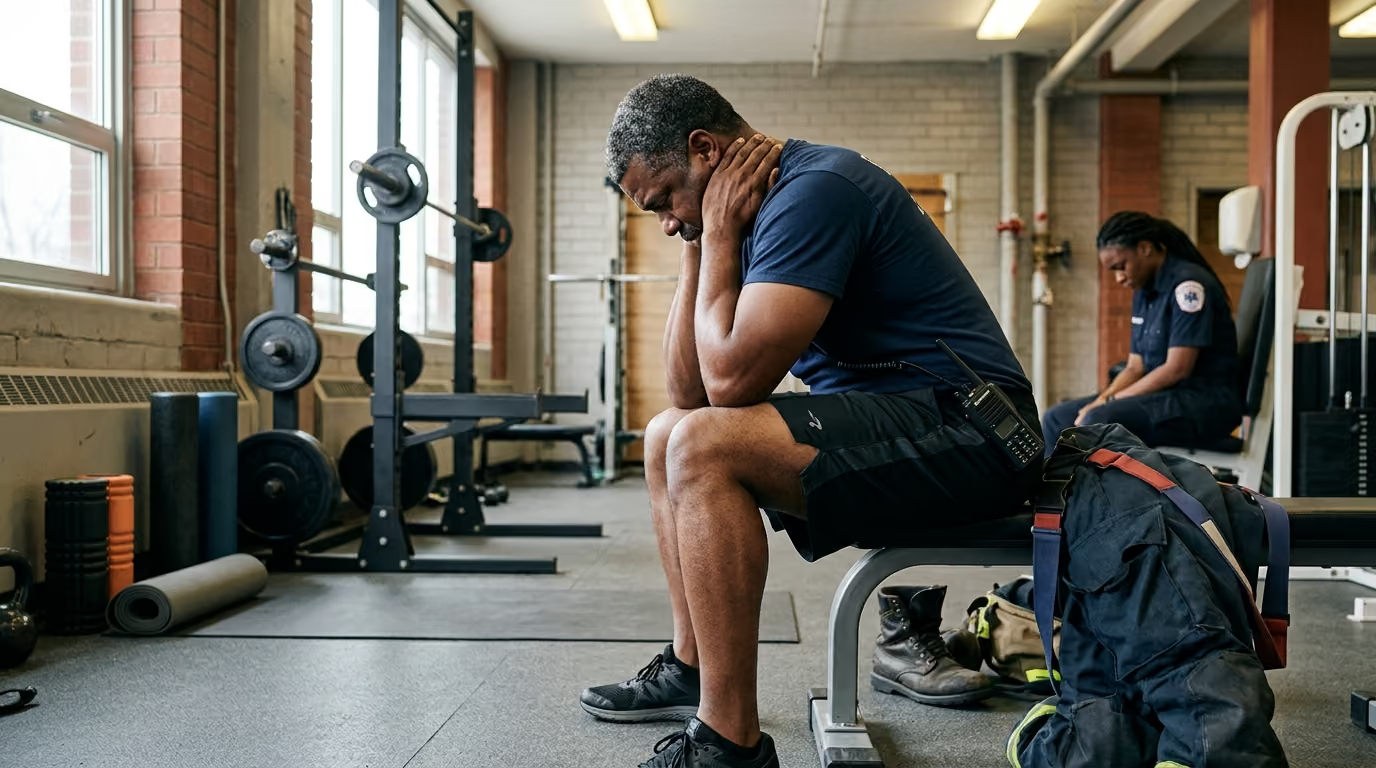

First responder pain is often blamed purely on biomechanics, but persistent stress and fatigue drive chronic muscle tension that alters movement and recovery.





If you are in immediate danger, call 911. For 24/7 support, call or text 988 and press 1 for the Veterans Crisis Line, or text 838255.
Physical recovery in emergency services is often treated as a simple equation of tissue repair and rest. In reality, occupational recovery is a dynamic physiological state influenced by psychological demand, autonomic arousal, sleep disruption, and physical load. It is not an issue of willpower or isolated muscle fatigue. Understanding how stress alters muscle tone, movement patterns, and pain processing allows responders to protect their long-term health while maintaining operational readiness.
First responder recovery depends on the constant interaction between the nervous system and the musculoskeletal system. High psychological stress triggers involuntary muscle bracing and alters biomechanics. When combined with irregular shifts and traumatic calls, this tension can turn acute physical strain into persistent pain. Effective recovery requires practical self-regulation, structured movement, protected sleep, and a clear distinction between daily performance habits and clinical medical care.
The human stress response is an evolutionary survival mechanism designed to prioritize immediate action over long-term tissue maintenance. When an emergency call triggers acute stress, the sympathetic nervous system activates rapidly. This response causes a sudden release of catecholamines, including adrenaline and noradrenaline, alongside a slower release of cortisol from the adrenal glands. These chemical messengers raise heart rate, increase blood pressure, dilate airways, and route blood flow toward major skeletal muscle groups.
Musculoskeletal bracing is a core component of this activation. The nervous system recruits motor units across the body to stiffen joints, preparing the body for impact, heavy lifting, or rapid locomotion. In acute emergency settings, this bracing is protective. It stabilizes the spine, protects vulnerable joints, and increases rate of force development.
Problems emerge when this bracing pattern fails to resolve after the incident ends. If the central nervous system remains in a high state of vigilance, motor units continue firing at a low level. This involuntary contraction reduces local microcirculation, restricts capillary blood flow, and slows the clearance of metabolic byproducts. Over time, persistent muscle tension leads to local tissue hypoxia, ischemic discomfort, and structural stiffness across common junctional zones such as the neck, upper trapezius, jaw, lumbar spine, and pelvic floor.
This persistent guarding directly alters movement quality. Under high arousal, motor control shifts from smooth, variable movement strategies to rigid, stereotyped movement patterns. Responders often lift, carry, and twist using excessive trunk stiffness and restricted hip mobility. Bracing changes spinal loading angles, increases shear forces during patient transfers or hose pulls, and elevates the physical cost of routine tasks.
Stress-induced movement alterations do not replace biomechanical injury models. Instead, they act as an internal load multiplier. A heavy patient transfer performed with rigid spinal mechanics, shallow apical breathing, and pre-existing muscle tension carries a far higher injury risk than the same lift performed in a regulated physiological state.
The scientific literature establishes a clear link between occupational stress, psychosocial strain, and musculoskeletal disorders across emergency services and industrial settings. Research demonstrates that physical load alone does not fully explain injury rates in high-demand occupations. Psychosocial work factors, including high psychological job demands, low job control, shift timing, and weak workplace support, contribute directly to musculoskeletal injury risk.
Longitudinal studies demonstrate that psychosocial work stressors exert small but statistically significant lagged effects on the onset of musculoskeletal problems. Systematic reviews of workplace research confirm that high workload, low autonomy, and organizational strain correlate with elevated rates of chronic low back pain and upper extremity disorders. When physiological stress markers remain elevated over weeks or months, systemic inflammatory pathways can be altered, impairing normal collagen synthesis and slowing tissue repair.
Occupational health data underline the sheer scale of musculoskeletal strain in emergency services. Sprains, strains, and soft-tissue tears consistently represent the single largest injury category for firefighters, emergency medical services personnel, and police officers.
In occupational analyses of emergency-department-treated injuries, police officers showed an injury rate of approximately 8.5 injuries per 100 full-time-equivalent workers. Career firefighters showed an injury rate of 7.4 per 100 full-time workers, while career EMS personnel experienced an injury rate of 8.6 per 100 full-time workers. Sprains and strains accounted for roughly 33 percent to 41 percent of all emergency responder injuries.
Among prehospital medical personnel, body-motion events represent the dominant injury mechanism. Approximately 90 percent of these body-motion injuries result directly from lifting, carrying, or transferring patients in awkward environments. Workers' compensation data indicate distinct regional patterns across responder roles. Police officers and firefighters report back and knee injuries far more frequently than shoulder injuries. In contrast, EMS clinicians present with back and shoulder injuries more frequently than knee injuries.
Musculoskeletal disorder prevalence among firefighters ranges widely from 9 percent to 74 percent depending on study design and reporting methods. Meta-analyses estimate overall musculoskeletal disorder prevalence among firefighters at approximately 46.4 percent. The lumbar spine, knees, shoulders, and cervical spine represent the most frequent anatomical sites of reported symptoms.
While the association between occupational stress and musculoskeletal disorders is robust, the scientific evidence on broad stress-management interventions remains mixed. Systematic reviews of stress-control programs across military, law enforcement, and first responder populations reveal clear positive effects on return to duty, absenteeism, and general distress. However, these programs show no statistically significant reduction in post-traumatic stress disorder, clinical depression, or generalized anxiety disorders.
Many published studies on first responder resilience, stress inoculation, and mindfulness programs suffer from small sample sizes, high risk of bias, and short follow-up periods. Stress-management strategies serve as valuable performance-support tools to aid physiological recovery and movement quality. They cannot be presented as guaranteed medical cures or preventative vaccines for trauma-related psychological conditions.
Physical recovery cannot occur in an autonomic vacuum. True tissue recovery requires adequate time in a parasympathetic-dominant state, during which heart rate slows, vascular tone normalizes, anabolic hormone production increases, and immune function handles cellular repair. Shift work, extended duty cycles, and unpredictable nighttime dispatches interrupt this restorative cascade.
Circadian misalignment alters normal endocrine rhythms. Cortisol production typically peaks shortly after waking and falls to its lowest level around midnight, allowing growth hormone secretion and deep slow-wave sleep to facilitate muscular repair. In first responders working rotating schedules or extended 24-hour shifts, this diurnal pattern is frequently disrupted. Nighttime alerts cause sudden spikes in sympathetic arousal, fragmenting sleep architecture and reducing the time spent in slow-wave and rapid-eye-movement sleep stages.
When sleep is chronically restricted or fragmented, the body accumulates a substantial physiological recovery debt. Sleep-deprived responders exhibit elevated baseline pro-inflammatory cytokines, including interleukin-6 and tumor necrosis factor-alpha. These circulating inflammatory markers impair collagen synthesis, degrade connective tissue integrity, and delay recovery from routine operational loads or physical training.
Sleep disruption also compromises neuromuscular coordination. Central nervous system fatigue reduces motor unit recruitment speed, degrades postural stability, and impairs reaction time during high-load operational tasks. A tired responder carrying equipment across an uneven roadway or navigating stairs with a stretcher demonstrates reduced proprioceptive acuity and compensatory motor strategies.
Establishing a shift specific sleep plan for first responders helps mitigate some of this circadian strain. However, individual sleep discipline cannot fully eliminate the biological tax of repeated night shifts. When operational tempo remains high, chronic recovery debt manifests as persistent musculoskeletal aches, systemic lethargy, autonomic dysregulation, and heightened pain sensitivity.
Pain is not a direct readout of tissue damage. It is an emergent, multidimensional experience generated by the central nervous system when it perceives a credible threat to the body. Biological inputs from damaged ligaments or strained muscles are weighed alongside psychological state, prior injury history, sleep status, emotional distress, and environmental context.
This biological reality requires a clear distinction between nociception and pain:
When a responder experiences an acute back strain during a call, protective bracing is an appropriate biological response. The danger occurs when this protective response hardens into persistent fear avoidance. If a responder believes that their spine is permanently damaged or fragile, they begin to anticipate pain during everyday tasks. This anticipation leads to kinesiophobia, altered gait patterns, and excessive co-contraction of abdominal and paraspinal muscles.
Fear-driven avoidance creates a self-reinforcing deconditioning loop. By avoiding basic spinal flexion, rotational loading, or progressive strength training, local muscular capacity declines. Connective tissues lose tolerance to rapid tensile loading, and neural movement maps become less precise. When the responder is eventually forced to lift a heavy patient under chaotic conditions, their deconditioned musculoskeletal system is less capable of handling the load.
Responders should not be told to ignore sharp symptoms or blindly push through acute structural pain. The evidence strongly supports graded movement exposure within tolerable, non-threatening limits. Safe, progressive movement restores tissue capacity, recalibrates the nervous system's threat threshold, and breaks the cycle of movement apprehension.
Managing stress-induced muscle tension requires practical, repeatable actions that fit unpredictable duty schedules. These performance-support strategies focus on autonomic regulation, motor preparation, and post-incident recovery routines. They bridge the gap between heavy operational demands and sustainable career longevity.
Effective shift preparation sets baseline physical capacity and establishes operational boundaries.
Maintaining physiological awareness during active dispatches prevents excessive, unhelpful physical bracing.
Applying an active post-incident transition strategy immediately after high-intensity calls helps clear residual autonomic tension before it hardens into persistent physical guarding.
A structured post-call routine initiates physiological down-regulation and accelerates muscular recovery.
Recovery days must focus on rebuilding physiological capacity rather than lapsing into total sedentary behavior.
Integrating structured low-fatigue physical training preserves tissue resilience while leaving sufficient systemic energy to handle emergency calls.
Navigating recovery in emergency services requires avoiding common cultural, physiological, and clinical misconceptions. Examining specific real-world case patterns illustrates how physical stress, psychological arousal, and occupational habits interact.
A 34-year-old paramedic notices severe tightness in their neck and upper trapezius following pediatric calls, severe motor vehicle collisions, and difficult airway scenarios. They report waking with a clenched jaw, tension headaches, and shallow breathing patterns after shifts. An orthopedic screening reveals full cervical range of motion and normal upper extremity reflexes, with no radicular nerve compression.
Key Principles:
A 42-year-old career firefighter experiences recurrent low back pain following structural fires, heavy equipment carries, and prolonged extrications. Flare-ups happen most frequently after multiple consecutive night shifts with broken sleep. Fearing permanent spinal degeneration, the firefighter stops squatting, deadlifting, and bending during daily life, relying instead on complete rest between shifts.
Key Principles:
A 29-year-old patrol officer is involved in a high-stress armed confrontation. Weeks after the incident, the officer experiences widespread muscular rigidity, an exaggerated startle response, insomnia, and profound irritability. The officer attempts to self-manage the condition by doubling their gym workouts and pushing through extreme lifting sessions to maintain control.
Key Principles:
An emergency medical technician working high-volume urban shifts develops a habit of consuming several alcoholic drinks after evening tours. The alcohol provides immediate muscle relaxation and dulls cognitive overactivation, making it easier to fall asleep initially. Within two months, the responder reports daytime fatigue, worsening back aches, broken sleep, and increasing morning stiffness.
Key Principles:
A veteran firefighter develops sharp shoulder pain during an overhaul operation but conceals the injury from crew members to avoid being seen as incapable. The firefighter takes high doses of over-the-counter anti-inflammatory drugs and continues working heavy shifts. Three months later, an uncoordinated patient lift results in a complete rotator cuff tear requiring surgical repair and extended duty modification.
Key Principles:
Learning to apply a practical stress skill between calls provides immediate physical down-regulation without interrupting operational duty.
Maintaining career capability requires understanding where self-management ends and professional care begins. Self-directed performance support improves everyday movement, eases baseline tension, and builds general resilience. It is not an appropriate substitute for licensed medical care, physical therapy, or trauma-focused psychotherapy when pathology is present.
First responders, peer support teams, and operational leaders must recognize when an issue requires specialized clinical evaluation.
Do not attempt to manage the following symptoms with mobility drills, foam rolling, or relaxation techniques. Seek immediate medical evaluation:
When stress-related symptoms impair basic operational safety, personal relationships, or cognitive clarity, a licensed mental health professional should be consulted:
Accessing specialized injury prevention and physical recovery resources ensures personnel receive evidence-informed guidance throughout their active careers.
Rotating and overnight shifts disrupt your natural circadian rhythm, which alters normal cortisol regulation and blunts overnight growth hormone release. This disruption increases circulating inflammatory markers, slows down soft tissue repair, and lowers central pain thresholds. The resulting central fatigue degrades motor coordination, making muscles brace more easily to compensate for reduced stability. Managing nighttime light exposure, maintaining consistent off-duty sleep schedules, and prioritizing post-shift hydration can help mitigate these physiological effects.
High physical fitness provides a substantial cardiovascular and structural buffer, but it does not make the autonomic nervous system immune to stress. A fit responder exposed to high psychological threat, continuous dispatch volume, or severe sleep restriction will still experience sympathetic arousal and involuntary muscle guarding. Relying solely on high-intensity training while ignoring recovery, sleep debt, and stress regulation often leads to overtraining, connective tissue breakdown, and unexpected injuries.
Physical strain refers to mechanical loading and structural fatigue placed directly on muscles, tendons, ligaments, and joints during physical tasks. Moral injury is a profound psychological and emotional wound that occurs when a responder witnesses, fails to prevent, or participates in events that violate their deeply held ethical values. While moral injury originates psychologically, it produces severe chronic autonomic stress that frequently manifests physically as persistent muscle tension, sleep disruption, and increased pain sensitivity.
As emergency service personnel age, connective tissue collagen becomes less pliable, baseline microcirculation decreases, and natural recovery timelines lengthen following intense physical exertion. Older responders benefit from shifting focus toward structured warm-ups, multi-planar mobility work, joint stability training, and dedicated active recovery sessions. Emphasizing early injury reporting, prioritizing consistent sleep, and replacing maximal lifting efforts with submaximal strength and power training helps preserve long-term capability.
Physical recovery in emergency services is an active physiological process shaped by the complex interplay between mechanical workload, nervous system arousal, sleep quality, and organizational stress. Building sustainable, career-long capability requires treating autonomic regulation, smart load management, and restorative sleep as foundational physical requirements rather than optional personal preferences.
Stay connected for research-led guidance on duty fitness, shift-work sleep, injury recovery, stress, nutrition and career longevity. Practical ideas for first responders who want to stay capable on the job, recover well and protect their health for the long run.



Read practical guidance on first responder fitness, recovery, sleep, nutrition and resilience for demanding work and a long, active career.
read the blog



