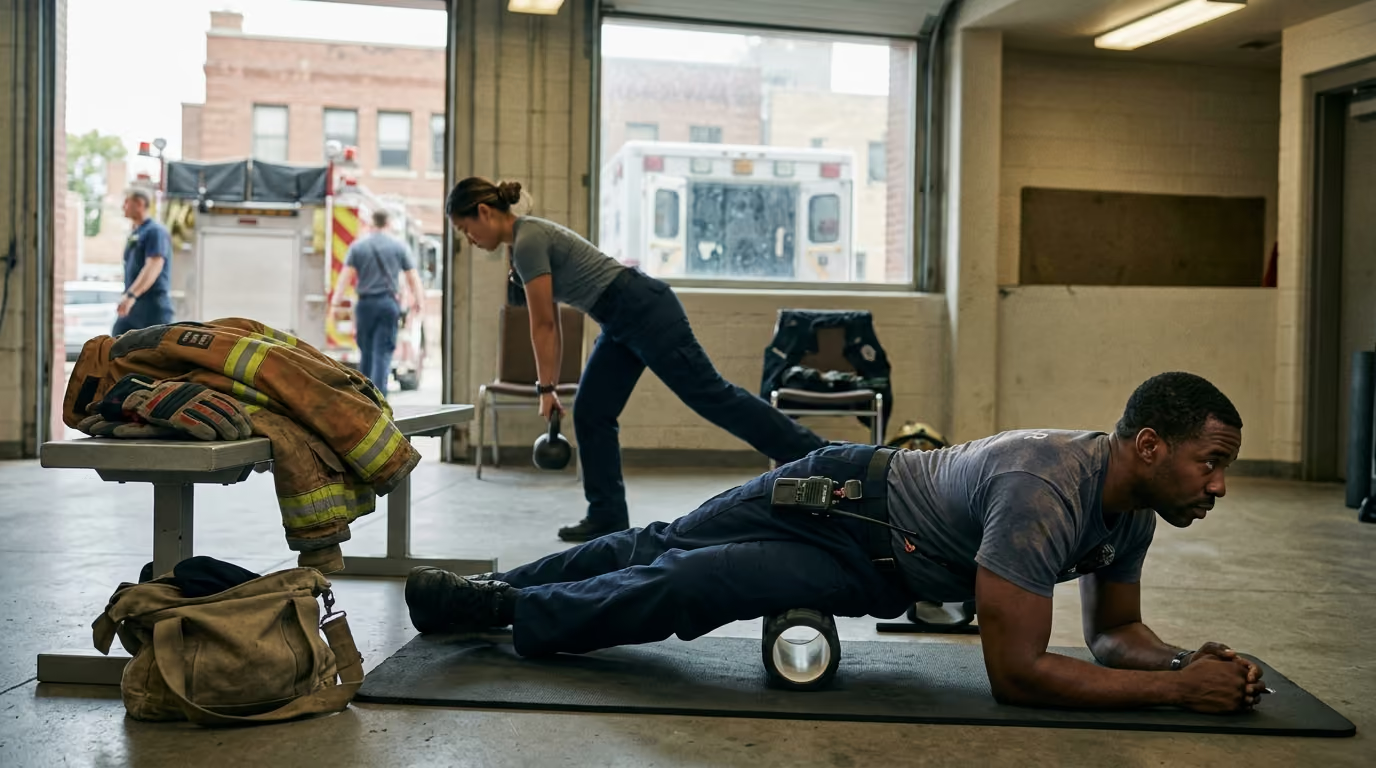

Operational physical workload in public safety can be measured and mitigated through structured task assessments, physiological monitoring, and targeted ergonomic equipment upgrades.





Operational physical workload in emergency services is not just exercise intensity or caloric burn. It is the cumulative physiological, mechanical, environmental, and cognitive stress placed on a responder across a shift, an incident, or a career. Managing this demand requires understanding how gear weight, awkward postures, thermal stress, sleep deficits, and sudden maximal efforts combine to degrade performance and increase injury risk.
Managing physical workload effectively requires moving beyond individual fitness. Responders and agencies must balance task design, equipment ergonomics, work-rest cycles, and task-specific conditioning. When departments treat physical demand as an operational risk to manage rather than an individual burden to endure, they protect crew capability and long-term health.
The following guide details the mechanisms of cumulative strain across fire, EMS, law enforcement, and rescue operations. It provides a practical framework to evaluate, monitor, and mitigate operational stress in the field.
Physical workload in emergency response differs fundamentally from athletic training. In sports, volume and intensity are planned, movements are predictable, and recovery periods are scheduled. In emergency operations, physical stress is unpredictable, asymmetric, and frequently compounded by sleep disruption and environmental extremes.
A practical model expresses total operational workload as the interaction of five distinct elements:
Total Workload = External Load + Internal Physiological Response + Task Complexity + Environmental Stress + Recovery Deficit
External workload represents the physical work performed. This includes the weight of body armor or turnout gear, the distance tools are carried, the flights of stairs climbed, and the mass of a patient moved. It also includes mechanical repetitions, such as chest compressions or sledgehammer strikes.
Internal workload reflects how hard the responder's body works to meet that external demand. Heart rate, oxygen consumption, core body temperature, sweat rate, and perceived exertion define this response. Two responders lifting the same patient can experience drastically different internal workloads based on hydration, fatigue, and baseline conditioning.
Acute workload refers to the physical demand of a single task or call. Chronic workload represents the accumulation of physical stress over days, weeks, and consecutive shifts. When acute spikes occur on top of unresolved chronic fatigue, the responder experiences a load-capacity mismatch. This mismatch is the primary operational driver of acute musculoskeletal failure and chronic overuse injuries.
Occupational health data shows that overexertion and musculoskeletal strain are leading causes of lost-time injuries across public safety sectors. The evidence indicates that these injuries stem from cumulative mechanical fatigue, poor leverage, and thermal stress rather than isolated lack of strength.
Data from the United States Fire Administration (USFA) reveals that overexertion or strain consistently causes roughly 29 percent of reported fire-related firefighter injuries. In these reports, sprains and strains account for 23 percent of all injury types. Long-term surveillance data from 2005 through 2017 shows that overexertion injuries rose from 24.1 percent to 29.0 percent over that twelve-year span.
Research from the National Fire Protection Association (NFPA) reinforces these findings. During fireground operations, strains, sprains, and muscular pain account for 43 percent of all recorded injuries. Overexertion or strain causes 27 percent of fireground injuries, while falls, jumps, slips, or trips cause 22 percent. These two categories combined represent nearly half of all fireground trauma.
Emergency medical services experience similar occupational burdens. Published literature reviews demonstrate that the annual prevalence of back pain among EMTs and paramedics ranges between 30 percent and 66 percent. Back injuries and contusions account for 4 percent to 43 percent of reported EMS trauma. Systematic reviews of paramedic tasks identify stretcher handling, heavy equipment transport, and patient extraction as the most physically taxing aspects of the job.
Research also shows that personal protective equipment (PPE) creates a substantial physiological penalty. Encapsulating gear and respiratory protection restrict heat dissipation, elevate heart rate, and increase oxygen consumption for any given task. Structural turnout gear systems can weigh up to 26 kilograms while providing heavy thermal insulation. In thermal stress evaluations of wildland firefighters, mean heart rates reached 94 percent to 97 percent of individual maximums during continuous uphill work under heat load.
Law enforcement research highlights the chronic mechanical stress of carried equipment. Systematic reviews examining patrolling personnel confirm a direct association between mandatory load carriage and multisite musculoskeletal pain. The duty belt is consistently identified as the primary contributor to chronic hip and low back dysfunction.
Each emergency response branch presents a unique physical stress profile. Applying a single generic workload model across all disciplines fails to capture the distinct mechanical and physiological hazards of each operating environment.
Firefighting combines high-intensity metabolic output with extreme thermal stress and heavy external loads. Advancing a charged 1.75-inch hose line, performing vertical ventilation, or conducting primary search requires sustained muscular power in awkward, low-visibility conditions.
The primary physiological challenge on the fireground is heat retention. Structural firefighting gear traps metabolic heat, preventing evaporative cooling through sweat. As core temperature climbs, cardiovascular drift occurs, driving heart rates toward maximum even during moderate physical tasks. Firefighters must manage high-force movements like forcible entry while their grip, balance, and fine motor control degrade from acute thermal strain.
Paramedic and EMT workloads are characterized by repeated, unpredictable manual material handling. Unlike industrial settings with uniform boxes and mechanical cranes, EMS personnel lift human bodies of varying sizes from tight, awkward locations.
EMS providers frequently lift patients from bathroom floors, behind beds, or inside damaged vehicles. These lifts combine spinal flexion, lateral bending, and rotation under heavy loads. Operating manual stretchers, carrying heavy response bags, and performing prolonged chest compressions create high cumulative shear and compressive forces on the lumbar spine. This mechanical exposure occurs multiple times per shift, often without adequate physical preparation or recovery between calls.
Law enforcement officers experience an operational profile defined by prolonged low-movement periods punctuated by sudden, violent physical exertion. An officer may spend six hours seated inside a patrol vehicle before sprinting across uneven terrain, vaulting a fence, or engaging in ground control.
The duty belt places an asymmetrical load directly on the iliac crests and lumbar spine. This load alters pelvic tilt and gait mechanics, especially during prolonged sitting in vehicle seats designed without body armor accommodation. When sudden high-intensity physical conflict occurs, the officer must generate explosive power from cold, stiff muscles, substantially increasing the risk of acute hamstring, groin, and spinal injuries.
Rescue specialists face complex physical demands involving rope systems, heavy hydraulic extrication tools, and confined space access. Rescue workload is rarely about maximum speed. It is driven by prolonged isometric muscle contractions, sustained awkward postures, and high grip demands.
Operating a 20-kilogram hydraulic spreader while leaning into a vehicle structure requires sustained trunk and shoulder endurance. Technical rope rescue requires hauling, ascending, and patient packaging on vertical faces or unstable slopes. In these environments, physical fatigue directly compromises cognitive precision, knot security, and situational awareness.
Managing operational demand requires a structured assessment process. Agencies and individual responders can evaluate their daily physical exposure by following a four-step workload framework.
Do not classify an entire shift or incident as simply hard or easy. Break down operational responses into discrete, measurable task units.
Key operational task units include:
Document the duration, frequency, estimated external load, and environmental conditions for each task unit. Note whether the task required awkward postures, sustained grip, or rapid power generation.
Identify the primary physiological demand of the work performed. Operational tasks generally fall into one or more distinct stress categories:
Classifying the dominant stressor ensures that recovery and training target the specific physiological system that was exhausted. Responders can integrate autoregulation training systems for first responders to adjust their workouts based on which specific stressors dominated their recent operational shifts.
Capture both what the responder did and how their body handled the stress. External workload can be measured using objective operational counts:
Internal workload can be tracked using simple, validated field metrics. The Session Rating of Perceived Exertion (RPE) offers a practical method to quantify incident strain without complex laboratory equipment.
Responders rate the overall difficulty of an incident or shift on a scale from 1 to 10. Multiplying this rating by the incident duration in minutes yields an incident load score in arbitrary units:
Incident Load Score = Duration in Minutes × Session RPE
A 30-minute high-intensity structural fire attack rated at an RPE of 8 produces a load score of 240 units. A 90-minute technical rescue call rated at an RPE of 4 produces a load score of 360 units. While these numbers do not represent clinical values, tracking them across shifts highlights dangerous spikes in cumulative exposure.
Track physical workload across multiple time frames to identify chronic fatigue accumulation. Evaluate exposure across four primary windows:
Monitoring these rolling windows allows responders and supervisors to recognize when high operational demands are placed on an under-recovered individual. If a crew completed multiple high-load calls overnight, scheduling heavy structural drills the following morning substantially increases injury vulnerability.
Physical capacity cannot overcome poor equipment design. When gear is poorly configured, unbalanced, or unnecessarily heavy, it imposes a constant biomechanical tax on the body. Applying ergonomic principles to operational equipment reduces this tax before the responder ever exerts force.
Agencies should apply a clear hierarchy of equipment management controls:
Research confirms that mechanical handling devices significantly reduce spinal loading among EMS personnel. Powered stretchers and powered loading systems eliminate the repetitive manual lifting of patients into ambulances. Transfer slides, descent-control stair chairs, and lifting slings allow clinicians to move patients with better spinal alignment and lower peak muscle activation.
Departments should establish standard operating procedures that mandate the use of transfer equipment on every call, not just for bariatric patients. Relying on manual lifting because it seems faster exposes crews to high spinal shear forces that accumulate into chronic disc pathology.
For law enforcement officers, managing equipment load requires addressing the entire duty system. Agencies should consider authorizing load-bearing external vests where operationally appropriate. Moving heavy items like radios, handcuffs, and magazines from the duty belt to an external vest redistributes weight to the shoulders and upper torso. This offloads the iliac crests and reduces nerve compression around the hips.
Vehicle ergonomics must also be addressed. Patrol car seating should allow adequate space for body armor and duty gear without forcing the lumbar spine into excessive flexion or lateral rotation. Officers should be trained to adjust their seat height, lumbar support, and steering wheel distance to maintain an upright pelvic position during driving.
Emergency operations regularly require working outside neutral joint alignments. Crawling through an attic, extricating a patient from an overturned vehicle, or working in a tight stairwell forces responders into flexed, rotated, and laterally bent positions.
The risk of injury escalates dramatically when awkward posture is combined with high force, sustained duration, high repetition, and baseline fatigue:
Injury Risk = Postural Deviation × Applied Force × Exposure Duration × Cumulative Fatigue
Responders cannot eliminate awkward postures entirely, but they can minimize the time spent in compromised positions using specific tactical habits:
Small operational adjustments preserve biomechanical integrity. Choosing to spend thirty seconds clearing a hallway before moving a heavy patient prevents the awkward twisting lifts that drive career-ending spinal injuries.
General fitness routines focused purely on commercial gym movements often fail to build the specific physical capacities required for emergency operations. Responders need structured conditioning that develops trunk endurance, multi-planar strength, grip capacity, and work tolerance under operational constraints.
Agencies and responders can structure their physical preparation around minimum effective dose physical preparation to build robust capability without generating excessive training fatigue on top of shift work.
Fireground physical conditioning should emphasize work capacity, lower body power, and core endurance:
Paramedic and EMT training should target spinal resilience, asymmetric lifting strength, and rotational control:
Patrol officer conditioning must address sudden explosive demands and the physical toll of load carriage:
Rescue specialists require exceptional isometric endurance, grip durability, and balance:
Responders seeking structured physical programming can review evidence-based injury prevention and physical recovery strategies to align their physical training with their operational shift schedules.
Physical conditioning improves an individual's work capacity, but it does not make them immune to physiological failure. Believing that a high level of fitness eliminates operational risk is a dangerous misconception.
Physical strength cannot compensate for poor leverage, excessive patient weight, or extreme environmental heat. A responder with a double-bodyweight deadlift can still suffer a severe disc herniation if forced to lift an unstable patient while twisting in a confined space. Conditioning expands a responder's operational safety margin, but it does not remove the physical laws of biomechanics.
Furthermore, highly conditioned responders often push past early warning signs of thermal and cardiovascular strain. Because their aerobic capacity allows them to sustain high work rates, they can accumulate dangerous levels of core heat before experiencing voluntary exhaustion.
Rehabilitation protocols frequently rely on rapid cooling devices, including misting fans, cooling vests, and forearm immersion. While these tools assist recovery, they do not provide immediate physiological resets.
Scientific evaluations demonstrate that passive gear removal and cooling vests do not instantly reverse profound internal thermal strain. Under continuous heavy operational heat, heart rates can remain elevated near maximum even when cooling garments are applied. Rehabilitation requires adequate time for internal metabolic heat to dissipate, cellular hydration to restore, and cardiovascular strain to normalize.
Responders must also implement psychological and autonomic recovery tools during shift work. Utilizing structured reset protocols between high-intensity calls helps down-regulate sympathetic nervous system activation, reducing baseline muscle tension and resting heart rate before the next operational response.
Responders and incident commanders must recognize critical physical red flags that mandate immediate work stoppage and medical evaluation:
When any of these symptoms appear, the responder must be removed from duty immediately. Continuing to operate under these conditions risks catastrophic medical events and endangers the entire crew.
Minor muscular soreness is a normal consequence of emergency work, but persistent pain is a signal of unmanaged physical strain. Responders should seek professional clinical assessment before minor overuse transforms into debilitating chronic injury.
Consider clinical evaluation from a licensed physical therapist, occupational medicine physician, or orthopedic specialist when experiencing:
Early intervention through physical therapy, joint mobilization, and task-specific movement retraining resolves mechanical dysfunctions quickly. Ignoring persistent pain leads to compensatory movement patterns that overload adjacent joints and accelerate career-ending tissue breakdown.
Prolonged sitting in a vehicle causes hip flexor tightness, gluteal deactivation, and spinal stiffness. When responding to high-priority calls, use transit time to perform brief isometric activations: brace the abdominal wall, squeeze the glutes, and perform ankle circles. Upon arrival, take five seconds to perform two deep bodyweight squats or a quick hip hinge before grabbing heavy gear or initiating a sprint.
Back-to-back calls create cumulative fatigue through repetitive submaximal loading. Track the total volume of patient transfers and equipment carries rather than just call duration. Rotate physical tasks between crew members on every call: have one provider manage the stretcher while the other carries the medical bags, then switch on the next response. Utilize mechanical slide sheets and powered equipment on every patient movement, regardless of perceived patient size.
Encapsulating gear traps heat, driving dramatic increases in sweat rate to support evaporative cooling. In hot or humid environments, responders can lose more than 1.5 liters of sweat per hour of heavy work. When operations exceed 60 minutes of heavy exertion, plain water is insufficient. Responders must consume balanced electrolyte solutions containing sodium and carbohydrates to maintain plasma volume, prevent cramping, and support cellular function.
First, audit the duty belt and eliminate any equipment not strictly required by agency policy. Second, explore whether departmental regulations permit load-bearing external vest carriers to move weight from the waist to the upper torso. Third, position heavier items like handcuffs and radios as close to the sides of the body as possible, avoiding placing hard gear directly over the spine or sacrum where it presses into the lower back while seated.
Managing operational physical workload requires moving past the outdated belief that individual toughness can overcome poorly managed mechanical, thermal, and cumulative physical stress. By integrating ergonomic equipment, structured task rotation, objective exposure tracking, and task-specific physical conditioning, emergency service professionals can protect their operational readiness and secure lasting career longevity in emergency services.
Stay connected for research-led guidance on duty fitness, shift-work sleep, injury recovery, stress, nutrition and career longevity. Practical ideas for first responders who want to stay capable on the job, recover well and protect their health for the long run.



Read practical guidance on first responder fitness, recovery, sleep, nutrition and resilience for demanding work and a long, active career.
read the blog



