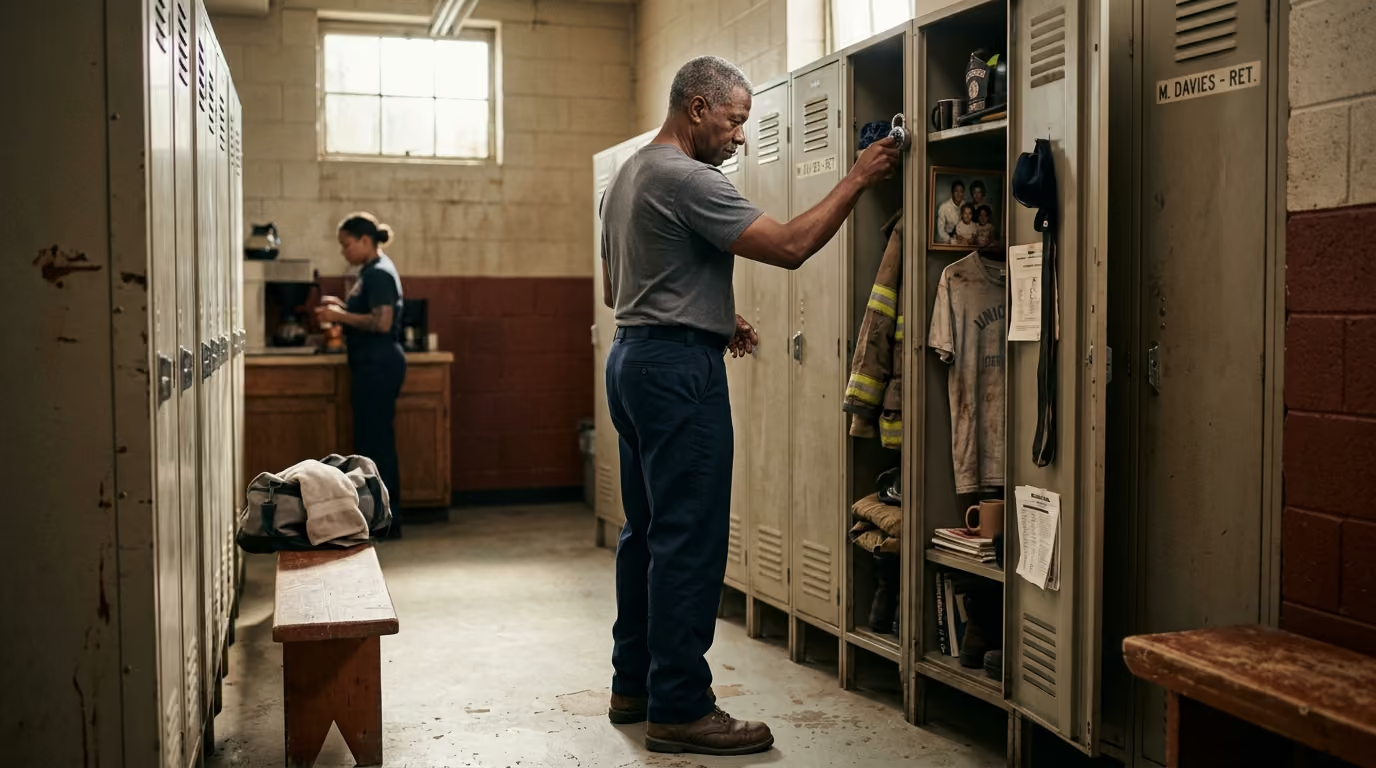

Retirement planning for first responders combines multi-bucket pension strategies with long-term health documentation and proactive identity rebuilding for a secure post-service life.





If you are in immediate danger, call 911. For 24/7 support, call or text 988 and press 1 for the Veterans Crisis Line, or text 838255.
Retirement from emergency service is not a single calendar date, a final shift debrief, or a pension paperwork milestone. It is an extended physical, psychological, and operational transition that permanently alters your daily environment. Treating retirement merely as an administrative departure creates severe blind spots across health, relationships, and identity.
A successful transition requires deliberate preparation across multiple domains years before your final tour of duty. True retirement readiness balances financial security, physical capacity, identity flexibility, relationship systems, daily structure, and long-term purpose.
If you or someone you know is experiencing acute distress, thoughts of self-harm, or a mental health crisis, support is available immediately. Call 911 for immediate emergency response. Dial 988 and press 1 to reach the Veterans and Military Crisis Line, or text 838255 for confidential support. Safe storage of household items and means should always be coordinated alongside a supportive family member, peer, or licensed clinician.
Research on public safety personnel demonstrates that leaving emergency service involves unique occupational challenges. Occupational health data reveals that retirement readiness among emergency responders is distinct from the general population. The evidence base includes strong epidemiological data on physical injury, mixed findings on post-service volunteer interventions, and consistent observational studies on occupational identity loss.
Studies from occupational health bodies, including the Centers for Disease Control and Prevention (CDC) and the National Institute for Occupational Safety and Health (NIOSH), show significant physical wear across emergency careers. Sprains and strains represent roughly 33% to 41% of all non-fatal injuries among police officers, firefighters, and paramedics in surveillance data. Furthermore, workplace injuries among older first responders are substantially more likely to produce permanent functional disability than identical injuries in younger personnel.
The psychological literature identifies a clear phenomenon known as role residual. Role residual occurs when an individual continues to define their personal identity, social status, and behavioral habits around a former career long after separation. Observational reviews show that a lack of transition planning frequently correlates with post-service isolation, substance misuse, depressive symptoms, and abrupt loss of purpose.
Intervention studies indicate that general civilian retirement advice often fails when applied to public safety retirees. Emergency personnel experience distinct operational cultures, specialized shift work, cumulative stress exposure, and closely knit peer groups. When these elements disappear overnight, the sudden vacuum destabilizes individuals who prepared solely for their financial pension.
The day-to-day realities of first responder duty deeply condition the human nervous system. Decades of working rotating 12-hour or 24-hour shifts, responding to tones, and managing unpredictable scenes establish strong physiological baselines. Shift work disrupts circadian rhythms and creates long-term sleep debt.
Data examining public safety schedules indicates that poor sleep quality affects roughly 64% of emergency medical services personnel and 51% of law enforcement officers. Insomnia symptoms affect nearly a quarter of career firefighters. Over decades, this constant hypervigilance and sleep fragmentation alters cardiovascular and metabolic profiles.
When you retire, the external demands that regulated your schedule vanish. The abrupt disappearance of high-stakes problem solving, physical exertion, and team accountability can trigger profound disorientation. The central nervous system, accustomed to operating in an elevated state of readiness, suddenly receives no operational inputs.
Understanding these physiological adaptations helps normalize the disorientation that many new retirees experience. Your body and mind have adapted to an emergency environment over twenty or thirty years. Decompressing from that operational state requires a systematic, phased off-ramp rather than an abrupt halt.
A comprehensive retirement process moves through three distinct phases: preparation, separation, and reconstruction. Rushing these phases increases the risk of financial mistakes, relationship friction, and post-service depression.
Building a multi-year timeline allows you to test lifestyle assumptions while you still have the security of active employment. You can read more about planning sustainable transitions within our career longevity resources.
Financial readiness requires replacing optimistic assumptions with verifiable, documented cash-flow models. Defined-benefit pensions remain the primary retirement vehicle for state and local public safety personnel. However, pension formulas, survivor options, cost-of-living adjustments, and healthcare subsidies differ dramatically across jurisdictions.
Public sector workers frequently face unique Social Security rules depending on whether their agency participated in Section 218 agreements. Some public safety members do not pay into Social Security during their operational careers. If you earned Social Security credits in the private sector, specific federal provisions may modify your final benefit.
To create genuine financial stability, organize your projected post-service resources into a four-bucket income framework:
This includes your core defined-benefit pension, verified Social Security payments, and fixed annuities. This income should ideally cover all non-negotiable living expenses, including housing, core utilities, baseline nutrition, and essential insurance premiums.
This bucket holds your defined-contribution accounts, including deferred compensation 457(b) plans, 401(k) balances, IRAs, and standard brokerage holdings. These funds provide flexible capital for discretionary lifestyle spending, travel, capital purchases, and inflation management.
Income generated through part-time employment, adjunct instruction, private consulting, or independent business activities. This cash flow provides financial margin during early retirement years and reduces withdrawal pressure on your invested portfolio assets.
Liquid cash equivalents, emergency savings accounts, and accessible lines of credit reserved strictly for major unforeseen shocks. These funds protect against major home repairs, acute medical out-of-pocket expenses, or sudden economic downturns.
You should stress-test your financial model against three distinct spending levels:
Decades of operational emergency response place an extraordinary burden on your musculoskeletal, cardiovascular, and metabolic systems. Leaving the department does not automatically erase the physiological consequences of chronic sleep disruption, heavy gear loading, and toxic atmospheric exposures. A proactive health strategy focuses on thorough documentation, preventive screening, and targeted physical restoration.
Musculoskeletal degeneration represents a primary threat to long-term quality of life. High rates of back, neck, shoulder, and knee dysfunction accumulate across years of lifting stretchers, wearing heavy duty belts, and carrying structural gear. Proactive physical therapy and structured strength training should replace intense, high-impact tactical workouts as you prepare for departure.
Sleep recovery is another foundational health priority. The circadian strain caused by shift work alters endocrine function and elevates systemic inflammation. Developing a structured sleep protocol is essential for restoring long-term metabolic health. Explore our guide on building a shift-specific sleep plan to reset your natural rhythms.
Cardiovascular disease and occupational cancer require systematic monitoring. First responders face elevated risks for specific malignancies due to repeated exposures to synthetic combustion byproducts, diesel exhaust, and chemical foams. Participating in national tracking registries, such as the National Firefighter Registry for Cancer, supports broader health research while encouraging personal vigilance.
Occupational identity is the central psychological pillar of the emergency services profession. Responders do not simply perform a job; they inhabit a social role defined by bravery, public trust, distinct authority, and mutual reliance. When you surrender your badge, radio, or gear, that operational identity instantly fractures.
Navigating this transition requires moving through the identity reconstruction sequence. You must consciously separate your intrinsic character traits from the specific uniform you wore. The goal is identity integration, where your career becomes a proud chapter of your life rather than your entire identity.
The capabilities you forged during emergency operations possess immense value outside the public safety sector. Translating these skills into civilian language opens pathways to meaningful second careers, consulting roles, or community leadership.
Purpose after service extends far beyond paid employment. Research on social connection indicates that structured, recurring commitments provide stronger mental health protection than occasional, passive leisure.
Engaging in meaningful volunteer work or skills-based mentoring can reduce perceived loneliness and restore a sense of contribution. However, poorly chosen volunteer commitments that reproduce toxic operational stress or exposure to trauma can impede your emotional decompression. Select roles that align with your core values while protecting your mental and physical recovery.
Retirement fundamentally reorganizes the home environment. First responders often look forward to retirement as a time of uninterrupted family connection. However, partners and children often experience this sudden shift as a major disruption to established household rhythms.
For decades, the household adapted to your irregular shift patterns, mandatory overtime, and operational absences. When you return home permanently, the daily division of labor, personal privacy, and domestic space must be renegotiated. Unspoken expectations regarding chores, spending, and daily presence can quickly generate marital friction.
Establishing a clear, written Retirement Operating Agreement prevents avoidable household conflict. This framework helps couples align their expectations before tensions develop.
Relying solely on your spouse or former station peers for all social connection creates a fragile support system. Successful retirees actively construct a multi-layered social network that provides distinct avenues for camaraderie, intellectual growth, and recreation.
Maintaining diverse social connections prevents the isolation that frequently occurs when former shift partners remain focused on active department business. You can read more about balancing life demands and restorative practices within our career longevity and life after service resources.
The emergency services provide an intense, externally imposed daily structure. Shift rotations, emergency dispatches, training drills, vehicle checks, and station meals dictate your schedule for decades. When you retire, that entire structural scaffolding disappears overnight.
Without deliberate planning, total freedom can quickly deteriorate into lethargy, irregular sleep, social withdrawal, and aimlessness. To avoid this trap, build a balanced weekly structure before your final shift.
The objective is not to build a rigid paramilitary schedule in your own home. The goal is to establish a predictable, healthy daily rhythm that provides momentum, keeps you physically active, and gives each day clear meaning.
To maintain steady physical and metabolic energy across your week, review our foundational guide on eating for circadian rhythm alignment.
The transition out of public safety is rarely linear, and several edge cases require specialized planning and protective boundaries. Recognizing these scenarios early prevents financial instability, health crises, and acute psychological distress.
Leaving emergency service due to a disabling physical injury or acute psychological trauma is fundamentally different from a planned service milestone. Medical retirement often involves feelings of unresolved grief, anger toward the agency, and sudden loss of autonomy. Individuals medically retired must navigate complex workers' compensation systems, functional rehabilitation, and vocational retraining simultaneously.
If you are facing an involuntary medical separation, prioritize complete medical documentation, secure competent legal counsel, and establish mental health care immediately. Do not attempt to manage the administrative and emotional burden alone.
Separating from public safety mid-career requires careful evaluation of deferred pension options, contribution refunds, and healthcare bridges. Cashing out retirement contributions early can trigger substantial tax penalties and permanently destroy long-term compounding growth. Always consult an independent fiduciary financial advisor before transferring or withdrawing public pension balances.
Single retirees lack built-in household support systems and face elevated risks of social isolation following separation from the department. They should deliberately establish formal healthcare proxies, legal power of attorney designations, and recurring community commitments.
Similarly, personnel retiring to rural or remote areas may face limited access to specialized medical clinics, physical therapists, and peer support networks. Establishing reliable telehealth connections and maintaining active regional peer ties is critical for those living outside major metropolitan areas.
Retirement removes the operational distractions that often keep unresolved trauma, chronic pain, depression, and substance misuse suppressed during active service. When the fast-paced calls stop, latent psychological and physical symptoms frequently surface. Seeking professional support is not a sign of failure; it is an essential part of career maintenance and post-service recovery.
Selecting a culturally competent clinician is critical for effective psychological care. A competent provider understands the operational realities of command structures, gallows humor, cumulative exposure to tragedy, and the reluctance of first responders to show vulnerability.
If everyday stressors feel overwhelming during your transition, integrating tactical stress management techniques can help calm your nervous system. Learn practical self-regulation exercises in our guide on the 90-second stress reset.
Examining structured examples helps demonstrate the difference between fragmented preparation and comprehensive transition planning. The following models illustrate common trajectories.
An illustrative scenario involves a veteran fire captain who retired immediately upon reaching maximum pension eligibility. He eliminated his consumer debt, secured a stable defined-benefit payout, and planned to spend his time on unstructured leisure.
Within six months, the absence of station camaraderie, shift routines, and physical demands resulted in severe disruption. His sleep schedule collapsed, alcohol consumption increased, and his spouse experienced substantial distress over the loss of household boundaries.
Key Takeaway: Financial capacity alone does not create a sustainable retirement. Without planned daily structure, proactive health habits, and external social connections, financial stability cannot prevent post-service isolation.
A contrasting example involves an operational paramedic supervisor who implemented a four-year retirement roadmap. She systematically documented past lifting injuries, obtained treatment for chronic shoulder dysfunction, and consulted an independent financial planner.
Two years prior to departure, she began teaching emergency medical response courses at a local community college two days per week. She established a consistent strength training routine, joined an outdoor cycling club completely unrelated to public safety, and drafted a clear weekly schedule with her partner.
Key Takeaway: Layering meaningful part-time contribution, diverse friendships, and structured physical care creates a smooth transition that protects long-term capability and purpose.
Use this objective self-assessment to identify strengths and vulnerabilities in your transition plan. Rate each metric honestly from 0 to 3.
Interpreting Your Score: A low score in any domain is not a personal failure. It provides a clear, actionable roadmap of exactly where your preparation efforts must focus over the coming months.
Medical retirement occurs when an active duty injury or occupational illness permanently prevents you from fulfilling operational duties. Unlike standard planned retirement, medical retirement is frequently unexpected and involves significant administrative, legal, and emotional complexity.
The process requires exhaustive medical documentation, formal disability board reviews, and complex workers' compensation coordination. Medically retired personnel often experience a sharper sense of identity loss and grief, making early mental health and vocational support essential.
Bridge employment can provide valuable income, daily structure, and social engagement during early retirement. However, taking a secondary public safety job can sometimes delay necessary psychological decompression if it reproduces the same hypervigilance, night shifts, and administrative stress as your primary career.
Evaluate potential bridge work carefully: choose roles that leverage your expertise, such as teaching or consulting, while protecting your sleep, recovery, and family boundaries.
First responders retiring outside metropolitan areas often face shortages of specialized clinicians and peer support groups. Rural retirees should actively establish relationships with licensed telehealth providers who possess specific experience treating emergency service personnel.
Additionally, staying involved in regional or state retiree associations can help maintain peer connection without requiring proximity to your former department.
Emergency dispatchers, crime scene technicians, and corrections personnel experience severe cumulative trauma, rotating shifts, and high operational stress without the physical outlets or public recognition often afforded to field responders. When these professionals retire, their psychological needs are frequently overlooked.
Non-uniform personnel must apply the same rigorous transition framework: systematically documenting occupational stress, establishing healthy physical and sleep routines, and rebuilding social identities outside the communications center.
Retirement from emergency service is not the end of your capability; it is the deliberate redirection of your hard-earned discipline, leadership, and experience into a sustainable post-service life. By systematically preparing your health, finances, relationships, and identity years before your final shift, you protect your long-term longevity and build a purposeful civilian future.
Stay connected for research-led guidance on duty fitness, shift-work sleep, injury recovery, stress, nutrition and career longevity. Practical ideas for first responders who want to stay capable on the job, recover well and protect their health for the long run.



Read practical guidance on first responder fitness, recovery, sleep, nutrition and resilience for demanding work and a long, active career.
read the blog



