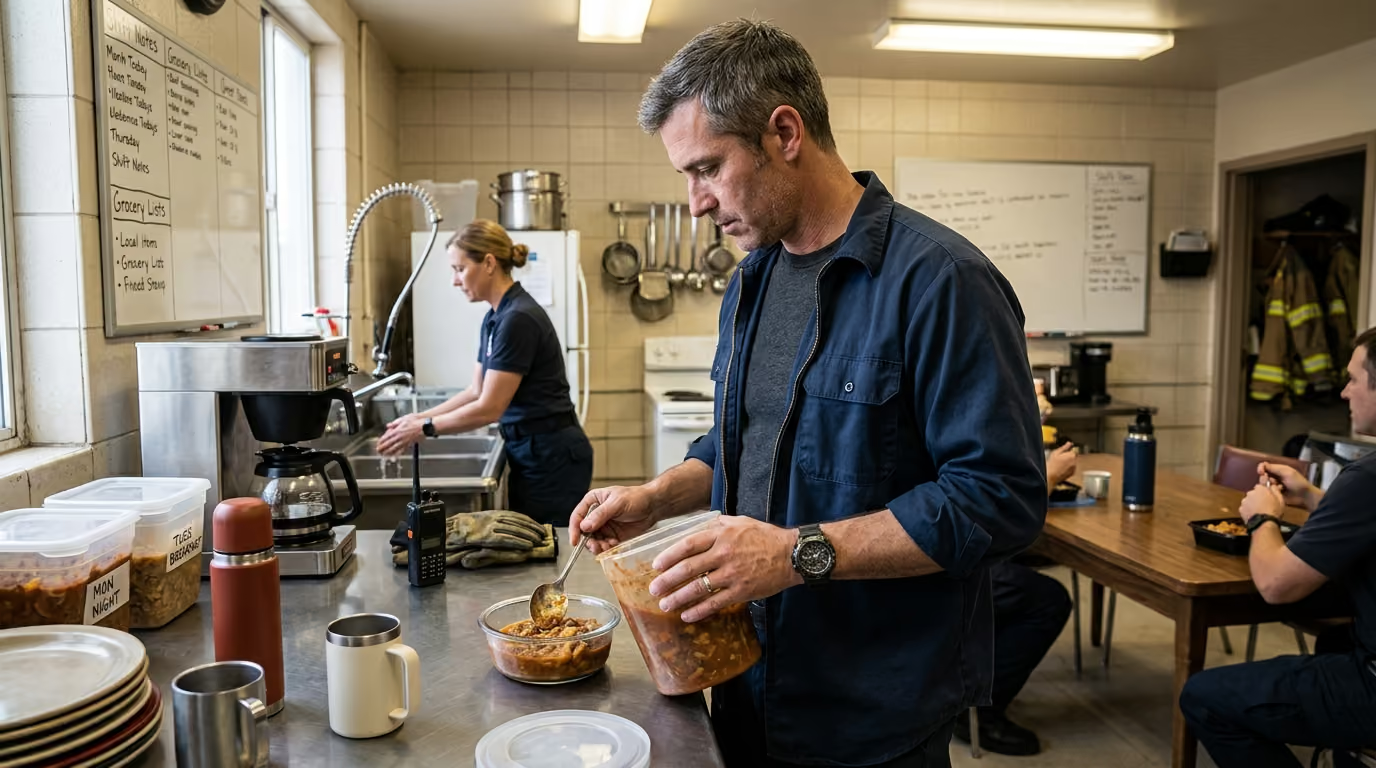

Three menu options provide first responders with adaptable nutritional frameworks to upgrade communal meals and maintain operational readiness throughout long shifts.





Many first responders find themselves searching for how to eat healthy at the firehouse without alienating their crew or cooking separate meals. The communal table is central to station culture, but typical shift meals can make it hard to maintain energy, support recovery, and protect long-term metabolic health. You can eat well at the station without lecturing your colleagues, bringing isolated meal-prep containers to group dinners, or demanding a complete overhaul of house traditions.
Eating well in an emergency services environment is not a test of personal willpower. It is an operational challenge shaped by shift timing, group purchasing, kitchen equipment, emergency calls, and food availability. Sustainable station nutrition relies on adjusting portions, adding nutrient-dense foods to existing dishes, modifying defaults, and managing storage. This guide provides a direct, evidence-based manual for improving your nutrition at the firehouse, police station, or ambulance base while keeping crew cohesion intact.
Research shows that the communal emergency services food environment heavily influences individual dietary choices. A 52-station cluster-randomized trial published in JAMA Network Open examined nutrition interventions among 485 career firefighters. The researchers found that environmental modifications, including grocery discounts, peer support, educational materials, and chef demonstrations, increased Mediterranean diet adherence by more than 10 percent over 12 months. This demonstrates that improving nutritional quality across a department depends on modifying the food environment rather than relying on individual restraint alone.
Controlled research in UK fire stations published in the Proceedings of the Nutrition Society evaluated multi-component dietary interventions. Stations implementing portion control, Mediterranean-style dietary patterns, and environmental adaptations achieved significant reductions in body fat, waist circumference, total dietary fat, saturated fat, and sodium intake. Follow-up research on station cooking workshops showed that practical kitchen changes, such as adopting smaller serving plates, keeping leftover dishes off the dining table, and incorporating whole grains, produced lasting improvements in eating habits.
Shift work itself alters metabolic physiology and food selection patterns. A systematic review on rotational shift workers found that shift personnel consume fewer core foods like fruits, vegetables, whole grains, and lean proteins, while consuming significantly more energy-dense discretionary foods. Further chrononutritional research indicates that shift workers frequently obtain their largest share of daily calories late in the shift. Firefighters in one dietary pattern study consumed approximately 36 percent of their daily energy intake during evening meals and only 17 percent at breakfast.
These nutritional patterns are not personal shortcomings. Research across occupational health literature indicates that sleep restriction, circadian disruption, and elevated cortisol shift biological appetite regulation toward energy-dense, refined carbohydrates and high-fat options. Dietary interventions targeting night workers show that while timing adjustments alone do not guarantee weight loss, improving meal composition and nutrient density consistently supports lipid profiles, blood sugar regulation, and digestive comfort.
Standard nutrition plans assume predictable meal schedules, uninterrupted digestion, and consistent grocery access. Emergency service work regularly breaks every one of these assumptions. Understanding how operational demands interact with human digestion allows you to tailor your food intake to actual duty conditions.
Call volume directly interferes with digestion. An emergency dispatch immediately triggers sympathetic nervous system activation, redirecting blood flow away from the gastrointestinal tract toward working skeletal muscles. Eating a large, high-fat, high-sodium meal right before a heavy working fire, extrication, or prolonged resuscitation often leads to gastrointestinal distress, acid reflux, or sluggish physical performance.
Thermal strain and heavy personal protective equipment compound these demands. Operating in turnouts or tactical body armor increases fluid loss through sweat and accelerates glycogen depletion. When personnel return from a physically demanding incident, severe dehydration and glycogen depletion are frequently mistaken for acute sugar cravings. Navigating these demands requires learning how targeted shift nutrition supports metabolic resilience across unpredictable operational cycles.
Extended sedentary periods broken up by acute physical demands create another common operational challenge. Crews may spend hours completing reports, conducting inspections, or maintaining equipment before suddenly needing to perform near-maximal physical work. Eating large, heavy meals during quiet hours creates postprandial fatigue, reducing alertness on the road and slowing reaction times on scene.
Group dynamics also dictate what appears on the table. Station meal funds operate on tight per-person budgets, which often favors calorie-dense bulk carbohydrates, processed meats, and commercial sauces. Food is also a social tool for decompression, bonding, and stress mitigation. Any nutritional strategy that creates friction around the kitchen table or implies judgment of the station cook will fail over the course of a career. Success requires practical adjustments that integrate smoothly into the existing station routine.
Evaluating a communal meal does not require calorie counting apps or complicated rules. You can assess and improve any firehouse, station, or base meal using four practical frameworks that respect crew traditions while improving nutritional density.
The least disruptive way to upgrade a heavy station meal is to add nutrient-dense foods before attempting to remove or alter the core recipe. When pasta night, burger night, or taco night is on the schedule, do not ask the cook to change their recipe. Instead, introduce high-volume, micronutrient-dense items to the table alongside the main dish.
Adding volume through vegetables, legumes, and whole fruit reduces total energy density naturally. It increases dietary fiber, promotes satiety, and stabilizes post-meal blood glucose without requiring anyone to forfeit their favorite comfort foods.
Every shift meal can be broken down into three distinct structural components. This framework works across any culinary style, from traditional southern cooking to Latin American, Asian, or standard diner fare.
When you approach the serving line, visually identify the base, anchor, and support elements. If the cooked meal lacks an anchor or support, you can supplement from your personal locker or the station refrigerator without altering the shared meal.
A common mistake in communal dining is assuming everyone at the table requires identical serving sizes. A 220-pound firefighter who completed heavy structural training needs different energy amounts than an officer managing logistics or an individual targeting fat loss.
The UK fire-station trials showed that serving shared meals with components separated allows personnel to tailor portions to their specific workload. Keeping carbohydrate bases, proteins, and rich sauces in separate serving dishes rather than pre-plating allows each person to adjust their plate composition without comment.
Using standard dinner plates can also lead to unconscious overconsumption, particularly with energy-dense recipes. Using a slightly smaller plate for the initial serving, while leaving the option open for seconds after a brief pause, gives physiological fullness cues time to register.
Stations that manage food successfully often maintain a predictable three-option structure for every shift. This eliminates reliance on fast-food runs when calls delay dinner.
Having rapid backup options prevents the common trap of raiding vending machines, bakeries, or fast-food drive-throughs when an emergency call interrupts normal cooking hours.
Managing your intake at a shared table requires simple portioning methods that do not draw attention or cause social friction. Hand-based portion estimation provides a reliable, portable tool for building balanced plates in any firehouse, mess hall, or station kitchen.
Adjusting these hand-based portions allows you to tailor energy intake to your daily occupational workload:
Viewing macronutrients through an operational lens removes moral labels like "clean" or "dirty" eating. Each macronutrient performs a specific physiological function during emergency response:
Protein maintains lean muscle tissue, supports immune defenses, and provides sustained satiety across long gaps between calls. Aim for 20 to 40 grams of protein per meal. Excellent station staples include skinless poultry, 90 percent or leaner ground beef, whole eggs, egg whites, Greek yogurt, canned tuna, and cottage cheese. High-protein meals stimulate satiety hormones and prevent excessive snacking on refined station treats.
Carbohydrates are the primary fuel source for high-intensity physical work, including victim extrication, stair climbs, hose advancement, and structural firefighting. Restricting carbohydrates too aggressively on duty can lead to central fatigue, lightheadedness, and impaired decision-making under stress. Prioritize complex sources like potatoes, sweet potatoes, oats, brown or white rice, beans, and fruit for baseline meals. Save simple, rapidly digested carbohydrates for immediate operational fueling during extended incidents.
Fats support hormone production, assist cellular signaling, and help absorb fat-soluble vitamins. Quality sources include extra virgin olive oil, avocados, nuts, seeds, and fatty fish. However, dietary fat is energy-dense, providing 9 calories per gram compared to 4 calories per gram for protein and carbohydrate. Heavy creamy sauces, deep-fried foods, sausage, and excessive melted cheese can dramatically increase the calorie load of a meal while slowing gastric emptying, potentially causing stomach discomfort during subsequent calls.
The language used around food sets the tone for kitchen culture. Moralizing terms like "junk food," "clean eating," "cheating," or "burning off dinner" create defensiveness and push crew members into opposing camps. Using neutral, operational language keeps the focus on performance, recovery, and readiness.
Neutral statements frame your choices as personal preference and performance management rather than a negative evaluation of the cook's efforts. Exploring our dedicated guides on energy management and nutrition principles can provide additional context for structuring balanced meals.
Upgrading communal meals does not mean replacing traditional favorites with plain chicken and steamed broccoli. Making subtle, high-impact ingredient swaps maintains the flavor, texture, and satisfaction of classic station recipes while significantly improving their nutritional profile.
Taco night is naturally versatile and easy to adapt for varying nutritional requirements.
Pasta dishes are affordable, easy to cook in bulk, and universally popular on shift.
Morning meals often set the trajectory for daytime alertness and energy stability.
Burgers provide an excellent, satisfying protein source when built with attention to total fat and toppings.
Beverages are a major contributor to hidden calories, added sugars, and caffeine crashes across long shifts. Improving the visibility and convenience of low-calorie options changes fluid intake without requiring strict rules.
Snacking in the station is often driven by boredom, fatigue, or proximity rather than true hunger. Setting up a two-tier snack system provides fuel tailored to different duty demands.
These options provide a balance of protein, dietary fiber, and healthy fats to maintain stable energy and appetite during routine duties.
These items are designed for rapid gastric emptying and quick energy release during heavy physical exertion or immediate post-incident recovery.
Organizing these foods into designated, clearly labeled bins in the station pantry prevents mindless grazing on high-fat snacks during quiet evening hours. For broader strategies on maintaining readiness and physical capability, read our resource on sustainable training and fatigue management.
Food safety in a firehouse, station, or base kitchen carries unique risks. Emergency dispatches frequently interrupt meal preparation, leaving food sitting at room temperature on stoves or dining tables for hours. Applying clear food safety standards protects the entire crew from foodborne illness that can take an entire shift company out of service.
Perishable foods left in the danger zone between 40 degrees Fahrenheit and 140 degrees Fahrenheit allow bacteria to multiply rapidly.
If the tones drop while cooking or eating:
Station refrigerators are notorious for forgotten leftovers, unlabeled containers, and cross-contamination. Establishing simple operational rules keeps shared cold storage sanitary and usable:
Attempting to change an entire station's eating culture overnight through top-down mandates creates immediate resistance. Successful, lasting improvements rely on gradual environmental shifts that make balanced choices convenient, affordable, and culturally acceptable.
Before suggesting any changes, observe the current station dynamic without judgment. Pay attention to:
Select two simple, non-controversial adjustments that add convenience without removing existing comfort foods.
Run these two adjustments as a trial. Measure practical outcomes that matter to the crew:
Once an adjustment proves practical, make it a standard part of the station routine. Add it to the shared grocery list template, establish clear storage locations, and introduce it naturally to rotating personnel. Systemic improvements stick when they become the default baseline of the station kitchen rather than a temporary program.
To explore the wider impact of shift schedules on operational readiness, review our analysis on sleep biology and emergency service performance.
While improving nutrition supports health, operational safety always takes precedence over dietary goals. Rigid dietary restriction, prolonged fasting on duty, or extreme calorie deficits introduce dangerous vulnerabilities into emergency operations.
Attempting strict fasting protocols or aggressive calorie restriction during shift work creates direct operational hazards:
If you are pursuing fat loss or metabolic health improvements, maintain adequate energy intake on active duty days. Reserve larger caloric deficits for scheduled off-duty recovery periods when emergency calls will not compromise physical safety.
This guide provides operational nutrition and food environment frameworks for general occupational capability. It does not replace individualized clinical medical nutrition therapy.
You should consult a registered dietitian, physician, or occupational healthcare provider if you have:
An occupational healthcare professional or registered dietitian specializing in tactical and emergency services can tailor nutrition strategies to your individual clinical profile, shift schedule, and physical workload. Additional guidance on occupational health standards is available through our overview of first responder duty fitness standards.
Sustainable duty performance is built on repeatable nutritional habits that survive the chaos of emergency calls, broken sleep, and communal kitchens. By improving the default food environment, adding nutrient density to familiar meals, and respecting crew traditions, you protect both your immediate operational readiness and your long-term health across a full career.
Use this practical checklist to implement low-friction nutritional upgrades on your next tour of duty:
Stay connected for research-led guidance on duty fitness, shift-work sleep, injury recovery, stress, nutrition and career longevity. Practical ideas for first responders who want to stay capable on the job, recover well and protect their health for the long run.



Read practical guidance on first responder fitness, recovery, sleep, nutrition and resilience for demanding work and a long, active career.
read the blog



