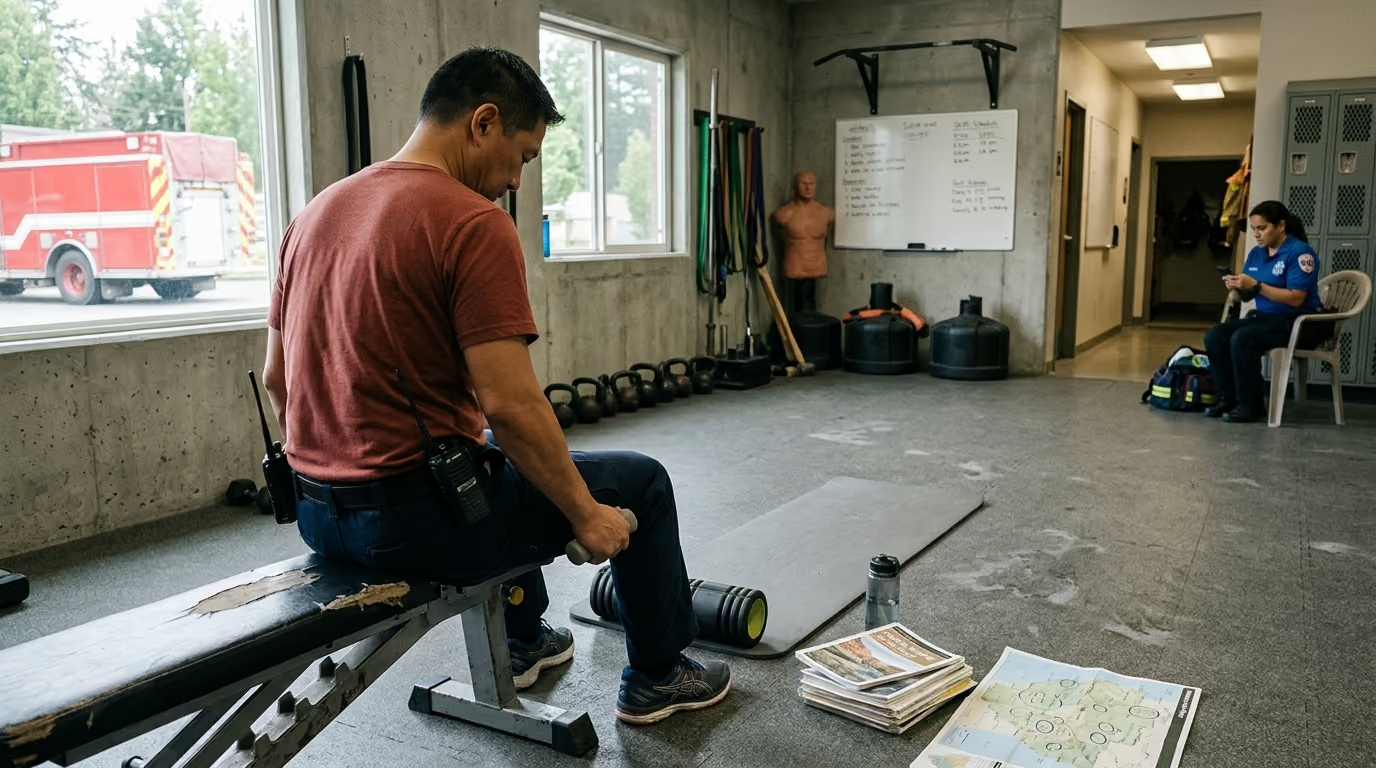

Six travel readiness domains help retired first responders manage chronic pain, protect daily energy, and safely plan sustainable trips after leaving the frontline.





If you are in immediate danger, call 911. For 24/7 support, call or text 988 and press 1 for the Veterans Crisis Line, or text 838255.
After thirty years of shift work, sirens, and physical strain, retirement often arrives with a long list of travel plans. You might picture walking through historic European cities, driving across national parks, or taking extended family vacations. The reality of the first major trip can feel surprisingly harsh. Standing on hard airport concrete irritates an old lumbar injury. Crowded terminals and unexpected alarms trigger familiar hypervigilance. Broken sleep in an unfamiliar hotel room leaves you drained before the day even begins.
Many former emergency personnel discover that leaving the job does not instantly restore the body. Decades of cumulative duty fatigue, disrupted circadian rhythms, and orthopedic wear follow you into civilian life. Approaching post-service travel with the same mindset used during operational shifts, pushing through fatigue and ignoring physical warning signs, often leads to severe setbacks.
Travel after an emergency-service career works best when viewed as graded, adaptable active living. It is not an endurance test, nor is it passive relaxation. By matching the physical and cognitive demands of a trip to your current capacity, you can explore new destinations while protecting your long-term health and energy.
Retirement changes your daily schedule, but it does not erase the biological footprint of emergency service. Research shows that former first responders experience elevated rates of physical and psychological health challenges compared to the general public. Understanding these baseline realities helps you plan trips that support your well-being rather than compromise it.
Occupational data demonstrates that physical wear is a standard outcome of frontline careers. Surveillance analysis published by the RAND Corporation found that duty-related injury retirements among firefighters were roughly twice as common as non-occupational disability retirements. The majority of these cases involved chronic back, joint, and torso pain. When you transition from structured shift routines to unstructured travel, these dormant injuries often resurface during long transit periods, luggage handling, or extended walking on uneven terrain.
Sleep architecture also remains vulnerable long after your final shift. Systematic reviews on emergency personnel report a high prevalence of chronic sleep disorders across police, fire, and emergency medical services. Estimates indicate that roughly 36 percent of first responders experience insomnia, 27 percent report excessive daytime sleepiness, and 25 percent live with obstructive sleep apnea. Time-zone changes, unfamiliar beds, and hotel noise can easily destabilize sleep patterns that are already fragile.
Psychological stress patterns also persist into retirement. A 2026 systematic review estimated that approximately 15.4 percent of former first responders meet clinical criteria for post-traumatic stress disorder. Decades of operating in high-threat environments train the nervous system to remain on high alert. Unpredictable crowds, loud transit hubs, confined spaces, and emergency sirens in unfamiliar cities can trigger acute stress responses if itineraries are packed too tightly.
Maintaining physical activity remains vital for long-term health and mobility. World Health Organization physical activity guidelines for older adults recommend 150 to 300 minutes of moderate-intensity aerobic activity per week, alongside muscle-strengthening exercise at least two days per week. For functional independence and fall prevention, the guidelines advise varied multicomponent physical activity emphasizing balance and strength on three or more days weekly. Post-service travel offers an ideal vehicle for this active living, provided the itinerary respects your body's need for systematic recovery.
Being medically stable enough to travel is not the same as being ready for any itinerary. A person might be fully cleared for a quiet beach stay but unprepared for a multi-city walking tour or a remote wilderness trek. Evaluating your readiness across six specific functional domains prevents unexpected medical or physical emergencies away from home.
Your underlying conditions, vital signs, and medication regimens must be stable before departure. This means blood pressure is controlled, chronic pain is manageable, and respiratory or cardiac conditions show no recent deterioration. If a physician has adjusted your medication dosages within the past four weeks, your system may still be adapting. Stability allows clinicians to evaluate travel risks accurately and provide clear guidance.
Functional capacity refers to your ability to handle the specific physical demands of the chosen destination. This includes walking on varied surfaces, climbing stairs without elevators, sitting for extended transit hours, and lifting baggage. It also covers the ability to transfer between vehicles and navigate crowded terminals without immediate physical distress.
The central question is not just whether you can complete a demanding travel day, but how quickly you recover from it. High recovery capacity means that after a long flight, a delayed connection, or a day of sightseeing, you bounce back after a normal night of rest. If an active day causes a multi-day flare of joint pain, extreme exhaustion, or mental fog, your itinerary exceeds your current recovery capacity.
Travel removes the comfort and predictability of home routines. Self-management capacity is your ability to maintain hydration, nutrition, medication schedules, and mobility routines on the road. It also involves operating medical devices like continuous positive airway pressure units and monitoring your physical symptoms without clinical supervision.
Emergency service conditions the brain to scan for hazards and take command during crises. Psychological readiness involves having clear strategies to manage situations where you lack control. This includes navigating congested transit hubs, hearing unexpected emergency alarms, handling enclosed spaces, and coping with sensory overload without becoming irritable, hypervigilant, or overwhelmed.
A well-prepared traveler always has a backup plan for when circumstances go wrong. Contingency capacity includes knowing what to do if luggage is lost, medication runs out, flights are canceled, or an injury flares up. It means carrying medical summaries, having travel insurance that covers emergency medical evacuation, and establishing clear plans to shorten or alter a trip if necessary.
Thorough preparation before departure prevents minor health issues from escalating into major operational problems abroad. The Centers for Disease Control and Prevention recommends that older adults schedule a travel-health consultation four to six weeks before departure. This timeline allows adequate time to complete necessary vaccinations, assess chronic conditions, and adjust itineraries based on clinical recommendations.
A travel-health appointment should cover far more than standard destination immunizations. You and your primary care provider need to review the specific physical and environmental demands of your itinerary. Discuss altitude, expected temperature extremes, walking distances, and the quality of local medical infrastructure.
Your clinician should evaluate how travel stress interacts with your baseline health. Review recent cardiovascular stability, blood pressure patterns, and joint limitations. If you use a continuous positive airway pressure machine, discuss electrical requirements and distilled water access at your destination. Obtain a formal clinical letter summarizing your diagnoses, baseline functional capacity, and required medical devices.
Managing medications across time zones requires careful organization. Never pack essential daily medications in checked baggage. Luggage can be delayed, damaged, or lost, leaving you without critical therapies in an unfamiliar location. Keep all prescription medications in your carry-on luggage inside their original pharmacy containers with visible labels.
According to the CDC Yellow Book guidelines for travelers with chronic illnesses, you should pack enough medication for the entire duration of the trip plus several days of extra supply to account for travel delays. The CDC also cautions that counterfeit medications are prevalent in some international destinations. You should never rely on purchasing replacement maintenance medications abroad unless an unexpected emergency arises.
Create a comprehensive medication summary card to carry in your wallet and store securely on your mobile phone. Include the brand name, generic name, exact dosage, prescribing clinician, and local pharmacy contact information. Work with your physician or pharmacist before departure to map out how you will adjust dosing schedules across multiple time zones. This is especially vital for medications requiring precise timing, such as anticoagulants, insulin, corticosteroids, and cardiovascular drugs.
Check destination-country laws regarding controlled substances well before departure. Certain pain medications, sleep aids, and stimulants that are legal at home may be heavily restricted or strictly prohibited in other countries. The National Health Service and international travel health authorities advise travelers to secure specific permits or official clinician letters when transporting controlled pharmaceuticals abroad.
A common mistake among newly retired first responders is assuming their bodies can instantly handle demanding physical itineraries. Decades of working through pain create a habit of ignoring early fatigue signals. In retirement, this operational toughness often backfires, resulting in severe physical crashes that ruin planned vacations.
Do not base your travel itinerary on what you used to carry or how far you could walk during your career. Base your plans on your current, tested functional capacity. You can evaluate your readiness at home using simple, objective tests over several weeks:
If an activity causes significant pain or severe fatigue that lasts longer than 24 hours, your body is telling you that the load is too high. You need to adjust the pace or scale back the physical demands before you depart.
When designing your daily travel schedule, establish what clinicians refer to as a "Minimum Viable Day." This is the foundational baseline of activity that you can maintain consistently without triggering physical or cognitive exhaustion.
A sustainable baseline day includes waking at a reasonable hour, taking medications on schedule, eating balanced meals, and performing gentle mobility exercises. It includes exactly one primary, meaningful excursion, such as visiting a museum, exploring a park, or taking a scenic boat tour. The rest of the day remains open for quiet meals, physical rest, and unstructured decompression. Once you know you can sustain this baseline day across several days, you can selectively add optional secondary activities.
To prevent the boom-and-bust cycle of overexertion followed by exhaustion, use a simple three-tier pacing scale to monitor your physical output during trips.
Using this autoregulation framework allows you to explore destinations actively without paying a heavy physical price the following day. For deeper strategies on balancing physical output with long-term capacity, review our guide on autoregulation and recovery management.
Sleep disruption is one of the quickest ways to trigger pain flares, cognitive fog, and mood changes while traveling. Because first responders frequently carry a history of shift-work sleep disorder or sleep apnea, preserving sleep routines away from home requires deliberate strategy.
Do not leave your sleep environment to chance. When booking accommodations, request rooms on higher floors located away from elevators, ice machines, service doors, and busy street fronts. If possible, choose lodging in quieter residential or historic districts rather than commercial entertainment hubs.
Transform your temporary room into a functional sleep environment immediately upon arrival. Check the air conditioning or heating to ensure you can keep the room cool overnight. Use travel clothespins or binder clips to seal gaps in hotel curtains to eliminate intrusive street light. Cover illuminated display lights on televisions and alarm clocks, and use high-grade silicone or foam earplugs to block unfamiliar nighttime sounds.
When crossing multiple time zones, your central biological clock requires time to synchronize with local daylight. The CDC guidance on jet lag recommends adjusting your daily schedule toward the destination time zone immediately upon arrival. Seek bright outdoor sunlight in the morning to advance your circadian clock, and keep your meals aligned with local dining hours.
Avoid using alcohol as a sedative to force sleep during travel. While alcohol may induce drowsiness, research confirms that it severely fragments sleep architecture, suppresses restorative rapid-eye-movement sleep, and worsens sleep-disordered breathing. If daytime fatigue becomes intense, limit naps to 15 or 20 minutes in the early afternoon so you do not compromise nighttime sleep pressure. For comprehensive shift-work sleep principles that apply directly to travel, see our blueprint on strategic sleep planning for shift workers.
If you use a continuous positive airway pressure machine for sleep apnea, treat it as essential medical equipment. Never leave it at home to save luggage space. Traveling without your prescribed airway therapy increases daytime sleepiness, elevates nighttime blood pressure, and strains the cardiovascular system.
The Transportation Security Administration classifies medical devices as separate from standard carry-on limits. You can carry your device aboard aircraft in its protective case without counting against your airline carry-on allowance. Pack universal plug adapters, an extension cord, and a backup mask cushion. Verify where you can purchase distilled water near your lodging, or discuss suitable travel filtration options with your medical equipment supplier.
Long transit days represent significant physical hurdles for retirees with orthopedic wear. Extended periods of seated immobility, heavy luggage handling, and walking through vast airport terminals place concentrated stress on damaged joints.
Standing in long security queues and walking miles through international terminals can exhaust your energy reserves before your flight even leaves the tarmac. Use available travel accommodations without hesitation. Requesting terminal transport or wheelchair assistance does not mean giving up your independence. It is an intelligent energy-budgeting decision that preserves your physical capacity for the actual vacation.
The Transportation Security Administration provides a dedicated program known as TSA Cares. Travelers with medical conditions, joint replacements, or implanted devices can contact TSA Cares at least 72 hours before departure. The agency provides specialized assistance through security checkpoints, ensuring that medical devices and mobility limitations are handled professionally.
When selecting airline seating, choose an aisle seat whenever possible. Aisle access allows you to stand up, stretch your back, and walk the cabin periodically without disturbing neighboring passengers. Avoid tight flight connections that force you to sprint between distant gates with heavy bags.
Sitting still for long periods during flights or road trips slows venous blood flow in the lower legs. This increases the risk of deep vein thrombosis, especially for older travelers or those with cardiovascular risk factors.
CDC travel guidance recommends performing regular leg exercises while seated on trips lasting longer than four hours. Move your feet in circles, flex your ankles up and down, and contract your calf muscles frequently to promote venous blood return. Stand up and walk the aisle whenever the seatbelt sign is turned off. If you have personal risk factors for blood clots, such as prior vascular issues or recent orthopedic surgery, discuss graduated compression stockings with your physician.
Lifting heavy suitcases into overhead bins or pulling unbalanced luggage across cobblestone streets quickly aggravates spinal and shoulder injuries. Invest in lightweight, durable luggage equipped with four multidirectional spinner wheels. Four-wheel bags glide effortlessly alongside you, eliminating the awkward twisting and dragging motions that strain the lower back and rotator cuff.
Pack strictly what you need and divide weight across smaller, manageable bags. When lifting luggage into vehicles or storage racks, keep the load close to your center of gravity, bend your knees, and lift with your legs rather than your spine. If you experience chronic joint issues, explore our dedicated resources on long-term musculoskeletal injury recovery to refine your mobility maintenance habits.
Retirement separates you from the emergency services, but your nervous system retains decades of operational conditioning. Unfamiliar environments can trigger sudden surges of hypervigilance, irritability, or distress. Planning for emotional and sensory safety ensures that unexpected triggers do not overwhelm your trip.
Sensory overload during travel often mimics operational environments. Crowded subway platforms, blaring emergency sirens in dense downtowns, confined aircraft cabins, and sudden industrial alarms can provoke an automatic fight-or-flight response. You might notice rapid shallow breathing, muscle tension, a sudden urge to clear the room, or sharp irritability with companions.
These physical responses are predictable reactions from a finely tuned survival system, not signs of personal failure. The goal is not to avoid the world entirely, but to manage exposure gradually and maintain access to reliable calming tools.
When you feel your arousal levels rising in a busy environment, implement rapid grounding protocols to re-anchor your nervous system in the present moment:
Travel often presents constant opportunities for alcohol consumption, from airport lounges to late-night dinners. First-responder populations experience documented risks regarding substance use as an unhelpful coping tool for trauma and insomnia.
Using alcohol to numb travel anxiety or force sleep destabilizes mood, disrupts sleep architecture, and interacts dangerously with prescription pain and cardiovascular medications. Establish clear personal boundaries around alcohol before you leave home. Choose alcohol-free beverages, schedule active morning activities that discourage late-night drinking, and communicate your health boundaries clearly with your travel companions.
A successful post-service vacation depends heavily on how you structure your days. Avoid rapid-fire group tours that dictate every minute of your schedule. Use these four flexible itinerary frameworks to explore destinations while preserving your health and energy reserves.
Instead of changing hotels every night and packing bags repeatedly, choose one high-quality, accessible accommodation as your central "base camp" for a week or more. Explore surrounding areas through short, direct day trips.
This model offers significant health advantages. It minimizes the physical strain of moving heavy luggage, ensures consistent sleep in a familiar room, and provides a dependable location for medications and medical devices. If you experience an unexpected pain flare or an exhausting day, you have a comfortable, established base where you can rest without disrupting transit schedules.
Structure each day around exactly one primary physical or cultural activity. This could be a guided morning tour of a museum, a scenic coastal walk, or a visit to a historical landmark.
Surround that single primary event with generous margins of unscheduled time. Eat relaxed meals, sit in quiet parks, and return to your room for an afternoon rest block. If you feel energetic later in the day, you can always take an optional evening stroll. If you feel tired, your essential mission for the day is already accomplished.
Always insert a dedicated "buffer day" after major travel hurdles. Schedule a zero-obligation day following long international flights, extended multi-hour drives, or demanding physical excursions like mountain hikes.
A buffer day has no reservations, no alarms, and no fixed timelines. It allows your body clock to adjust, gives your joints time to calm down after transit vibration, and lets your mental energy recharge. Treating rest as a scheduled calendar event prevents cumulative duty fatigue from derailing the rest of your vacation.
Never enter an activity or environment without an agreed-upon exit strategy. Before visiting a large festival, crowded attraction, or walking tour, determine how you can leave early if necessary.
Identify nearby taxi stands, rideshare pickup zones, and accessible public transit lines before you arrive. Establish a simple, non-verbal signal with your travel companion that indicates when you have reached your physical or emotional limit. Having a clear, guilt-free plan to exit an activity preserves your energy and prevents unnecessary conflicts with your partner.
These four operational scenarios demonstrate how different retired emergency professionals can adapt travel plans to match their specific health needs.
A retired company officer with 28 years of service plans a two-week European trip. He remains physically strong and enjoys lifting weights, but he has severe untreated snoring, unrefreshing sleep, and morning headaches. His initial plan involves changing hotels every two days across four countries.
Adapted Travel Plan:
A retired paramedic loves nature photography and wants to explore several western national parks. She can walk comfortably for 30 minutes on flat ground, but lifting heavy items and sitting in vehicles for long periods triggers acute lower back spasms and radiating leg pain.
Adapted Travel Plan:
A retired detective wants to visit historic cultural sites with his spouse. He experiences rising hypervigilance, rapid breathing, and irritability in dense crowds, noisy indoor venues, and confined transit spaces.
Adapted Travel Plan:
A retired emergency medical technician with stable hypertension and a history of stent placement plans an extended cruise. He takes multiple daily cardiovascular medications and worries about managing his regimen across changing port schedules.
Adapted Travel Plan:
Use these practical checklists to organize your health, mobility, and safety preparations across the travel timeline.
While minor muscle stiffness and mild fatigue are normal parts of travel, certain acute symptoms require immediate medical evaluation. Never attempt to push through severe symptoms in an effort to avoid disrupting vacation plans or disappointing travel companions.
Seek urgent, professional emergency medical care if you or your companion experience any of the following warning signs:
If you or someone you know is experiencing acute mental distress or thoughts of self-harm, immediate professional help is available. In the United States, call 911 for immediate operational emergency response, call or text 988 to reach the Suicide & Crisis Lifeline (press 1 for the Veterans and Military Crisis Line), or text HOME to 838255. In Canada, call or text 988 to reach the Suicide Crisis Helpline. In the United Kingdom, call 111 or 999 for emergency medical assistance.
Managing post-service health while exploring the world often requires ongoing collaboration with healthcare professionals. If you notice persistent barriers during your travels, consult licensed specialists who understand occupational health:
To discover more evidence-led frameworks for preserving physical and cognitive capabilities throughout life after service, review our comprehensive first responder performance and recovery resources.
Return to this guide whenever you begin planning a new travel itinerary, especially when transitioning to more demanding destinations, crossing multiple time zones, or recovering from recent health changes.
Travel after emergency service is not about proving your resilience or enduring physical exhaustion. It is about applying the same thoughtful preparation and situational awareness you used during your career to build sustainable, active, and fulfilling experiences in the years ahead.
Stay connected for research-led guidance on duty fitness, shift-work sleep, injury recovery, stress, nutrition and career longevity. Practical ideas for first responders who want to stay capable on the job, recover well and protect their health for the long run.



Read practical guidance on first responder fitness, recovery, sleep, nutrition and resilience for demanding work and a long, active career.
read the blog



