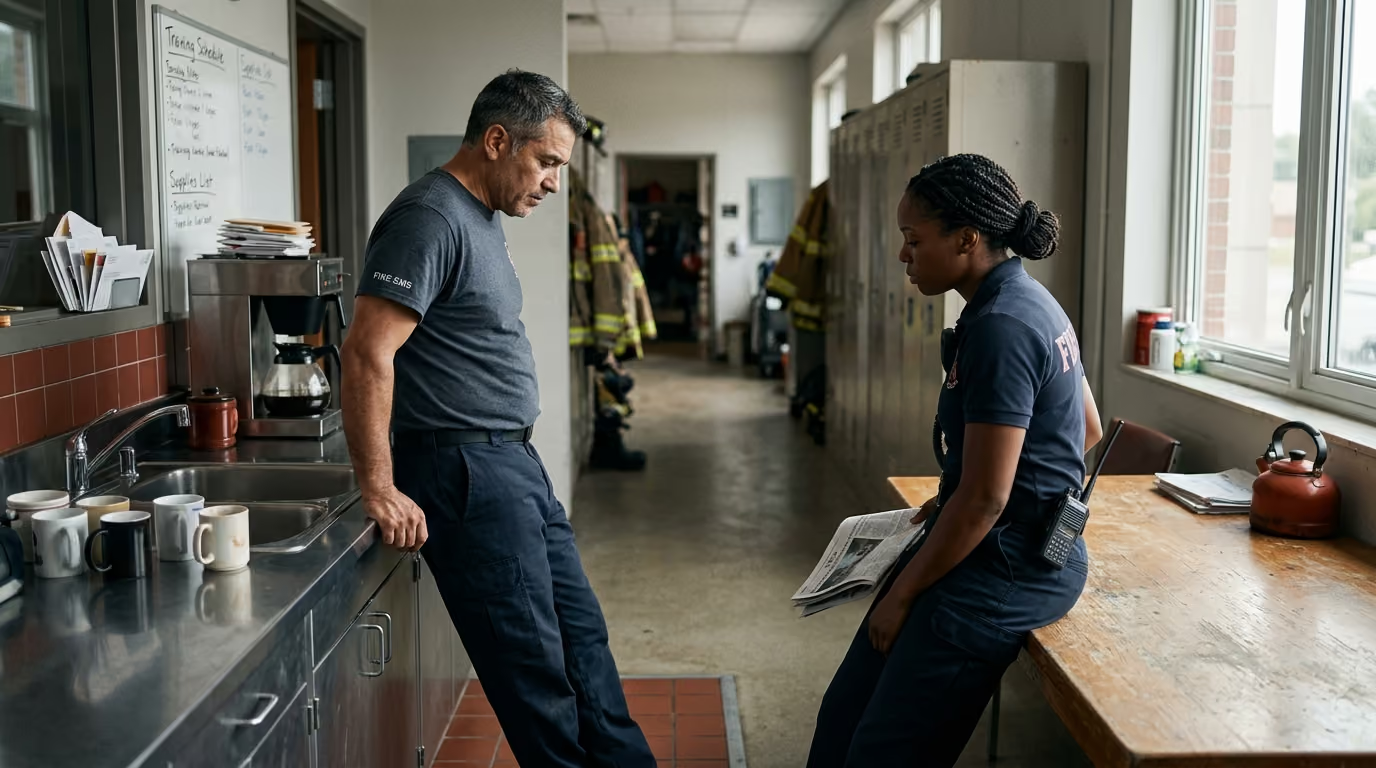

Traumatic exposure affects emergency responders through complex psychological mechanisms, memory processes, and compounding operational stressors that shape long-term mental health outcomes.





If you or someone you know is facing an immediate mental health crisis or thoughts of suicide, support is available around the clock. Call 911 for immediate operational danger. Call or text 988 to reach the Suicide & Crisis Lifeline, press 1 for the Veterans Crisis Line, or text 838255. When unmanageable distress or safety concerns arise, work together with a trusted colleague, family member, or clinician to secure personal means and establish a clear safety plan.
The bay doors close, the apparatus engine shuts off, and the physical work of a four-hour extrication is finished. Your turnout gear is hung up, the run report is logged, and the crew returns to routine station duties. Outwardly, the shift moves forward. Inwardly, specific sensory fragments from the incident keep cycling back, accompanied by an unsettled physiological charge that makes normal rest impossible.
Traumatic exposure in emergency work does not follow a simple cause and effect timeline. A call that leaves one crew member unfazed may disrupt another responder for weeks. Psychological disruption happens when an incident activates threat, guilt, grief, helplessness, or moral distress in ways that outlast the initial call. These reactions can interfere with sleep, relationships, physical recovery, and day-to-day operational focus.
Understanding how memory, meaning, avoidance, sleep, and occupational support interact gives responders a clear framework for protecting their long-term health. Experiencing acute distress after extreme calls is a normal human response rather than a sign of career failure. Building capability involves learning how these reactions operate and knowing when to use evidence-based support.
The scientific literature on emergency-service personnel demonstrates that high-intensity calls are routine occupational realities rather than isolated exceptions. However, the data shows substantial variation in how responders process these events over time. Research clearly separates an initial stress reaction from long-term occupational injury.
Clinical research differentiates among three primary post-exposure categories:
Systematic reviews demonstrate wide ranges in post-traumatic stress prevalence across emergency disciplines. These differences stem from variations in study design, screening tools, occupational demands, and whether researchers measured current symptoms or lifetime rates. A systematic review and meta-regression by Berger and colleagues estimated the pooled current PTSD prevalence among rescue workers at 10.0 percent. Another meta-analysis focusing on paramedics identified a 12-month prevalence rate of 20.0 percent, compared to approximately 3.06 percent in populations without systematic trauma exposure.
Similar variations appear across other emergency roles. A rapid systematic review of emergency department personnel documented an estimated PTSD prevalence of 18.6 percent. Broad reviews of firefighters report prevalence estimates ranging anywhere from 1.9 percent to 57 percent depending on the diagnostic criteria applied. Among ambulance personnel, reviews cite prevalence rates between 4.0 percent and 25.5 percent. Investigations into secondary traumatization show that between 4 percent and 13 percent of first responders experience significant distress solely through indirect exposure to traumatic accounts.
Research confirms that traumatic exposure alone does not dictate the outcome. The National Institute of Mental Health (NIMH) notes that risk is shaped by personal history, the subjective sense of horror or helplessness during an event, and the quality of post-incident support. Prior traumatic events, severe sleep debt, concurrent life stressors, and a lack of social connection substantially increase vulnerability. Conversely, strong operational communication, psychological safety within crews, and healthy sleep practices serve as protective factors that assist recovery.
Not every severe incident leaves a lasting mark. Responders frequently manage horrific scenes with minimal lingering distress, only to find themselves unsettled by a call that seemed routine on paper. Several distinct psychological mechanisms explain why certain events remain disruptive long after the scene is cleared.
Training provides emergency personnel with operational scripts, tactical checklists, and clinical protocols designed to manage chaotic environments. When an incident overwhelms those structures, the subjective sense of control evaporates. Rapidly deteriorating fires, unpredictable violence, sudden equipment failures, or pediatric arrests create an immediate clash between operational training and situational reality.
Helplessness carries a high psychological burden. When a responder realizes that a patient or colleague will die regardless of technical execution, the brain registers profound survival threat. Even when no physical harm occurs to the responder, the realization of severe vulnerability can shatter the baseline assumption of operational control.
Emergency professionals carry a high degree of perceived responsibility for human life. In the aftermath of a poor outcome, the brain often engages in counterfactual thinking. Responders construct internal scenarios centered on what might have happened if circumstances were slightly different.
This internal dialogue often manifests as repetitive loops:
Counterfactual processing is a standard cognitive attempt to analyze danger and prevent future errors. When this processing shifts into persistent self-condemnation, it prevents psychological resolution. The responder remains stuck in an active state of perceived failure, maintaining elevated physiological arousal.
Many emergency responders construct their identity around competence, resilience, and the ability to solve complex crises. An incident that produces paralysis, profound fear, or unavoidable failure directly challenges that self-concept. The individual may interpret normal human emotional responses as evidence of personal inadequacy or professional unfitness.
Beliefs such as "I should have handled that better" or "Asking for help makes me unreliable" create acute isolation. Responders often hide their distress to protect their reputation among peers. This internal conflict deepens the emotional disruption of the original event.
During extreme stress, the brain processes information differently than during routine states. High autonomic arousal can cause events to be encoded as intense sensory fragments rather than a smooth, chronological narrative. Responders often remember the distinctive smell of a structure fire, the sound of a monitor alarm, or a specific visual detail with absolute clarity while losing track of the exact operational timeline.
These sensory fragments become powerful internal cues. Weeks or months later, encountering an identical smell, sound, or physical environment can trigger a sudden surge of autonomic arousal. The individual feels as if they are right back in the original situation, even when they know the current environment is secure.
Some incidents cause disruption not through fear or physical danger, but through profound moral distress. Moral injury refers to the psychological and spiritual impact of witnessing, failing to prevent, or participating in actions that violate deeply held ethical values. In emergency services, this occurs when responders face impossible triage choices, systemic failures, or severe resource shortages that compromise patient care.
Moral injury can also stem from perceived institutional betrayal. When leadership enforces punitive administrative policies, ignores severe understaffing, or minimizes the reality of hazardous working conditions, responders experience deep alienation. The primary emotional drivers in moral injury are guilt, shame, anger, and loss of trust rather than fear-based panic.
The progression from acute post-incident distress to either healthy adaptation or persistent operational impairment depends heavily on how memories are stored, how avoidance behaviors are managed, and how meaning is assigned to the event.
Trauma-related memories do not function like video recordings. They are dynamic networks of sensory impressions, emotional reactions, and cognitive conclusions that evolve over time. When an incident is poorly integrated into long-term autobiographical memory, it acts like an open loop in the nervous system. The brain continues to treat the memory as an active threat requiring constant vigilance.
Avoidance is the primary mechanism that maintains long-term traumatic distress. When a responder experiences intense anxiety around a specific station, call type, geographical area, or conversation, avoiding that trigger produces instant psychological relief. This immediate drop in anxiety reinforces the avoidance behavior, making it more likely to occur again.
Over time, this cycle creates significant functional limitations:
While avoidance offers short-term relief, it prevents the nervous system from learning that the threat has passed. The brain never receives the necessary feedback that the reminder can be experienced safely. As a result, the perceived danger remains fully intact.
Recovery involves examining and shifting the conclusions drawn from an incident. Evidence-based treatments like Cognitive Processing Therapy identify unhelpful beliefs that emerge after traumatic exposure. These beliefs, often called stuck points, alter how individuals view themselves, their peers, and the world.
Common stuck points include:
Modifying these conclusions does not require forced positivity or minimizing genuine tragedy. Instead, it involves developing an accurate, balanced assessment of what happened. An evidence-aware perspective acknowledges that severe outcomes can occur despite excellent clinical and tactical decisions. Integrating this perspective allows the responder to file the memory away as a closed, historical event.
Sleep disruption is both a core symptom of traumatic stress and a primary driver of ongoing psychological vulnerability. Emergency personnel operate on irregular shift rotations, manage overnight calls, and frequently deal with chronic circadian disruption. When traumatic exposure is layered on top of chronic sleep debt, the brain's capacity to process emotional memories becomes severely compromised.
During rapid eye movement (REM) and slow-wave sleep, the brain actively consolidates memories and reduces the emotional tone attached to stressful experiences. When shift work, elevated cortisol, or trauma-induced nightmares disrupt these sleep stages, memory processing is interrupted. The raw emotional distress remains tied to the event, leaving the individual hyper-reactive to daily stressors.
Sleep problems following critical incidents often manifest in distinct ways:
The Department of Veterans Affairs and Department of Defense (VA/DoD) clinical practice guidelines emphasize that sleep disturbances must be evaluated and managed independently. Sleep disruption does not simply vanish when other post-incident symptoms improve.
Cognitive Behavioral Therapy for Insomnia (CBT-I) is the frontline, non-pharmacological gold standard for treating chronic insomnia co-occurring with trauma symptoms. For severe nightmares, guidelines suggest discussing evidence-supported pharmacological options, such as prazosin, with a qualified physician. Managing your environmental factors by optimizing dark, cool sleeping quarters and reducing daytime caffeine intake provides a critical foundation for recovery. Responders seeking to improve their routine can apply structured shift work and sleep strategies to protect their recovery windows.
The social environment within a department plays a major role in determining whether a responder recovers smoothly or develops persistent distress. However, widespread misconceptions exist regarding what constitutes effective post-incident support.
For years, mandatory single-session psychological debriefing, often referred to as Critical Incident Stress Debriefing (CISD), was standard practice in many emergency services. These sessions required all personnel involved in an incident to describe their actions and emotional reactions in detail shortly after the call. Comprehensive reviews by the World Health Organization (WHO) and clinical guidelines have found that mandatory single-session debriefing does not prevent PTSD, anxiety, or depression. For some individuals, forcing early exposure before the nervous system has stabilized can actually increase distress and interfere with natural coping mechanisms.
Current evidence supports a model focused on psychological first aid, practical assistance, and flexible peer connection:
Informal peer support offers tremendous value when properly structured. A systematic review by Donovan highlighted that peer supporters who understand the unique culture of emergency services can reduce isolation and make help-seeking normal. However, systematic reviews also show that peer support programs require rigorous training, ongoing clinical oversight, and clear boundary management to remain safe and effective.
Helpers themselves face meaningful occupational risks. Dispatchers, peer team members, station officers, and clinicians frequently experience secondary traumatization from repeatedly processing traumatic accounts. Department leaders must ensure that peer supporters receive regular supervision, manageable workloads, and access to independent care to prevent secondary stress from turning into operational burnout.
Traumatic stress presents differently across various emergency roles and career stages. The following illustrative models describe common operational presentations without using real individuals or fabricated performance metrics.
A flight paramedic responds to a severe pediatric trauma case where the patient succumbs to injuries despite flawless airway management and rapid transport. The medic completes the shift successfully and receives praise for technical execution under pressure.
Two weeks later, the medic experiences a sudden surge of panic when dispatched to a minor pediatric call. Specific sensory triggers, including the sight of children's clothing and the sound of crying, provoke immediate tachycardia and breathlessness. The responder begins trading shifts to avoid pediatric assignments, illustrating how sensory encoding and avoidance can compromise confidence despite clinical competence.
A veteran firefighter with fifteen years of service cannot identify a single defining critical incident. Instead, their career has involved hundreds of routine structural fires, difficult medical assists, fatal vehicle collisions, and chronic night-shift interruptions.
After managing an unremarkable residential kitchen fire, the firefighter experiences severe emotional numbness, daily irritability, fragmented sleep, and an escalating reliance on alcohol to unwind. This pattern illustrates cumulative exposure, where a minor incident acts as a tipping point for years of unresolved operational stress.
A police officer conducts a traffic stop that suddenly escalates into an armed confrontation. The suspect is taken into custody without shots being fired, and no physical injuries occur to anyone on scene.
Despite the positive outcome, the officer develops profound hypervigilance over the following month. They repeatedly check house locks, startle violently at routine household noises, and experience persistent nausea before every shift. Because nobody was physically injured, colleagues treat the call as a clean win, leaving the officer feeling isolated and confused by their intense physiological arousal.
An emergency communications officer manages an overwhelming volume of calls during a severe regional storm. Due to widespread unit shortages, response times for critical medical emergencies are heavily delayed. The dispatcher is forced to inform frantic callers that help is not immediately available.
In the weeks following the event, the dispatcher experiences deep guilt, anger toward system administration, and recurring thoughts about caller outcomes. The primary psychological disruption is not fear-based flashbacks, but moral injury centered on a perceived failure to protect the public.
Navigating traumatic exposure requires concrete, evidence-aware habits that fit within demanding operational schedules. These strategies provide support rather than promising complete prevention of trauma disorders.
Understanding when natural recovery has stalled is vital for personal safety and crew performance. Experiencing elevated heart rates, light sleep, and intrusive memories during the first few days following an intense call is a common acute reaction. However, when these symptoms fail to resolve over several weeks, they can compromise situational awareness, physical reaction time, and tactical decision-making.
Operating while severely impaired by traumatic stress introduces unacceptable safety risks. Responders who experience severe dissociation, sudden panic attacks, uncontrollable rage, or extreme sleep deprivation cannot safely drive emergency apparatus, operate complex machinery, make high-stakes medical calculations, or carry firearms. Recognizing these operational limits protects both the responder and the public they serve.
When symptoms persist beyond four weeks, consulting a licensed mental health professional who specializes in emergency-service populations is strongly indicated. Professional assessment can accurately differentiate among PTSD, Major Depressive Disorder, Generalized Anxiety Disorder, moral injury, and underlying sleep disorders like obstructive sleep apnea.
The VA/DoD clinical practice guidelines strongly recommend manualized, trauma-focused psychotherapies as the frontline treatment for PTSD. These therapies carry a substantially higher level of evidence for long-term symptom resolution than medication alone:
Trauma-focused psychotherapy does not require leaving the profession or handing over your operational authority. Engaging in evidence-based clinical care is an effective, practical method for resolving occupational injuries, restoring physical readiness, and maintaining capability across an entire career.
Sustainable performance in the emergency services requires recognizing that psychological exposure is an inherent operational condition of the job. Experiencing lingering distress after an overwhelming call does not reflect personal weakness, professional failure, or a lack of mental toughness. It reflects a human nervous system responding to extreme, abnormal operational demands.
Career longevity depends on shifting away from destructive avoidance, protecting baseline physical and sleep needs, and building honest communication within crews. Long-term readiness is sustained by treating traumatic stress as an occupational injury that can be understood, managed, and effectively rehabilitated.
Revisit this guide after managing an unusually complex critical incident, when noticing creeping avoidance behaviors in your daily routines, or when supporting a crew member whose operational focus and sleep quality have declined following a difficult shift.
Understanding how your mind and body process critical incidents ensures that you can serve your community with distinction while protecting your health for the years of life that follow retirement.
Stay connected for research-led guidance on duty fitness, shift-work sleep, injury recovery, stress, nutrition and career longevity. Practical ideas for first responders who want to stay capable on the job, recover well and protect their health for the long run.



Read practical guidance on first responder fitness, recovery, sleep, nutrition and resilience for demanding work and a long, active career.
read the blog



