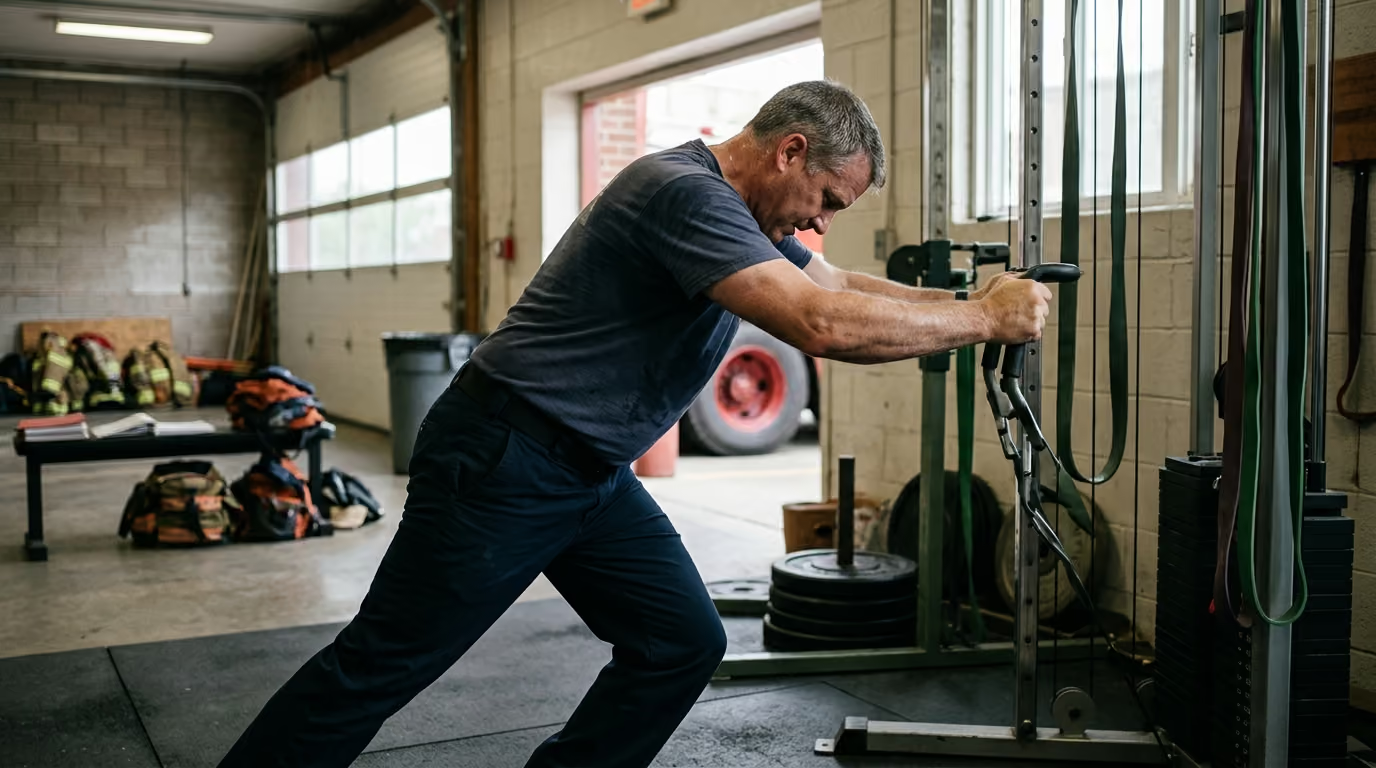

Tactical upper-body performance depends on balanced multi-planar strength, scapular control, and progressive programming built to withstand demanding operational duty environments.





A heavy barbell bench press or a high repetition pull-up test is often viewed as the ultimate measure of upper-body fitness. In emergency services, these isolated gym numbers rarely tell the full story. On duty, personnel do not press from a stable padded bench or pull in a single vertical plane. Real duty demands moving unpredictable loads across compromised surfaces while managing shifting centers of mass.
Upper-body duty performance requires producing force away from the body, drawing objects toward the torso, and stabilizing the joints while the environment changes. Developing true operational capacity requires an integrated approach to horizontal pushing, horizontal pulling, vertical pressing, vertical pulling, and multi-planar joint control.
A complete upper-body program builds balanced capacity across pushing and pulling planes while establishing strict scapular, shoulder, and trunk control. First responders need absolute strength to move heavy equipment and relative strength to negotiate obstacles. By prioritizing compound patterns, multi-angle control, grip endurance, and thoughtful progression, personnel can build physical durability that withstands the unpredictable demands of emergency service.
Muscular strength and endurance directly influence occupational performance across emergency services. Research examining simulated firefighting tasks shows strong inverse relationships between physical fitness and task completion times. Greater upper-body strength, lower-body power, and cardiorespiratory endurance correlate with faster hose drags, equipment carries, and forced entries.
A systematic review of firefighter physical qualities revealed that occupational performance relies on a hierarchy of physical capabilities. Anaerobic capacity and anaerobic power ranked highest in correlation with task speed. Lower-body strength and upper-body strength followed closely. Upper-body endurance and trunk stability rounded out the primary physical determinants. Upper-body strength is essential, but it operates as part of an integrated kinetic chain.
Occupational tasks demand a balance between absolute and relative strength. Absolute strength is the maximum force produced regardless of body weight. This quality dictates how easily a responder moves a 200-pound patient, advances a charged hose line, or breaches a reinforced door. Relative strength reflects force production relative to total body mass. This quality determines climbing speed, bodyweight suspension, and obstacle clearance.
Evidence indicates that neither quality is sufficient on its own. A heavy worker with high absolute pressing power may struggle to climb through an attic access point. Conversely, a lighter worker with superior pull-up numbers may lack the mass and absolute force needed to drag an unconscious victim. Comprehensive training must develop high-force output alongside efficient bodyweight control.
Grip strength and forearm endurance represent critical bottlenecks in operational performance. Studies tracking simulated emergency tasks show that hand grip endurance directly dictates control over tools, stretchers, and rescue ropes. When grip fails, the shoulder complex and trunk must compensate with inefficient postures that increase joint strain. Muscular endurance in the hands and upper back must match pressing and pulling capacities.
Emergency operations alter how the body produces and sustains upper-body force. Unlike scheduled gym sessions, duty tasks occur under acute stress, sleep disruption, and environmental extremes. Firefighters operate in thick turnout gear and self-contained breathing apparatus that restrict shoulder range of motion. Law enforcement officers carry heavy duty belts and body armor that alter center of gravity and torso rotation. Paramedics repeatedly lift stretchers from awkward, asymmetrical postures on uneven ground.
Shift work compromises central nervous system recovery and connective tissue repair. When responders train after broken sleep or long shifts, rate of force development and motor control decline. High-load pressing under severe fatigue places undue stress on the anterior shoulder capsule and rotator cuff. Training must accommodate these fluctuations through intelligent duty fitness training strategies that manage accumulated fatigue.
Thermal stress and structural loads elevate cardiovascular demands during upper-body tasks. Advancing a charged line or extricating a trapped patient drives heart rates near physiological maximums. Under this metabolic strain, local muscular endurance in the shoulders, arms, and upper back depletes rapidly. Training must prepare the upper body to maintain joint control when breathing rates are elevated.
Field tasks rarely allow symmetrical foot placement. Pushing an ambulance cot up an incline requires single-leg drive, diagonal trunk bracing, and sustained horizontal pressing. Pulling a ceiling down during overhaul requires overhead reaching combined with downward pulling and neck stabilization. Programs that rely solely on bilateral, seated gym machines fail to prepare responders for these dynamic, multi-planar forces.
Horizontal pushing and pulling form the foundation of load management in emergency operations. Horizontal pushing drives objects away from the body or stabilizes an external load while the legs move forward. Horizontal pulling draws objects, personnel, or lines toward the torso. Both patterns require coordinated force transfer through the feet, hips, trunk, and upper extremities.
Horizontal pressing develops the pectorals, anterior deltoids, and triceps while demanding anterior trunk stability. Standard barbell bench pressing builds raw absolute strength, but floor presses and push-ups offer distinct functional advantages. The floor press limits shoulder extension at the bottom position, protecting the anterior joint capsule. Push-ups require the body to move around a fixed hand position, challenging the serratus anterior and trunk stabilizers.
Push-up variations can be progressed far beyond simple high-repetition sets. Elevating the feet increases the load transferred through the upper torso. Adding resistance bands or weight vests challenges absolute pushing capacity while demanding strict spinal alignment. Single-arm cable presses in a split stance teach the body to resist rotational torque, mimicking the mechanics of pushing open a heavy door.
Horizontal pulling develops the rhomboids, middle and lower trapezius, latissimus dorsi, posterior deltoids, and elbow flexors. These muscle groups counterbalance constant forward-reaching postures and stabilize the shoulder girdle during heavy carries. Inverted bodyweight rows challenge upper-back endurance while requiring glute and hamstring engagement to maintain a rigid plank.
Chest-supported rows allow high-intensity pulling without placing compressive loads on the lumbar spine. Single-arm dumbbell rows train latissimus recruitment while demanding anti-rotational trunk stability. Sled rope pulls directly mimic hose advancement and patient drags, requiring sustained grip, rhythmic elbow flexion, and lower-body drive. Balancing horizontal pushing volume with dedicated horizontal pulling protects the shoulder joint from overuse patterns.
Vertical pushing and pulling patterns govern overhead tool work, ladder operations, climbing, and self-rescue maneuvers. These movements require wide ranges of motion at the glenohumeral joint and coordinated upward rotation of the scapula. Without adequate mobility and stabilization, vertical loading can trigger impingement or chronic joint irritation.
Vertical pressing drives force upward relative to the torso. The strict overhead barbell press develops absolute vertical pressing power, but it demands excellent thoracic extension and shoulder flexion. Responders who lack full overhead range often hyperextend the lumbar spine to compensate. Landmine presses provide a joint-friendly alternative, allowing an angled pressing trajectory that accommodates natural scapular motion.
Half-kneeling single-arm overhead presses challenge vertical strength while locking the pelvis in a neutral position. This setup prevents lumbar overarching and teaches the responder to stabilize the trunk using the glutes and abdominals. Neutral-grip dumbbell presses place the shoulder in a position that reduces mechanical stress within the subacromial space. Responders must earn the right to press overhead by demonstrating clean thoracic mobility and pain-free mechanics.
Vertical pulling draws the body upward toward a fixed anchor or draws an overhead load downward. Pull-ups and chin-ups represent gold standards for relative pulling strength and upper-body power. They combine shoulder adduction, elbow flexion, and scapular depression under full body mass. For personnel who cannot complete strict pull-ups, assisted variations and lat pulldowns develop the necessary baseline latissimus and grip strength.
Overhead pulling mechanics should prioritize full active range of motion. Pulling should initiate with scapular depression and retraction before the elbows bend. Reaching full elbow extension at the bottom of each repetition develops strength in elongated muscle positions, protecting tendons during sudden loading events. Combining vertical pulling with horizontal rowing creates a balanced, durable upper back capable of handling diverse occupational demands.
The scapula serves as the mechanical bridge linking the upper arm to the rib cage and spine. For decades, traditional strength coaching insisted that the shoulder blades should remain pinned back and down during all upper-body exercises. Modern biomechanics contradicts this rigid cue. The scapula is designed to move dynamically across the thoracic wall to support the arm as it changes angles.
Proper overhead and pushing mechanics require upward rotation, protraction, posterior tilt, and elevation of the shoulder blade. Forcing the scapulae into constant retraction during pressing limits natural shoulder rhythm and can lead to impingement. Exercises like the push-up plus, serratus wall slides, and overhead carries encourage healthy scapular protraction and upward rotation. Rows and face pulls build retraction and posterior tilt control.
The concept of scapular dyskinesis describes altered scapular movement or resting position. Research demonstrates that scapular asymmetry is present in over half of healthy, asymptomatic individuals. Visible movement asymmetry does not automatically signify injury or pathology. Clinical consensus emphasizes evaluating scapular mechanics within the context of symptoms, strength, and operational task tolerance rather than treating minor visual asymmetries in isolation.
Push-to-pull ratios are frequently used to audit training balance. While aiming for roughly equal volume between pressing and pulling is sound practice, universal numerical ratios are overly simplistic. Different tactical roles demand distinct movement profiles. Monitoring an individual responder's push-to-pull volume helps avoid extreme imbalances where bench pressing dominates the routine while upper-back training is neglected.
Shoulder external-to-internal rotation strength ratios also require careful interpretation. While adequate rotator cuff strength is vital for joint centration, studies in tactical populations show mixed results regarding whether rotation ratios predict future injuries. Rotator cuff training should include prone external rotations, face pulls, and rhythmic stabilization drills. These exercises develop baseline tissue tolerance, but they must be paired with compound multi-joint movements for practical duty readiness.
Raw strength is useless if a responder cannot control an unstable object or transfer force through the body. Operational tasks are rarely clean or predictable. A patient on a backboard shifts unexpectedly. A charged hose line writhes under water pressure. A combative subject resists control techniques. Duty readiness demands multi-planar stability, varied contraction types, and robust grip endurance.
Training must progress through multiple body positions to prepare for dynamic environments. Standing, split-stance, tall-kneeling, half-kneeling, and crawling positions expose the upper body to diverse stability challenges. Performing a single-arm cable press from a split stance teaches the body to drive force from the rear foot through the hips, across the anterior diagonal core, and out through the pressing arm.
Operational tasks utilize three primary muscle contraction types:
Carries represent one of the most effective methods for developing integrated upper-body control and grip capacity. Suitcase carries challenge anti-lateral flexion of the spine while testing unilateral grip. Bottom-up kettlebell carries force precise shoulder centration and intense forearm activation. Front-rack carries build thoracic extension endurance, and overhead carries develop dynamic scapular stability under sustained load.
Grip endurance requires targeted training across multiple hand positions. Responders should train crushing grip with heavy dumbbells, pinch grip with weight plates, and support grip with thick ropes or towels. Towel pull-ups, thick-bar rows, and timed dead hangs build resilience in the forearm flexors. This hand strength directly prevents premature grip failure during extended rescue scenarios.
Designing an upper-body program for first responders requires balancing stimulus with recovery. Shift work, unpredictable call volumes, and physical duty demands make excessive training volume counterproductive. Programs must focus on high-yield compound movements that build strength efficiently while preserving energy for the job.
According to exercise science principles, training major muscle groups at least twice per week optimizes strength and hypertrophy adaptations. For maximum strength development, using loads at or above 80 percent of one-repetition maximum for two to three sets provides an effective stimulus. Moderate loads performed for higher volumes develop muscular endurance and tissue tolerance. First responders should blend heavy compound work with higher-repetition assistance exercises.
A two-day split fits demanding work schedules and allows ample recovery between duty shifts.
For personnel on predictable schedules or during low-call periods, a three-day split integrates power, strength, and duty conditioning.
Exercises must progress logically based on individual movement quality and operational tolerance.
Training must adapt to individual strengths and weaknesses:
Learn how to modify these sessions based on daily readiness by reviewing the shift-work training decision tree to ensure optimal recovery.
Progress in upper-body training often stalls due to common programming mistakes. Identifying and resolving these errors protects joint health and accelerates duty readiness.
One widespread error is accumulating excessive pressing volume while neglecting upper-back training. Routine bench pressing without matching rowing and rear deltoid work pulls the shoulders into persistent internal rotation. This creates muscular imbalances that elevate strain on the bicipital tendon and rotator cuff. Balancing pressing volume with equal horizontal and vertical pulling protects long-term joint health.
Another pitfall is forcing painful overhead pressing patterns. Barbell overhead pressing requires significant thoracic extension, upward scapular rotation, and shoulder flexion. When personnel with limited mobility force this movement, they hyperextend the lumbar spine and pinch subacromial tissues. Modifying the movement to a landmine press or neutral-grip dumbbell press maintains strength development without causing joint inflammation.
Over-relying on isolated gym tests to judge operational capability leads to false confidence. Performing twenty pull-ups does not guarantee that a responder can manage an awkward hose line or lift an obese patient from a tight hallway. Tests provide baseline data, but training must incorporate offset loads, thick grips, and multi-directional forces to build true operational resilience. Explore broader concepts in our strength fitness and duty performance resources to expand your program design.
Training every set to absolute muscular failure severely impairs central nervous system recovery. For shift workers who may catch a working structure fire or a complex rescue call hours after training, deep central fatigue creates unnecessary operational risks. Leaving one to two repetitions in reserve preserves motor control and ensures responders remain ready for duty. Implementing autoregulation principles outlined in our guide to readiness and autoregulation helps calibrate daily intensity appropriately.
Upper-body training must always be balanced against the physical realities of operational service. Pushing through acute joint pain or training under extreme sleep deprivation increases injury risk. First responders must recognize critical training limits to protect both their performance and their long-term health.
Fatigue management is the most important safety boundary in tactical strength training. When cumulative fatigue from night shifts, overtime, and high call volumes sets in, joint position sense and motor recruitment degrade. Attempting heavy one-repetition maximum lifts during periods of acute sleep loss places excessive strain on passive joint structures. Modifying load, utilizing moderate rep ranges, or swapping free weights for stable bodyweight movements protects the body during high-fatigue cycles.
Responders dealing with acute joint discomfort must modify movement patterns rather than forcing through pain. Anterior shoulder irritation can often be managed by switching from wide-grip barbell bench pressing to neutral-grip dumbbell floor pressing. Medial or lateral elbow pain often responds well to replacing straight-bar curls and pull-ups with neutral-grip or suspension-strap variations. Modifying the grip interface and range of motion allows continued strength development without aggravating sensitive connective tissues.
Training should never compromise operational safety. Never perform exhaustive grip training or maximum-effort pressing sessions immediately prior to reporting for high-risk duty shifts. If forearm muscles are fatigued, tool control, weapon retention, and ladder security are compromised. Schedule high-intensity upper-body sessions on off-duty days or at the start of extended rest cycles to allow complete tissue recovery. Learn more about long-term physical sustainability in our career longevity section.
While minor muscle soreness is a normal adaptation to resistance training, persistent joint pain or neurological symptoms demand professional medical evaluation. First responders often attempt to self-treat shoulder injuries, which can turn manageable conditions into chronic, career-limiting impairments.
A licensed physical therapist, sports medicine physician, or orthopedist should be consulted if you experience:
A qualified clinician can perform orthopedic testing, evaluate true scapulothoracic rhythm, and determine whether symptoms stem from rotator cuff tears, labral pathology, cervical spine issues, or joint impingement. Early clinical intervention combined with structured rehabilitation preserves operational readiness and prevents long-term disability. Access additional recovery strategies across our injury recovery resources to support your rehabilitation process.
Building an upper body capable of handling demanding operational service requires moving beyond traditional bodybuilding or powerlifting templates.
Sustainable upper-body duty capability is built through consistent, balanced training that protects joint integrity while developing practical operational strength. By training push, pull, and control as an integrated system, first responders ensure they can perform on duty today and remain physically resilient throughout their entire careers.
Stay connected for research-led guidance on duty fitness, shift-work sleep, injury recovery, stress, nutrition and career longevity. Practical ideas for first responders who want to stay capable on the job, recover well and protect their health for the long run.



Read practical guidance on first responder fitness, recovery, sleep, nutrition and resilience for demanding work and a long, active career.
read the blog



