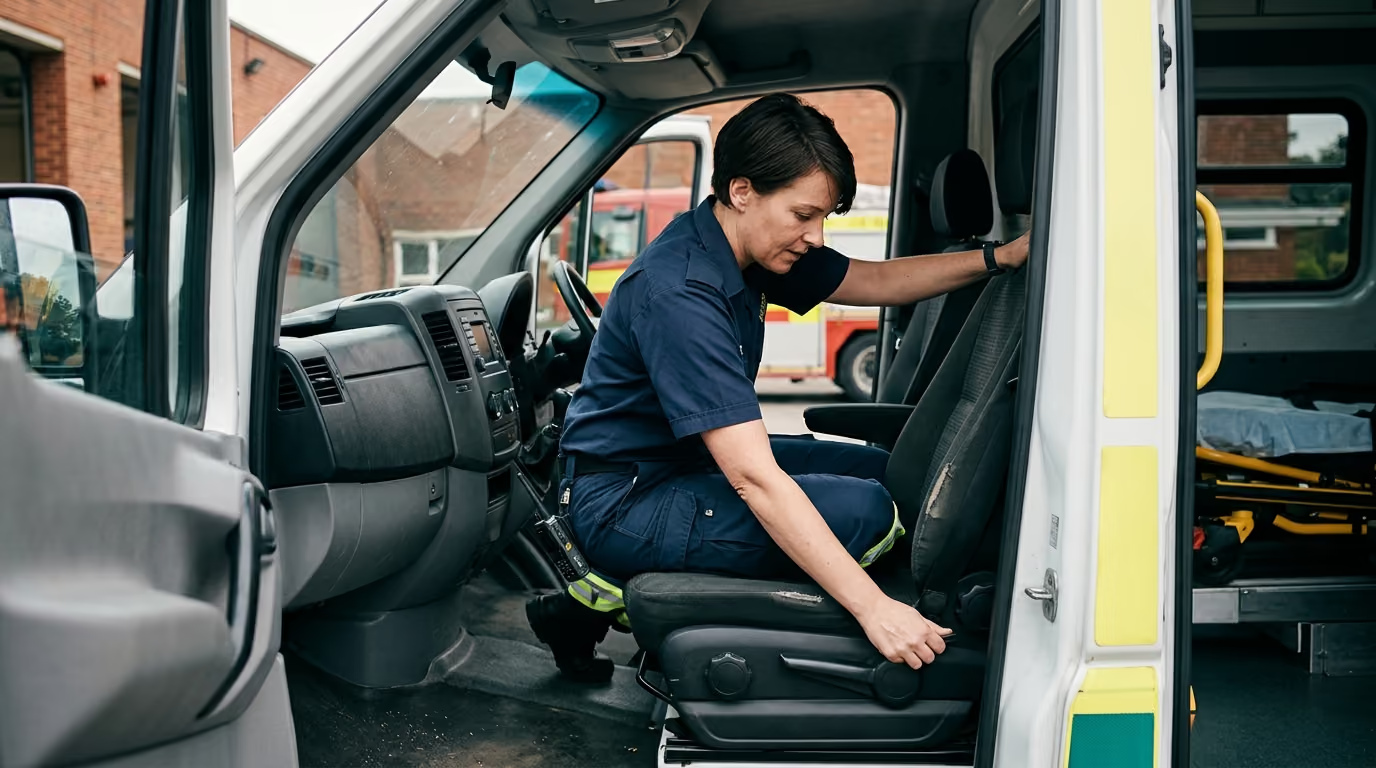
Most emergency services treat cab discomfort as an inevitable part of the job rather than a direct mechanical driver of musculoskeletal injury. The reality is that the vehicle is an active workstation where static compression, vibration, and constrained posture prime the body for acute failure during subsequent high-force tasks.
Addressing vehicle ergonomics requires looking beyond seat padding or seatbelt adjustments. It demands a systematic evaluation of how cab architecture, body-worn equipment, Whole-Body Vibration, and rapid transitions interact under operational time pressure.
Define the Vehicle Work System as an Injury Mechanism
Vehicle ergonomics is an injury-prevention priority rather than a luxury or convenience initiative. First responders spend hours seated in constrained postures while wearing restrictive equipment, followed immediately by high-velocity exits, heavy lifting, or physical confrontations. These transitions create a cumulative exposure pattern where sustained static load, vibration, awkward reaching, and sudden force interact directly.
Understanding this dynamic requires precise clinical and occupational definitions:
Clinical and Occupational Terminology
- Discomfort: Transient stiffness, localized aching, or fatigue that resolves shortly after leaving the vehicle.
- Musculoskeletal Symptoms: Persistent pain, numbness, tingling, weakness, or joint restriction indicating tissue irritation.
- Musculoskeletal Disorders: Clinically defined conditions affecting muscles, tendons, ligaments, nerves, or spinal discs resulting from cumulative wear or sudden loading.
- Acute Injury: Sudden tissue damage from a specific event, such as a slip during egress, a collision, or an uncontrolled lift.
- Cumulative Trauma: Gradual structural breakdown caused by repeated micro-trauma without a single identifiable incident.
- Work-Related Aggravation: Mechanical cab stressors that exacerbate pre-existing degenerative changes or previous occupational injuries.
Standard incident reports usually document only the final acute event. An officer who suffers a lumbar tear while restraining a subject may have experienced months of postural creep and disc compression inside a patrol vehicle. The prolonged sitting compromised spinal stability long before the physical confrontation occurred.
Applying the vehicle-work system model means evaluating the operator, seating geometry, control placement, body-worn gear, step height, and road conditions as a single operating unit. Research from the Canadian emergency services standard emphasizes that ambulance and response vehicle design must balance human performance and physical limitations against engineering requirements.
Examine the Research on Responder Musculoskeletal Risk
Epidemiological surveillance data demonstrates that musculoskeletal injuries represent the primary medical burden across emergency services. A national surveillance study of emergency-department-treated injuries among emergency responders by the Centers for Disease Control and Prevention identified sprains and strains as the leading diagnosis across all responder groups.
Sprains and strains accounted for 41 percent of emergency department visits for emergency medical services personnel. They represented 33 percent of injuries among career firefighters and 34 percent among law enforcement officers.
- EMERGENCY-DEPARTMENT-TREATED SPRAIN AND STRAIN PROPORTIONS
The same national dataset revealed that bodily motion was the primary exposure category for these injuries. Bodily motion accounted for 39 percent of EMS injuries, 20 percent of firefighter injuries, and 19 percent of police injuries.
Vehicles and transit events were direct contributors to responder trauma. Vehicles were identified as the injury source in 14 percent of EMS cases, 8 percent of firefighter cases, and 17 percent of law enforcement cases. Transportation incidents accounted for 10 percent of EMS emergency visits, 5 percent of firefighter injuries, and 14 percent of police injuries.
A workers' compensation study examining first responder claims in Ohio revealed distinct anatomical patterns across disciplines. Police officers experienced elevated rates of motor-vehicle-related back problems, while firefighters suffered higher rates of overexertion injuries. Police officers and firefighters injured their backs and knees more frequently than their shoulders. In contrast, EMS personnel injured their backs and shoulders significantly more often than their knees.
- PRIMARY INJURY SITES BY OCCUPATIONAL DISCIPLINE
- Police Officers: Lower Back, Hips, Knees
- Firefighters: Lower Back, Knees, Ankles
- EMS Personnel: Lower Back, Shoulders, Cervical Spine
A broader occupational review from Monash University confirmed these patterns across international fleets. Ambulance personnel demonstrated the highest vulnerability to upper-body and trunk strain. Fire and rescue personnel sustained a higher proportion of lower-extremity and spinal injuries linked to climbing, gear weight, and dynamic movement.
Research conducted across 12 law enforcement sites published through the CDC examined 974 active patrol officers. The findings indicated that 88 percent of officers reported physical pain or discomfort at the end of their shift. The lower back and hips were the most frequently affected anatomical regions. Approximately one-third of the officers reported chronic neck pain linked to viewing and operating center-mounted mobile data terminals.
Analyze the Primary Biomechanical Drivers of In-Cab Strain
Cab-induced musculoskeletal disorders result from specific, measurable mechanical forces acting on spinal discs, nerve roots, and peripheral joints.
- THE FIVE INTERACTING MECHANICAL STRESSORS IN CAB ENVIRONMENTS
- 1. Sustained Ischial and Lumbar Compression
- 2. Asymmetric Rotational Torque
- 3. Whole-Body Vibration and Impact Shock
- 4. Dynamic Motion During Transit
- 5. High-Impact Ingress and Egress Mechanics
1. Sustained Sitting and Pelvic Posterior Tilt
Prolonged seated positioning flattens the natural lumbar lordosis, pushing the pelvis into a posterior tilt. This posture increases intradiscal pressure within the L4-L5 and L5-S1 spinal segments. Over hours of driving, the posterior spinal ligaments experience viscoelastic creep, loosening passive spinal support and leaving spinal structures vulnerable to shear forces during sudden movement.
Equipment worn on the duty belt, such as handcuffs, radio holsters, and sidearms, worsens this issue. When these items sit between the pelvis and the seat back, they create focal pressure points, rotate the pelvis, and tilt the lumbar spine.
2. Rotational Torque and Asymmetric Reaching
Mobile data terminals, radios, sirens, and secondary equipment are routinely mounted on center consoles. Accessing these controls forces the operator into combined trunk flexion, lateral bending, and axial rotation.
This mechanical combination creates high shear strain on spinal annulus fibers. Reaching across the passenger compartment to retrieve gear or access computers produces continuous eccentric loading on the shoulder musculature and contralateral paraspinal tissues.
3. Whole-Body Vibration and Mechanical Shock
Whole-Body Vibration (WBV) is low-frequency mechanical energy transmitted from the road surface through the vehicle chassis, floor, and seat cushion into the operator's skeleton. WBV exposure frequencies between 4 and 8 Hz match the natural resonance frequency of the human lumbar spine.
Continuous vibration at these frequencies accelerates disc degeneration, reduces nutrient diffusion across vertebral endplates, and triggers sustained muscle contractions that lead to paraspinal fatigue. Transient mechanical shocks, such as striking potholes, crossing railroad tracks, or navigating uneven curbs, deliver unattenuated peak forces directly through a fatigued spine.
4. Movement in Confined, Moving Compartments
Emergency medical providers face unique mechanical challenges when providing patient care in a moving ambulance. Providing chest compressions, managing airways, starting intravenous lines, or retrieving supplies while the vehicle accelerates, turns, and brakes requires complex stabilization.
An OSHA occupational review identified standing to access overhead supplies during transit as a major source of acute spinal injuries among emergency medical technicians. Performing precision manual tasks while resisting lateral inertial forces creates severe spinal compression combined with unpredictable multi-directional shear loading.
5. Ingress and Egress Kinetic Energy
Entering and exiting response vehicles is a high-frequency, repetitive action. In full gear, a firefighter or police officer adds 20 to 60 pounds of external load to their body. Exiting a cab by stepping down blindly or jumping to the ground multiplies joint ground reaction forces across the ankles, knees, and lumbar spine.
Over thousands of calls, these repetitive impacts cause microtrauma to articular cartilage and surrounding tendons. Twisting the torso while backing out of a confined patrol door compounds these forces with destructive rotational torque across the weight-bearing hip and knee.
Configure Patrol Vehicles to Protect Spine and Hip Mechanics
Patrol vehicles present distinct ergonomic challenges due to tight cockpits, body armor, duty belts, and center-mounted electronic consoles.
- PATROL COCKPIT ALIGNMENT CLEARANCES
- Head Restraint
- Steering Wheel
- MDT Position
- Seat Base
Optimize Seating Geometry and Equipment Clearance
An adjustable seat does not guarantee an ergonomic workstation if the duty belt or safety partition limits the seat's usable range. When configuring a patrol seat, adjust the seat base height so your eyes are centered in the windshield while maintaining clear view of all dashboard instruments.
Set the seat cushion angle so your thighs are fully supported without placing pressure behind your knees. Keep two to three fingers of clearance between the front edge of the seat pan and your popliteal fossa (the crease behind the knee).
Adjust the backrest angle to between 100 and 110 degrees. This slight recline reduces passive disc pressure compared to sitting completely upright at 90 degrees. Position the lumbar support so it sits firmly in the inward curve of your lower back without forcing your pelvis forward away from the backrest.
If your duty belt hardware pushes against the seat bolsters, adjust your holster positions or use specialized duty-seat cutouts. Your pelvis must rest squarely against the backrest to maintain spinal alignment.
Position Mobile Data Terminals and Secondary Controls
Center-mounted displays are a primary source of chronic cervical and thoracic strain among patrol personnel. To reduce this strain, mount the terminal on an articulating bracket that allows adjustments in height, tilt, and swivel.
Position the screen so you can view it with less than 15 to 20 degrees of lateral neck rotation from your standard driving posture. The top of the display screen should sit level with or slightly below your eye line, preventing upward neck extension.
Angle the screen surface directly toward your face to eliminate glare and reduce neck craning. When typing, bring the terminal closer to your body rather than reaching across the center console.
If you must type for an extended period, rotate your entire torso toward the computer rather than twisting only your neck and upper back. Stow and lock the terminal securely before putting the vehicle in motion so it does not obstruct your forward visibility or line-of-sight to the passenger-side mirror.
Structure Patrol Routine Posture Resets
Extended periods of stationary surveillance or traffic monitoring cause significant postural creep and tissue stiffness. Integrate short physical resets during natural operational pauses.
- Every 45 to 60 minutes, gently tilt your pelvis forward and backward five to ten times to mobilize the lumbar spine and restore fluid exchange in the intervertebral discs.
- Retract your cervical spine by performing gentle chin tucks to counteract forward-head posture caused by looking at mounted displays.
- When parked safely, shift your feet flat onto the floor pan, sit tall away from the backrest, and take several deep diaphragmatic breaths to engage core stabilizers.
- Avoid resting your left arm continuously on the hard window sill, which can compress the ulnar nerve and elevate the left shoulder girdle.
For additional recovery routines between calls, check our guide on injury prevention and physical recovery strategies.
Configure Ambulance Compartments for Dynamic Patient Care
Ambulance patient compartments require an ergonomic layout that balances direct clinical access with physical safety during transit. Applying user-centered design principles ensures equipment is positioned around typical paramedic movements.
- AMBULANCE PATIENT COMPARTMENT ERGONOMIC ZONES
- Zone 1: Primary Reach Airway, Suction, Gloves, Sharps
- (Seated/Belted) (Zero standing required)
- Zone 2: Secondary Reach IV Kits, Bandaging, Med Bags
- (Seated Reach) (Within arm's length)
- Zone 3: Base Storage Backboards, Stair Chairs, Oxygen Tanks
- (Vehicle Staged) (Accessible from exterior or entry)
Eliminate Unsupported Standing During Transit
Working in a moving patient compartment without physical support presents a high risk for acute spinal and extremity injuries. Arrange medical supplies so the primary provider can reach essential equipment while seated and buckled into the attendant seat.
- Store primary airway supplies, suction units, bag-valve masks, diagnostic tools, gloves, and sharps containers within arm's reach of the primary airway seat.
- Mount cardiac monitors and defibrillators on swivel-and-lock brackets visible from both the primary attendant seat and the secondary squad bench.
- Avoid reaching across the patient while the ambulance is in motion; if clinical needs require moving, use ceiling-mounted grab rails to maintain continuous upper-body stability.
- Establish an operational standard that non-emergent procedures requiring standing are completed while the vehicle is stationary or during controlled stops.
Improve Cot Loading and Transition Mechanics
Stretcher loading and unloading operations impose high spinal shear loads, particularly when handling bariatric patients or navigating uneven surfaces.
- Use powered hydraulic or battery-assisted cot systems whenever possible to eliminate manual lifting from the ground to loading height.
- Adjust the cot height so the load handles sit level with your pelvic brim before initiating movement, maintaining an upright torso and neutral wrists.
- Ensure the ambulance rear bumper step features a high-traction, self-draining surface to prevent slip events during cot engagement.
- Align the cot straight with the vehicle's floor track system before pushing forward, avoiding awkward twisting loads on the shoulders and lumbar spine.
- If using manual cots, enforce a two-person team lift protocol with synchronized lifting counts and clear communication.
For guidance on maintaining structural strength around irregular calls, read about structured physical preparation routines.
Modify Fire Apparatus and Heavy Cab Layouts
Heavy fire apparatus cabs feature elevated mounting heights, high step profiles, and tight internal spaces crowded by structural firefighting gear and self-contained breathing apparatus (SCBA).
- FIRE APPARATUS 3-POINT INGRESS/EGRESS CONTACT
- Hand 1
- Hand 2
- Foot 1
- Never jump from the cab or rear tailboard step surface
Standardize Ingress and Egress Protocols
Stepping out of an engine, ladder truck, or rescue apparatus is a frequent source of lower-extremity trauma among firefighters. The national injury study highlighted that firefighter sprains and strains predominantly affect the lower trunk, ankles, and knees.
- Maintain continuous three-point contact (two hands and one foot, or two feet and one hand) throughout the entire entry and exit sequence.
- Face toward the cab interior when stepping down from the vehicle rather than facing outward toward the street.
- Use designated vertical grab rails instead of gripping the steering wheel, door frame, or seat cushion edge during descent.
- Visually inspect the step surface and the ground below for ice, water, oil, debris, or curbs before committing your body weight to the step.
- Prohibit jumping from cab steps, tailboards, or bumper surfaces, as jumping while wearing heavy gear can generate peak impact forces up to six to eight times your body weight.
Reconcile SCBA Seats and Cab Seating Geometry
Riding in apparatus seats designed to accommodate SCBA cylinders can push the torso forward and remove lumbar support if not properly adjusted.
- Ensure mechanical SCBA seat brackets and integrated back cavities allow the firefighter's back to rest flush against the seat frame when riding unequipped.
- When riding with an SCBA cylinder mounted, adjust the shoulder straps and head clearance so the bottle does not tilt the helmet forward into cervical flexion.
- Position apparatus head restraints to align with the center of the occupant's head, accounting for the added bulk of particulate hoods and structural gear.
- Adjust apparatus driver air-suspension seats based on individual operator weight, preventing the suspension from bottoming out on rough roads.
Optimize Compartment Tool Storage and Retrieval
Heavy equipment stored in high or deep apparatus compartments creates substantial spinal and shoulder loading during retrieval.
- Store high-frequency, heavy tools, such as extrication spreaders, hydraulic power units, and large supply hoses, between mid-thigh and chest height.
- Install roll-out trays and drop-down tool boards to bring equipment outside the apparatus body envelope, eliminating the need to overreach into compartments.
- Use two-person lift protocols for all equipment exceeding 45 pounds, particularly when lifting from elevated running boards or side steps.
- Position hose bed access ladders and folding steps to provide secure handholds and slip-resistant footing during packing operations.
For information on balancing high-output shifts and recovery, explore training around shift work demands.
Apply the Vehicle Ergonomics Assessment Checklist
Use this structured assessment to evaluate fleet vehicle ergonomics. Score each item from 0 to 3 based on direct observation of the responder wearing full operational duty gear.
- SCORING CRITERIA
- 0 No concern Optimal ergonomic design
- 1 Minor concern Minimal postural compromise
- 2 Significant concern Clear mechanical strain present
- 3 Immediate corrective priority High injury hazard
1. Seated Posture and Clearance
- Can the operator position their pelvis fully against the backrest without duty belt interference?
- Does the backrest provide continuous, comfortable support throughout the lumbar curve?
- Is there 2 to 3 fingers of clearance between the front edge of the seat pan and the back of the knee?
- Can the driver operate the accelerator and brake pedals without hyper-extending the knee or lifting the thigh off the seat?
- Does the seat provide adequate lateral thigh and torso support without creating pressure points on equipment holsters?
2. Steering and Primary Controls
- Can the operator grip the steering wheel with relaxed shoulders and slightly bent elbows (approximately 90 to 120 degrees)?
- Is there at least 10 to 12 inches of clearance between the center of the steering wheel and the front of the officer's body armor?
- Can the driver access the radio microphone, siren controller, and light switches without twisting the torso away from the seat?
- Are secondary emergency switches labeled clearly and positioned within direct sightlines?
3. Display Terminals and Secondary Electronics
- Can the mobile data terminal screen be viewed with less than 15 to 20 degrees of lateral neck rotation?
- Does the terminal position avoid obstructing forward windshield visibility and side-mirror sightlines?
- Can the operator position the keyboard to allow neutral wrist postures during typing?
- Can the computer mounting assembly be locked securely to prevent movement during driving maneuvers?
4. Whole-Body Vibration and Chassis Dynamics
- Does the vehicle seat suspension operate smoothly without bottoming out over standard road bumps?
- Are vehicle tires, shocks, struts, and chassis bushings properly maintained to minimize cabin vibration?
- Do operators report freedom from excessive road shock, cabin rattle, and floor vibration during routine operations?
- Are seat foam cushions intact and resilient, showing no signs of bottoming out or structural breakdown?
5. Ingress and Egress Architecture
- Are vehicle door openings wide enough to allow clearance for duty belts, turnout gear, and equipment bags?
- Are exterior steps slip-resistant, illuminated, self-cleaning, and positioned at a comfortable step height?
- Are vertical grab rails reachable and comfortable to grip while wearing structural firefighting or rescue gloves?
- Can personnel maintain continuous three-point contact throughout the entry and exit sequence?
- Is the step transition free from tripping hazards, structural obstructions, or pinch points?
6. Compartment and Tool Ergonomics
- Are primary medical supplies and high-use tools stored between mid-thigh and chest height?
- Are essential patient care supplies accessible from a seated, belted position inside the ambulance?
- Can heavy tools and jump bags be removed without requiring deep reaches or torso twisting?
- Are heavy equipment items secured in crash-tested mounting brackets that are easy to release?
7. Fleet Management and Reporting Systems
- Does the agency provide an established, non-punitive process for reporting vehicle fit issues and seat defects?
- Do fleet procurement specifications include field evaluations with responders wearing full gear?
- Are seat repairs, suspension overhauls, and mount adjustments tracked within routine maintenance schedules?
- Does the organization provide onboarding education covering cab setup and safe exit mechanics?
Implement Administrative Controls and Equipment Selection
Engineering modifications to vehicle cabs provide the most effective protection, but administrative policies and targeted gear selection are essential supporting measures.
- HIERARCHY OF VEHICLE ERGONOMIC CONTROLS
- Level 1: Engineering
- Level 2: Fleet Policy
- Level 3: Administrative
- Level 4: Individual
Fleet Procurement and Field Evaluation
Fleet purchasing decisions should evaluate total ergonomic integration rather than reviewing vehicle chassis and electronic systems in isolation.
- Require vehicle upfitters to demonstrate that mobile data terminal mounts, partitions, and consoles do not compromise seat travel or recline angles.
- Incorporate operational trials with personnel across diverse heights and body types wearing complete gear (such as body armor, duty belts, and turnout gear) before finalizing fleet orders.
- Specify air-suspension or mechanical dampening seats for heavy fire apparatus and high-mileage utility fleets.
- Choose low-profile, modular duty gear, load-bearing vests, or suspender systems that redistribute weight from the pelvis to the upper torso, clearing the lower seat back.
Fleet Maintenance Protocols
Vehicle seats, cushions, and mounting hardware degrade over time and require proactive maintenance.
- Include seat suspension mechanisms, foam integrity, step surfaces, grab handles, and display mount locks on monthly apparatus and patrol vehicle inspection checklists.
- Establish mandatory replacement criteria for vehicle seats that lose structural support, show broken adjustment mechanisms, or have bottomed-out cushion foam.
- Rotate high-mileage, rough-riding reserve vehicles across assignments to reduce individual cumulative vibration exposure.
- Promptly repair loose or misaligned electronic mounting arms that force personnel into awkward typing or viewing postures.
Shift Rotation and Postural Variation
Administrative policies can support movement variation and reduce sustained static loading.
- Encourage dynamic postural changes during shifts, alternating driving and passenger duties between partners when operationally feasible.
- Structure patrol assignments to balance prolonged sitting with foot patrols, stationary facility checks, or targeted physical tasks.
- Schedule regular operational pauses during extended highway transports or surveillance details to step out of the cab and walk briefly.
To understand how individual recovery impacts sustained career health, read about managing accumulated fatigue and physical readiness.
Recognize Limits, Trade-Offs, and Clinical Red Flags
While ergonomic adjustments significantly reduce physical strain, they operate within real operational constraints. Balancing occupant safety, equipment accessibility, and emergency response capabilities involves inevitable trade-offs.
- OPERATIONAL RED FLAGS: PROMPT MEDICAL EVALUATION NEEDED
- Persistent numbness, tingling, or radiating extremity pain
- Progressive motor weakness in the foot (foot drop) or hand
- Night pain waking you from sleep after long driving shifts
- Unresolving spinal stiffness lasting longer than 2 weeks
- Changes in bowel or bladder function (EMERGENCY RED FLAG)
Understand Operational Constraints
- Airbag deployment zones, side-curtain safety systems, and crash survivability standards restrict where electronics and equipment brackets can be placed.
- Partition safety cages in law enforcement vehicles inherently limit rearward seat travel and recline range for taller officers.
- Ambulance patient compartment dimensions must prioritize direct patient access and resuscitation space, which can complicate optimal seating placement.
- Tactical body armor and respiratory protection reduce spinal mobility, making some awkward reaching unavoidable during complex calls.
- Vehicle modifications must never compromise immediate emergency driving safety, emergency egress clearance, or primary road visibility.
Identify When Professional Medical Evaluation Matters
Vehicle adjustments can mitigate mechanical stress, but they cannot treat established structural disc pathology, advanced facet joint arthropathy, or peripheral nerve compression syndromes. Personnel should consult a qualified healthcare professional (such as an occupational physical therapist, sports medicine physician, or orthopedic specialist) when experiencing:
- Radiating pain, numbness, or tingling traveling down the buttock, leg, calf, or into the foot (sciatica).
- Pins-and-needles sensations or numbness extending down the arm into the hand and fingers during or after driving.
- Progressive muscular weakness, such as difficulty lifting the foot (foot drop) or dropping held items.
- Spinal pain or joint stiffness that persists for more than two weeks despite proper vehicle setup and rest.
- Any sudden alteration in bowel or bladder control, or numbness in the groin or saddle area, which represents a surgical emergency (Cauda Equina Syndrome).
Personnel must never operate an emergency vehicle or return to active duty while impaired by severe physical pain, neurological deficits, or the sedating effects of prescription pain medications.
To discover more strategies for long-term health, explore our resources on preserving career longevity.
Review the Key Takeaways
- Treat cab ergonomics as a primary component of injury prevention rather than a comfort preference.
- Configure vehicle seats, steering wheels, mirrors, and electronic displays together as a single integrated system.
- Account for the bulk and weight of operational gear, body armor, and duty belts during vehicle adjustments.
- Minimize unsupported standing and reaching inside moving ambulances by keeping high-frequency supplies within arm's reach of belted seating.
- Maintain strict three-point contact during apparatus ingress and egress, and prohibit jumping from cab steps or tailboards.
- Use the structured 7-domain vehicle assessment checklist to identify and correct fleet ergonomic hazards.
- Seek prompt licensed medical evaluation for radiating nerve symptoms, persistent pain, or motor weakness.
Systematic vehicle ergonomics protects joint health, lowers acute injury rates, and supports the physical longevity required for a healthy career.
Sources
- The impact of emergency responder musculoskeletal injuries in the State of Ohio - PubMed
- (PDF) Applied Ergonomics - CDC Stacks
- Chapter 1: Ergonomics and Wellness (summary and references)
- Occupational injuries among emergency responders
- Emergency Responder Health Effects
- The nature and burden of occupational injury among first ...
- Emergency Services Ergonomics and Wellness - U.S. Fire ...
- Musculoskeletal Disorders and Whole Body Vibration