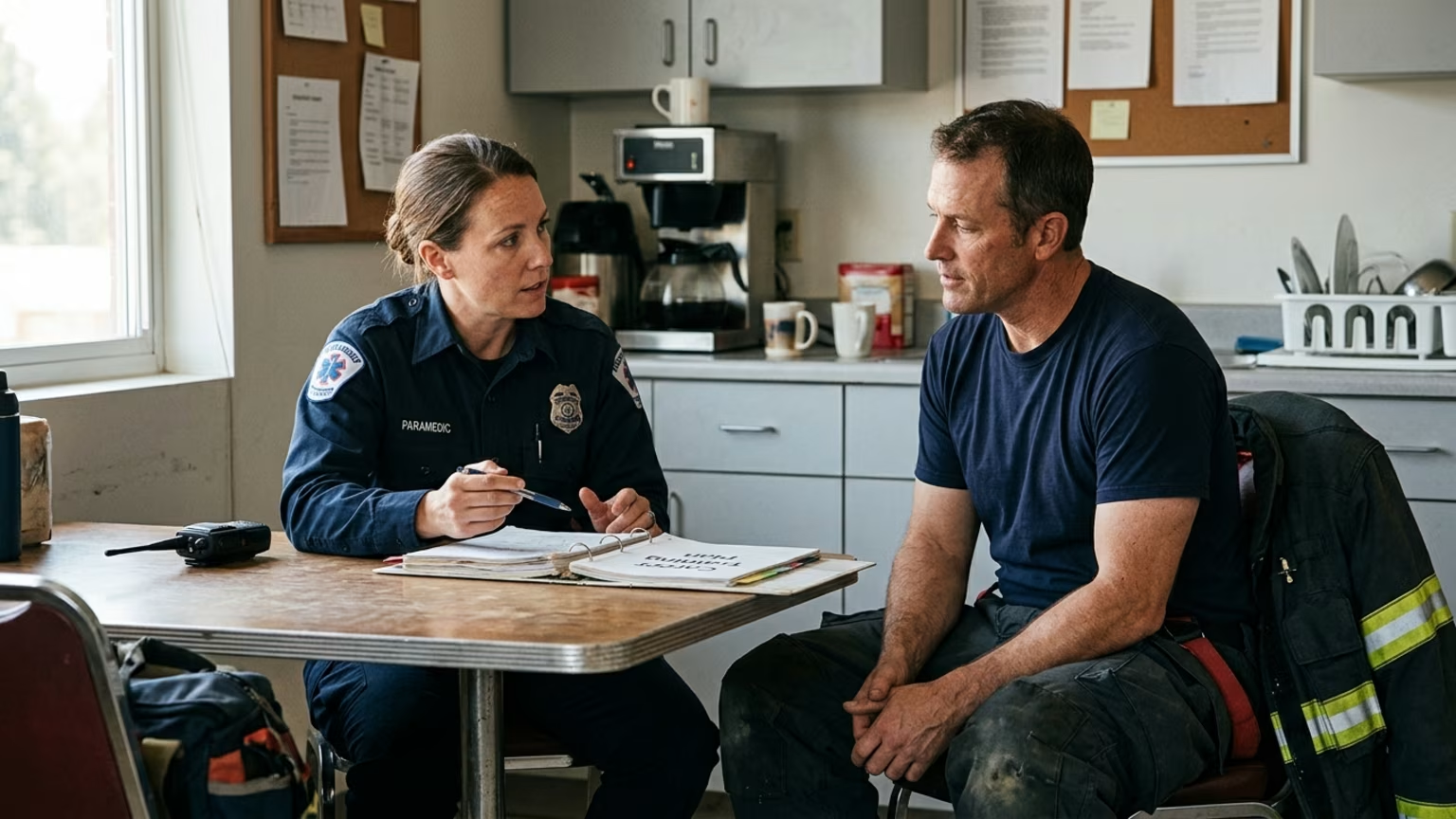

A practical, evidence-based framework for preserving strength, aerobic capacity, mobility, and work tolerance across a first responder's entire career.





The physical realities of emergency service compound significantly over decades. A 2026 report analyzing more than 1,000 firefighters in Estonia and Latvia highlighted significant health challenges across the emergency workforce. Researchers found that nearly 55 percent of participants were overweight or obese. The same report indicated that more than half of the surveyed personnel experienced back pain. These statistics demonstrate that isolated fitness routines often fail to counter cumulative occupational demands.
Recognizing the need for a deeper perspective, the National Registry of Emergency Medical Technicians launched the LIFE Study on September 14, 2026. This longitudinal project investigates the cumulative health risks associated with occupational exposures, injuries and stress across emergency medical careers. Much of the historical research focuses on isolated incidents or specific fitness assessments. The LIFE Study aims to map how repeated physical and psychological exposures impact personnel across entire careers.
Tracking these exposures over time reveals why single-metric fitness tests fall short. First responders face a combination of interrupted sleep, heavy gear loads and unpredictable physiological stress. When a professional works a standard daytime schedule, recovery happens naturally overnight. Emergency personnel do not have this luxury, meaning health metrics must account for irregular recovery windows. This systemic approach is essential for mapping true long-term capability.
Institutional support for comprehensive health tracking is steadily growing. The International Association of Fire Fighters recently launched a public health and safety resource library. This database contains nearly 300 resources covering nutrition, fitness and occupational health. Access to centralized research helps departments address readiness as a multi-domain system rather than an individual burden.
First responders carry a heavy physical and neurological burden on every active shift. The Estonia-Latvia report noted that only about one in ten surveyed firefighters consistently felt well-rested. Chronic sleep restriction prevents the nervous system from fully recovering between emergency calls. This autonomic disruption alters hormone regulation, impairs tissue repair and elevates systemic stress.
When the nervous system remains in a chronically activated state, physical performance and physical recovery both suffer. The lack of sufficient restorative rest directly correlates with the high rates of back pain observed in recent studies. Over years of service, this cumulative fatigue heavily compromises joint stability and occupational movement tolerance. First responders must monitor this load and tracking stress to preserve their physical capability.
The researchers involved in the Estonia-Latvia study argued against treating this systemic fatigue as a personal failure. They recommended building physical training and dedicated recovery periods directly into shift work. Placing the entire burden on individual personnel ignores the harsh realities of shift-work fatigue. Reliable recovery requires organizational adjustments to properly support the autonomic nervous system.
Without sufficient recovery time, the body struggles to maintain basic metabolic functions. This reality explains why poor rest and high obesity rates often appear together in occupational surveys. The autonomic nervous system prioritizes immediate energy availability over long-term tissue repair during periods of high stress. Modifying training variables around this physiological reality prevents personnel from driving themselves into extreme overtraining.
Organizational changes can directly influence physiological recovery and long-term performance. A recent shift-schedule study conducted with the Roswell, Georgia, Fire Department evaluated the direct impact of rotation timing. Between June 2024 and early 2026, the department transitioned from a 24/48 schedule beginning at 8:00 a.m. to a 48/96 schedule starting at 11:00 a.m. The study tracked metrics using detailed daily surveys and wrist-worn sleep monitors.
The adjusted rotation produced measurable, concrete improvements in rest. Self-reported sleep increased by an average of 41 minutes per night following the schedule change. Wrist-worn sleep trackers corroborated this positive trend, recording an increase from 6.7 to 7.0 hours per night. This data shows that structural changes can meaningfully alter an individual's recovery capacity.
The researchers monitored a comprehensive range of health variables during this transition period. The Roswell study included targeted follow-up assessments, paired medical evaluations and continuous wearable sleep tracking. Daily surveys specifically covered critical factors like sleep quality, fatigue, general mood and depression. Tracking these multiple domains provided a much clearer picture of overall workforce readiness.
While these findings are specific to the Roswell department, they highlight the strict relationship between shift design and restorative sleep. The later start time and consolidated days off provided larger uninterrupted windows for complete rest. First responders attempting to maintain capability over time must factor their specific shift constraints into their planning. Modifying work patterns might be just as critical as adjusting lifting routines.
Maintaining physical capability across a 30-year career requires highly adaptive, evidence-based strategies. A 2026 scoping review of field-based tests evaluated available options for tracking cardiorespiratory readiness. The authors concluded that the 20-meter shuttle run offers the most favorable overall profile for department-wide monitoring. The test requires minimal equipment and provides valid data for scaling across a large workforce.
However, the scoping review highlighted that tests should inform training rather than finalize employment status. Submaximal tests generally produce larger errors, and researchers warned that local validation is absolutely necessary near fitness cut points. Departments might use semiannual assessments as a baseline for monitoring physical trends over time. Tracking physiological changes gradually is far more useful than reacting to a single poor result.
Strength maintenance becomes increasingly critical as emergency medical professionals and firefighters age. A recent meta-analysis assessing generally healthy older adults found that combining creatine with resistance training produced a small but statistically significant strength improvement. The authors noted moderate certainty of evidence for this highly specific benefit. They found uncertain effects on overall physical function and warned against extrapolating results directly to frail populations.
This data suggests that nutritional support and resistance work play a role in long-term durability. First responders in the latter half of their careers can utilize these strategies to preserve force production. However, training programs must account for past injuries and the current physical demands of the job. Personnel should focus on autoregulating their workouts to match their daily readiness and cumulative fatigue.
Aerobic and resistance work remains absolutely central to late-career health and injury prevention. A broad review of exercise and bone health in adults included 124 trials involving 18,429 participants. The research found cautious support for brisk walking, jogging and combined aerobic-resistance exercise. These scalable movement patterns can help improve bone mineral density and reduce unexpected fracture risk. First responders should prioritize these routines for their body-composition training and overall durability.
Adapting workout volume and exercise selection to respect injury history is highly recommended. The available sources support taking back pain and musculoskeletal symptoms very seriously as early warning signs. Personnel should modify their routines to preserve mobility rather than aggressively pushing through joint pain. Building a durable framework means adjusting the physical workload before minor aches become permanent limitations.
Long-term physical readiness relies heavily on consistent, predictable recovery periods. The researchers behind the Estonia-Latvia study stressed the importance of formal organizational support. Embedding dedicated physical training and protected rest periods within active shifts reduces the physical toll on personnel. Relying strictly on personal discipline ignores the biological reality of sleep deprivation and chronic occupational stress.
Departments and individuals must view fatigue management as a shared operational responsibility. Incorporating mobility work and light aerobic training during low-stress periods can facilitate active recovery. Treating sleep and rest as fundamental training variables drastically improves overall career longevity. A well-rested responder possesses the autonomic resilience required to handle decades of unpredictable emergency calls.
Career longevity relies on adapting training to occupational realities rather than forcing aging bodies through inflexible routines.
Planning for physical capability and an active life after retirement or leaving service requires a strategic approach that evolves alongside the demands of the job. Generic fitness advice that assumes a predictable standard daytime schedule fails to account for unpredictable shifts, so Rescuris translates clinical evidence into practical guidance built around the realities of demanding work.
Rescuris publishes evidence-aware guidance for firefighters, police officers, paramedics and other first responders on fitness, recovery, sleep, nutrition, stress resilience and long-term capability.






Read practical guidance on first responder fitness, recovery, sleep, nutrition and resilience for demanding work and a long, active career.
read the blog
