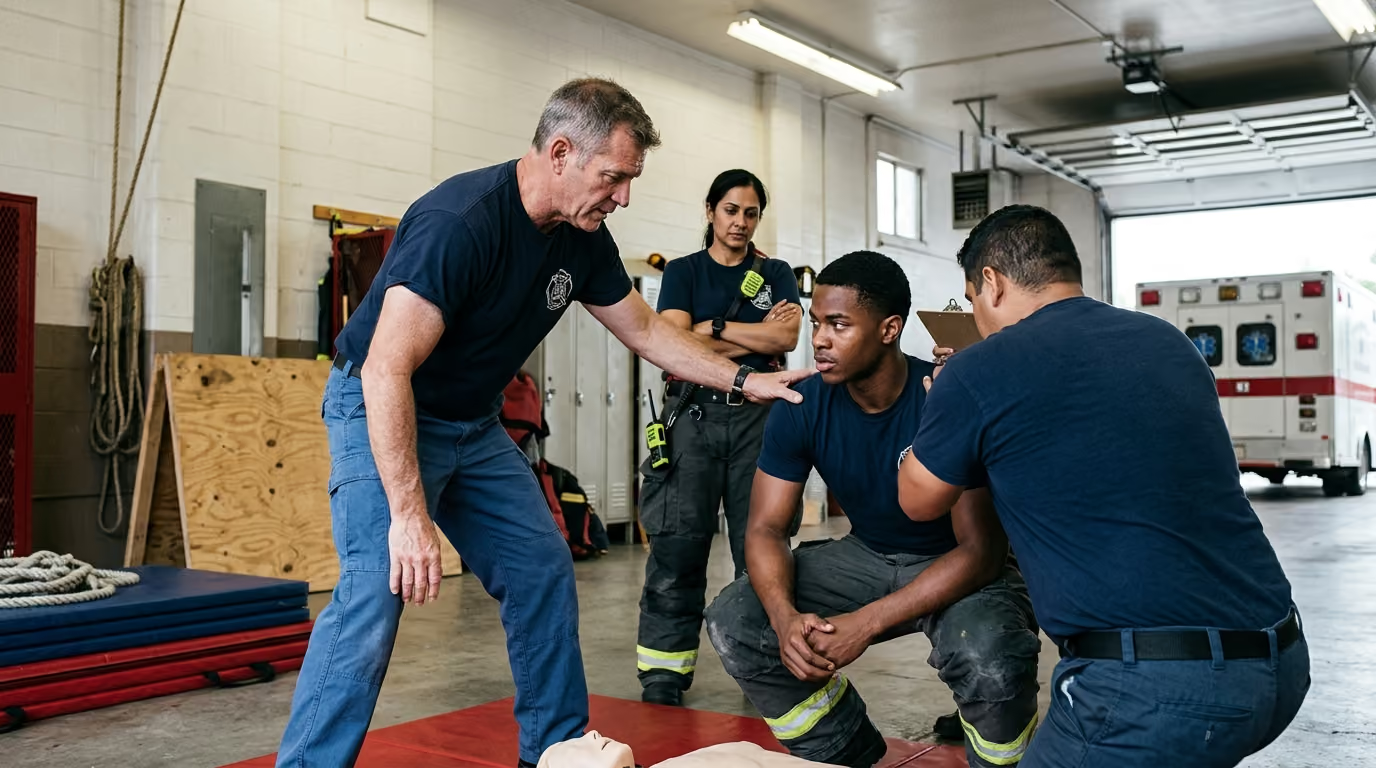

Long-term operational durability and reduced injury risk across every career stage emerge when first responders adapt physical training to cumulative exposure and recovery needs.





The prevailing assumption in emergency services is that physical decline is an unavoidable consequence of getting older. Many responders believe that as the years advance, the only rational choice is to slash training intensity, stop lifting heavy, and accept persistent pain as part of the uniform.
Occupational research paints a different picture. Chronological age is rarely the primary driver of training intolerance or on-duty injury. Instead, accumulated physical exposure, unaddressed tissue damage, movement compensations, and mismatched recovery capacity dictate how a body handles physical stress.
Career-long durability is not about training less as you get older. It is about training with higher precision. By adjusting exercise selection, volume, power development, and recovery timing around real-world occupational wear, responders can maintain high operational capacity across a full career and into retirement.
Occupational studies on tactical athletes reveal that physical fitness remains a primary modifiable factor for career longevity. Cardiovascular capacity, muscular strength, movement quality, and body composition interact to protect responders from acute trauma and chronic overuse.
A comprehensive study hosted by the Centers for Disease Control and Prevention examined firefighter fitness and injury incidence. Firefighters with a maximal oxygen uptake below 43 milliliters per kilogram per minute were 2.2 times more likely to sustain an injury than those with an aerobic capacity above 48 milliliters per kilogram per minute. Those scoring between 43 and 48 milliliters per kilogram per minute experienced a 1.38 times higher injury rate compared to the highest fitness group. The researchers calculated that each improvement in relative aerobic capacity of one metabolic equivalent, or roughly 3.5 milliliters per kilogram per minute, was linked to a 14 percent reduction in overall injury risk.
Aerobic capacity is only one component of career durability. Additional research indicates that comprehensive fitness determines musculoskeletal resilience across all age brackets. Every single-unit improvement in push-ups, sit-ups, absolute aerobic capacity, and sit-and-reach test performance was associated with a 3 to 5 percent lower likelihood of reported musculoskeletal injury.
Physical injury does not fall exclusively on older personnel. Analysis shows that injury risk is highest among individuals in the lowest tier of overall fitness, regardless of their age. Younger personnel under the age of 30 actually demonstrate a higher rate of acute sprains and strains than older responders. This pattern often stems from rapid spikes in physical workload, improper lifting mechanics, and insufficient movement proficiency rather than biological aging.
The scientific literature on recovery also challenges common assumptions. In studies examining acute recovery following worksite resistance exercise bouts in career firefighters, age did not dictate the rate of recovery. Firefighters across age groups experienced measurable drops in upper-body strength, countermovement jump height, and lower-body rapid force production between 24 and 72 hours after hard training. The time required for neuromuscular recovery was driven by the intensity and volume of the session rather than how many birthdays the responder had celebrated.
Musculoskeletal disorders do accumulate over time. Research tracking active-duty firefighters with an average age of 42 years and 15 years of operational service revealed higher rates of lower-extremity and low-back disability in older cohorts. These limitations reflect the cumulative occupational dose of heavy bunker gear, awkward patient transfers, vehicle extrication, and repeated returns to duty before injuries have fully healed. The evidence indicates that decline is driven by accumulated wear, poor recovery habits, and unaddressed trauma rather than an unavoidable biological ceiling.
Chronological age represents the number of years a person has lived. Functional age reflects current physical capability relative to occupational demands. Two 45-year-old responders can possess radically different functional capacities based on their training background, prior orthopedic surgeries, sleep habits, and metabolic health.
Exposure age measures the cumulative occupational toll placed on the body. A paramedic or firefighter with fifteen years on a high-volume urban unit absorbs a massive volume of mechanical stress. Thousands of patient transfers, heavy equipment carries, awkward extrications from tight spaces, and abrupt shifts from sedentary station life to maximal exertion create deep tissue strain.
This occupational strain interacts directly with the physiological reserve of the responder. Every emergency task requires a specific baseline capacity. The difference between an individual's maximal capacity and the demand of the task is their operational reserve.
When a recruit enters the service with high physical capacity, basic occupational tasks consume only a small fraction of their available energy. As exposure accumulates, unaddressed injuries and suboptimal training can shrink that capacity. If the demands of the job remain static while capacity declines, the operational reserve narrows.
A narrow reserve means daily emergency tasks require near-maximal physical effort. Working near your physiological ceiling accelerates fatigue, degrades motor control, and dramatically increases the risk of acute injury.
Maintaining durability requires preserving that reserve margin across every decade of service. You can explore structured approaches to sustain readiness by reviewing minimum effective dose training strategies, which build functional reserve without overloading worn joints.
Physical readiness is not static. It fluctuates based on cumulative night shifts, thermal stress, poor nutrition, and off-duty responsibilities. Evaluating a responder based on exposure and functional capacity rather than birth year allows for smart, targeted training adjustments.
Career stages provide a practical framework for programming physical training across a working life. Responders should view these stages as operational phases rather than rigid age brackets.
Early-career responders often possess high enthusiasm, good tissue elasticity, and rapid systemic recovery. Their primary vulnerability lies in rapid workload escalation combined with inconsistent movement proficiency.
During the academy and probationary periods, individuals face sudden, repeated exposure to heavy equipment, thermal stress, and awkward lifting. Many attempt to perform high-intensity recreational workouts on top of physically grueling operational drills.
Training in this stage must prioritize:
After several years of service, responders become technically proficient on scene. Physical confidence is high, but the initial signs of occupational wear often appear.
In this phase, responders frequently develop movement compensations to work around minor joint irritations. They may maintain sufficient strength for isolated efforts but lack the work capacity needed for extended, multi-hour incidents.
Programming priorities include:
The mid-career phase, often spanning the third and fourth decades of life, is where occupational exposure, prior injuries, shift work, and family demands intersect. Studies indicate that firefighters between the ages of 30 and 49 sustain a significant proportion of total musculoskeletal injuries, with upper-limb and lower-back problems leading the list.
The primary error in this stage is attempting to maintain the high-volume training programs of early adulthood. The body can still tolerate heavy loads, but it requires smarter volume management and longer recovery windows between high-neural-demand sessions.
Training should emphasize:
Responders navigating this career phase can study career longevity frameworks to align duty schedules with physical preservation.
Senior responders bring exceptional tactical wisdom, scene anticipation, and technical efficiency to emergency calls. However, they carry decades of accumulated orthopedic stress, joint degenerations, and scar tissue.
Research demonstrates that while older responders maintain the capacity to recover from acute resistance training, their lower-body rapid force production and jump mechanics can remain suppressed for up to 72 hours. Therefore, the goal is not to eliminate hard training, but to apply selective intensity.
Key training adjustments include:
The final phase involves preparing for a smooth transition out of active service or into less physically demanding roles. It also encompasses retired responders who wish to remain active, volunteer, or protect their physical independence.
Retirement should never mark the end of structured physical training. Abandoning resistance exercise after leaving the service accelerates sarcopenia, degrades balance, and increases the risk of chronic metabolic disease.
Long-term priorities focus on:
Retired and late-career personnel can access dedicated resources within the life after service collection to structure post-uniform fitness plans.
To individualize a physical training program across a career, responders must assess their readiness across six practical domains. This prevents the mistake of relying on chronological age to dictate exercise selection.
Occupational safety standards, such as NFPA medical guidelines, emphasize baseline and annual clinical health evaluations. These evaluations must examine cardiovascular health, metabolic markers, respiratory function, and musculoskeletal integrity.
Annual screenings establish a baseline and ensure that vigorous physical training remains clinically safe. Aerobic capacity testing should always follow thorough clinical clearance.
Responders should evaluate their capacity across multiple fitness attributes rather than relying on a single strength or endurance test.
Training must reflect the actual demands of the responder's current assignment. A paramedic running twelve calls a shift in a high-rise district faces different physical strains than a wildland firefighter or an engine company officer.
Map out regular duty demands, including average gear weight, stair climbing frequency, typical patient transfer loads, and the duration of high-intensity operations.
Document all previous bone fractures, joint dislocations, ligament sprains, muscle tears, concussions, and chronic pain patterns. Identify which specific movement patterns or loading parameters provoke symptoms. A past injury is not a reason to avoid training, but it is a permanent programming variable.
Track daily inputs that affect systemic readiness. Quantify sleep quality, shift rotation stress, nutritional consistency, hydration levels, and outside lifestyle pressures. A training session that produces positive adaptations during a calm stretch off duty can cause physical breakdown if performed after three consecutive night shifts.
Observe how the body organizes movement under unloaded and loaded conditions. Evaluate basic foundational patterns:
Identifying movement restrictions allows responders to select exercises that train target muscles without placing excessive strain on vulnerable joints.
Responders can implement a simple daily traffic-light readiness system to make immediate workout adjustments:
For a deeper look at adapting workouts based on daily physical signals, study the autoregulation guide for first responders.
Maintaining physical capability across a 25-year career requires preserving muscular strength and rapid force production. However, using traditional heavy barbells and high-impact plyometrics year after year can wear down knees, shoulders, and spinal structures. Responders must learn to train strength and power using joint-friendly methods.
As cumulative exposure increases, high training volume becomes the primary driver of overuse injuries. Responders do not need five sets of ten repetitions on heavy compound lifts to maintain operational strength.
A more effective strategy is selective intensity. Keep the load moderately heavy to maintain motor unit recruitment, but restrict the volume to two or three crisp, high-quality sets.
Terminating sets well before technical failure protects connective tissues while preserving central nervous system output.
Muscular power, which is the ability to generate force rapidly, declines faster than maximal strength as humans age. Power is essential for climbing stairs quickly, jumping across obstacles, catching a falling patient, and stabilizing yourself during a sudden slip.
Traditional power training often relies on maximal box jumps, depth drops, and heavy Olympic weightlifting. For an experienced responder with worn knee cartilage or lumbar disc herniations, high-impact landings carry unacceptable risks.
Safer power-building alternatives include:
The American College of Sports Medicine highlights that training with moderate loads between 30 and 70 percent of one-repetition maximum, moved with maximal concentric speed, effectively maintains power outputs. This approach provides the neurological benefits of explosive training without unnecessary orthopedic strain.
Shoulder injuries represent a massive percentage of occupational claims among experienced emergency personnel. Decades of pushing gurneys, pulling hoses, handling ladders, and wearing heavy gear create anterior shoulder tightness and rotator cuff impingement.
To build upper-body durability without shoulder destruction:
Low-back pain remains the leading cause of early retirement and disability across fire, police, and EMS agencies. Spinal durability is not achieved through endless flexion-based abdominal exercises. It requires building a rigid, fatigue-resistant muscular cylinder around the lumbar spine while maintaining mobile, powerful hips.
Practical adjustments for spinal preservation include:
When duty fatigue makes normal workouts difficult, consult the shift-work training decision tree to select appropriate joint-friendly alternatives.
Navigating decades of tactical training requires avoiding common mental and physical traps that shorten careers.
Believing that advancing age automatically prevents progress creates a self-fulfilling prophecy. Responders stop pushing for strength, abandon conditioning, and accept weakness as normal. The data shows that older personnel maintain excellent adaptations to resistance training when volume and recovery are appropriately managed. Focus on functional metrics rather than age numbers.
Younger personnel often possess high cardiovascular capacity but lack joint stability, lifting mechanics, and pacing. Throwing recruits into extreme, high-volume conditioning circuits leads to high rates of ankle sprains, knee strains, and early shoulder trauma. Early-career programming must prioritize foundational mechanics and movement control over sheer exhaustion.
While aerobic capacity is strongly correlated with reduced injury risk, cardiovascular endurance cannot compensate for weak muscles or poor spinal stability. A responder with an elite VO2max who cannot lift an incapacitated patient from the floor safely remains a liability to their crew. Comprehensive fitness requires strength, power, mobility, and endurance in equal measure.
Pushing through sharp, stabbing, or progressive joint pain is not tough; it is counterproductive. Pain alters motor recruitment, forcing other muscle groups to compensate and creating secondary injuries elsewhere. When pain appears, immediately alter the exercise range of motion, switch to a neutral grip, reduce the load, or swap the movement for a pain-free variation.
Passive stretching and foam rolling can temporarily alter tissue perception, but they do not build physical capacity. If a joint lacks active strength and stability throughout its full range of motion, stretching it will not prevent on-duty injury. Combine mobility exercises with progressive resistance training and active motor control drills to build resilient joints.
Attempting true one-repetition maximal lifts creates extreme central nervous system fatigue and places massive stress on connective tissues. First responders are tactical athletes, not competitive powerlifters. Assess strength progress using submaximal three-to-five repetition sets with pristine technique, or monitor bar speed during moderate-load training.
Attempting a maximal workout following an overnight shift with multiple runs dramatically increases injury risk. Sleep deprivation impairs reaction time, reduces tissue repair, alters pain sensitivity, and elevates systemic inflammation. On days with heavy sleep debt, pivot to low-intensity cardiovascular flushing, technique work, or dedicated sleep rather than high-strain lifting.
To understand how irregular shifts impact systemic recovery, read about how circadian strain and shift length drive sleep debt.
The following practical case scenarios illustrate how to modify training plans across different career phases and physical situations.
A 51-year-old senior firefighter maintains high aerobic fitness and lifts regularly. However, they perform intense interval workouts immediately following 24-hour shifts. Over several months, they experience declining performance, persistent shoulder aching, and elevated resting heart rates.
A 24-year-old probationary firefighter demonstrates great motivation and solid upper-body strength. However, they suffer repeated lateral ankle sprains during outdoor obstacle drills and gear drills.
A 38-year-old paramedic with twelve years of field service reports recurring low-back spasms following shifts involving heavy bariatric patient transfers and tight-staircase carries.
A 56-year-old tactical officer can deadlift and press impressive weights but feels sluggish when climbing stairs rapidly or pursuing subjects on foot.
A 63-year-old retired firefighter wants to return to the local volunteer department after three years of physical inactivity.
Durability requires acknowledging hard physical limits and knowing when training must yield to medical evaluation. Tactical training is a tool to support operational performance, not an arena to test your pain tolerance to the point of structural damage.
Occupational standards such as NFPA 1580 and 1582 establish medical requirements for emergency personnel. These standards outline cardiovascular fitness targets, medical clearance protocols, and physical evaluations.
Responders must recognize that medical standards represent health and safety baselines, not complete fit-for-duty measures. Passing an annual occupational physical proves that you are clinically clear to work; it does not automatically mean you possess the functional reserve needed for grueling physical operations. Departmental screenings should be treated as the foundation upon which functional durability is built.
Training must stop immediately, and medical evaluation must be sought, if any of the following warning signs occur during or after exercise:
Persistent aches that do not improve after two weeks of training modification warrant assessment by a qualified physical therapist, orthopedic specialist, or sports medicine physician. Seek professional medical evaluation if:
Working alongside licensed physical therapists and occupational medicine providers allows responders to identify the root cause of mechanical failure and construct a safe, structured path back to full capability.
To maintain long-term readiness, responders should evaluate their physical program quarterly using a structured durability scorecard. This five-point audit ensures that training remains balanced, effective, and sustainable.
Career longevity is not about clinging desperately to the training habits of your early twenties. It is about building an intelligent, adaptable physical system that respects the realities of shift work, manages cumulative exposure, and preserves high-level capability across every decade of your life.
Building career-long durability ensures that you remain fully capable on duty today while protecting your health, strength, and independence for the decades that follow your final shift.
Stay connected for research-led guidance on duty fitness, shift-work sleep, injury recovery, stress, nutrition and career longevity. Practical ideas for first responders who want to stay capable on the job, recover well and protect their health for the long run.



Read practical guidance on first responder fitness, recovery, sleep, nutrition and resilience for demanding work and a long, active career.
read the blog



