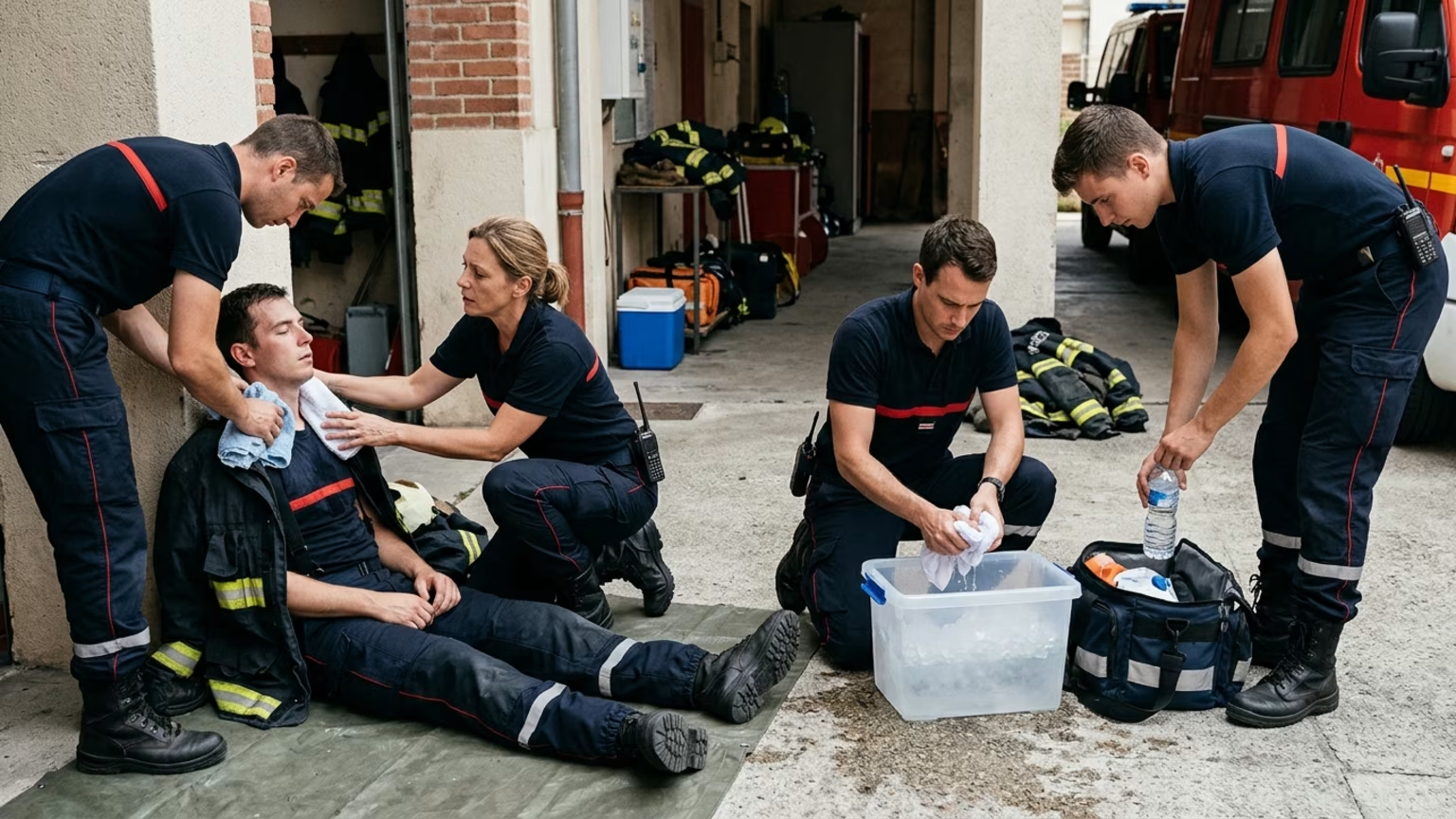

The May 2022 France First Aid protocol emphasizes prioritizing active cooling and airway safety before offering oral fluids for suspected heatstroke.





In May 2022, the France First Aid CPR Course published a heatstroke management protocol detailing when responders should administer controlled oral hydration alongside active cooling. The provider's online guidance establishes a strict clinical boundary between an alert patient who can safely swallow and a non-alert patient requiring immediate airway protection.
The primary sequence for managing an affected person begins by moving them immediately to a cool place. Responders are instructed to improve ambient ventilation and quickly remove the patient's restrictive clothing. The protocol then directs personnel to moisten the entire body with cool water by sponging or spraying the skin. The guidance explicitly specifies using cool water rather than iced water for this surface cooling phase.
Following the initiation of cooling measures, responders must accurately assess the patient's neurological status and swallowing capacity. The protocol states that responders may give cool water or an electrolyte-containing fluid in small amounts. This specific intervention applies strictly to an alert person who can swallow safely. The source page does not provide a stated fluid volume, a required electrolyte concentration or a maximum intake rate.
The guidance draws a clear and rigid distinction between alert individuals and non-alert patients. If the patient is not fully alert, responders must give nothing by mouth. The protocol dictates placing the non-alert patient in the recovery position to protect their vulnerable airway. Responders must reassess airway, breathing and circulation frequently while seeking hospital care by calling emergency services.
Patient conditions can fluctuate rapidly during a severe thermal event. If drowsiness appears after oral fluids are offered, the protocol directs the responder to halt hydration immediately. The responder must then place the patient in the recovery position and thoroughly reassess their vital signs. This rapid pivot protects the patient's respiratory tract from aspiration risks during transport.
This medical guidance validates critical priorities for firefighters, paramedics and police officers operating in dangerous environments. Severe heatstroke remains an intense medical emergency requiring rapid cooling and professional medical care. The protocol reinforces that oral hydration is entirely subordinate to airway safety and active thermal reduction. The ability to drink safely serves as a functional safety screen rather than definitive proof of a mild illness.
First responders face unique occupational barriers when assessing thermal strain in the field. Heavy protective clothing, extreme physical exertion and hot operational environments can make heat illness exceedingly difficult to recognize. Recognizing symptoms under ballistic vests or bunker gear requires continuous vigilance and specialized training. Because plain water falls short when heavy protective equipment accelerates salt and fluid loss, agencies consistently review supplemental fluid protocols.
The inclusion of an electrolyte option for alert patients requires careful application within broader structural safety frameworks. The France First Aid CPR Course protocol provides a localized perspective on managing casualties on the ground. However, it does not replace comprehensive organizational standards governing occupational heat exposure across an entire department. Medical guidelines must always intersect safely with the unpredictable nature of emergency response work.
Agencies currently operate without a fully quantified risk profile for severe thermal strain on the fireground. The available research does not provide a sufficiently detailed, directly sourced firefighter-specific dataset to quantify the exact risk. Furthermore, current data fails to establish a universally verified responder-specific electrolyte prescription for acute heat casualty management. This absence of targeted metrics forces departments to adapt generalized first aid principles to extreme operational conditions.
First responders evaluating suspected heatstroke should treat active cooling and emergency activation as their absolute top priorities. Attempting to hydrate a patient should never delay cooling, initial medical assessment or rapid hospital transport. Personnel must confirm that the person is fully alert and can swallow safely before offering anything by mouth. Assessing this swallowing capacity is a mandatory prerequisite for any authorized oral fluid administration.
Agencies must establish clear operational rules for halting interventions when a patient deteriorates. If a patient loses alertness or becomes suddenly drowsy, crews must stop oral fluids instantly. They must utilize the recovery position as appropriate and reassess airway, breathing and circulation frequently. Emergency medical care must then be escalated without any hesitation or administrative delay.
Responders utilizing this protocol must administer cool water or electrolyte fluids strictly in small amounts. The source supports controlled intake but does not provide a specific numerical dose for field application. Emergency personnel should never force fluids or apply a generalized hourly hydration target as a medical treatment dose. Carrying cool water is useful for operational readiness, but responders must respect these critical intake limits.
Department protocols should specify exactly who can authorize oral fluids during a chaotic incident. These procedures must dictate how swallowing and mental status are properly assessed by field crews under pressure. The France page supplies the basic alert versus non-alert distinction but lacks a complete agency administrative framework. Additionally, responders must always follow their local dispatch procedures instead of copying the protocol's literal "911" instruction.
Field personnel must recognize that oral intake addresses only a single component of severe thermal stress. Responders should avoid treating basic hydration as a substitute for proactive heat-acclimatization planning. Routine medical evaluations and the staging of adequate cooling resources remain vital components of scene safety. None of those broader, systemic interventions is quantified by the primary instructional page.
The available documentation leaves several clinical and diagnostic parameters undefined for future occupational research. The France First Aid CPR Course page lacks an explanation of why electrolyte-containing fluids are specifically preferred. It provides no evidence citations, clinical trials or author credentials to support its published wording. The source also lacks a precise diagnostic definition separating heat exhaustion from severe heatstroke.
Conflicting public advice currently complicates how field personnel interpret fluid administration guidelines during emergencies. Some sources recommend immediate cooling and absolutely no oral fluids for suspected heatstroke cases. The France protocol permits small amounts for an alert patient, which highlights an ongoing clinical debate regarding optimal care. That conflict reinforces the absolute necessity of distinguishing an alert patient from an unconscious or confused patient.
Departments must evaluate how generalized protocols intersect with long-term occupational health realities for their personnel. Retired responders and active personnel should avoid treating hydration as a complete substitute for mandatory work-rest controls. Understanding electrolytes for heat, sweat and long shifts requires ongoing review of targeted scientific research. The protocol does not suggest that electrolyte drinks should replace water during routine daily duty hydration.
Medical guidelines do not specify that every single responder needs electrolytes after every routine incident. Tracking how medical authorities update fluid recommendations helps emergency personnel refine their operational guidelines over time. Agencies should monitor whether future medical consensus establishes a universal electrolyte formula or a definitive sodium target. Managing recovery after physically demanding shifts relies on separating verified clinical boundaries from generalized fitness advice.
Until more specific occupational data emerges, airway protection and rapid cooling remain the undisputed field priorities. Future studies must define precise fluid volumes and electrolyte concentrations suitable for first responder recovery. The reliance on generalized first aid principles highlights the need for targeted emergency services research. Operational longevity demands that protocols evolve alongside the physical realities of the profession.
Treating routine hydration guidance as a substitute for acute medical intervention complicates recovering from accumulated physical wear without losing duty readiness. When conflicting guidelines make it difficult to manage severe heat exposure in the field, Rescuris translates credible biological evidence into practical operational protocols. We help crews turn localized first aid updates into sustainable strategies that respect the demands of active duty.
Rescuris publishes evidence-aware guidance for firefighters, police officers, paramedics and other first responders on fitness, recovery, sleep, nutrition, stress resilience and long-term capability.






Read practical guidance on first responder fitness, recovery, sleep, nutrition and resilience for demanding work and a long, active career.
read the blog
