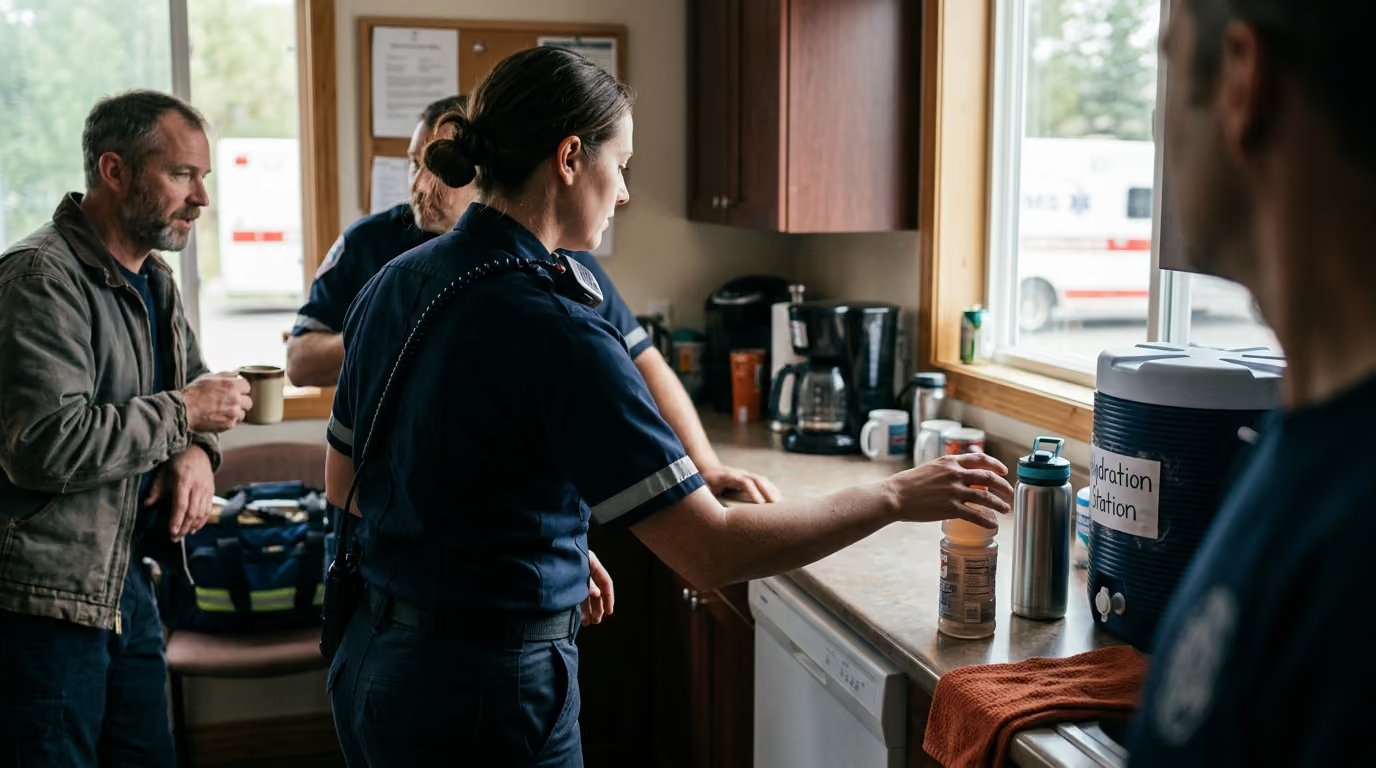

Extended emergency shifts in heavy turnout gear accelerate sodium loss, making individualized hydration planning essential for sustained physical performance and safety.





You finish a four-hour commercial structure fire in mid-July. Your turnout gear is soaked through from the inside, your mouth feels dry, and your uniform pants are stiff with dried salt rings. Back at the station, you drink three large bottles of plain water, yet an hour later you feel lightheaded, sluggish, and increasingly nauseated.
Plain water and balanced meals meet daily hydration needs under ordinary conditions. Electrolyte planning becomes relevant during prolonged sweating, high physical output, hot environments, back-to-back calls, and extended work in protective equipment. Sodium is the primary electrolyte lost in sweat that requires intentional replacement. The goal is maintaining safe hydration without overdrinking, protecting work capacity, and preventing both heat illness and dilutional hyponatremia. Electrolyte drinks cannot replace active cooling, work-rest cycles, or emergency care for heat stroke.
The human body relies primarily on the evaporation of sweat to dissipate heat during intense physical exertion and warm environmental conditions. When ambient temperatures rise or metabolic heat production increases from physical labor, the sympathetic nervous system stimulates eccrine sweat glands. These glands draw fluid from the interstitial space and blood plasma to produce sweat on the skin surface. When this moisture evaporates into the surrounding air, it removes thermal energy from the body.
Sweat is not pure water. It is a hypotonic solution containing water and several essential minerals known as electrolytes. Electrolytes carry electrical charges across cellular membranes and regulate fluid balance, nerve impulse transmission, and muscle contractions.
The physiological composition of sweat includes several distinct minerals:
Sodium losses represent the primary operational concern during physical work. While sports nutrition marketing often highlights potassium and magnesium, sweat consists predominantly of water and sodium chloride.
Current occupational and sports science evidence shows substantial variation in how much fluid and sodium individuals lose. Research demonstrates that sweat rates typically range from 0.3 to 2.5 liters per hour depending on workload, environmental heat, humidity, and individual conditioning. A responder working at a high sweat rate can lose three times as much fluid per hour as a colleague performing similar duties.
Sweat sodium concentration also demonstrates wide biological variation. Documented sweat sodium concentrations range between 10 and 90 millimoles per liter (mmol/L), which equals roughly 230 to 2,070 milligrams of sodium per liter of sweat. A standard average is approximately 50 mmol/L, or 1,150 milligrams of sodium per liter.
Research shows that heat acclimatization modifies both sweat rate and sodium concentration. As the body adapts to heat over 7 to 14 days of gradual exposure, the eccrine sweat glands improve their ability to reabsorb sodium before releasing sweat. In one study of heat-exposed workers, summer sweat sodium concentrations averaged 53 mmol/L compared to 73 mmol/L in unacclimatized winter conditions, even while total sweat volume increased.
The evidence base for sweat rate measurement and sodium replacement is strong in controlled athletic and occupational settings. However, applying precise formulas to emergency response is constrained by unpredictable operational environments. Hydration needs must be approached with flexible field frameworks rather than rigid, one-size-fits-all prescriptions.
Standard occupational hydration guidelines assume predictable rest breaks, ambient airflow, and light clothing. Emergency services operate under conditions that fundamentally alter thermal physiology.
Firefighters, tactical law enforcement officers, and hazardous materials teams operate in specialized personal protective equipment (PPE). Turnout gear, ballistic vests, and chemical suits create a microclimate that prevents moisture evaporation.
When sweat cannot evaporate due to impermeable or semi-permeable thermal barriers, cooling fails. The body continues to produce sweat in an attempt to cool down, leading to rapid fluid loss without the expected drop in core temperature. This condition, known as uncompensable heat stress, accelerates cardiovascular strain. Heart rate increases to pump blood to both working muscles and dilated skin vessels, while blood plasma volume declines from continuous sweating.
Unlike industrial workers with scheduled breaks, first responders face erratic shift patterns. A crew may transition from seated station duties to a multi-hour extrication or wildland fire within minutes.
These unpredictable operational demands often interrupt meal schedules. When responders miss regular meals, they lose their primary dietary source of sodium and calories. Managing hydration on long shifts requires recognizing how practical meal strategies for demanding shifts interact with fluid retention. Working through multiple operational periods without solid food creates a cumulative electrolyte deficit that plain water alone cannot correct.
Wildland firefighting, disaster response, and extended tactical operations involve continuous work over 12 to 24 hours. Responders carry heavy loads across uneven terrain with limited shade and restricted water supply access. In these environments, carrying gallons of plain water without adequate sodium replacement can increase the risk of acute fluid imbalances.
Hydration strategies must match the specific operational context. Using concentrated electrolyte products during sedentary station hours adds unnecessary sodium and expense. Conversely, relying exclusively on plain water during prolonged thermal operations creates performance and safety risks.
Tier 1 applies to ordinary station duties, routine EMS responses, short law enforcement patrols, and moderate training sessions under mild to moderate environmental conditions.
Tier 2 applies to operations lasting several consecutive hours with continuous moderate-to-heavy sweating. Examples include extended structure fires, technical rescues, long tactical deployments in body armor, and sustained wildland operations.
Tier 3 applies to multi-alarm fires, consecutive shifts in high heat, intense wildland shifts over multiple days, or individuals identified as heavy, salty sweaters.
First responders can establish baseline hydration metrics through simple field tracking. Measuring personal sweat loss helps prevent both underdrinking and dangerous overdrinking.
The most practical method to assess sweat loss is measuring body mass before and after an intense training evolution or simulated work bout.
The calculation follows a basic field equation:
Sweat loss in liters equals pre-work body weight minus post-work body weight plus fluid consumed during work minus urine produced during work.
One kilogram of short-term body mass change equals approximately one liter of fluid loss. If working in pounds, divide the weight loss in pounds by 2.2 to find the loss in kilograms.
Consider an illustrative model of a firefighter performing a 60-minute live-fire training evolution. The member weighs 90 kilograms before donning gear and 88.5 kilograms after doffing gear and toweling dry. During the drill, the member drank 0.5 liters of water and did not urinate.
Consider a second illustrative model of an officer in tactical gear during a two-hour perimeter search in warm weather. The officer weighs 82 kilograms before the shift and 81 kilograms after. The officer consumed 1.0 liter of fluid and produced roughly 0.2 liters of urine.
These calculations provide starting estimates. Real-world sweat rates will shift based on ambient humidity, cloud cover, radiant heat, and protective clothing layers.
Because laboratory sweat testing is rarely available in station environments, responders can use broad reference ranges. A standard baseline assumes roughly 1,000 milligrams of sodium lost per liter of sweat.
If a responder has an estimated sweat rate of 1.5 liters per hour during heavy labor, that individual loses roughly 1,500 milligrams of sodium per hour. Replacing every single milligram during active work is neither necessary nor advisable. The physiological objective is replacing roughly 300 to 700 milligrams of sodium per liter of fluid consumed during prolonged exertion, allowing standard post-shift meals to restore baseline electrolyte balance.
Commercial electrolyte products vary widely in their formulation. Selecting the right option requires reading nutrition panels rather than relying on marketing claims.
When assessing an electrolyte replacement product, examine four primary metrics:
Electrolyte packets are convenient, but whole foods provide effective sodium replacement alongside essential macronutrients. Integrating regular food during scheduled rehab or extended staging is often superior to relying exclusively on sports drinks.
Pairing whole foods with plain water allows responders to replenish sodium and fluids effectively without consuming excess artificial sweeteners or high-fructose corn syrups.
Hydration practices carry serious safety implications. Misunderstanding the difference between dehydration, heat stroke, and fluid overload can lead to incorrect field interventions.
Heat illnesses exist along a spectrum of severity. Distinguishing between mild heat exhaustion and life-threatening heat stroke is critical for emergency personnel.
Heat exhaustion occurs when the body loses excessive water and salt through sweating, leading to systemic strain.
Management requires removing the responder from heat, loosening protective equipment, resting in shade or an air-conditioned cab, applying active cooling towels, and sipping cool fluids if the individual is fully alert.
Heat stroke is a severe medical emergency where thermoregulatory mechanisms fail, allowing core body temperature to rise above 104 degrees Fahrenheit (40 degrees Celsius).
If heat stroke is suspected, activate emergency medical protocols immediately. Initiate rapid, aggressive full-body cooling using cold-water immersion or continuous ice-water rotation. Do not force fluids by mouth to an individual with altered mental status.
Exercise-associated hyponatremia occurs when blood sodium concentrations fall to dangerously low levels, usually below 135 mmol/L. This condition is primarily driven by overdrinking hypotonic fluids such as plain water or low-sodium fitness beverages during prolonged sweating.
When a responder sweats heavily, both water and sodium leave the vascular system. If the responder replaces those losses by forcing large volumes of plain water beyond their thirst requirements, the remaining blood sodium is diluted. Water moves down the osmotic gradient into tissue cells, causing cellular swelling. In severe cases, this produces cerebral edema.
A responder who has consumed gallons of plain water during a shift and presents with confusion or vomiting should never be given more water. This presentation warrants urgent medical evaluation, fluid restriction, and professional management.
Individual health status and prescription medications significantly influence how the body handles heat, fluid volume, and sodium balance.
Responders with pre-existing hypertension, kidney disease, or cardiovascular disorders must exercise caution with sodium intake. While acute sodium replacement is necessary during heavy thermal sweat loss, habitual high sodium intake during sedentary periods can elevate resting blood pressure in sensitive individuals. Personnel managing these conditions should coordinate hydration guidelines with their physician.
Several common over-the-counter and prescription medications disrupt thermoregulation and fluid retention:
Hydration is only one component of operational safety. Maintaining physical capability requires balancing training intensity with accumulated fatigue. Integrating autoregulation strategies for first responder training ensures that physical conditioning builds resilience without pushing an already dehydrated, sleep-deprived responder into systemic breakdown. When fatigue or heat illness impairs physical capacity, pulling an individual from duty protects both the member and the crew.
Thermal strain and fluid deficits frequently carry over from one shift to the next. Incomplete rehydration degrades cardiovascular function, reduces physical output, and impairs cognitive processing on subsequent calls.
Recovering from a major fluid deficit requires a structured approach over several hours rather than chugging fluids immediately after a call.
The ACSM guidelines recommend consuming 125 to 150 percent of the total fluid volume lost during the operational period. If a responder finishes an incident with a two-pound deficit (roughly one kilogram or one liter of fluid), the target rehydration volume is 1.25 to 1.5 liters over the following two to four hours. The additional volume compensates for ongoing urine output and continued respiratory losses.
Drinking large volumes of plain water rapidly triggers diuresis, causing the kidneys to excrete the fluid before it can restore plasma volume. Consuming sodium alongside rehydration fluids maintains the osmotic stimulus for drinking and retains the fluid within the vascular system. Incorporate salty meals, broths, or formulated electrolyte solutions containing 50 to 100 mmol/L of sodium during the initial recovery window.
Fluid restoration cannot be separated from sleep and nutrition. Chronic sleep disruption alters hormone levels that regulate fluid balance, including vasopressin and aldosterone. Establishing a shift-specific sleep plan for emergency personnel helps normalize endocrine function and supports cellular recovery.
Furthermore, pairing post-shift rehydration with appropriate macronutrient intake restores depleted muscle glycogen. Responders who maintain structured training around shift work schedules should ensure that post-incident recovery takes precedence over high-intensity workouts when fluid and sleep deficits exist.
Review this framework whenever you prepare for seasonal summer heat transitions, deploy to wildland or extended disaster incidents, update station standard operating guidelines for incident rehabilitation, or experience recurrent headaches, muscle cramping, or extreme weight fluctuations after demanding calls.
Sustainable operational readiness depends on matching fluid and sodium intake to the actual physical demands of the job, protecting long-term cardiovascular health while maintaining duty capability through every shift.
Stay connected for research-led guidance on duty fitness, shift-work sleep, injury recovery, stress, nutrition and career longevity. Practical ideas for first responders who want to stay capable on the job, recover well and protect their health for the long run.



Read practical guidance on first responder fitness, recovery, sleep, nutrition and resilience for demanding work and a long, active career.
read the blog



