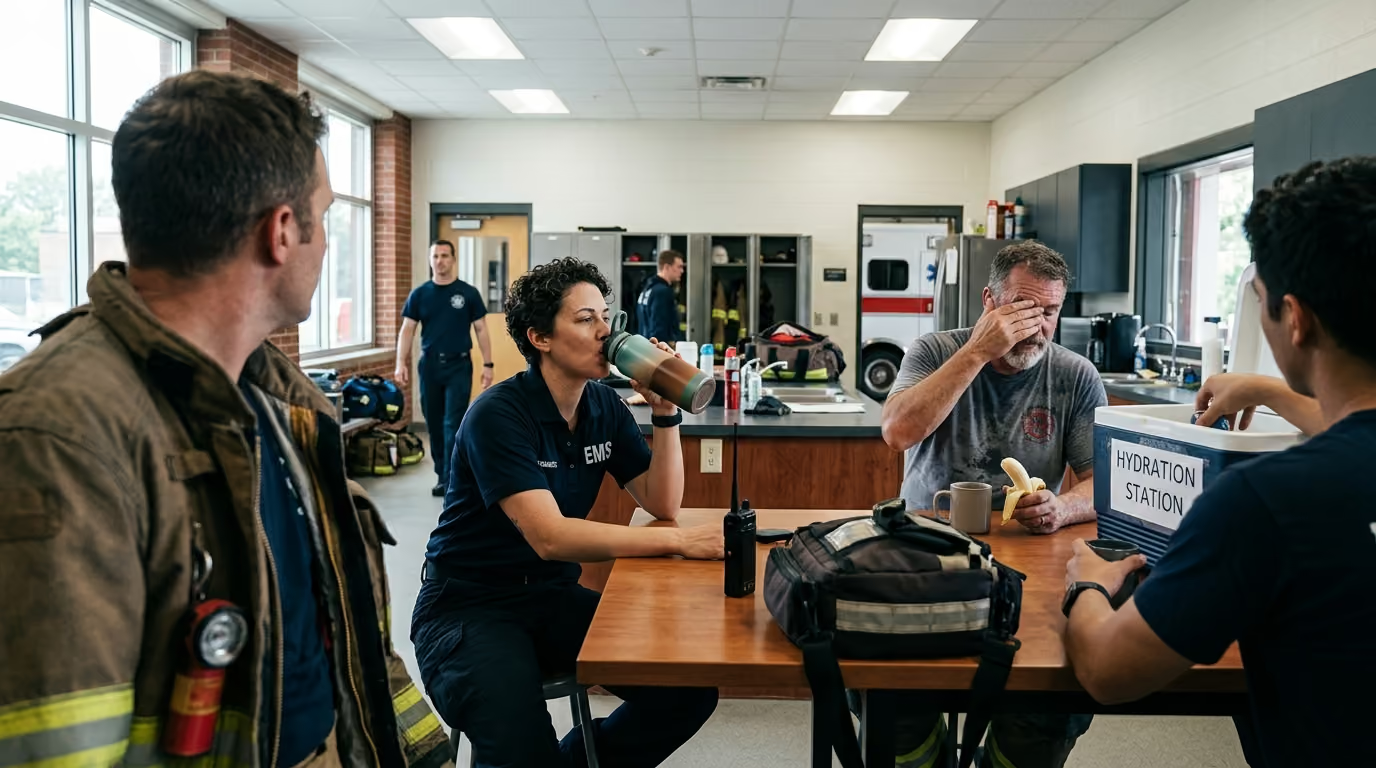

Better physical recovery and uninterrupted sleep follow when emergency workers combine strategic fluid intake with active cooling methods and optimized rest environments after heavy shifts.





You finish a brutal summer shift, strip off your sweat-soaked gear, chug two bottles of water, and collapse into bed, only to find yourself tossing and turning with a pounding pulse and hot skin. Many first responders search for why they cannot sleep after working in extreme heat. The answer is straightforward: intense heat exposure raises your core body temperature, strains your cardiovascular system, and depletes fluids and electrolytes. Your body requires a drop in core temperature to initiate deep sleep, and until you actively cool down and restore fluid balance, your nervous system remains stuck in an agitated, wakeful state.
This guide provides a comprehensive protocol for managing thermal strain, replacing fluids safely, and setting up your environment for restorative rest after physically demanding emergency work.
Sleep and body temperature regulation are fundamentally linked. Under normal physiological conditions, your body follows a strict 24-hour circadian rhythm. Core body temperature drops by approximately one to two degrees Fahrenheit in the late evening. This decline coincides with the release of melatonin and signals the brain that it is time to sleep.
To lower core temperature, the body increases blood flow to the skin, especially through the hands and feet. This process, known as distal vasodilation, allows heat to radiate out into the environment. When you enter a sleep window with an elevated core temperature from heavy exertion or prolonged heat exposure, this natural cooling mechanism is disrupted. The brain struggles to initiate sleep onset, leading to prolonged tossing and turning.
Research shows that high ambient temperatures directly degrade the structure of sleep. When sleeping environments exceed 84 degrees Fahrenheit (29 degrees Celsius) or reach 95 degrees Fahrenheit (35 degrees Celsius), experimental studies show a marked increase in wakefulness alongside significant reductions in slow-wave sleep and rapid eye movement (REM) sleep. Slow-wave sleep is essential for physical tissue repair, muscle protein synthesis, and growth hormone release. REM sleep is critical for cognitive processing, emotional regulation, and procedural memory.
When thermal strain cuts short these sleep stages, recovery remains incomplete. A systematic review on occupational heat exposure revealed that workers exposed to high Wet Bulb Globe Temperature (WBGT) conditions face substantially higher rates of sleep disturbance. In one analyzed study of industrial workers, severe high-temperature exposure produced sleep disturbance odds ratios of 3.09 in men and 3.30 in women. Another study examining manual and outdoor workers found that high occupational heat exposure was associated with an odds ratio of 6.40 for insufficient sleep.
This dynamic creates a negative feedback loop. Sleep deprivation impairs your autonomic nervous system and degrades your body's ability to sweat and regulate heat on subsequent shifts. Entering a hot operational environment while sleep-deprived increases cardiovascular strain, accelerates dehydration, and raises your baseline core temperature faster. Managing thermal strain after duty is a direct operational requirement for maintaining long-term physical capacity.
First responders face thermal challenges distinct from almost any other workforce. Structural firefighters, wildland crews, tactical law enforcement officers, and hazardous materials teams must work under high ambient temperatures while wearing heavy, vapor-impermeable personal protective equipment (PPE).
Full structural turnout gear creates a sealed microclimate around the body. Sweat cannot evaporate efficiently through thermal and moisture barriers. Because evaporative cooling is the body's primary defense against hyperthermia, heat produced by working muscles becomes trapped inside the garment. Core body temperature can easily exceed 101 to 102 degrees Fahrenheit during routine structural operations, accompanied by sharp rises in heart rate that persist well after exiting the hot zone.
A study evaluating 367 industrial and field workers found that 84.8 percent suffered from poor sleep quality. Workers exposed to a WBGT of 86 degrees Fahrenheit (30 degrees Celsius) or higher had significantly greater odds of sleep disruption compared to those working below 82.4 degrees Fahrenheit (28 degrees Celsius), with an odds ratio of 2.63. In emergency response, high ambient temperatures combine with uncompensable heat stress from protective clothing, compounding these physiological effects.
Cardiovascular drift further complicates post-shift recovery. As you sweat, blood plasma volume decreases. To maintain cardiac output and keep blood flowing both to working muscles and to the skin for cooling, your heart must beat faster. This elevated cardiovascular workload can persist for hours after duty, keeping your sympathetic nervous system dominant. If you try to sleep while your heart rate remains elevated by 15 to 20 beats per minute above baseline, your body cannot transition into restorative parasympathetic rest. Reviewing baseline fatigue management guidelines helps frame how these cumulative operational strains interact over rotating tours.
Hydration is a primary defense against heat illness, but it must be applied with physiological precision. Dehydration degrades performance, reduces heat tolerance, and impairs sleep. However, drinking excessive amounts of plain water without electrolytes creates severe medical risks.
In a controlled study examining firefighters performing work in protective clothing, researchers tested how various fluid replacement volumes affected performance and thermal strain. Firefighters receiving high fluid replacement (replacing 78 percent of sweat loss) and moderate replacement (63 percent) sustained total tolerance times of 111.8 minutes and 112.9 minutes. Those receiving low replacement (37 percent) lasted 104.2 minutes, while those given no fluids lasted only 95.3 minutes. Actual working time excluding rest was 82.6 minutes for high replacement and 82.9 minutes for moderate replacement, compared to just 65.3 minutes with zero fluid intake. Partial fluid replacement during work maintains cardiovascular stability and extends operational endurance.
The National Institute for Occupational Safety and Health (NIOSH) outlines specific benchmarks for fluid intake during heat exposure:
Drinking beyond these upper thresholds does not improve cooling. It can dilute blood sodium levels, leading to exercise-associated hyponatremia. Hyponatremia causes cellular swelling in the brain, resulting in confusion, seizures, coma, and potential fatality.
Electrolyte replacement becomes mandatory when heavy sweating extends beyond two hours. Sweat contains critical minerals, primarily sodium and chloride, with smaller amounts of potassium and magnesium. Drinking large volumes of distilled or pure tap water after prolonged sweating dilutes remaining serum electrolytes, triggering muscle cramping and impaired cardiac function.
You can replace electrolytes using balanced sports solutions, oral rehydration packets, or regular post-shift meals. Whole foods such as salted pretzels, pickles, lean deli meats, fruits, and soups provide both the sodium and water needed to restore plasma volume. Integrating structured meals is covered extensively in our guide on tactical meal and snack timing on shift.
To estimate post-shift fluid deficit accurately, weigh yourself before and after heavy incidents without clothing or gear. The American College of Sports Medicine recommends consuming 16 to 24 ounces (450 to 675 mL) of fluid for every pound of body mass lost during work. The U.S. Fire Administration provides an equivalent metric of replacing approximately one liter of fluid for every kilogram of weight lost. Spread this intake steadily over two to three hours post-shift rather than chugging it in a single sitting. Gulping fluid triggers rapid gastric emptying, bloating, and excessive urination, disrupting sleep.
Drinking cold fluids alone will not rapidly lower an elevated core body temperature. Active cooling must be applied directly to remove stored thermal energy from muscle and visceral tissue.
A research study evaluating dual-function firefighter cooling vests demonstrated how external cooling and fluid ingestion target different physiological mechanisms. External torso and peripheral cooling significantly improved subjective thermal sensation and reduced skin temperature. Cold fluid ingestion acted internally, lowering heart rate and rapidly alleviating subjective thirst. Combining external cooling with cold fluid intake delivers far greater physiological recovery than relying on either method alone.
Remove helmets, turnout jackets, ballistic vests, duty belts, and boots immediately upon reaching a safe rehabilitation area. Keeping heavy nylon or insulated layers on traps heat against your skin, forcing your core temperature to climb even after physical work stops.
The palms of your hands and your forearms contain specialized vascular structures called arteriovenous anastomoses (AVAs). These vessels shunt large volumes of blood directly from arterioles to venules, bypassing capillary beds. Submerging your hands and forearms in cool water (50 to 60 degrees Fahrenheit) for 10 to 15 minutes cools circulating blood rapidly, transferring that cooling directly back to your core.
Move into an air-conditioned vehicle, station dayroom, or shaded space with strong fan airflow. If ambient humidity allows for evaporation, place cool, wet towels over the neck, head, and axillae. When humidity is exceptionally high (above 75 to 80 percent), simple wetting becomes ineffective because sweat cannot evaporate. In humid conditions, conductive cooling through cold packs, forearm immersion, and air conditioning must take precedence.
Many responders make the mistake of taking an ice-cold shower immediately before climbing into bed. Freezing water causes rapid peripheral vasoconstriction, clamping down surface blood vessels and trapping heat in your core. It also stimulates the sympathetic nervous system, increasing alertness.
A comprehensive review on passive body heating and sleep quality demonstrated that taking a warm-to-lukewarm shower or bath approximately 90 minutes before bedtime produces the best sleep outcomes. Warm water gently dilates peripheral blood vessels, promoting heat transfer to the skin. When you exit the shower, the rapid evaporation of moisture coupled with open surface vessels accelerates core temperature decline. This timing aligns with natural circadian cooling and shortens sleep onset latency.
When emergency personnel finish a grueling night shift in summer, they face an uphill battle. They must sleep during the daytime when solar radiation, ambient heat, outdoor noise, and biological circadian wake signals peak.
A bedroom that is too hot prevents the body from shedding residual metabolic heat. Research confirms that nighttime ambient temperatures above 77 degrees Fahrenheit (25 degrees Celsius) reduce total sleep time by an estimated 7 to 15 minutes, increase spontaneous nighttime awakenings, and reduce deep restorative phases. For night-shift workers sleeping during peak daytime heat, the impact is often far more severe.
To create a sleep environment that supports recovery, implement these four environmental controls:
Set your bedroom thermostat between 65 and 68 degrees Fahrenheit (18 to 20 degrees Celsius). If central air conditioning is unavailable or struggling against extreme outdoor heat, run a dedicated portable unit or window unit in the bedroom. Turn on the unit well before getting home so the room is cold when you arrive.
Airflow across the skin facilitates continuous convective heat transfer. Position an oscillating or ceiling fan to provide a steady breeze across your bed. Discard synthetic polyester or heavy memory-foam mattress toppers that trap body heat. Use breathable sheets made from lightweight cotton, linen, or bamboo, and keep a light blanket nearby in case your skin cools down later in the sleep cycle.
Light exposure suppresses melatonin production and triggers cortisol release, signaling the brain that it is time to wake up. Wear dark, polarized sunglasses on your drive home from a morning shift to limit retinal light exposure. Install 100 percent blackout curtains in your bedroom, or use a contoured sleep mask to block light leaks around window frames and doors.
Occupational research indicates that noise and heat act as compounding stressors. When workers are exposed to elevated temperatures alongside environmental noise, sleep fragmentation rises sharply. Use a white-noise machine, box fan, or high-grade silicone earplugs to mask daytime traffic, lawn mowers, and household activity.
For personnel navigating rotating tours or extended operational deployments, check our resource on building a personalized shift sleep schedule.
Heat acclimatization is an essential physiological adaptation that improves your ability to tolerate thermal stress. Controlled, repeated exposure to heat stimulates adaptations that lower cardiovascular strain and improve cooling efficiency:
Acclimatization is not permanent. It begins to decline within a few days of non-exposure and is largely lost after two to three weeks away from hot environments. Illness, vacation, light duty, or sudden seasonal heat spikes leave responders vulnerable to heat strain.
NIOSH recommends a structured progression for introducing workers to hot environments:
For workers new to an environment or seasonal recruits, heat exposure should be limited to no more than 20 percent of normal shift duration on day one. Daily exposure should increase by no more than 20 percent on each subsequent day. Full physiological adaptation typically requires 7 to 14 days of staged exposure.
For personnel returning from medical leave, extended time off, or assignment transfers, NIOSH outlines a four-day schedule:
Acclimatization reduces physiological strain, but it does not eliminate the need for work-rest cycles, accessible hydration, or active cooling. When ambient temperatures and humidity climb, work-to-rest ratios must be adjusted systematically. Continuous heavy work in extreme heat inevitably overpowers human thermoregulation.
First responders often pride themselves on pushing through discomfort. However, confusing heat illness with normal fatigue can lead to catastrophic medical outcomes. Heat illness represents a spectrum of conditions, ranging from mild discomfort to a life-threatening emergency.
Heat cramps are painful, involuntary muscle spasms that typically strike the calves, thighs, abdomen, or shoulders after prolonged exertion. They stem from heavy sweat losses coupled with large intakes of unsalted fluids.
Heat exhaustion occurs when fluid loss and cardiovascular strain prevent the body from sustaining cardiac output and cooling requirements. Signs and symptoms include profuse sweating, pale or ashen skin, dizziness, persistent headache, nausea, lightheadedness, weakness, and a rapid, thready pulse. Core temperature is elevated, but typically remains below 104 degrees Fahrenheit (40 degrees Celsius). The defining clinical marker is that mental status remains intact. The responder is fully oriented to person, place, time, and situation.
Heat stroke is a severe medical emergency characterized by profound failure of the thermoregulatory system. Core body temperature climbs above 104 degrees Fahrenheit (40 degrees Celsius), triggering systemic inflammation, cellular damage, and multi-organ failure.
Never allow a responder displaying signs of heat exhaustion or neurological impairment to drive themselves home or return to quarters unmonitored.
While routine heat fatigue can be managed through rest and structured hydration, certain conditions warrant formal medical evaluation from a physician, occupational health provider, or emergency department:
Rhabdomyolysis is a major concern following hot, high-exertion shifts. Severe heat strain combined with heavy muscular work causes muscle tissue breakdown. Damaged muscle fibers release myoglobin and intracellular contents into the bloodstream, which can cause acute kidney injury. Cola-colored urine, extreme muscle soreness, and localized swelling require prompt medical evaluation, laboratory blood testing for creatine kinase (CK) levels, and intravenous hydration.
Certain common medications also impair heat tolerance. Blood pressure medications like beta-blockers limit cardiac output adjustments, while diuretics accelerate dehydration. Antihistamines, psychiatric medications, and certain decongestants inhibit normal sweating. Responders taking these medications should consult their personal physician or department medical officer to establish individualized hydration and work limits. For long-term conditioning strategies that support career health, explore our dedicated section on duty fitness and conditioning.
Use this sequential operational checklist to transition from hot field conditions to complete physiological recovery and restorative rest.
Sustainable performance in emergency services depends on respecting human physiology. Heat, dehydration, and sleep disruption are interconnected strains that degrade operational readiness when ignored. By treating post-shift cooling, precise fluid replacement, and sleep environment control as core operational disciplines, you protect your day-to-day safety on duty and preserve your health across a long career.
Stay connected for research-led guidance on duty fitness, shift-work sleep, injury recovery, stress, nutrition and career longevity. Practical ideas for first responders who want to stay capable on the job, recover well and protect their health for the long run.



Read practical guidance on first responder fitness, recovery, sleep, nutrition and resilience for demanding work and a long, active career.
read the blog



