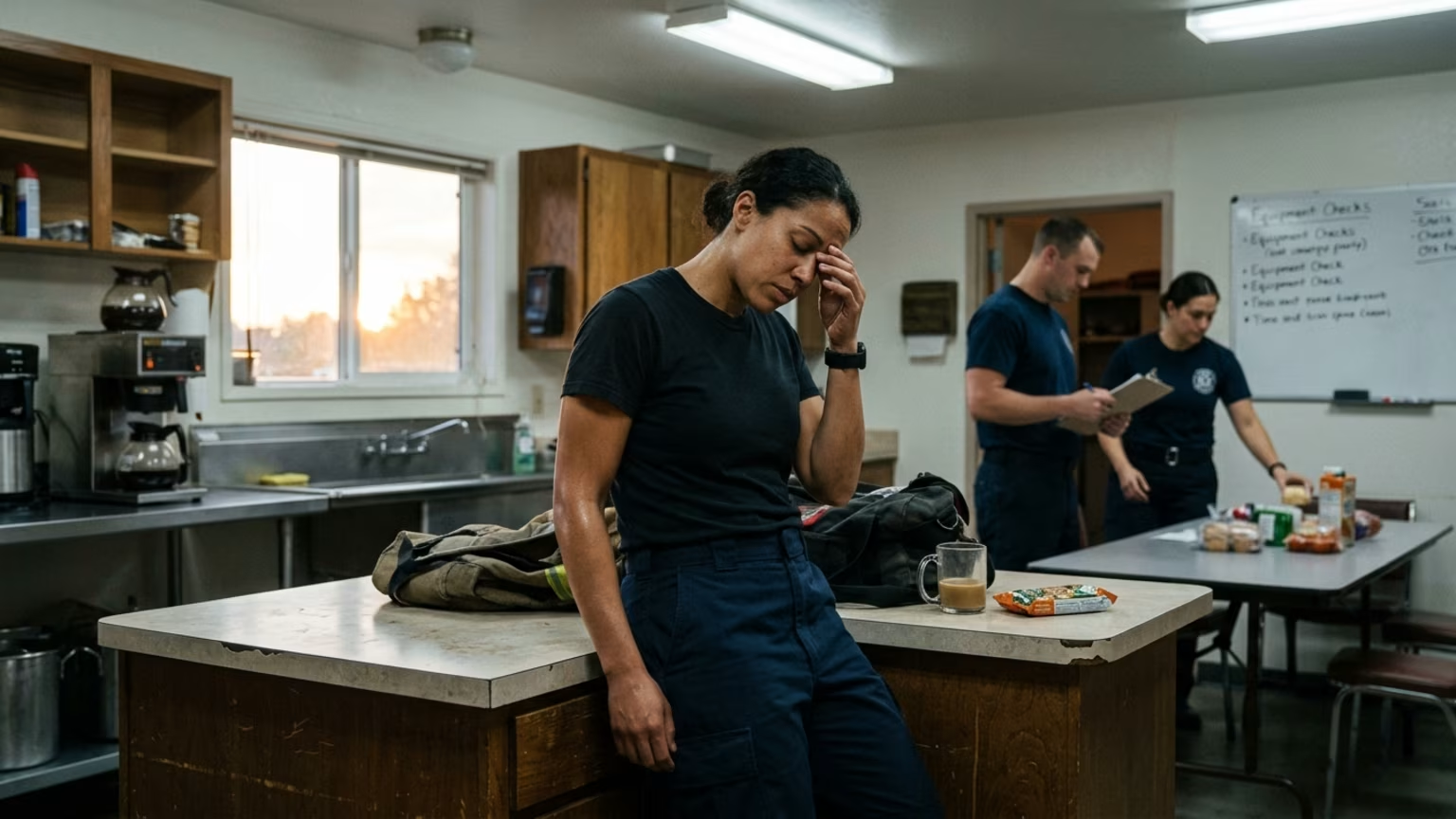

A July 2026 Columbia study links 80 minutes of lost sleep to increased weight and sedentary time, reinforcing the need for off-day rest in shift workers.





On July 7 2026, the Annals of Internal Medicine published a pooled analysis showing that reducing nightly sleep by about 80 minutes leads to measurable increases in body weight and sedentary time over six weeks. The research by Faris M. Zuraikat and colleagues demonstrates how moderate chronic sleep restriction alters physical habits in adults.
The underlying research was published as a pooled analysis of randomized trials. News18 reports that the controlled study observed 95 adults over the age of 20. These individuals participated in a two-part intervention that began with a usual-sleep phase. This initial phase established a baseline before the participants moved into a restricted schedule.
During the restriction phase, researchers instructed the participants to delay their bedtime by 90 minutes. The study required them to keep their usual wake time constant throughout the trial. This design specifically targeted the kind of delayed rest that many working adults experience. Coverage of the pooled analysis notes that participants actually averaged about 80 minutes less sleep per night.
This moderate reduction in rest produced several measurable physical outcomes over a short period. The average weight of the participants was 0.45 kg higher after six weeks of restricted rest. This increase represents about one pound of weight gained compared to their adequate-sleep phase. A secondary summary also reports a 0.52 cm higher average waist circumference during the sleep restriction period.
The physical impact extended beyond basic body composition metrics. The same reporting details an average increase of 17.2 minutes per day in sedentary time. Participants spent noticeably less time moving when their sleep was curtailed by just 80 minutes. These specific figures are group averages across the 95 adults rather than predictions for any individual worker.
The findings provide evidence of a short-term association under a controlled intervention. The available results do not establish that this trial measured long-term disease outcomes. They also do not prove that every person who sleeps less will automatically gain weight. This context is critical when interpreting the average weight and sedentary time increases reported by the researchers.
The participants were adults who generally managed to sleep at least seven hours prior to the intervention. They were also described in study coverage as having elevated cardiometabolic risk profiles. The findings illustrate a controlled shift in physical habits rather than an inevitable outcome for all populations. Extrapolating these averages to every shift schedule requires careful consideration.
Applying these specific laboratory findings to emergency personnel requires careful contextual framing. The published research is not described in the available coverage as a first-responder study. Extrapolating the results directly to firefighters or paramedics remains a cautious step. However, the operational connection is highly relevant for personnel who regularly face similar sleep constraints.
First responders frequently experience moderate sleep curtailment due to their demanding rosters. A 2025 field study cited by The Conversation highlights this occupational reality. The report found that wildland firefighters averaged 13.8-hour shifts on active fire days. During these intense operational periods, they managed only about 6.7 hours of sleep.
This field evidence confirms that emergency duty schedules naturally coincide with short sleep. The firefighter study noted that poorer sleep and longer shifts were associated with reduced cognitive function. This creates a clear picture when combined with the Columbia University findings. The laboratory results show a measurable short-term physical signal, while the field report confirms the occupational hazard.
The practical connection between these two pieces of research is limited but highly relevant for operational planning. The Columbia results deliver a measurable short-term signal regarding modest sleep restriction in an adult population. Meanwhile, the field report demonstrates that significant occupational demands routinely generate sleep loss and performance concerns. Neither source tests a targeted sleep-protection program, but together they highlight the physical cost of ignored fatigue.
These combined insights validate current fatigue management protocols that prioritize dedicated rest periods. The data confirms that sleep loss directly influences daily physical activity levels. Recognizing this cost helps agencies treat shift work and sleep recovery as a baseline physiological need. This approach shifts the focus away from simply demanding better fitness toward actually protecting the recovery window.
Emergency service culture frequently focuses on the extreme fatigue caused by continuous 24-hour operations. This operational focus can overshadow the subtle biological impact of losing just an hour of rest. The recent study challenges the assumption that only massive sleep deficits affect physical readiness. Participants in the Columbia trial only lost an average of 80 minutes of sleep each night.
This modest restriction was still sufficient to increase daily sedentary time and alter body weight. Responders often brush off a minor sleep deficit as a routine part of shift work. They might assume that such a small reduction has no bearing on their overall conditioning. The data indicates that even minor daily restrictions create a measurable biological change over six weeks.
Many fitness frameworks for shift workers treat exercise and sleep as entirely separate categories. A responder might prioritize a heavy workout following a short night of rest. The reported increase in sedentary time suggests that sleep loss fundamentally changes spontaneous daily movement. Recognizing this connection points toward evaluating shift schedules for first responder sleep and recovery rather than relying solely on willpower.
The assumption that weight management relies exclusively on diet and structured exercise is widespread. The Columbia study demonstrates that sleep duration acts as an independent variable for physical activity. When rest decreases, the body naturally compensates by reducing spontaneous movement. This biological reality challenges the idea that personnel can simply train their way out of chronic fatigue.
Addressing this biological reality is critical when structuring long-term fitness goals for emergency personnel. Expecting a responder to maintain perfect conditioning while routinely losing 80 minutes of sleep ignores basic physiology. The reduction in daily movement reported in the pooled analysis shows how the body conserves energy automatically. Recognizing this mechanism allows shift workers to stop blaming a lack of motivation for their accumulated fatigue.
First responders cannot always control their duty hours or overnight dispatch volumes. They can however adjust how they manage their physical recovery during their time off. The study serves as a reason to notice repeated sleep curtailment in your daily routine. Protecting sleep opportunity between tours and on off-days is a highly defensible performance strategy.
Tracking your sleep opportunity alongside your duty schedule is a practical first adjustment. Note the actual hours available for continuous rest rather than just the time you clock out. Compare this available recovery window against your daily physical activity levels. This tracking helps identify recurring patterns of restriction that mirror the 80-minute deficit observed in the study.
If you notice chronic sleep loss and a drop in activity, professional guidance is valuable. Discussing these patterns with a qualified clinician or occupational-health professional is a sensible step. This provides a structured method to address fatigue before it degrades your physical readiness. While off-day strategies are not proven to prevent cardiometabolic disease, they remain a practical necessity for longevity.
Prioritizing actual rest may sometimes require modifying your physical conditioning routine. If you are severely restricted on sleep, pushing through a heavy workout might prove counterproductive. Focus on physical recovery when shift work disrupts sleep to maintain your baseline capability. Adjusting your routine to secure your sleep windows actively offsets the physical demands of the job.
Protecting your sleep windows might also involve managing your physical environment during daytime rest periods. First responders working night rotations must actively defend their recovery time from common daytime interruptions. This deliberate protection of rest helps maintain baseline physical conditioning despite an irregular duty roster. Implementing these practical steps aligns your recovery with the physical demands of your operational schedule.
The current reporting describes a six-week comparison involving specific adult participants. It does not establish a long-term weight trajectory for the individuals involved in the trial. We do not yet know the extent to which any physical changes reverse after sleep improves. Tracking how quickly activity metrics normalize when adequate sleep returns will be critical for shift workers.
Applying these laboratory results to first responders requires population-specific clinical trials. Neither the Columbia study nor the wildland firefighter field report tests a dedicated sleep-protection program. We need focused studies that track targeted off-day sleep strategies among active-duty emergency personnel. This research will help determine if structured rest periods actively prevent weight gain in this specific workforce.
Future analysis must also separate short-term physical associations from long-term occupational health risks. The available results do not specify a disease-risk increase attributable directly to the intervention. Understanding the cumulative load problem regarding irregular schedules and cardiometabolic health remains an urgent priority. Until definitive studies are completed, protecting baseline sleep remains the most practical defense for shift workers.
The connection between short-term weight changes and prolonged occupational stress requires dedicated, long-term investigation. Researchers must look beyond six-week intervals to understand how years of rotating shifts alter baseline metabolism. Observing the cardiometabolic outcomes of emergency workers over a full career will provide much stronger operational guidance. Until the scientific community delivers these longitudinal studies, proactive sleep management remains your best physical defense.
Understanding testosterone and hormone claims without assuming testing or treatment is right for everyone often complicates how responders address the weight changes linked to chronic sleep loss. Rescuris evaluates the clinical evidence behind physical recovery and shift-work fatigue to clarify these complex physiological shifts. We turn credible research into practical guidance built around irregular schedules, helping personnel sustain their long-term capability. Explore Resources
Rescuris publishes evidence-aware guidance for firefighters, police officers, paramedics and other first responders on fitness, recovery, sleep, nutrition, stress resilience and long-term capability.






Read practical guidance on first responder fitness, recovery, sleep, nutrition and resilience for demanding work and a long, active career.
read the blog
