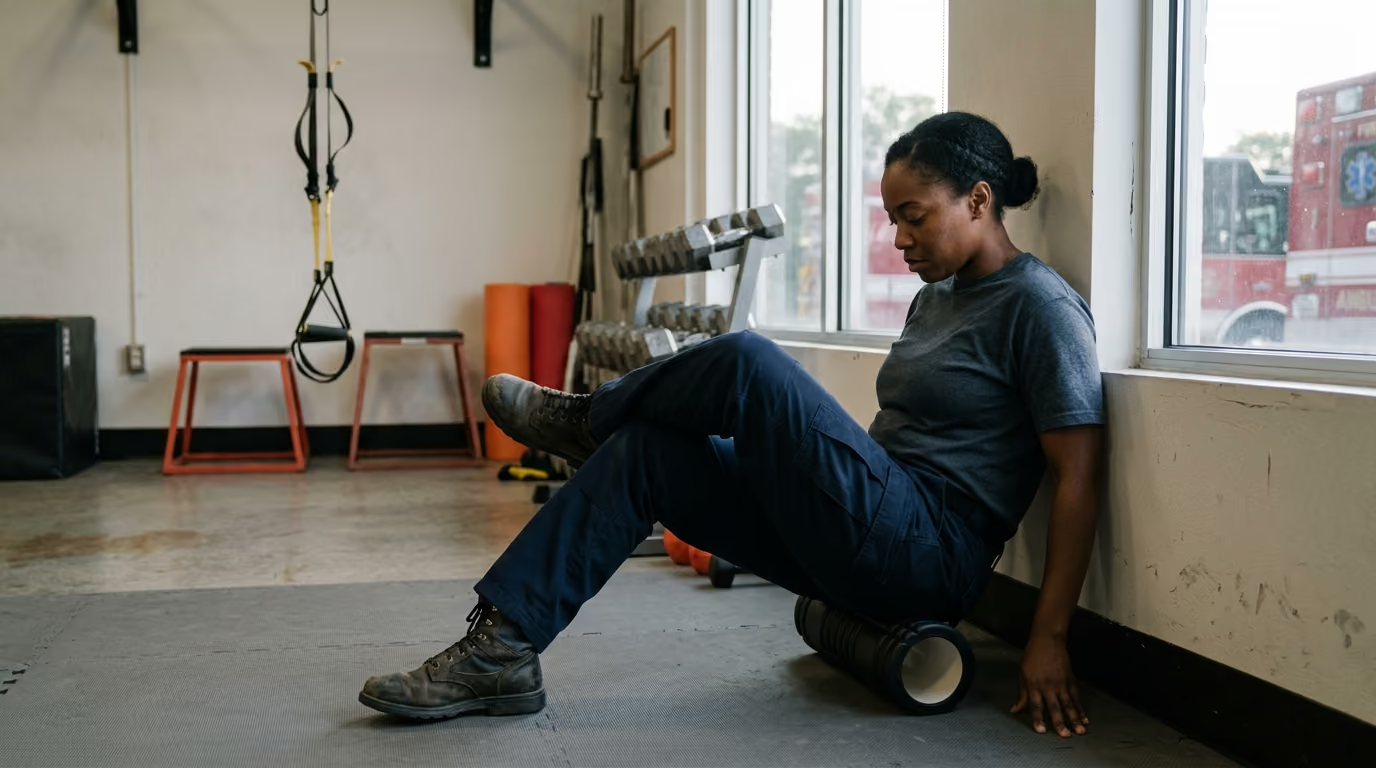

Twelve-hour shifts demand strategic recovery protocols that use targeted naps, timed caffeine intake, and autoregulated training days to maintain physical capacity and repair tissue.





Most recovery advice assumes you sleep eight uninterrupted hours during the biological night. For professionals working rotating schedules, 24-hour tours, or night shifts, that baseline does not exist. Pushing through high-volume training on fragmented daytime sleep does not build resilience. It compounds systemic fatigue, degrades neuromuscular control, and slows tissue repair.
Physical recovery under shift work is not about forcing an unnatural schedule to feel normal. It is a structured risk-management process. To maintain physical capability, you must protect your core sleep periods, use strategic naps, time light and caffeine deliberately, and adjust your training volume when sleep debt accumulates.
Shift work presents two distinct physiological hurdles. You face an absolute deficit of sleep hours, and you must attempt sleep at biologically unfavorable times. When your wakefulness occurs during the circadian night, your core temperature, hormonal pulses, and nervous system operate against your work demands. Conversely, attempting to sleep during the day means resting while your biological clock promotes alertness.
Understanding this distinction prevents common training mistakes. Spending seven hours in bed after a night shift does not produce the same biological recovery as seven consolidated hours at night. Daytime sleep is frequently lighter, more fragmented, and interrupted by environmental noise.
You must separate sleep opportunity from actual sleep obtained. Sleep opportunity is the time you designate for rest. Sleep obtained represents the consolidated minutes of restorative deep and rapid eye movement stages. A standard recovery plan fails when it assumes every hour spent lying down provides equal cellular restoration.
Research demonstrates that sleep loss directly degrades physical output, tissue repair, and motor control. Systematic reviews confirm that acute sleep loss reduces aerobic endurance, muscular peak power, sprinting capacity, and reaction time while increasing perceived exertion. A workout performed after poor sleep feels significantly heavier and demands greater mental effort for lower physical output.
Muscle tissue repair suffers substantially when sleep is restricted. Human clinical trials show that a single night of total sleep deprivation can reduce post-prandial muscle protein synthesis by 18 percent. Sleep restriction disrupts the endocrine environment responsible for muscular remodeling. It alters testosterone secretion, increases systemic cortisol activity, blunts growth hormone release, and impairs cellular insulin sensitivity. These physiological changes impair your ability to repair soft tissue damage from duty tasks or heavy lifting.
Sustained sleep restriction carries a measurable injury cost. Sports medicine data indicates that sleeping seven hours or less per night over a 14-day period is associated with an approximate 1.7-fold increase in musculoskeletal injury risk. In occupational settings, extended shift durations compound this danger. Studies across shift-working populations show that shifts of 12 hours or more carry a 25 to 30 percent higher risk of accidents and injuries compared to standard eight-hour shifts.
The evidence also highlights individual variability. While total sleep deprivation causes immediate, predictable drops in physical capability, partial sleep restriction over one to three nights produces varied responses across different movement tasks. You may preserve basic multi-joint pressing or pulling strength for a brief session, but complex motor patterns, balance, and sustained cardiovascular work deteriorate quickly. Tracking these shifts helps prevent overtraining and soft-tissue injury.
First responders, emergency personnel, and industrial shift workers face physical demands that basic sleep studies rarely replicate. Your schedule does not merely shift your bedtime. It exposes you to sudden sympathetic surges, high thermal loads from protective gear, prolonged periods of vehicle sitting, and unpredictable physical efforts.
When an alarm sounds during a period of circadian low, your body experiences an immediate surge of adrenaline and noradrenaline. This rapid transition from rest to high-intensity physical exertion places immense strain on cold muscles and joints. Performing heavy extrications, patient carries, or physical confrontations during the biological night requires significant motor control while your central nervous system is naturally suppressed.
Post-incident adrenaline also creates sleep latency problems. You may finish a demanding call at 04:00 and clear duty at 07:00, but your sympathetic nervous system remains elevated. Trying to sleep immediately after high-stress calls often results in restless, fragmented rest. You can implement specific injury prevention and physical recovery strategies to balance these occupational hazards against your weekly physical training.
Reviewing operational data reinforces this reality. Reports analyzing fatigue across extended shift lengths show that fatigue multiplies the rate of on-duty errors, vehicle collisions, and physical strains. Recognizing that shift work alters your basic recovery baseline is essential for staying healthy across a long career.
The foundation of physical recovery is protecting your primary sleep period, regardless of what time of day it occurs. Clinical guidance from the American Academy of Sleep Medicine and occupational health bodies emphasizes initiating your main sleep block as soon as practical following a shift. Delaying sleep to run errands or complete chores increases biological wakefulness as the day progresses.
To maximize sleep quality during daylight hours, you must control your sleep environment completely. Sunlight penetrating your eyelids suppresses natural melatonin production and signals daytime alertness to the brain. Install true blackout curtains or wear a fitted, contoured sleep mask. Lower your bedroom temperature, as the human body requires a drop in core temperature to initiate and sustain deep sleep stages.
Noise management is equally vital for daytime recovery. Daytime traffic, delivery services, family activities, and neighborhood sounds cause micro-arousals that disrupt sleep architecture without fully waking you. Use a mechanical white noise machine or dense silicone earplugs to block high-frequency sound spikes. Put communication devices on emergency-bypass modes so unnecessary notifications do not interrupt deep restorative cycles.
Organizational sleep parameters suggest aiming for at least 10 to 11 consecutive hours off duty between shifts. This window provides the necessary travel, decompression, nutrition, and personal care time required to achieve seven to eight hours of actual sleep. When designing a long-term schedule, consult frameworks for building a shift-specific sleep plan to match your particular rotation.
When your primary sleep window is shortened or fragmented, planned naps serve as an effective tactical tool. The American Academy of Sleep Medicine and the National Institute for Occupational Safety and Health recommend strategic naps to counteract occupational sleepiness and restore motor control. Naps should not replace your main sleep block, but they can bridge critical recovery gaps.
A prophylactic nap occurs in the late afternoon or early evening before reporting for a night shift. Sleeping for 60 to 90 minutes before your shift provides a complete sleep cycle, including slow-wave deep sleep. This pre-shift sleep banks restorative recovery, blunts the buildup of homeostatic sleep pressure, and preserves physical reaction time during the early morning hours.
A short nap taken during an authorized mid-shift break helps restore alertness during the biological trough between 02:00 and 05:00. Keep this nap between 15 and 30 minutes. Sleeping longer than 30 minutes during a work break increases the risk of sleep inertia, leaving you groggy and uncoordinated if called into immediate action.
If your daytime sleep was interrupted after working all night, a 20 to 45-minute afternoon nap can relieve residual fatigue before evening family commitments. Avoid taking long naps late in the day if you plan to transition back to a normal nighttime sleep schedule that evening. Keep the duration controlled to protect the subsequent night of rest.
A caffeine nap involves consuming a modest dose of caffeine, roughly 100 milligrams, immediately before a 20-minute nap. Because caffeine takes approximately 20 to 30 minutes to clear the gastrointestinal tract and bind to adenosine receptors, you wake up just as the stimulant takes effect. This protocol reduces sleep inertia and sharpens short-term alertness for critical physical tasks.
Caffeine is a dependable countermeasure for acute sleepiness, but it does not repair muscular tissue or replace cellular rest. A systematic Cochrane review found no clear evidence that caffeine consumption alone eliminates workplace injuries among shift workers. Relying on stimulants to push through heavy training while sleep-deprived masks central nervous system fatigue while leaving muscular tissue vulnerable to strains and tears.
Caffeine has an average elimination half-life of five to six hours in healthy adults, with significant amounts remaining active for much longer. Consuming caffeine late in a night shift ensures that active metabolites will circulate in your bloodstream when you attempt daytime sleep. This blunts deep slow-wave sleep, increases nighttime awakenings, and degrades the restorative value of your rest.
Establish a firm caffeine cutoff time four to six hours before your target sleep window. If you aim to sleep at 08:00 following a night shift, stop all caffeine intake by 03:00 or 04:00. When waking for a shift, use moderate, divided doses of 50 to 100 milligrams rather than massive 300-milligram boluses. This approach provides steady alertness without causing extreme heart rate spikes or gastrointestinal distress.
Limit energy drinks loaded with excess refined sugars. High sugar intake combined with caffeine causes rapid blood glucose fluctuations that worsen mid-shift fatigue crashes. Rely on black coffee, unsweetened tea, or measured caffeine tablets to manage alertness accurately without disrupting metabolic health.
Training through severe fatigue without modification does not produce progressive adaptation. When your nervous system is depleted, heavy eccentric loads and high-speed movements carry high injury risk with minimal training return. You must adjust your training based on actual recovery status rather than rigid calendar programming.
Using a systematic training decision tree for shift workers allows you to modify workouts objectively based on measurable fatigue indicators.
A green day occurs when you obtain at least seven hours of consolidated sleep, report low perceived fatigue, and exhibit normal movement quality. On these days, execute your primary strength, power, and high-intensity conditioning sessions. You can safely expose your musculoskeletal system to heavy compound lifts, high-velocity sprints, and complex technical drills.
A yellow day reflects four to six hours of fragmented sleep, elevated perceived exertion, or mild physical lethargy. Do not cancel the session entirely, but strip away high-risk components. Reduce your working volume by 30 to 40 percent, lower the intensity to submaximal ranges, and avoid training to muscular failure. Replace explosive Olympic lifts or heavy axial loading with machine-supported work, dumbbell presses, and steady-state zone 2 aerobic exercise.
A red day occurs following severe sleep deprivation of fewer than four hours, extreme operational stress, or noticeable motor clumsiness. Heavy resistance training on red days compounds systemic inflammation and significantly elevates injury risk. Limit your physical activity to gentle mobility routines, light walking, or soft-tissue work. Focus your remaining time on nutrition, hydration, and acquiring sleep.
Circadian disruption impairs insulin sensitivity, alters appetite hormones like ghrelin and leptin, and slows gastrointestinal motility. When working nights, you are more prone to cravings for ultra-processed carbohydrates and calorie-dense snacks. These food choices drive systemic inflammation and cause sluggishness during physical tasks.
Maintain adequate total daily protein to support muscle protein synthesis, especially when sleep deficits threaten muscular recovery. Distribute protein intake across three to four balanced meals containing 25 to 40 grams of high-quality protein from lean poultry, fish, eggs, or whey. When preparing food for night duty, pack pre-portioned meals to avoid relying on station snacks or fast-food options.
Hydration plays an indispensable role in maintaining blood volume, cardiac efficiency, and joint lubrication. First responders working in heavy turnout gear or body armor lose substantial fluid and electrolytes through sweat. Mild dehydration of just two percent of body mass impairs cognitive function, increases perceived physical exertion, and reduces muscular power.
Drink water consistently throughout your shift, adding sodium, potassium, and magnesium if working in high-heat environments. Taper fluid intake slightly during the final 90 minutes before your planned sleep window to prevent mid-sleep awakenings for urination. For detailed strategies on organizing meal timing around irregular working hours, review guidance on time-restricted eating on night shifts.
Light is the primary environmental cue governing human circadian biology. Photons entering the retina strike specialized intrinsically photosensitive retinal ganglion cells, signaling the suprachiasmatic nucleus to suppress melatonin and promote wakefulness. Strategic light exposure helps you adjust to shift schedules, while unmanaged light sabotages daytime sleep.
If you finish a night shift and plan to sleep immediately upon arriving home, minimize exposure to bright morning sunlight. Exposure to sunlight during your morning commute signals your internal biological clock that the day has begun, triggering cortisol release and suppressing daytime sleepiness. Wear dark, polarized sunglasses on your drive home, provided they do not compromise your driving safety in low-visibility conditions.
If you work a permanent or recurring block of night shifts, use bright indoor lighting or broad-spectrum light boxes during the early portion of your shift. Exposing yourself to bright light between 21:00 and 01:00 suppresses early-shift drowsiness and helps shift your circadian phase later. Avoid high-intensity bright light exposure during the final two hours of the shift.
When rotating back to daytime living on off-duty days, reverse this process. Seek immediate outdoor sunlight exposure upon waking in the morning to anchor your circadian rhythm to standard daytime hours. Natural sunlight within 30 minutes of waking accelerates phase realignment and clears lingering grogginess.
Misunderstandings regarding sleep physiology lead many shift workers to adopt counterproductive habits. Addressing these errors protects long-term health and keeps your physical performance reliable on duty.
Assuming that seven hours of daytime sleep equals seven hours of nighttime sleep is physiologically incorrect. Because daytime sleep conflicts with core circadian alerting signals, it contains less restorative slow-wave sleep and more frequent micro-arousals. You must manage training loads conservatively even when the clock suggests you spent sufficient time in bed.
Attempting to shock a sleep-deprived body into alertness with high-intensity training increases cardiovascular strain and joint stress. While a light warmup or walk elevates core temperature and promotes gentle blood flow, max-effort resistance training on severe sleep debt damages tissue that your body cannot efficiently rebuild. Train to stimulate physical adaptation, not to punish yourself for being tired.
Completely flipping your sleep schedule by 12 hours on your first day off causes acute circadian misalignment similar to severe international jet lag. This practice leaves you chronically fatigued during your personal life and equally exhausted when returning to duty. Adopt a moderate transition strategy, such as shifting your sleep window by three to four hours rather than completely reversing it.
Using over-the-counter sleep aids or prescription sedatives to force daytime sleep alters natural sleep architecture. Many sedatives suppress restorative rapid eye movement and slow-wave sleep stages, leaving you physically unrecovered despite prolonged unconsciousness. Treat pharmacological aids with caution and prioritize environmental sleep controls.
Managing physical recovery through lifestyle adjustments has biological limits. Shift work places undeniable stress on cardiovascular, metabolic, and neurological systems. You must establish firm personal guardrails to ensure your pursuit of physical readiness does not compromise personal or public safety.
Never operate motor vehicles, handle emergency machinery, or perform heavy barbell training if you experience involuntary microsleeps, visual drifting, or severely delayed reaction times. Drowsy driving is a leading cause of fatal accidents among first responders leaving night duty. If you cannot stay awake for the drive home, take a 20-minute nap in a secure station bunk or parking area before operating a vehicle.
Certain symptoms indicate problems beyond basic shift-work fatigue. If you experience persistent insomnia during scheduled sleep opportunities, chronic daytime sleepiness that impairs basic functioning, loud snoring accompanied by witnessed breathing pauses, or severe mood disturbances, seek formal medical evaluation. These signs frequently point to clinical shift work sleep disorder, obstructive sleep apnea, or underlying endocrine dysfunction.
Consulting a licensed physician or board-certified sleep specialist provides access to clinical diagnostic testing, personalized circadian phase-shifting protocols, and evidence-based treatment plans. Medical oversight ensures that underlying clinical disorders are treated directly rather than masked with stimulants. For additional occupational guidance, consult established shift-work sleep protocols published by public health agencies.
Managing physical recovery around an irregular schedule requires intentional planning, strict environmental control, and the discipline to adjust training intensity to your biological state. Protecting your rest ensures sustainable physical capability, lowers injury rates, and supports your health across a demanding career and into retirement.
Stay connected for research-led guidance on duty fitness, shift-work sleep, injury recovery, stress, nutrition and career longevity. Practical ideas for first responders who want to stay capable on the job, recover well and protect their health for the long run.



Read practical guidance on first responder fitness, recovery, sleep, nutrition and resilience for demanding work and a long, active career.
read the blog



