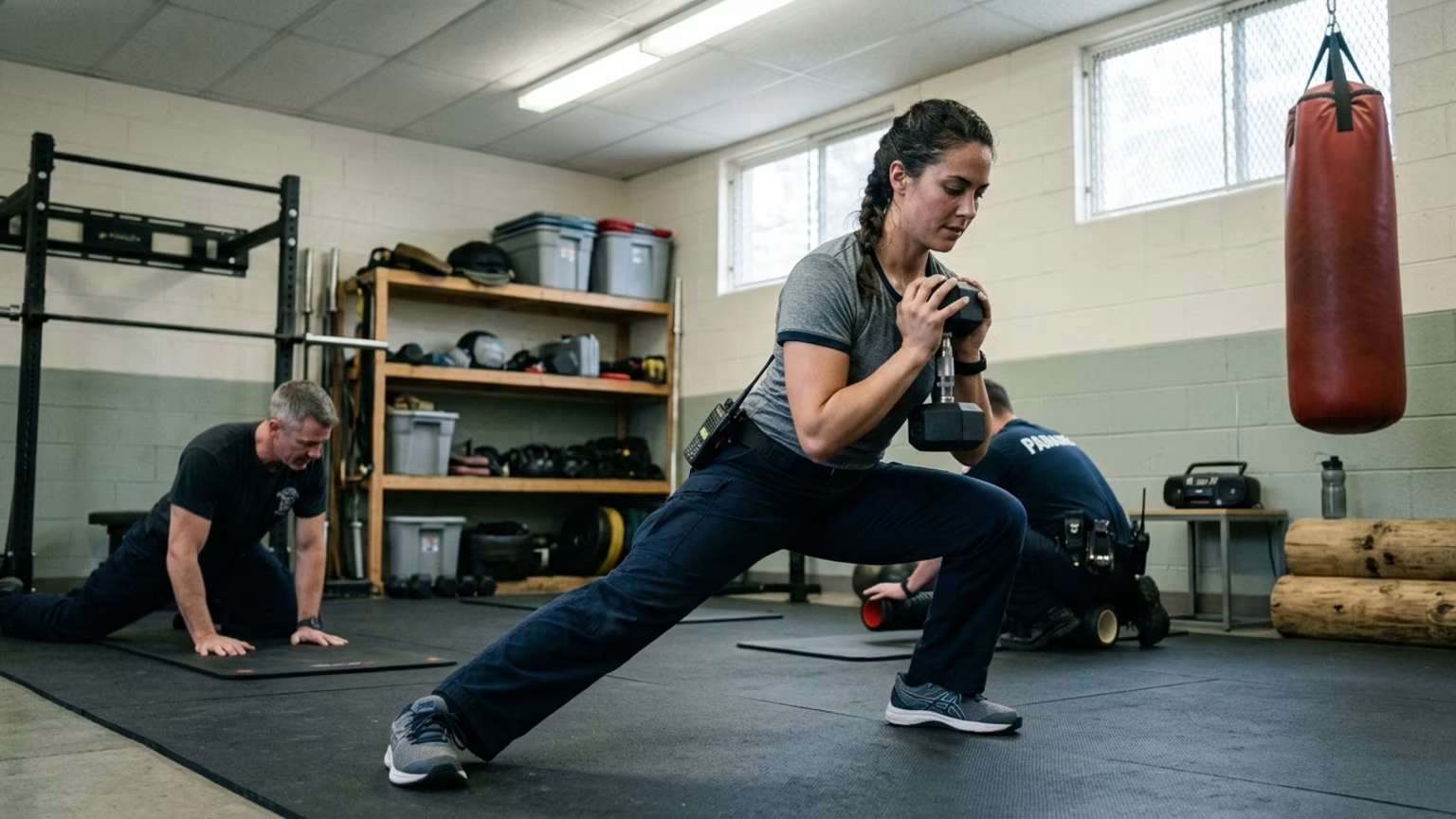

A practical, occupation-specific mobility framework designed for first responders. Learn how to structure movement readiness around actual duty demands.





The National Institute for Occupational Safety and Health clearly identifies manual patient handling as a major risk factor for first responders [5]. Lifting and transferring patients directly contributes to work-related musculoskeletal disorders across the entire emergency response sector [5]. These patient-transfer demands remain heavily relevant to both modern EMS and fire-based medical response [5]. Emergency personnel must manipulate heavy, unpredictable human loads in extremely confined spaces on a daily basis.
Stairwells, narrow hallways and severely damaged vehicles present severe environmental barriers to safe lifting mechanics. First responders cannot realistically control their exact physical leverage during critical life-saving medical interventions. Because emergency scenes are inherently chaotic, achieving perfect lifting posture remains a persistent operational myth. Developing proper movement skills under load remains vital for long-term career survival.
A comprehensive systematic review confirms that structured, occupation-specific training programs produce measurable operational benefits [1]. These targeted physical preparation programs associate closely with better performance in highly demanding simulated occupational tasks [1]. Researchers noted specific improvements across critical skills like rapid victim rescue, hose advancement and ladder operations [1]. By practicing these exact movement patterns, personnel build physical resilience against the unpredictable nature of emergency response.
However, clinical experts note that more extensive research is still needed on optimal program duration and progression [1]. The proper progression of physical training variables requires careful study to maximize long-term safety [1]. Researchers highlight that concurrent job demands heavily influence baseline physical fitness over a long career [1]. Balancing demanding shift work against structured recovery protocols requires a deeply practical approach to daily movement.
The sudden transition from a sedentary station chair to a chaotic scene shocks the human nervous system. A massive spike in heart rate prepares the body for immediate survival rather than safe joint mechanics. Soft tissues remain completely cold and stiff as personnel rush to grab complex rescue tools. This harsh biological reality means that initial occupational movements are almost entirely fueled by raw adrenaline.
This repeated reliance on extreme sympathetic arousal forces the body to absorb impact through rigid joints. Ligaments and tendons take the absolute brunt of the load when supporting muscles remain unprepared for explosive movement. Over an extended career, this repeated pattern accelerates the steady accumulation of chronic tissue irritation. Restoring natural movement capacity helps the central nervous system downregulate after these intense occupational spikes.
Implementing a daily shift-ready mobility routine allows the body to maintain essential joint function between calls. This consistent, low-intensity movement prevents tissues from locking into the restrictive postures dictated by heavy protective gear. The nervous system gradually learns to trust these wider ranges of motion without triggering defensive muscle spasms. This biological adaptation proves critical for preventing minor structural stiffness from developing into severe occupational injury.
Routine tasks require controlled motion across unpredictable terrain, slippery floors and confined structural spaces. A practical daily movement plan organizes mobility strictly around these exact environmental challenges. This focused approach targets the specific body regions responsible for managing heavy equipment safely. Prioritizing targeted movement rehearsal builds a foundation for long-term physical durability.
Ankles handle the constant demand of negotiating steep stairwells, uneven ground and cluttered emergency scenes. Stiff ankles severely limit a first responder's ability to lower their center of gravity safely. When the ankles cannot flex properly, the knees must shift forward uncontrollably, or the lower back must round excessively. This compensation pattern proves particularly dangerous when carrying heavy medical bags or navigating structural debris.
Restoring basic ankle function creates a highly stable foundation for the entire kinetic chain. A practical routine includes controlled knee-over-toe ankle rocks while keeping the heel down firmly. Personnel can also perform slow calf raises with a deliberate pause at the top and bottom. Supported split-stance ankle pulses help simulate the uneven footing commonly found on chaotic emergency scenes.
Emergency medical personnel often spend extended periods kneeling on concrete or crouching inside cramped ambulances. These awkward static positions aggressively shorten the hip flexors while weakening the posterior chain muscles. Over time, this chronic imbalance pulls the pelvis out of alignment and restricts natural stride length. Deliberate hip mobility work directly counters the structural damage caused by these prolonged occupational postures.
The primary goal is to make common work positions feel physically available rather than chasing extreme flexibility. Unrestricted hips allow personnel to maintain a stronger base of support during complex medical response. A sensible hip block includes half-kneeling hip-flexor movements paired with a gentle glute contraction. Supported lateral squats or side-to-side weight shifts improve lateral mobility for working inside tight spaces.
The thoracic spine handles the heavy rotational demands of breathing, bracing and heavy equipment use. The weight of a self-contained breathing apparatus constantly pulls the shoulders forward during extended shifts. This sustained anterior load locks the thoracic spine into a rigid posture over many continuous hours. A stiff upper back severely restricts lung expansion during high-exertion fireground tasks.
Proper upper-back movement prevents the lower back from absorbing dangerous rotational forces under heavy load. Personnel can implement quadruped or standing thoracic rotations to maintain necessary spinal function. Wall-supported upper-back extensions help reverse the rounded posture created by wearing heavy protective gear. Slow reach-and-rotate patterns teach the body to separate healthy upper-back movement from aggressive low-back twisting.
Shoulders endure massive mechanical strain during overhead reach, pulling ceilings and heavy equipment handling. When the shoulder capsule becomes chronically restricted, the body relies on smaller, vulnerable muscles to generate force. This poor mechanical leverage significantly increases the risk of painful rotator cuff injuries over time. A practical mobility approach prioritizes scapular control and smooth joint rotation to protect these critical structures.
The emphasis remains on building a useful range of motion rather than passive flexibility for its own sake. A basic shoulder routine starts with smooth wall slides to groove proper movement patterns safely. Personnel can follow these with controlled arm circles to maintain global joint capsule health. Scapular push-ups against a wall or bench develop the necessary supportive strength for heavy lifting.
Integrating these movements into a daily shift requires realistic timing and minimal equipment. The objective is to raise movement readiness gradually without creating fatigue before demanding emergency work begins. Proper timing allows personnel to remain physically capable without turning recovery into an exhausting workout. Breaking mobility into manageable blocks reduces barriers created by shift work and irregular schedules.
A pre-shift sequence requires approximately five to eight minutes and focuses strictly on movement readiness. First responders can start with one minute of easy walking, marching or stationary cycling. Following this warmup, perform eight to ten ankle rocks per side to prepare the lower body. Six to eight controlled hip hinges then activate the posterior chain for early lifting tasks.
The routine continues with six to eight half-kneeling hip movements per side to counter seated stiffness. Personnel should add six thoracic rotations per side to prepare the trunk for heavy load bracing. Six wall slides or controlled arm raises prepare the shoulders for managing heavy gear safely. Finally, complete two practice repetitions of a job-relevant pattern, such as stepping or kneeling.
Between calls, the priority becomes interrupting static positions without creating unnecessary physical fatigue. A two to four minute reset helps personnel recover from seated standby or long report writing. When circumstances allow, personnel should walk rather than immediately remaining seated after a call. Five slow hip hinges and five ankle rocks per side help quickly restore lower body blood flow.
This brief period is a low-dose movement reset, not a substitute for rest or hydration. Personnel can use three to five thoracic rotations per side to alleviate upper-back stiffness. Five relaxed shoulder reaches or wall slides reduce tension from heavy vests or equipment harnesses. Taking several slow breaths allows the shoulders and rib cage to move naturally before the next tone.
The post-shift sequence should remain slower and noticeably less demanding than the initial warmup. Taking five to ten minutes helps the body transition out of repeated bracing and high-alert movement. A short routine that is easy to repeat remains far more realistic than an elaborate stretching program. First responders can begin by walking easily for one or two uninterrupted minutes.
Follow the walk with gentle ankle and hip movements to release lingering muscular stiffness. Supported thoracic rotations help decompress the spine after hours of carrying heavy gear across the shift. Relaxed shoulder motion relieves mechanical tension without forcing the joints into extreme overhead ranges. The session should finish with calm breathing and a brief body scan to assess fatigue.
First responders must learn how to use physical symptoms as direct feedback during their daily mobility work. Mild stiffness that improves with easy movement may justify a reduced-range version of the daily routine. However, stretching should never feel intensely uncomfortable or painfully forced during an acute muscle injury. Chasing more range of motion is not automatically better for tasks requiring stability and rapid force production.
Sharp pain, sudden weakness, physical numbness or significant joint swelling requires immediate medical caution. Symptoms that emerge after a specific operational incident should not be managed by simply stretching harder. Persistent or worsening pain must be assessed by an appropriately qualified healthcare clinician. This careful approach prevents minor duty-related strains from developing into severe structural damage.
Mobility routines cannot replace progressive strength training, cardiovascular conditioning or proper sleep management. Maintaining a robust physical foundation requires careful workload recovery and active heat management while on duty. Proper patient-handling technique and accurate equipment fit remain absolutely crucial for overall occupational health.
Retired first responders can still use these exact same fundamental movement categories to maintain their physical independence. However, the daily application volume and intensity should reflect their current lifestyle capacity rather than their former active-duty demands. A retired professional might focus solely on the morning sequence to alleviate chronic joint stiffness. Medical conditions, previous surgeries and chronic pain patterns require careful individualized assessment before starting new routines.
Maintaining operational readiness requires preparing joints for the specific demands of emergency response rather than chasing generic flexibility.
Recovering from accumulated physical wear without losing duty readiness frequently challenges emergency personnel trying to manage irregular shifts. Navigating unpredictable emergency calls and heavy patient handling demands forces the body to adapt rapidly, but Rescuris helps first responders build practical movement protocols that support long-term operational health. Explore Resources
Rescuris publishes evidence-aware guidance for firefighters, police officers, paramedics and other first responders on fitness, recovery, sleep, nutrition, stress resilience and long-term capability.






Read practical guidance on first responder fitness, recovery, sleep, nutrition and resilience for demanding work and a long, active career.
read the blog
