
Passive flexibility does not prevent injuries on shift, but building active joint control and loaded mobility protects first responders during demanding emergency tasks.





Many first responders search online for ways to fix chronic hip tightness, lower back stiffness, or shoulder pinching after long shifts. The standard advice usually tells them to hold passive hamstring stretches or spend twenty minutes on a foam roller. This guide provides a direct, evidence-based method to build usable range of motion that holds up under heavy gear, awkward patient transfers, and unpredictable physical demands.
Operational mobility is the ability to access, control, and repeatedly use specific joint angles under load, fatigue, and environmental stress. It is not flexibility for its own sake. Achieving a deep split or touching your toes with passive assistance does not guarantee you can safely lift a bariatric patient from a tight bathroom floor. You need active strength at end ranges, joint stability inside heavy protective clothing, and the capacity to move without forcing vulnerable tissues into painful compensations.
Passive flexibility measures how far a joint can be moved by an external force while the surrounding muscles remain relaxed. A clinician lifting your leg into a hamstring stretch measures passive range. In contrast, operational mobility demands active neurological control and muscular force production throughout that entire arc of motion. When you step over an obstacle while wearing thirty pounds of armor, your nervous system must dynamically stabilize the joint at every degree of travel.
True operational capability requires a six-tier movement framework:
Focusing exclusively on passive stretching can create an illusion of readiness. When passive range expands without a matching increase in motor control, the nervous system often perceives the joint as unstable. In response, it creates protective muscular tension to guard the area. First responders who spend hours stretching their hips often find the tightness returns within hours because they have not built usable strength across that newly opened range.
The range-strength-control triad forms the foundation of operational movement. First, can you physically enter the necessary position without severe structural pinching? Second, can you produce and absorb force within that position while maintaining balance? Third, can you exit the position smoothly under load without relying on awkward spinal twisting or violent momentum? If any component of this triad fails, the movement becomes an injury liability during emergency calls.
Building a modest mobility reserve protects against real-world chaos. Duty environments rarely feature flat floors, perfect lighting, or balanced loads. When you step on wet stairs or catch a falling patient, your joints are suddenly forced beyond standard angles. A well-conditioned mobility reserve ensures that these unexpected shifts do not exceed your physical thresholds.
Sprains, strains, and soft tissue tears make up the single largest category of work-related injuries across the emergency services. Data from the National Fire Protection Association reveal that sprains and strains account for 43 percent of all fireground injuries. These soft tissue failures become even more dominant away from the fireground, representing 63 percent of training injuries and 58 percent of injuries during non-fire emergencies.
Similar trends exist throughout emergency medical services and law enforcement agencies. Research published by the Centers for Disease Control and Prevention and the National Institute for Occupational Safety and Health identifies sprains and strains as the leading injury classification, representing roughly 33 to 41 percent of all responder injuries. Across all branches of emergency response, the lower back and the lower extremities suffer the highest incidence of mechanical wear, with the knee joint being the most frequently injured lower-limb site.
Epidemiological reviews consistently show that lower-extremity and spinal strains account for substantial lost duty time. Reported injury rates across emergency service studies span from 9 percent to 74 percent depending on department tracking methods. Yet the direct link between general physical fitness scores and injury rates remains complex. A systematic review evaluating emergency responder fitness found limited evidence that standard physical tests reliably predict future injury, though higher baseline aerobic capacity generally correlates with lower overall risk.
This scientific reality demands honesty about what mobility training can and cannot do. No stretching protocol or mobility routine can completely eliminate injury risk on the fireground, during patient handling, or in physical confrontations. Equipment design, unpredictable patient movements, sleep deprivation, and shift fatigue all influence injury rates. Instead of treating mobility as an absolute shield, view it as an essential component of physical readiness alongside strength, cardiovascular endurance, and sound work mechanics.
Movement screening tools, such as the Functional Movement Screen, provide structured ways to assess baseline motion. The screen evaluates movement across seven fundamental patterns on a 21-point scale. Early occupational studies suggested that a composite score of 14 or lower indicated an elevated risk of musculoskeletal injury. Subsequent large-scale investigations and systematic meta-analyses have challenged this cut-off value.
A study analyzing Denver firefighters demonstrated that composite screening scores of 14 or lower did not predict occupational injury claims or workers' compensation costs. When researchers analyzed the data across emergency populations, composite screening scores proved too inconsistent to act as a stand-alone clearance tool. Movement screens remain valuable as diagnostic baselines to spot asymmetric restrictions, but they should never be used as predictive crystal balls.
Occupational mobility cannot be measured accurately in shorts and running shoes. The protective ensembles worn by firefighters, tactical police officers, and paramedics alter body mechanics, restrict joint excursion, and shift the center of mass. Structural turnout gear, body armor plates, duty belts, and heavy steel-shank boots impose physical barriers that reduce functional movement.
Ergonomic studies evaluating structural firefighter ensembles have documented clear reductions in joint mobility. Firefighters wearing full protective gear experience significant decreases in shoulder flexion, cervical spine rotation, neck flexion, and standing trunk flexion. A comprehensive scoping review on personal protective equipment confirmed that every evaluated study demonstrated measurable restrictions in static range of motion, while balance assessments showed significant instability when personnel wore full protective ensembles.
Equipment fit significantly alters occupational movement efficiency. A systematic review on protective gear sizing revealed that 88 percent of analyzed studies found a direct relationship between improper garment fit and degraded physical performance. Oversized gear catches on obstacles and creates mechanical drag. Undersized gear restricts joint articulation, forcing the wearer to generate extra muscular force simply to bend the limbs.
Stiff duty boots and protective footwear severely restrict ankle dorsiflexion. When the ankle cannot flex forward over the foot, the body must find that missing motion elsewhere. First responders typically compensate by turning their feet outward, letting their knees collapse inward, or rounding their lumbar spines during low-level tasks. A responder who demonstrates a flawless barefoot squat in a gym setting may struggle to maintain balance when performing the same movement in structural boots.
The physical environment amplifies these gear restrictions. Emergency personnel frequently work on wet pavement, oil-slicked roadways, unstable debris, and narrow stairwells. In these settings, limited mobility forces awkward postures that overload surrounding joints. Understanding how personal protective equipment alters joint motion allows you to train for the true operational realities of the job rather than idealized gym conditions. For structured strategies on organizing duty-ready physical preparation, review our guide to programming high output workouts around shift work.
The hips and ankles function as the primary load-bearing joints for the entire lower body. When either joint loses its functional range, the knee and the lumbar spine are forced to bear excessive shear stress. Building resilient operational mobility requires addressing the specific mechanical requirements of both joints under dynamic load.
The hip joint is a ball-and-socket structure designed for multi-planar articulation. It must produce robust flexion, extension, internal rotation, external rotation, adduction, and abduction. In duty situations, the hips allow you to squat down to a patient, step over guardrails, and climb into vehicle cabs. When hip flexion is restricted, the pelvis tilts backward prematurely, pulling the lumbar spine into loaded flexion.
To maintain usable hip mobility, focus on active positions that demand pelvic control. The 90-90 hip shift teaches controlled internal and external rotation without requiring spinal movement. Perform this drill by sitting on the floor with both knees bent at 90-degree angles, one leg in front and one to the side. Actively press the knees into the floor, sit tall through the torso, and slowly rotate between positions using hip musculature rather than spinal momentum.
Staggered-stance split squats and rear-foot elevated split squats strengthen the hips at deep angles. These exercises load the front hip into deep, stable flexion while placing the rear hip into active extension under tension. This directly translates to stepping off an apparatus, climbing steep terrain, or kneeling beside a patient on a narrow stair landing.
Ankle dorsiflexion is the ability of the foot to angle upward toward the shin, allowing the knee to travel forward past the toes. Without adequate dorsiflexion, descending into a low squat or crouching inside a tight space becomes difficult. When the ankle hits a mechanical block, the heels lift off the ground, reducing the base of support and pitching the entire torso forward.
To improve ankle dorsiflexion, practice the loaded half-kneeling ankle mobilization. Place one foot flat on the floor roughly six inches from a solid wall or post. Drive the knee directly forward over the middle of the toes while keeping the heel firmly planted on the ground. Hold an end-range stretch for two to three seconds, actively pull the toes upward into the boot using the anterior tibialis, and repeat for ten to twelve controlled repetitions per side.
Integrate deficit heel raises and slow tempo eccentric calf drops into your weekly strength routine. Lowering the heel below the level of a step under a controlled three-second tempo builds usable range of motion while simultaneously reinforcing the Achilles tendon against sudden dynamic stretching. This resilience is vital when jumping down from high running boards or navigating rough terrain.
The upper body must balance mobility and stability to support heavy lifting, overhead tool operation, and sustained patient holding. The thoracic spine and shoulder girdle operate as an integrated unit. Restrictions in mid-back mobility directly undermine shoulder mechanics, forcing the glenohumeral joint and neck into strained alignments.
The thoracic spine is designed to provide rotational and extensional freedom while protecting the ribcage and vital organs. In modern emergency service work, prolonged sitting in patrol cars, long ambulance transports, and heavy protective vests pull the mid-back into chronic, slumped kyphosis. When the thoracic spine becomes rigid, the body attempts to generate rotation and extension from the lumbar spine, which is structurally poorly suited for rotational loads.
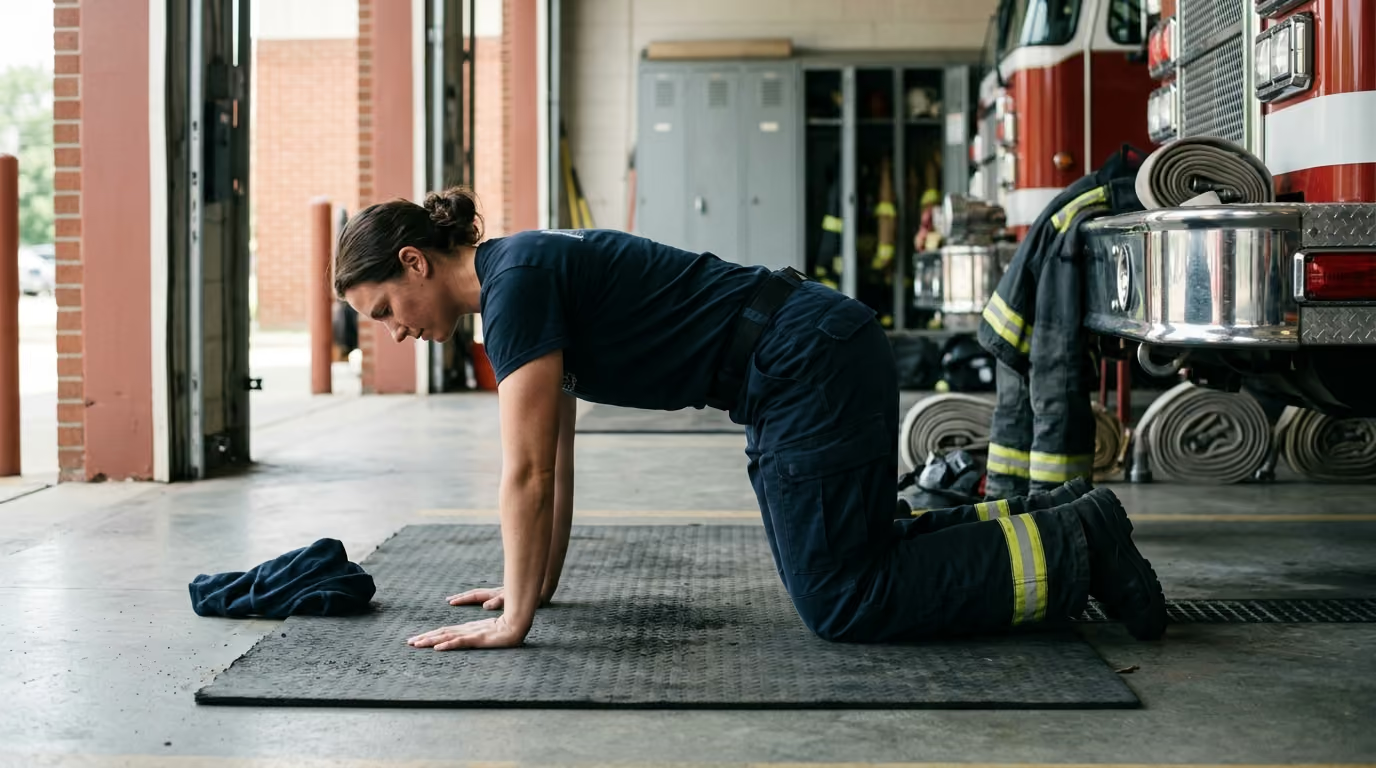
The quadruped thoracic rotation drill builds rotational control while keeping the lumbar spine stable. Begin on hands and knees with your hips pushed back toward your heels to lock out the lower back. Place one hand behind your head, rotate your elbow downward toward the opposite wrist, and then actively drive the elbow upward toward the ceiling by rotating through the mid-back. Track the movement with your eyes, pause at full active rotation for two seconds, and return smoothly.
To build thoracic extension under control, use a foam roller or peanut mobility ball positioned across the mid-back. Support your head with your hands to protect the cervical spine, keep your ribcage drawn down toward your pelvis, and gently extend your upper back over the roller without letting your lower back arch. Perform several slow extensions across different thoracic segments, pairing each movement with complete exhalations.
The shoulder is the most mobile joint in the human body, relying heavily on surrounding musculature and scapular coordination for stability. First responders require shoulder mobility that can handle overhead tool work, patient dragging, and lateral reaching around structural obstacles. However, flexibility without motor control leaves the shoulder susceptible to impingement, labral tears, and rotator cuff strains.
Active overhead reaching requires clear upward rotation and posterior tilting of the scapula. When protective clothing restricts this movement, the head of the humerus pinches against the acromion process. To restore active overhead reach, perform wall slide variations with an active reach at the top. Stand tall facing a wall, place your forearms against the surface, slide them upward into a "Y" position, and actively lift your arms off the wall for two seconds at the peak of the movement using your lower trapezius and serratus anterior.
Loaded carries represent one of the most effective ways to build functional shoulder mobility and joint integrity. Single-arm suitcase carries, double-arm farmer carries, and overhead waiter carries challenge the rotator cuff to keep the humeral head centered while the body moves through space. These carries develop dynamic grip strength, core stiffness, and shoulder stability simultaneously, directly preparing you for difficult equipment transfers.
Isolating joint mechanics in the gym is only the first step. Operational mobility must ultimately be expressed during complex, multi-joint movements under realistic field conditions. Breaking down common operational tasks illustrates how these movement qualities integrate during high-stakes duties.
Entering confined spaces, advancing a charged hose line, or conducting searches requires moving efficiently close to the floor. A functional crouch requires deep hip and knee flexion combined with forward ankle travel. When a responder lacks these ranges, they tend to bend completely at the lower back, dropping their head and losing peripheral situational awareness.
Practice moving between a supported deep squat, a half-kneeling stance, and a low crawl without using hands for balance whenever possible. Incorporating bear crawl variations and low lateral transitions into your training builds the hip mobility and wrist tolerance needed to move through tight, restricted structures smoothly.
Climbing stairs with a medical jump kit or ascending a ground ladder with equipment requires repeated single-leg force production through a large range of motion. Each step up requires the lead hip and knee to flex deeply while the trailing leg extends to drive the body upward. If hip flexion is restricted, the responder will swing the leg outward in a wide arc, reducing mechanical efficiency and increasing the risk of slips.
Single-leg step-ups onto an elevated box provide an excellent simulation for climbing mechanics. Focus on stepping onto the box without kicking off with the back foot, driving entirely through the lead heel and hip. Lower yourself back down under a strict three-second eccentric count to train dynamic knee stability and ankle control under load.
Operating heavy hydraulic rescue tools, pulling ceiling drywall, or reaching across an engine compartment requires reaching in diagonal, multi-planar patterns. These tasks demand that the thoracic spine rotate while the hips shift weight, all while the shoulder maintains control over a heavy, vibrating tool.
Incorporate half-kneeling cable chops and lifts into your training schedule. These movements teach you to transfer force from the floor through a stable pelvis, across an active core, and out through the arms in diagonal planes. This directly mirrors the muscular demands of operating tools across awkward angles.
Patient handling represents the single largest source of musculoskeletal injury among emergency medical personnel. Lifting a patient off a low bed or transferring a person from a floor to a stretcher forces the body into extreme forward reaches. Patient-handling literature documents that manual lateral transfers routinely expose responders to shoulder flexion angles reaching 93 degrees and spinal flexion angles exceeding 54 degrees under heavy manual load.
First responders frequently make the mistake of keeping their feet planted while bending and twisting their spine to reach a patient. A core operational principle is simple: move your base of support before you reach. Taking a half-step closer or dropping into a half-kneeling position reduces the lever arm on the lower back, keeping the spine in a safer, more neutral posture. Learn more about managing training volume around shift constraints in our breakdown of minimum effective dose training for emergency personnel.
Recognizing common movement faults helps you spot physical limitations before they lead to painful duty injuries. The following illustrative case patterns show common mechanical breakdowns and practical training directions to address them.
An emergency responder presents with significant knee discomfort after structural training. When observed in a crouch, their heels lift off the ground immediately, their knees buckle inward, and their torso pitches hard forward.
A paramedic demonstrates excellent passive shoulder flexibility on an examination table, easily reaching arms overhead. However, when lifting an equipment bag into an overhead ambulance compartment while wearing a ballistic vest, their shoulders pinch and their lower back arches excessively.
A firefighter-paramedic frequently experiences lower back spasms after difficult patient extractions. Field observations show that when working in tight bedrooms, the responder keeps both feet glued in place, rounding and twisting their lower back to maneuver the patient rather than shifting their footing.
A responder moves with excellent mobility during unloaded gym workouts, displaying full-depth squats, smooth lunges, and balanced overhead presses. When wearing structural turnout gear and self-contained breathing apparatus, their movement becomes rigid, uncoordinated, and exhausting.
Integrating operational mobility into a demanding shift-work schedule requires a structured, time-efficient approach. You do not need ninety-minute yoga sessions to build durable joint function. Short, consistent movement preparation sessions paired with smart strength exercises produce superior results without causing deep physical fatigue.
The American College of Sports Medicine recommends flexibility and mobility exercise for all major muscle-tendon units at least two to three days per week, noting that regular practice maintains joint range. For emergency personnel, static stretching should not serve as the primary pre-work warm-up. Prior to shifts, heavy training, or intense drills, rely on dynamic movement preparation to raise core temperature, lubricate joint capsules, and activate stabilizing musculature.
Strength training should act as loaded mobility work. Choosing full-range exercises over partial repetitions strengthens joints at their structural end ranges. Exercises such as front squats, deep Bulgarian split squats, Romanian deadlifts, overhead presses, and chin-ups naturally expand and reinforce usable range of motion when performed with strict, controlled technique.
Between calls or during recovery days, use light mobility resets to relieve duty tension. Gentle joint circles, unloaded hip-hinge patterns, and supported spinal rotations help release muscle stiffness without inducing fatigue. If you need practical tools to settle physical tension after intense emergency calls, review our guide on quick grounding techniques for high-stress shifts.
When planning physical development across a twenty-year or thirty-year career, joint mobility and tissue durability must take precedence over chasing arbitrary gym maximums. Developing durable, pain-free movement patterns ensures you remain an operational asset to your crew and protects your physical independence long after your service ends. Explore broader strategies for sustainable capability in our career longevity resource hub.
Mobility training must respect structural biology and physiological limits. Forcing a joint into sharp, pinching pain does not increase range. It inflames joint capsules, irritates nerves, and triggers protective muscle spasms. Distinguishing between normal muscular stretching sensations and joint pathology is essential for long-term health.
Fatigue significantly alters neuromuscular control and joint protection. Attempting aggressive end-range mobility drills or heavy loaded stretching when severely sleep-deprived after an exhausting night shift increases the risk of soft tissue strains. When systemically fatigued, stick to gentle, restorative movement patterns rather than pushing into extreme ranges. If you want to understand how to adjust physical training volume according to daily readiness, consult our comprehensive guide to autoregulation and fatigue management for emergency responders.
If you experience persistent joint pain, mechanical clicking accompanied by swelling, structural instability, or radiating nerve symptoms, stop self-treating with aggressive stretching. Consult a licensed physical therapist, sports medicine physician, or qualified orthopedic clinician. A trained professional can evaluate structural joint alignment, rule out labral or ligamentous damage, and design a targeted rehabilitation plan tailored to your specific occupational demands.
Building durable, field-ready mobility does not require overhaul of your entire training regimen. It requires replacing passive, ineffective stretching with intentional, loaded movement patterns. Use this operational checklist to upgrade your physical readiness this week:
Operational mobility is ultimately about preserving your physical capability so you can perform decisively on the fireground, rescue scene, and ambulance floor without breaking down. Building strength through useful ranges of motion protects your body today, maintains your operational readiness through decades of demanding service, and ensures you leave the job with a healthy, fully functioning body.
Stay connected for research-led guidance on duty fitness, shift-work sleep, injury recovery, stress, nutrition and career longevity. Practical ideas for first responders who want to stay capable on the job, recover well and protect their health for the long run.



Read practical guidance on first responder fitness, recovery, sleep, nutrition and resilience for demanding work and a long, active career.
read the blog



