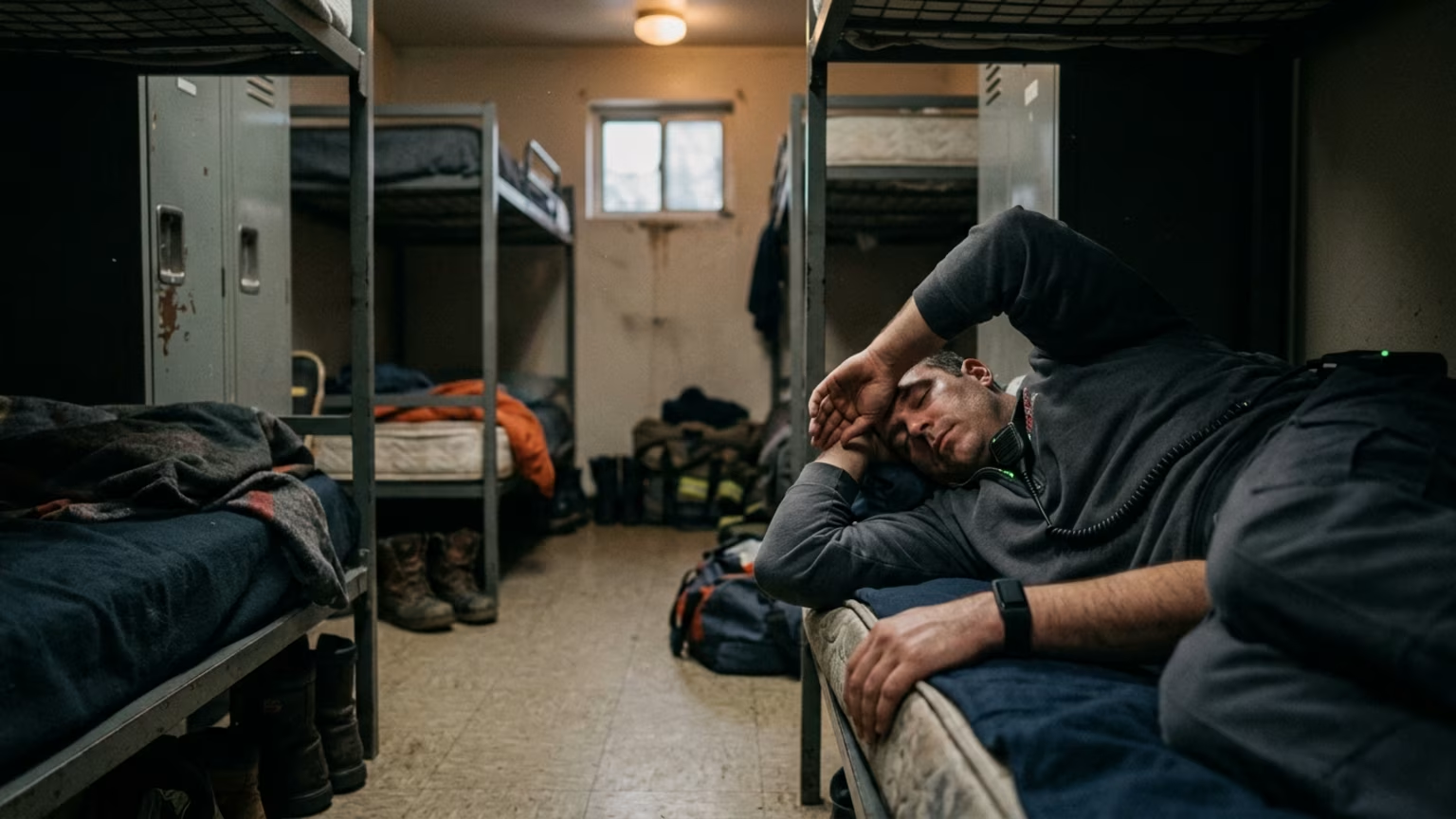

A recent 60-day pilot study found that San Francisco police officers and firefighters with PTSD experienced reduced nightmare frequency and distress when using the NightWare prescription wearable.





If you are in immediate danger, call 911. If you need immediate support, call or text 988 (press 1 for the Veterans Crisis Line) or text 838255.
On September 9, 2026, a peer-reviewed pilot study published in Frontiers in Sleep reported that San Francisco police officers and firefighters with PTSD experienced fewer nightmares when using the NightWare prescription wearable. The open-label study followed a small group of public-safety personnel over 60 days to evaluate the clinical impact of the device.
The pilot study tracked 10 participants using a consistent survey to measure self-reported sleep outcomes. Researchers found that average nightmare-related distress declined from 2.9 to 1.3 on a zero to four scale. This represents a reduction of more than half for the group over the study period. Nine of the 10 participants reported improved distress levels.
No participants reported worsening distress during the 60 days. Nightmare frequency also showed a distinct downward trend during the trial. Participants reported a decline in average nightmare nights from 5.2 nights per week to 3.6 nights per week. The study noted that 70 percent of the participants experienced fewer nightmare nights overall.
Participants also self-rated their sleep quality, which increased from 1.8 to 4.0 on a five-point scale. Treatment satisfaction increased from 2.2 to 4.5 on the same five-point scale. The intervention appeared well-received by the group. Nine of the 10 participants chose to continue using NightWare after the 60-day pilot ended.
NightWare is an FDA-cleared prescription wearable system designed to monitor and respond to sleep disturbances. The system uses a wrist-worn device and software to detect sleep-related physiological patterns associated with nightmares. When it detects these patterns, the device delivers short vibrotactile signals. These signals are intended to interrupt the nightmare without fully waking the user.
The FDA classifies the device as a prescription digital therapy device. It is intended to reduce sleep disturbance associated with psychiatric conditions. Specifically, this includes nightmare disorder and PTSD.
These findings hold specific operational value for emergency personnel managing irregular shifts and high stress. The timing of the results offers a clear window for clinical expectations. The study reported that most of the reduction in nightmare frequency appeared by day 30. This frequency benefit then held steady through day 60.
Meanwhile, nightmare-related distress continued to fall through the end of the pilot. Participants wore the device on an average of 76 percent of nights. This adherence rate matters greatly for operational planning and daily routine management. Device usefulness depends on consistent wear, routine charging, and willingness to use it during demanding duty periods.
First responders working rotating shifts or extended tours face highly unpredictable sleep windows. A wearable intervention must fit smoothly within these logistical realities to be effective. Addressing sleep disruption safely is a critical component of a consistent sleep recovery plan. PTSD-related sleep disruption can include intense nightmares, chronic insomnia, and difficulty disengaging from traumatic experiences.
All of these factors can severely interfere with recovery and next-day cognitive functioning. The baseline sleep strain in emergency services is already severe due to irregular shifts and long overtime rotations. When sleep windows are short, preventing nightmare interruptions becomes highly valuable for maintaining physical capability.
This San Francisco pilot is the first published NightWare study outside military and veteran populations. Previously, clinical evaluation of the device focused heavily on active-duty service members and veterans. A prior randomized, sham-controlled study involved 65 military veterans with trauma-related nightmares. That earlier study found preliminary evidence of improved self-reported sleep quality among participants who adhered to the intervention.
The new pilot challenges the assumption that sleep interventions tested on military deployments map perfectly to civilian first responders. Brian Robertson, MD, NightWare chief medical officer and the study first author, highlighted a core difference between these two demanding professions. He noted that public-safety personnel experience repeated traumatic incidents while continuing to work in the same communities. A police officer might return to the exact streets where traumatic events occurred on their very next shift.
This creates a different psychological environment for sleep recovery. Matthew Tucker, the company chief executive, characterized these San Francisco results as a step toward expanding access from veterans to first responders. NightWare is also participating in a national VA Pathfinder Innovation Pilot. This indicates continued evaluation within the Veterans Health Administration.
However, the exact generalizability of military sleep interventions to domestic police, fire, and EMS personnel requires targeted research. Expanding the evidence base to include active municipal responders provides much better operational context for local agencies. Because the population and study context differ from San Francisco first responders, the earlier veteran results should be treated as related evidence rather than a direct replication.
For a first responder experiencing trauma-related nightmares, NightWare represents a potential non-pharmacologic option to discuss with a clinician. It is not a standalone treatment for PTSD. The device is intended for use alongside prescribed medication and other recommended therapies. A wearable might address the specific symptom of nightmares. It does not treat trauma memories, avoidance, depression, anxiety or the underlying PTSD.
Seeking proper care is a critical part of health support for first responders. Personnel should initiate a practical conversation with a qualified clinician before seeking a prescription. First, determine if the nightmares actually stem from PTSD, nightmare disorder, shift-work disruption, or medication side effects. Sleep problems can arise from shift schedules, chronic stress, physical pain or medical conditions.
A nightmare-focused device is not a complete solution for every sleep problem. Next, patients must confirm if they meet the specific prescription indication. The device is indicated for the temporary reduction of sleep disturbance related to nightmares in adults aged 22 or older. The patient must also have a diagnosis of nightmare disorder or PTSD-related nightmares.
Patients must discuss how the device will fit alongside existing PTSD treatment rather than replace it. Users need to evaluate if they can reliably charge and wear the system during overtime, travel, or emergency callouts. Logistical friction can easily derail new recovery habits. A practical approach to recovery requires realistic planning, much like a career-long physical capability plan. A realistic timeline for integrating any new device must account for the physical exhaustion that accumulates over a standard rotation. If a tool is difficult to operate or uncomfortable to wear, adherence will naturally drop during high-stress periods.
Clinicians and patients should establish how progress will be monitored beyond simply counting nightmares. This means tracking total sleep time, frequency of awakenings, daytime sleepiness, and the ability to recover between shifts. Finally, there must be a clear plan for what to do if symptoms worsen. If sleep remains unsafe, or if clinical symptoms such as suicidal thinking emerge, the patient needs immediate medical guidance.
While the 60-day results are encouraging, the pilot requires careful clinical interpretation. The most important limitation is the small sample size of only 10 people. A result from 10 participants can identify a promising signal for further research. It cannot reliably estimate how often the device will work, for whom it will work, or how durable the benefit will be across large departments.
The study was an open-label, single-arm design. Participants knew they were receiving the treatment, and there was no control group receiving a sham treatment or usual care. Improvements in the pilot could reflect expectancy effects, natural symptom variation, or changes in broader clinical care. Outcomes were tracked using a consistent self-reported survey rather than established objective sleep measurements.
The study authors explicitly noted that controlled studies using validated instruments are still needed to confirm these findings. FDA clearance or authorization indicates that the device has a defined medical use. It does not mean that every user will benefit or that the product has been proven to resolve PTSD entirely. The company also states that individual results may vary.
Furthermore, the available report establishes improvements in nightmares, distress, and self-rated sleep quality. It does not establish improvements in reaction time, alertness, injury risk, absenteeism, clinical PTSD severity, or on-duty safety. Treating a small pilot average as a medical promise would be inappropriate for emergency personnel. Departments and peer-support programs should maintain cautious interest rather than blanket adoption.
A responsible rollout requires clinician oversight, strict privacy review, informed consent, and a clear method to track individual outcomes. Medical innovation often moves faster than departmental policy updates. When a new digital therapeutic enters the market, wellness coordinators face pressure to adopt it quickly. Maintaining a methodical approach to new technology protects both the agency budget and the long-term health of the personnel.
Finally, the available event coverage is largely based on a company-issued announcement reproduced by various outlets. The report identifies the peer-reviewed journal publication and summarizes its findings. A full independent appraisal requires reviewing the complete research paper. This includes its recruitment process, statistical methods, adverse events and conflict disclosures.
For active and retired personnel, the most defensible takeaway is that the device produced encouraging short-term results in a very small San Francisco pilot. Those findings justify further evaluation, not a definitive medical guarantee.
Integrating new clinical recovery tools into an unpredictable shift rotation requires practical planning long after a clinician writes the initial prescription. Separating useful stress-resilience guidance from motivational slogans or mental-health stigma often complicates how personnel evaluate new devices, and Rescuris provides the objective framework to support those decisions. Explore Resources
Rescuris publishes evidence-aware guidance for firefighters, police officers, paramedics and other first responders on fitness, recovery, sleep, nutrition, stress resilience and long-term capability.






Read practical guidance on first responder fitness, recovery, sleep, nutrition and resilience for demanding work and a long, active career.
read the blog
